
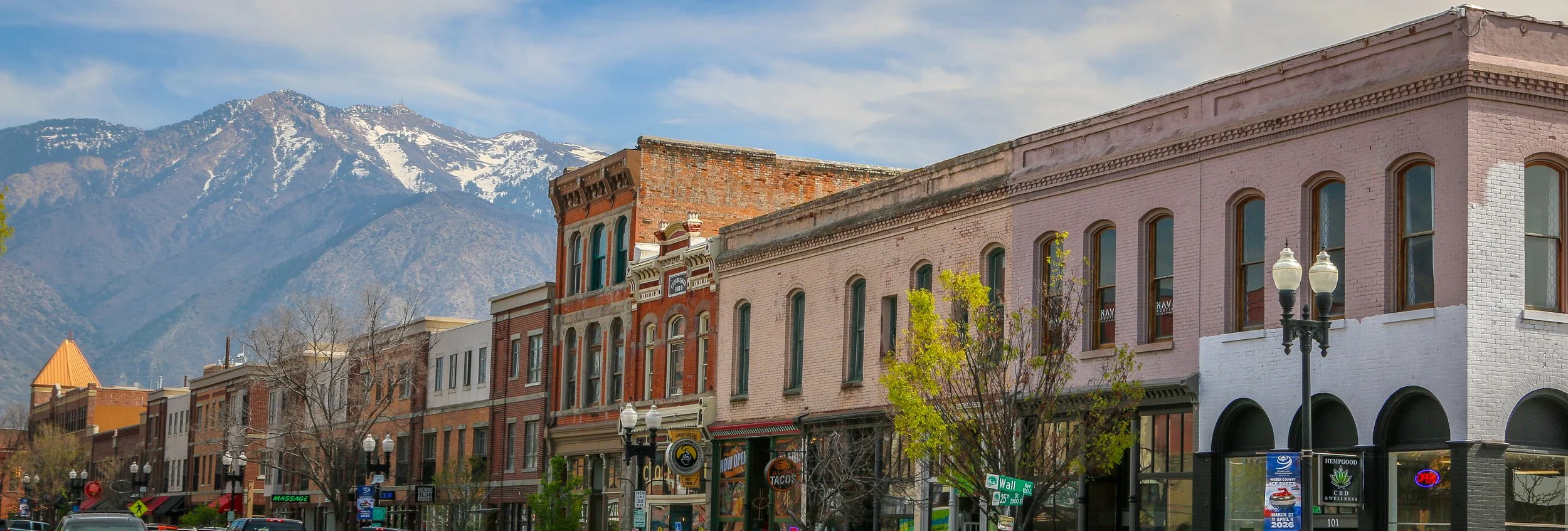
Ogden was home to Fremont Indians for centuries and was later the territory of the Northern Shoshone and Goshute tribes. Fur trader Miles Goodyear made his way into the valley in 1846 and set up a trading post he named Fort Buenaventura. I’m sure the Mormons were surprised to find him there when they arrived in 1847, but they bought his fort and began building a town there along the Ogden and Weber Rivers. The town they built was named Ogden after mountain man Peter Skene Ogden and became the second city in Utah to be incorporated after Salt Lake City. The whole area would change twenty years later when the transcontinental railroad came through Ogden, choosing the northern city over Salt Lake because its route went around the north shore of the Great Salt Lake. A spur line would be built to Salt Lake, and Ogden would become known as “Junction City”. With the railroad came tremendous shifts in the population and Ogden went from being a quiet Mormon city to a rowdy railroad town. It would also become one of Utah’s most diverse cities with an influx of Chinese laborers and Black train porters. All of the action would center on 25th Street which is still the main drag today. Later the Lincoln Highway would also come through Ogden, furthering its reputation as a major crossroads of the west. Today Ogden is tamer than it once was, but is still one of Utah’s least Mormon-influenced cities with an abundance of bars and clubs throughout. I found Ogden to be a fun and vibrant place with wonderful museums, some great historic buildings and yes, better than average nightlife for the Beehive State. I had a great visit and will definitely be back in the future. I hope you enjoy these photos from Ogden, Utah’s “Junction City”.