Tiny Marshall, Michigan sure has a lot to see in a very small area. Most of the downtown area is part of the National Historic Landmark District which includes over 850 buildings, a staggering amount for a town of just 7,000 people. It is not easy to maintain a town in the condition Marshall is in, and I really take my hat off to those who are working so hard to keep it the way it is.
Marshall was founded in 1830 and grew as a transportation hub catering to road, rail and river travelers with several historic inns and restaurants in the city dating back to those early days. The town was named for U.S. Supreme Court Justice John Marshall and of the more than 20 towns named after Marshall, this was the only one so-named before his death. Marshall became an early innovator in the public schools movement and their model was copied across the country. The town was also one of the final contenders to become the State Capital when it was moved from Detroit, but lost out to Lansing in the end.
Today, Marshall is incredibly well maintained. I loved that I could pick up a map outside of their tourism office at any time of day and the music playing on the street made me smile. There were historic walks laid out on the map, and markings on the sidewalks to help guide you along. The buildings downtown were well preserved and some truly transported me back in time. The homes in the surrounding neighborhood were equally historic and also well cared for. My favorite was Honolulu House which offered a wonderful guided tour. I came to Marshall planning on spending an hour and ended up there for more than half the day. It was definitely the cutest town I saw in all of southern Michigan and I am definitely looking forward to returning in the future. If Marshall isn’t on your list of Michigan small towns to visit, it certainly should be. I hope you enjoy these photos from beautiful Marshall, Michigan.
Battle Creek was home to the Potawatomi people long before white settlers arrived in the 1820s. The completion of the Erie Canal brought a wave of people into Michigan seeking work in the lumber industry and the town of Battle Creek was formally established in 1839. During the antebellum period, Battle Creek served as a minor but frequent stop on the Underground Railroad and in 1857 abolitionist Sojourner Truth chose it as her new home where she would live until her death in 1883. In the late 19th Century, the Battle Creek Sanitarium opened as a health resort for the rich and famous. Some of its more famous guests were President Warren G. Harding, Mary Todd Lincoln, Thomas Edison, Amelia Earhart and Henry Ford. The manager of the Sanitarium was Dr. John Harvey Kellogg whose brother William also worked there. I’ve read several accounts of how they accidentally created their now-famous corn flakes, but however it happened, they were a hit. A lesser known guest at the Sanitarium, C.W. Post, took the cereal idea and ran with it, setting up his own Post Cereal empire in Battle Creek. Between Post and Kellogg’s, Battle Creek has taken the nickname Breakfast Capital of the World, or, less seriously, Cereal City. Because these two successful brands still call Battle Creek home, the city looks great. The downtown area is vibrant and full of unique artistic flourishes and beautiful murals. There is a wonderful walking path along Battle Creek River and some great bars and restaurants around as well. Although it was quiet when I was there, I really enjoyed my visit to Battle Creek and I hope you enjoy these photos from Cereal City.
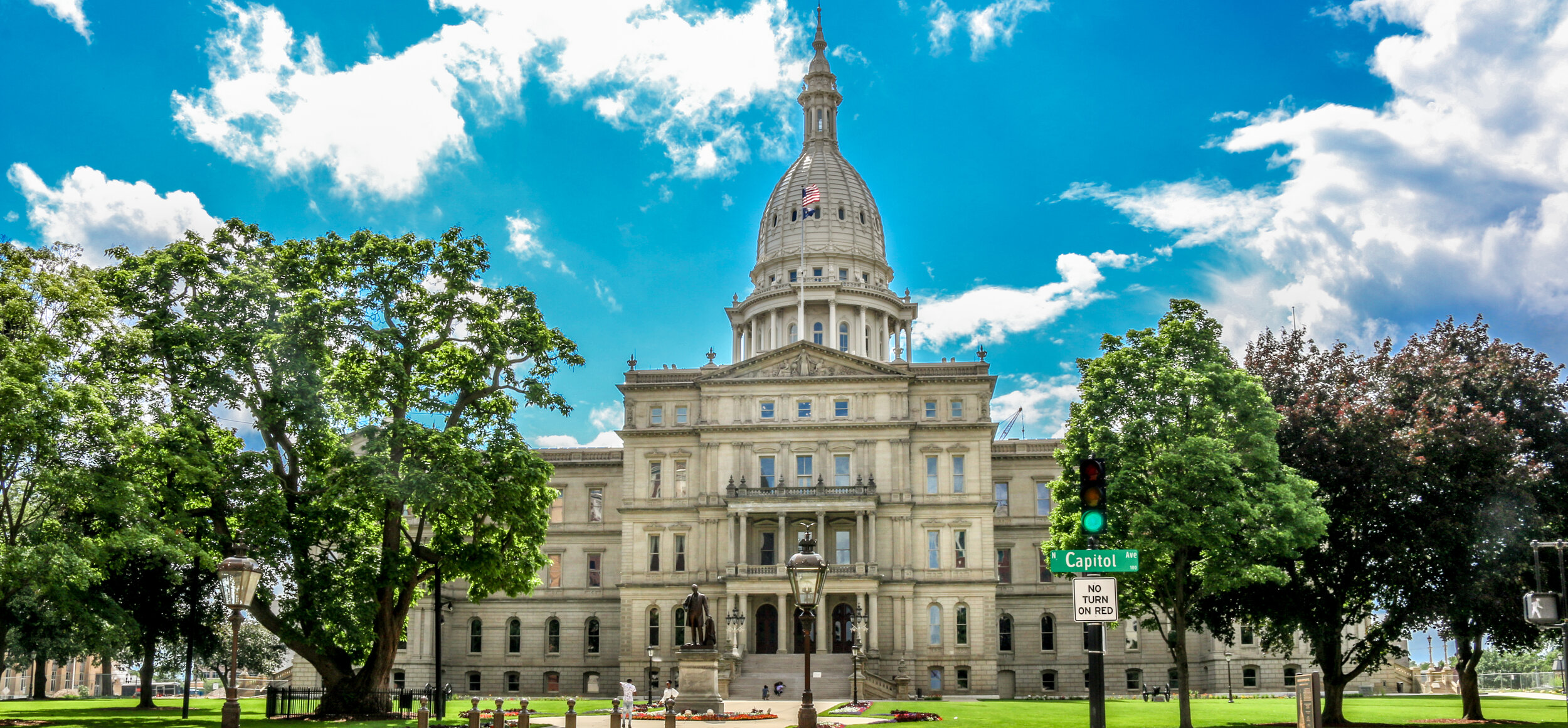
Michigan became a state in 1837 with its Capital City in Detroit. At some point in the 1840s, a debate grew over the vulnerability of Detroit which sits right across the lake from Canada and had been occupied in the War of 1812. Many cities vied for the seat of government, and the compromise was to build a new Capital City at a strategic inland crossroads. The area, known as Lansing, was renamed Michigan City, but the original name would be restored the following year. A two story wooden structure with a tin roof was built to house the state legislature and would serve as the State Capitol for for over 20 years. Finally, in the 1870s, construction on the current Capitol was begun. Elijah Meyers was chosen as the architect and he modeled the building after the U.S. Capitol in Washington. Meyers would go on to design the Colorado and Texas Capitols as well. The building opened in 1879. A hundred years later, people were calling to pull down the old building and replace it with a modern structure like they tragically did in Louisiana, Florida and elsewhere. Thankfully, that did not happen and instead a major, top-to-bottom restoration took place. The meticulous restoration even brought in artists to hand-paint all of the walls as had been done in the original design. The result is really quite something. The Michigan State Capitol is beautiful inside and out, and I was very fortunate to get a personal tour with the building’s lead guide. I hope you enjoy this look inside the beautiful Michigan State Capitol in Lansing.
All I knew about Flint when I arrived, I learned from Michael Moore's 1989 documentary Roger and Me. That and not to drink the water. Some people warned me not to go. What I found was a vibrant, clean city with an interesting past and a bright future.
In 1819, Jacob Smith established a small trading post on the Flint River. It grew quickly and become a convenient stopover on the route between Detroit and Saginaw. By 1860 the population had grown to 20,000 and Flint’s major industry, like most of the region, was lumber. In the late 19th Century, Flint became a major producer of carriages which paved the way for its entrance into the automotive market a few decades later. General Motors was founded in Flint in 1908 and would grow along with the city for many years. When GM started pulling out of Flint in 1978, the population began to drop and crime and poverty, which always go hand-in-hand, began to rise. For several years, Flint was considered one of the most dangerous cities in the country. The recent water contamination issues have led to Flint once again being in the spotlight for less than ideal reasons.
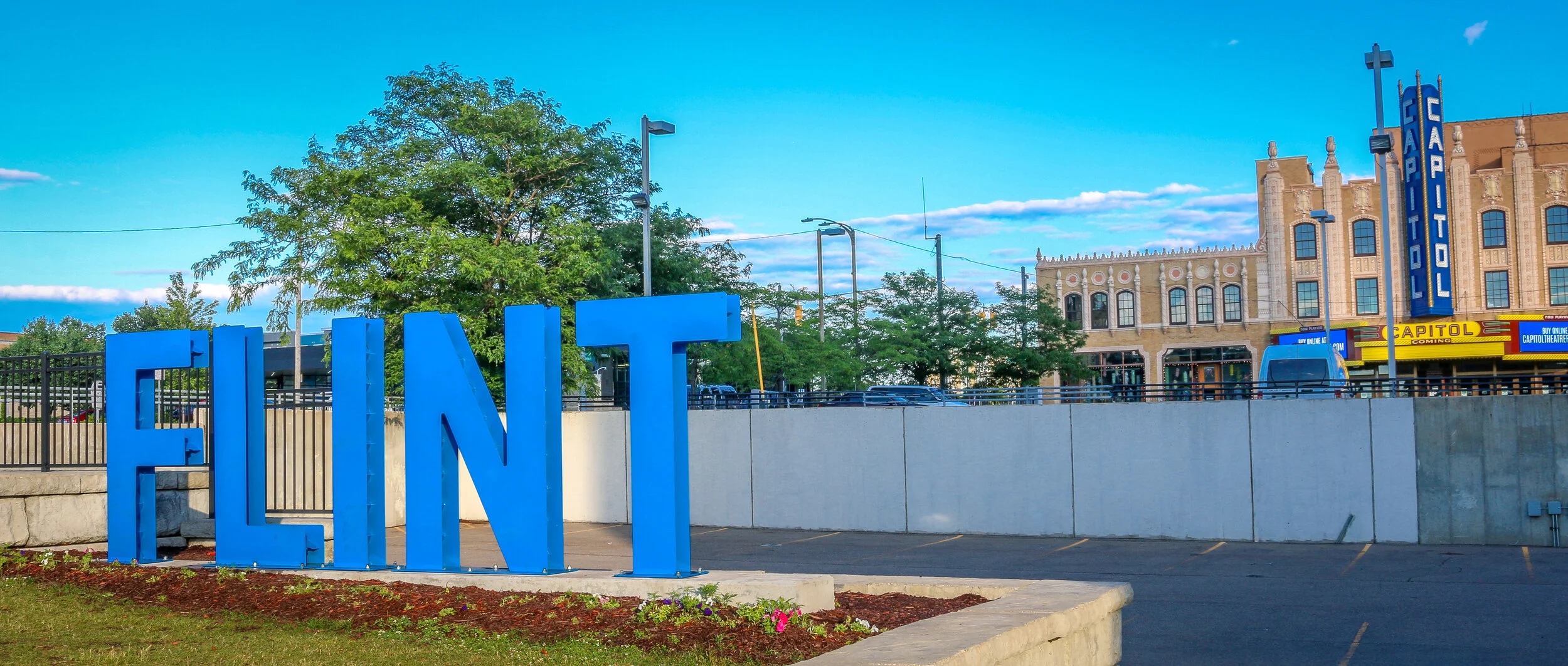
During my visit, I found a city that wasn’t ready to throw in the towel just yet. Flint has fought back against its bad reputation and taken serious steps to beautify its downtown and move the city forward. I found a vibrant Farmer’s Market, beautiful murals throughout the city, some great historical markers and statues (through a partnership with the National Park Service), and some great bars, restaurants and breweries. It was quiet when I was there, but I saw exercise classes going on in the park and some kind of jogging/scavenger hunt which looked like a lot of fun. While it was frustrating for me that their main museums were closed, they were closed for renovations and promise to come back next year better than ever. I was only in Flint for two days, but I’m certainly glad I stopped for a look. If you’re ever in the area, drop in and see what’s new in Vehicle City. You might be surprised by what you find there. I Hope you enjoy these photos from downtown Flint.
From 2010-2012, I lived and worked in a tiny fishing village in Southern Japan. My town, Usuki, had a beautiful historic core, a lovely industrial waterfront, an old castle ruin and some wonderful restaurants. In the two years I was there, we even got a 7-11 and a McDonalds. I lived in a beautiful, old, to-big-for-me apartment a few blocks from the water. During the week, I taught English in rural Japanese public schools. I worked in three different Junior High Schools and seven Elementary Schools. It was tough to move around so much, but I did enjoy the variety of it. Sadly, many of my days I spent very few hours in the classroom and was absolutely bored to tears most of the time. On the weekends I would spend time with friends or traveling the countryside. Our little corner of Japan was very rural, but also beautiful - especially when the rice was being planted. I found small communities to join, like a dance class in my town and a scuba diving shop in the next town up. I went to the beach and climbed mountains and visited the major cities. I also bought my first DSLR camera - at a pawn shop about an hour from my apartment. I didn’t learn to use it very well when I was there, but I took my first steps into the world of digital photography. It was also in Japan that I conceived the idea for this project and began to work to build this website. I made some wonderful friends while I was there, one of whom recently asked me if I had any photos of Japan that she could use to build a website for her business. That had me do a deep dive into my photo archives and dig up these old pictures. Some of them are actually pretty good, so I thought I would share them, and this story, with you here. Sadly, after a decade, I don’t remember where many of them were taken so not many of them are captioned. But I hope they can give you a feel for the time I spent there and some of the beauty of the country. Enjoy!
Hello Everyone! We are now just over three weeks away from 2021! I, for one, will welcome the New Year with open arms and a heart full of hope for a better year for us all. For all of the challenges 2020 has brought both to me personally and to us collectively, I continue to be grateful for the blessings in my life and the opportunities that have come along as well. It’s been an amazing experience to spend time with a 2 year-old and a 13 year-old and help them along in whatever way I could this year. I’ve also gotten to spend a lot of time with my folks here in Washington and know that I’m helping keep them safe and vice-versa. I’ve also been grateful to have some time to explore my hometown more than I ever have before which has brought me a lot of joy and contentment. While I’m looking forward to getting a vaccine and getting back on the road as soon as possible in 2021, I will always look back at this year as a time I was able to stop, reflect on the blessings I have in this life and make real plans for the future.
Speaking of a vaccine, there’s definitely been good news this week on that front. The Pfizer vaccine has been approved and the first shots administered in the UK. Approval should be right around the corner here in the US, and then the long and slow process of administering it can begin. I read yesterday morning that the FDA’s initial perusal of the application for approval was extremely positive. I know there are plenty of people out there who have read a lot of whacky things regarding the upcoming vaccine and vaccines in general for that matter. With all the travel I’ve done in my life, I’ve gotten every vaccine available and will gladly step to the front of the line for this one. I have plenty of family and friends in the medical industry and they have their people who they listen to and trust. If they tell me this is a go, I’m in. I simply don’t have time to waste on conspiracy theories and look forward to moving ahead with my life.
This week has been another busy week with my 2 year-old buddy, Mason. I’m happy that he’s continued to want to go outside and play despite the temperatures dropping into the thirties and forties. We bundle up tight but we’ve still been getting outside and going for long walks in neighborhood. He really loves running through the big piles of leaves and spent today sitting in one and just throwing the leaves up and watching them float down. It was a joy to watch him enjoying such a simple pleasure so much, and he’s definitely gotten me to run through more leaf piles than I have in many a year. We continue to look for berries, acorns and pretty colored leaves and he has been good about having me take off his mittens so he can grab these treasures and then letting me put them back on immediately after. We’ve also been having fun watching dead leaves float down the stream in the park as well, which really is pretty cool. He’s enjoying the few Christmas decorations which have sprung up around the neighborhood this week, but is particularly fond of his Christmas tree at home and loves showing me all the different ornaments and the stocking his grandmother sent him. Today we were reading the Night Before Christmas, and he is starting to recognize “Danda” (Santa). In one picture with Santa and his reindeer he was telling me that the reindeer were named Nick and Matt which are his cousin’s names (Nick is the young man I tutor on Mondays). I couldn’t figure it out, and then realized the text talks about “St. Nick” and the only Nick he knows is his cousin. Since he knows who Santa is, the reindeer must be the Nick they keep referring to and since Nick and Matt are twins, his brother must be one of the other reindeer. At least that’s how my mind processed what he said. Either way, he’s enjoying the holiday season so far and I’m enjoying it right alongside him.
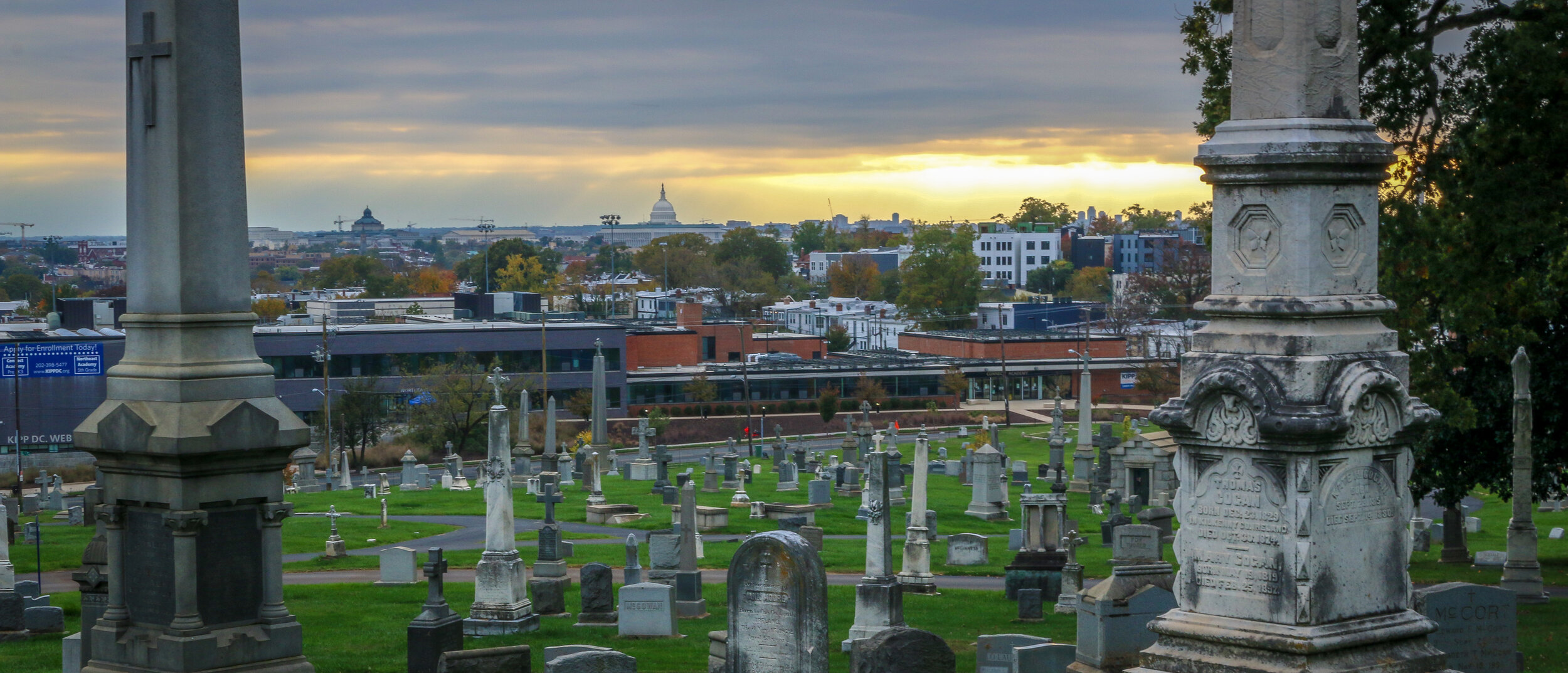
By 1852, the central section of Washington D.C. was developing quickly and the local citizenry wanted to be sure what land was available was available for the living. They therefore banned any new cemeteries from being established within the city center. Soon thereafter, the Roman Catholic Archdiocese of Baltimore, then the overseer of Washington’s catholic churches, purchased 40 acres in the surrounding countryside and established Mount Olivet Cemetery. This cemetery was and is the largest catholic cemetery in Washington D.C. and was also one of the first racially integrated cemeteries in the city. With commanding views over the city, it is a beautiful place for a wander, and as long-time readers know I very much appreciate funerary art of which there are some stunning examples in Mount Olivet. Mount Olivet is the final resting place of such notable people as White House Architect James Hoban, Supreme Court Justice Joseph McKenna, and Lincoln assassination conspirator Mary Surratt, the first woman executed by the U.S. Government.
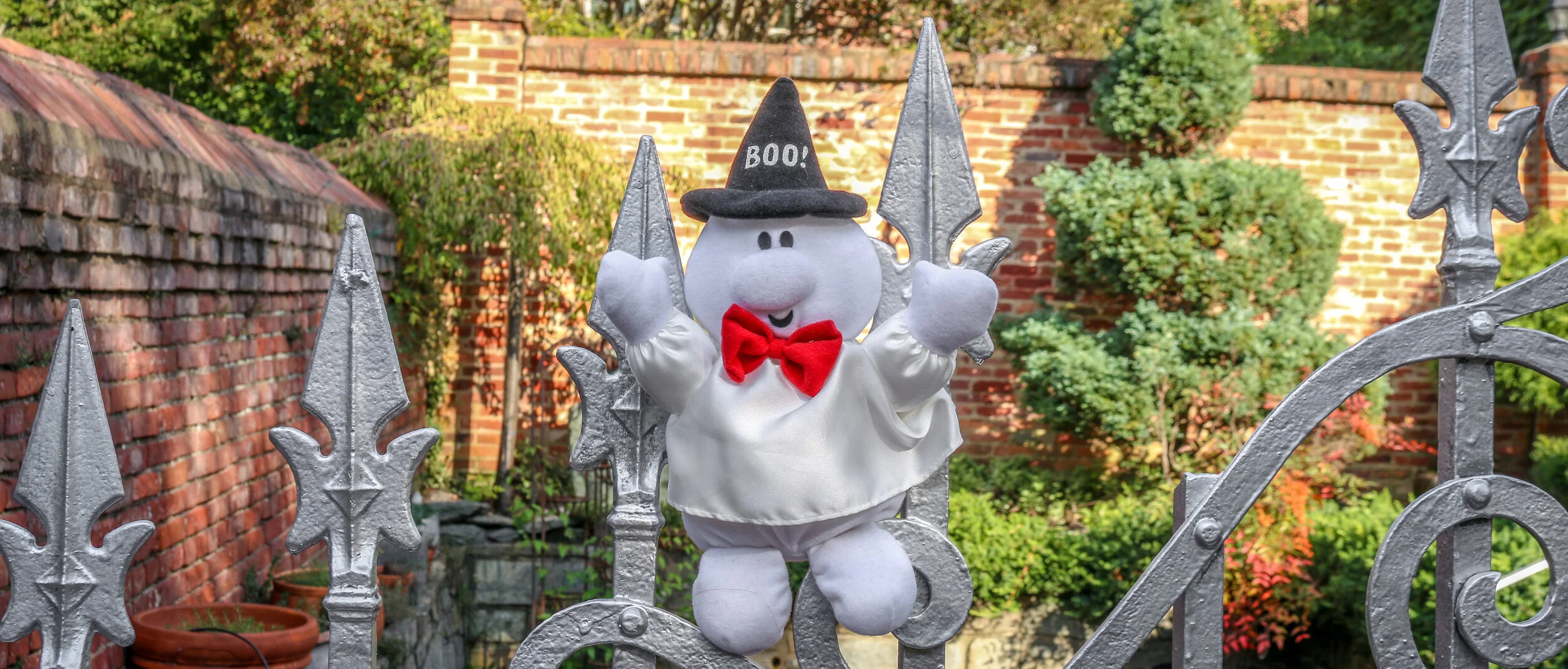
Happy Halloween from Washington D.C. I’ve been out and about these last few weeks gathering up stories and taking photos of some of Washington’s most haunted locations. It’s been a wonderful jaunt around the city and it’s always great to see things from a different angle. This is by no means an exhaustive list, just some of the places I enjoyed most. Please keep in mind that these are stories and I haven’t gone out of my way to disprove them or check for historical accuracy. Halloween is a day to suspend your disbelief and just enjoy a good ghost story, so enjoy this haunted historical trip around our nation’s Capital and the surrounding area. Happy Halloween!
Last week I had the distinct pleasure of traveling around southwestern New Hampshire to photograph these wonderful covered bridges. I’ve always had a thing for covered bridges, and these were no exception. Much like the lighthouses and Mail Pouch Barns I’ve featured in the past on this blog, covered bridges are such a beloved and photogenic part of the American landscape. Autumn had just begun when I was out taking these pictures, and was in varying stages depending on which bridge I was looking at, but it certainly was a beautiful day to be out there. I hope you enjoy these beautiful and historic covered bridges from southwestern New Hampshire.
In 1632, King Charles of England granted a charter for a huge tract of land in what was then the colony of Maryland to Cecilius Calvert, the second Lord of Baltimore. Within that tract was a hill known as Jenkins Hill which today we know by its far more famous name: Capitol Hill. In 1663, lawyer George Thompson acquired 1800 acres from Lord Baltimore and leased the land to future Proprietary Governor of Maryland Thomas Notley for 1000 years at the rental rate of “40,000 pounds of tobacco and one pepper corn” per year. Notley called his plantation Cerne Abbey Manor.
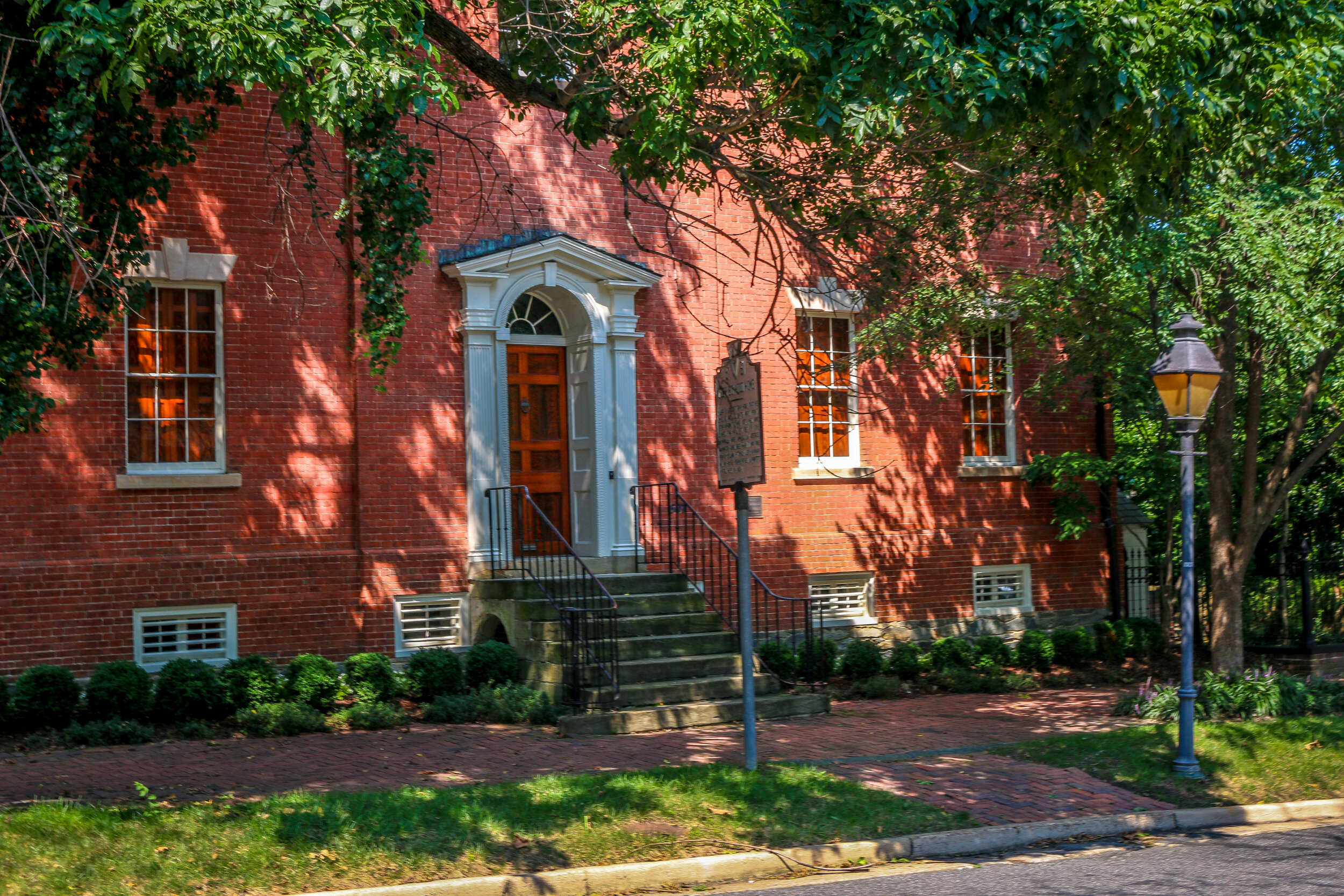
Cerne Abbey Manor would remain in Thomas Notley’s family for several generations and eventually was inherited by his great-great-grandson Daniel Carroll. When Washington D.C. was established, Daniel Carroll ceded Jenkins Hill to the Federal Government, and later received part of that land back which he then leased to Robert Sewall. On that lot was a small one-room farmhouse which had been built perhaps as early as 1750. Sewall built a considerably larger house facing the newly designated B Street (now Constitution Ave), keeping the farmhouse as his kitchen. It is likely that this house was completed around 1800. The architect of the house is unknown, but there is some conjecture that the designer was Leonard Harbaugh, who we remember for his designs of Old North for Georgetown University, the old U.S. Treasury Building and Holy Trinity Church and who is buried in D.C.’s Congressional Cemetery. Sewall had this house built as his “town house” but soon thereafter his uncle died and left him a large tobacco plantation in Southern Maryland called His Lordship’s Kindness. The fact that the manor house on that plantation was designed by Harbaugh lends some further credibility to his designing the Sewall House.
Because Sewall was busy sorting out his newly inherited plantation, the house was leased to Albert Gallatin who served as Secretary of the Treasury under Thomas Jefferson and James Madison. A disproven rumor once existed that the Louisiana Purchase was signed in the house while Gallatin was in residence there, but it would certainly have been an important discussion around the dinner table, perhaps with Thomas Jefferson himself in attendance. Gallatin lived in the house from 1801 to 1813 and after he left, Sewall left his son, William, to watch the house, but it is unlikely that William ever lived there.
After the Battle of Bladensburg in the War of 1812, British troops marched towards Washington. It is believed that shots were fired from inside the Sewall House, marking the only American resistance to the invasion of the Capital. Whether shots were fired or not, the British did set fire to the house which lends credibility to the story because as we learned when discussing the Octagon House in this series it was not British policy to burn private residences. Regardless, the house did burn and Sewall rebuilt it in its current form soon after the war making some small changes to the original design. He applied for reimbursement for this work from the U.S. government, but his application was denied. Robert Sewall died in the house in 1820, leaving it to his wife and four daughters…
The Potts-Fitzhugh house at 601-607 Oronoco Street in Alexandria is one of the most interesting houses still standing in the area. Known most famously as the Boyhood Home of Robert E. Lee, the house’s history goes much deeper. The house was built in 1795 in what was then the Alexandria section of Washington D.C. for John Potts. Potts was the secretary of the Potomac Canal Company, which was attempting to link the Potomac and Ohio Rivers with a canal around Great Falls. Potts was an old friend of George Washington who visited the house often and sometimes even spent the night during the year Potts resided in the house.
Potts lived in the Oronoco Street house for only about a year, and then sold it to William Fitzhugh, a wealthy Virginia tobacco planter and racehorse breeder who was looking for a city home. Fitshugh owned beautiful Chatham Manor in Fredericksburg which was right down the road from Ferry Farm, the boyhood home of George Washington. The two had served together in the Virginia House of Burgesses before the Revolution, and remained friends. In fact, Washington dined with Fitzhugh at this house on Oronoco Street just one month before he died, on his last visit to Alexandria. Fitzhugh was married to Ann Randolph and the couple had three children. One of their children, Mary Lee Fitzhugh, would grow up to marry George Washington Parke Custis, a grandchild of Martha Washington from her first marriage. The wedding took place in the parlor on Oronoco Street. George and Mary Lee had one daughter, Mary Anne Randolph Custis, who would grow up to marry Robert E. Lee in 1831, two years after he graduated from West Point. During the Civil War, the Lees would take refuge on the Fitzhughs’ country estate, Ravensworth, which they built after selling Chatham. When William Fitzhugh died in 1809, his city home on Oronoco Street passed to his son, also named William, who would rent it to the house’s most famous occupants: Henry “Light Horse Harry” Lee and his family which included then five-year-old Robert E. Lee.
Robert E. Lee was born in Stratford, Virginia in 1807, but he moved with his family to Washington D.C. in 1810, when he was just 3 years old, and lived at 611 Cameron Street in the Alexandria section. In 1812, they moved to this house on Oronoco Street where they lived for the next four years. The Lees would move to 407 N. Washington St. in 1816 but returned to the house on Oronoco Street in 1820. On October 14th, 1824, the Marquis de Lafayette was in Washington and wanted to visit his old Revolutionary War friend “Light Horse Harry” Lee’s widow and children,so he stopped by their home on Oronoco Street. Lafayette met 17 year-old Robert and no doubt told him of his father’s heroism in the Revolution. Robert lived on Oronoco St. until he departed for West Point in 1825 on the recommendation of William Fitzhugh the younger. When Robert left, his mother and two sisters moved across the river to Georgetown, but the house on Oronoco Street would be inhabited by other members of the Lee family for the next 62 years until it was sold to the Burson family in 1887. During the Lee family’s tenure there, Alexandria was retroceded to Virginia. One can only speculate on the fate of Robert E. Lee and the nation had his boyhood home remained a part of Washington D.C…