While all modern forms of music have roots somewhere, it’s always fascinating to trace them back and try and discover where they came from and how they evolved. The blues will take you back to Dockery Farms in Mississippi and jazz to Congo Square in New Orleans, although the influences of those music forms go back much further. Hip-hop got its start in New York City. Many would say Sun Studios in Memphis was where rock and roll was born, although I tend to think otherwise. Each genre tends to have its early influences and groundbreaking shifts which led to how we define them today. Bluegrass music really gained that definition in the mid 1940’s when Earl Scruggs and Lester Flatt joined the already extant band The Bluegrass Boys. There is no doubt though that the man who brought them together and nurtured the evolution of the sound was the founder of that group and the undisputed Father of Bluegrass: Kentucky native Bill Monroe.
Bill Monroe was born in a small house on Pigeon Ridge in central Kentucky. That house was torn down and a new one built in its place when Bill was a kid…
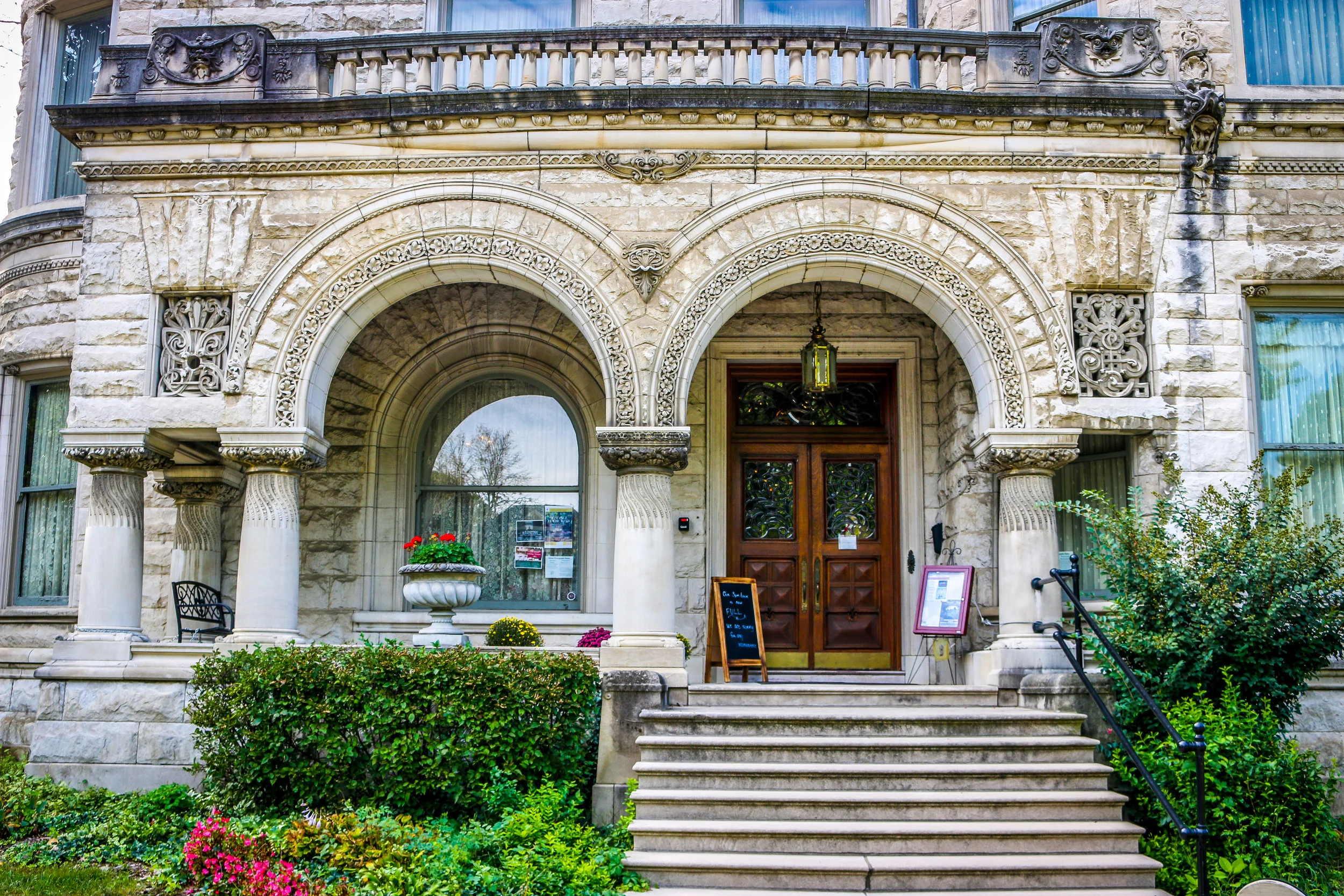
Despite its name, Old Louisville began as a suburb of Louisville sometime around 1870, nearly a century after the city’s founding. Old Louisville covers a 48 block area with one of the largest concentrations of Victorian architecture in the country. Unique to this time period and style, most of the houses in the neighborhood are brick or stone which has kept them in pretty good shape over the years. I loved wandering the neighborhood there and taking these photos. You will see some are of entire houses, while others are of specific details which caught my eye and others still are of neighborhood streets, parks and fountains. It’s a lovely place for a stroll and well worth a visit if you are ever in Louisville.
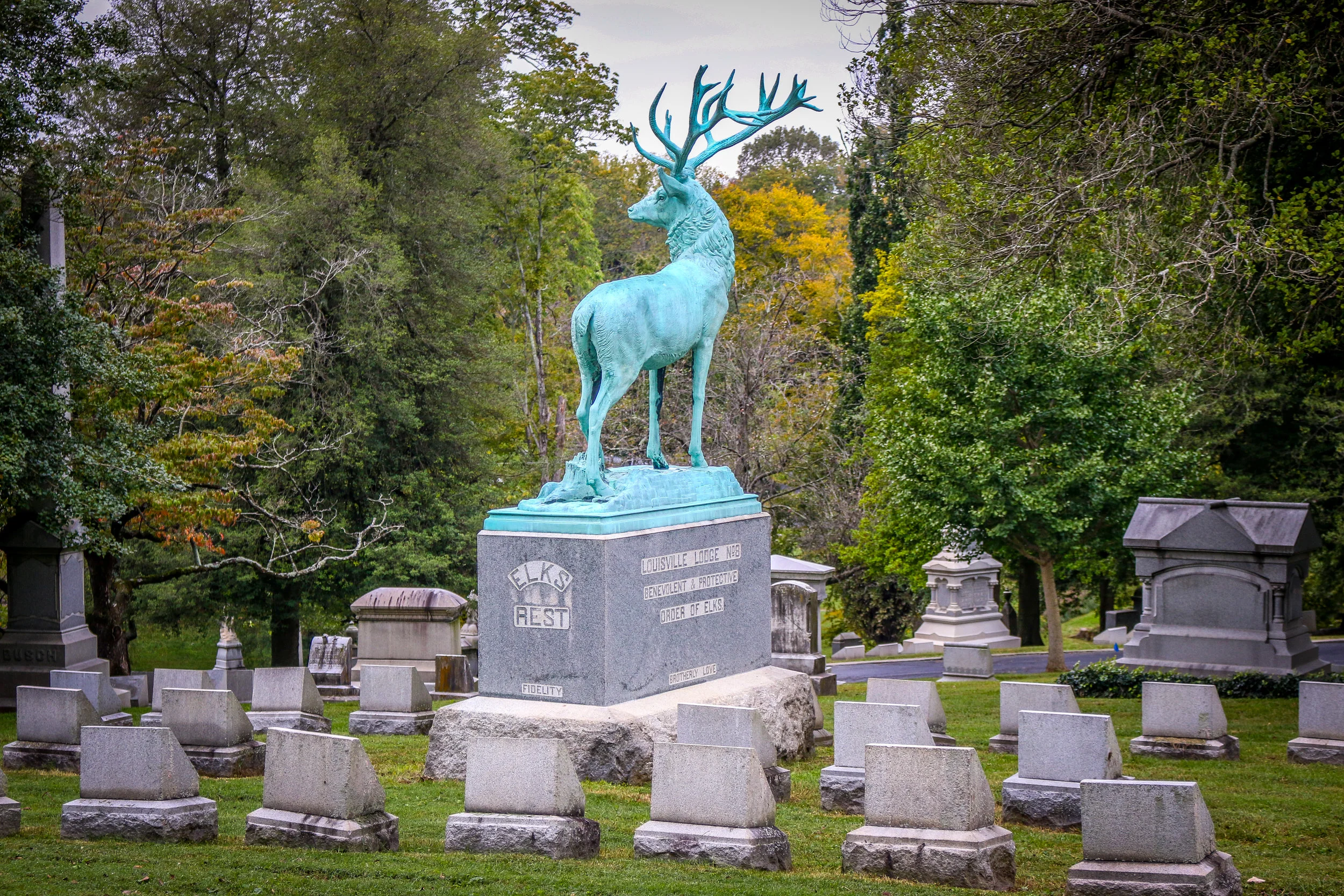
Louisville’s Cave Hill Cemetery was dedicated in 1848 and is the final resting place for over 120,000 people. During the Victorian Era and in a time before city parks were as prevalent as they are today, “garden cemeteries” were often designed and promoted for recreational activities. People would stroll down the winding lanes and maybe have a picnic by the lake. I like this idea and have always seen beautiful cemeteries as a nice place to walk and think and ponder life and death, a place to consider and draw from generations of people who came before us. Funerary art and statues are remarkable and often overlooked as a true art form. I spent several hours in Cave Hill over two visits, neither under the best of conditions for photography, but it was beautiful nonetheless. You will see photos of some of the famous people buried there like Colonel Harland Sanders, Muhammad Ali and Louisville founder George Rogers Clark. There are also lesser known people like Harry L. Collins, who was the official magician of Frito-Lay and Nicola Marschall who designed the official flag and uniforms of the Confederacy. Cave Hill is also a National Cemetery with graves for both Union and Confederate war veterans. It is a beautiful place to visit and was high on my list of sites I wanted to see in Louisville. I hope you enjoy my photos from Cave Hill.
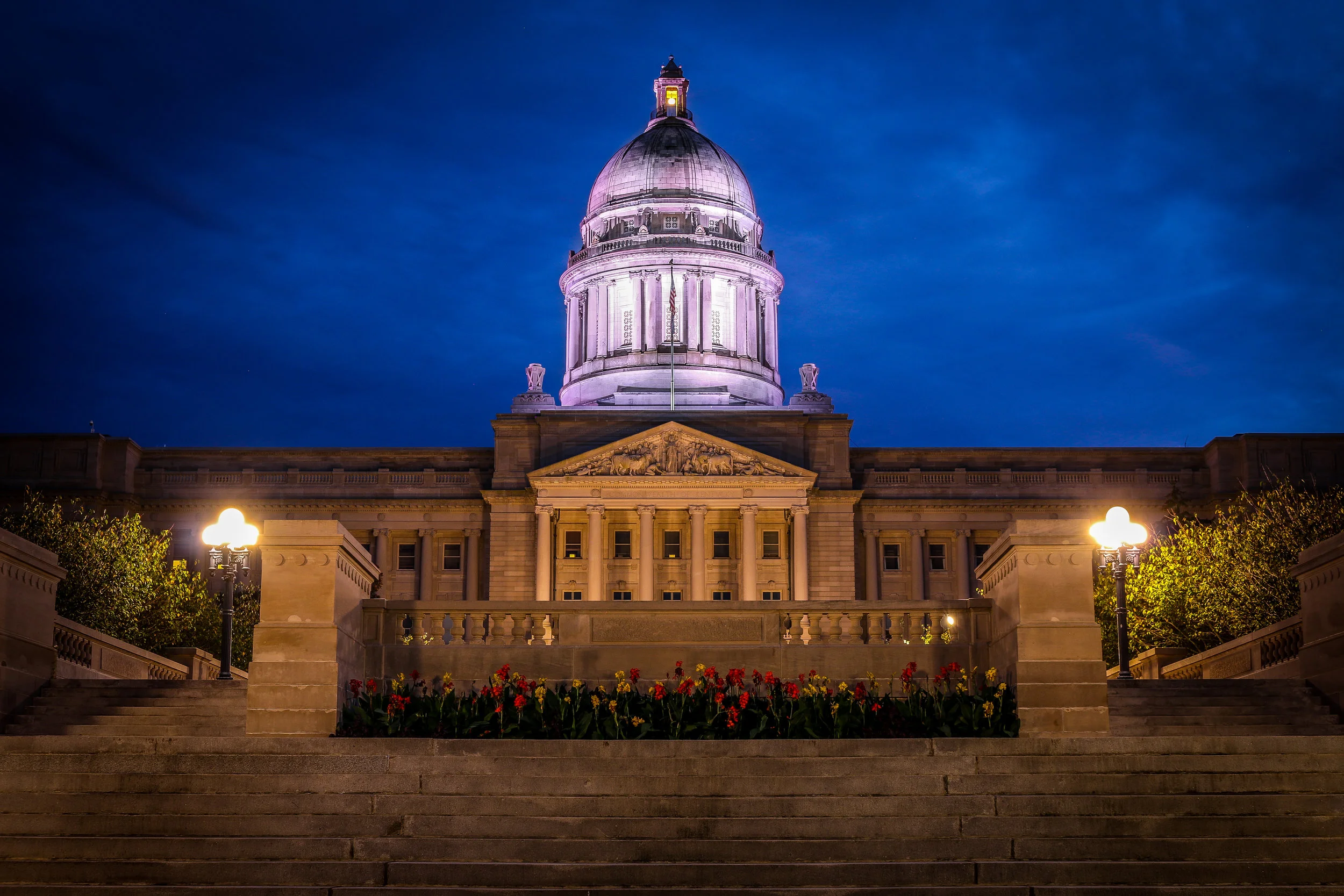
The “new” Kentucky State Capitol Building was built in 1910 at a cost of just over a million dollars. Designed by Frank Mills Andrews in the Beaux-Arts style, the beautiful Capitol sits high above Kentucky’s capital city of Frankfort. All three branches of the Kentucky government are housed within the Capitol building. The Capitol features a magnificent rotunda and some wonderful statues and artwork throughout. Entrance and tours are free. I hope you enjoy my photos of the Kentucky State Capitol…
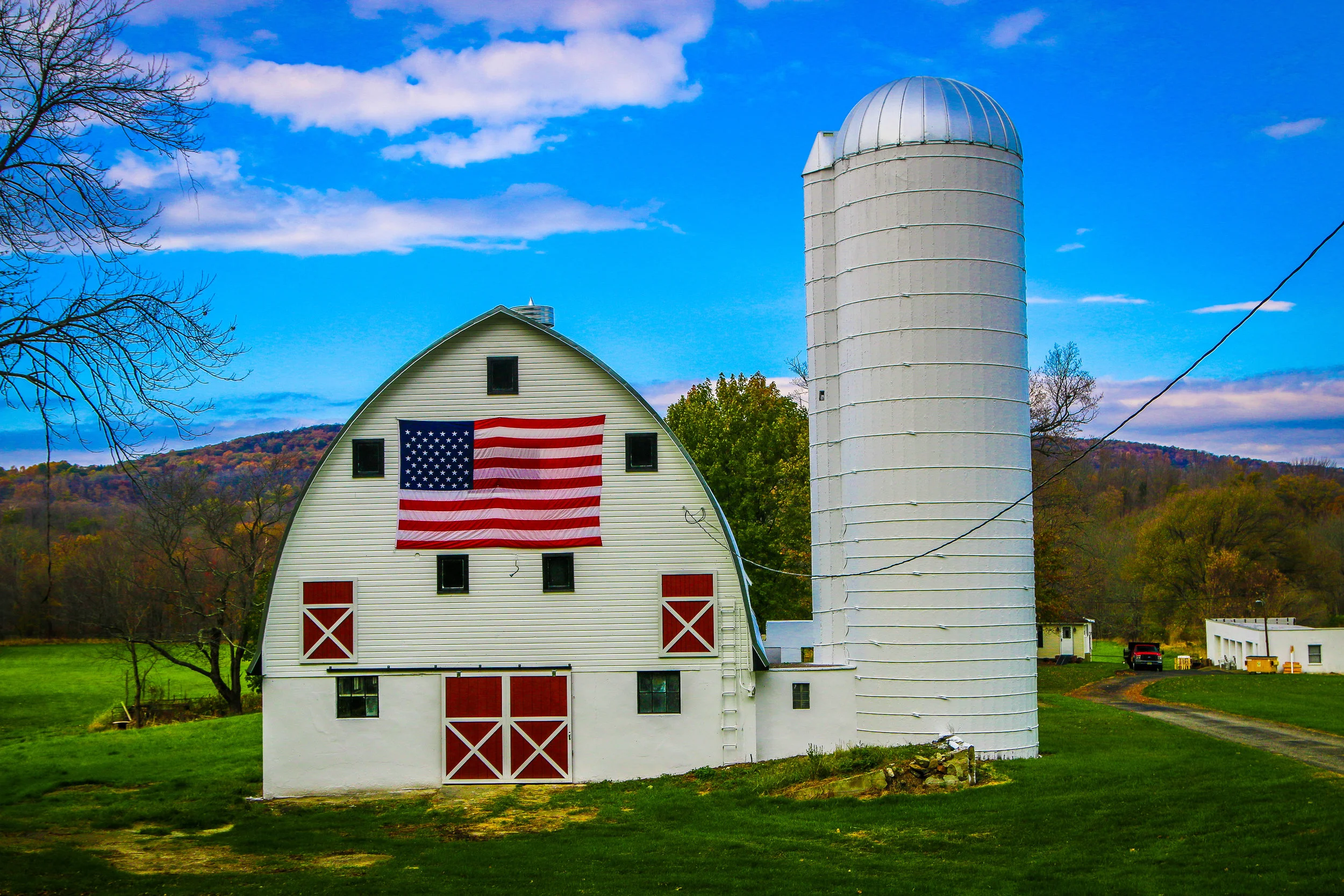
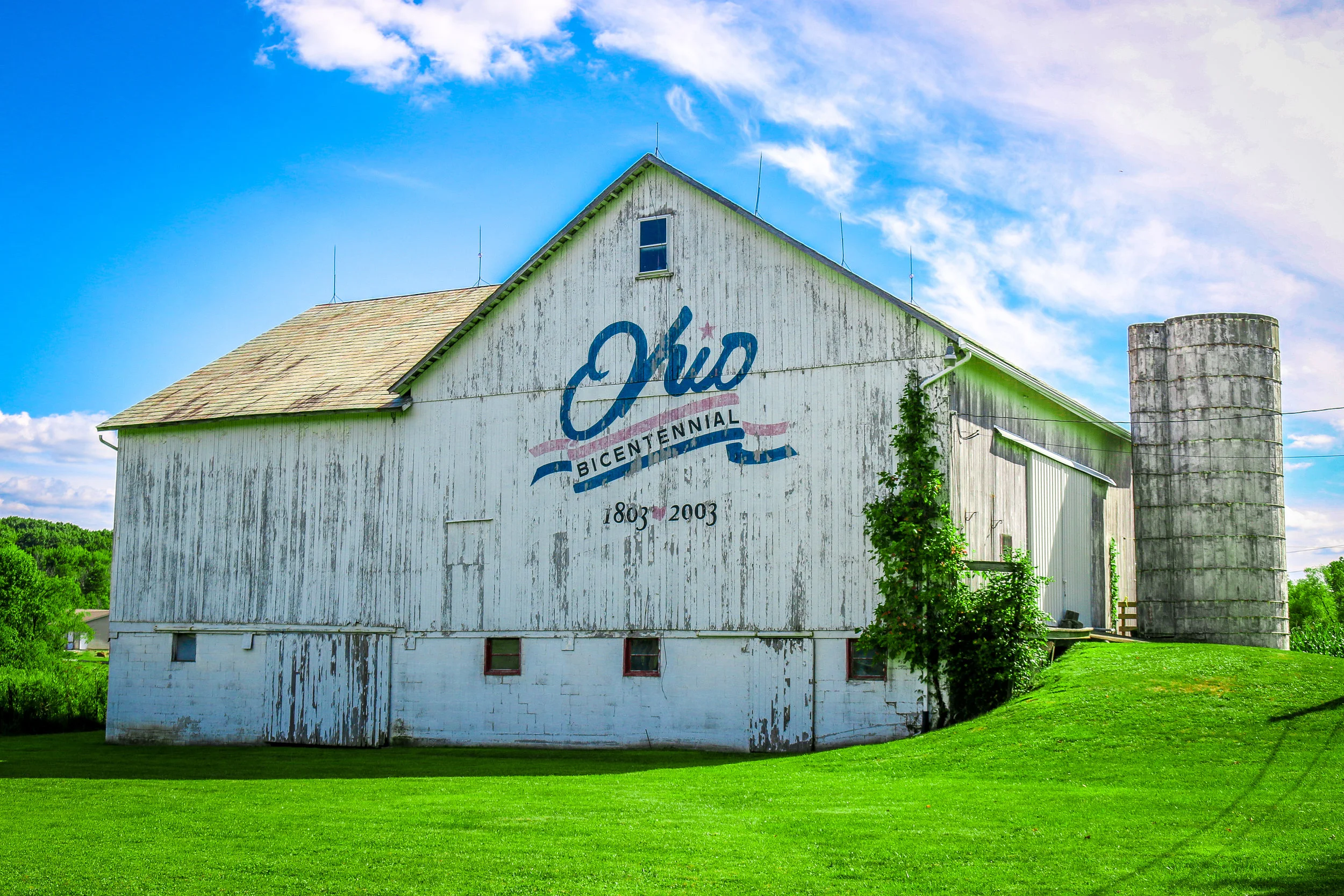
Starting in 1998, artist Scott Hagan set out to paint the Ohio Bicentennial logo on 88 historic barns, one in every county of the state. He completed the project in 2002 and when the bicentennial celebration began the following year, every county had its “Bicentennial Barn” proudly on display. You can still see many of these barns as you travel around the state today. Unfortunately I was only able to get these four photos in my travels around the Buckeye State, but every time I saw a Bicentennial Barn, it made me smile from ear to ear.
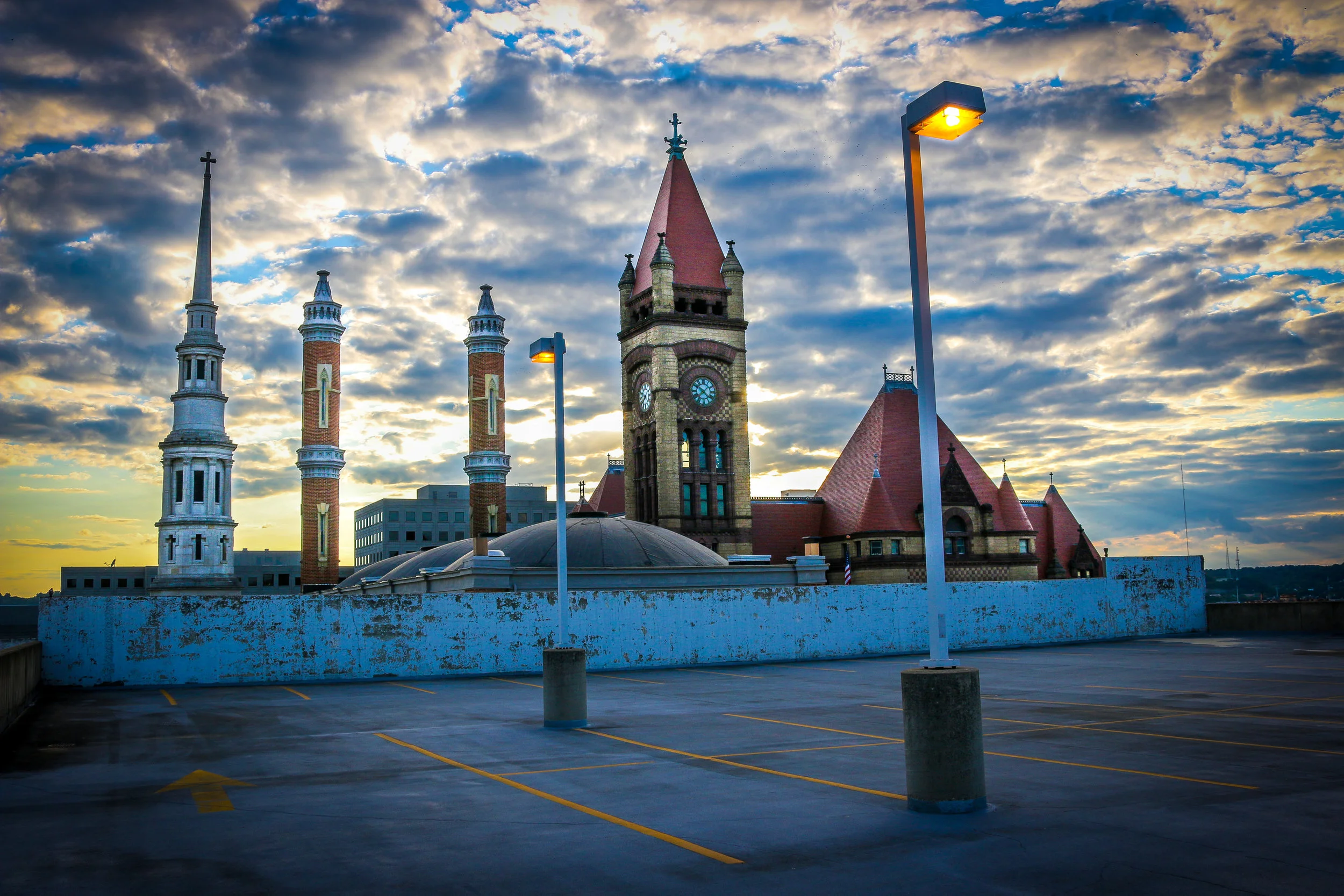
I really love these three photos from my time in Ohio. The top one is from Cincinnati, the middle one from Cleveland and the bottom one I took in Toledo. I love the vertical lines in them and how they have elements of old and new, modern and industrial. To me they speak of what I saw throughout my stay in the Buckeye State: a place holding onto its past but moving boldly towards the future.
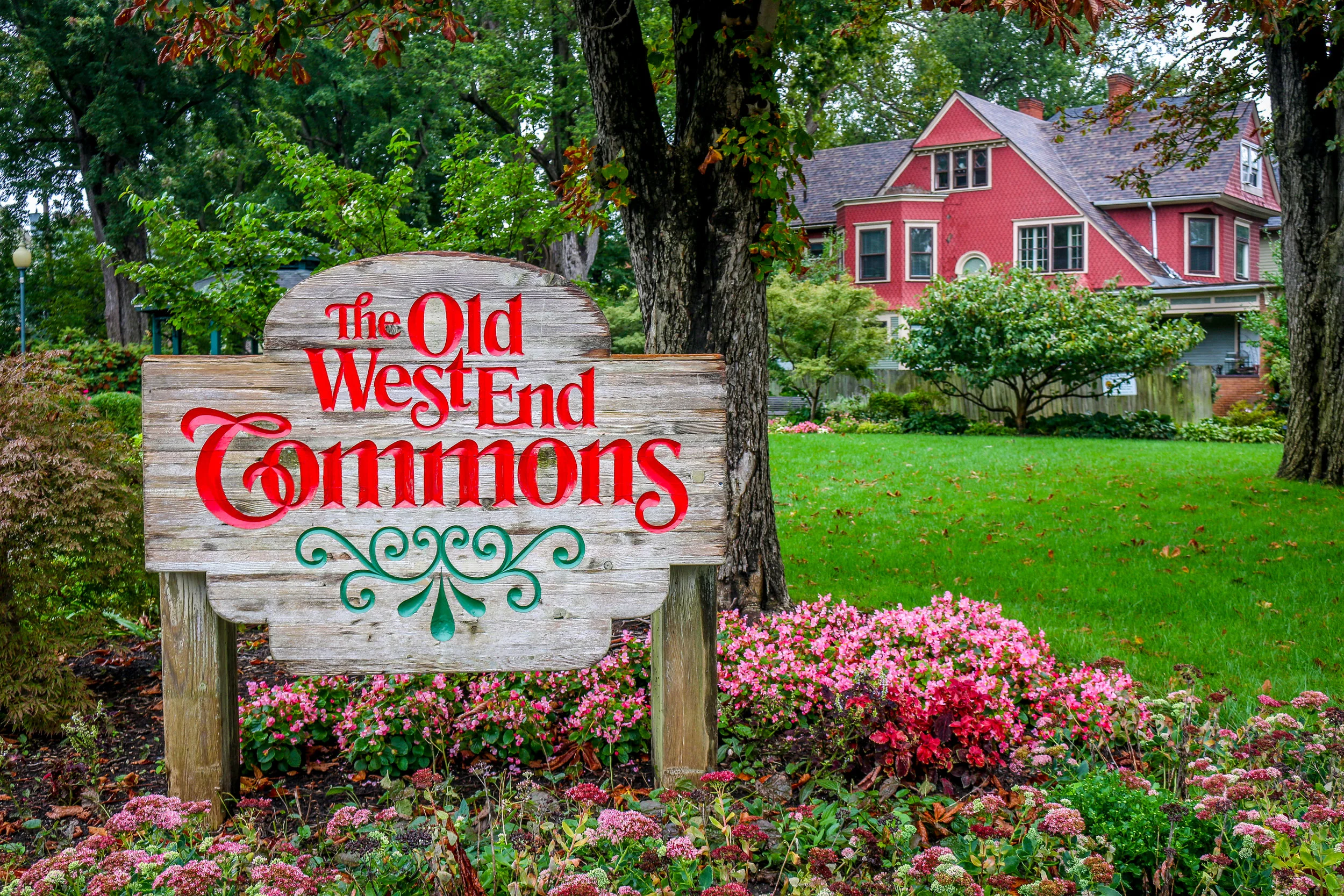
After the end of the Civil War, many of Toledo’s wealthiest residents began moving out of downtown and building houses “out in the woods”. This area developed over the next 50 years into the West End neighborhood, now called the Old West End. While it has ebbed and flowed over the years like most old neighborhoods, today it stands as one of the largest collections of intact Late Victorian Era homes in the country. It is a remarkable architectural gem, a living museum and a friendly and welcoming place for a visit. While I was walking around taking photos for this post, I met two long-time residents, Jim and Carol Kutsche, who you will see pictured at the bottom in front of their beautiful home. We sat on their porch for the better part of an hour talking about Toledo and the Old West End. The first day I visited the weather wasn’t in my favor, and the second the light was being difficult, but these photos still came out okay. It was too remarkable a neighborhood to pass by though, and I think you will definitely agree that many of these houses are real gems, even some which are in severe disrepair. If you are in Toledo, you must make time for a stroll around the beautiful Old West End.