I hope you enjoy this post with photos and history from Forest Hills, a beautiful neighborhood in Northwest Washington D.C.
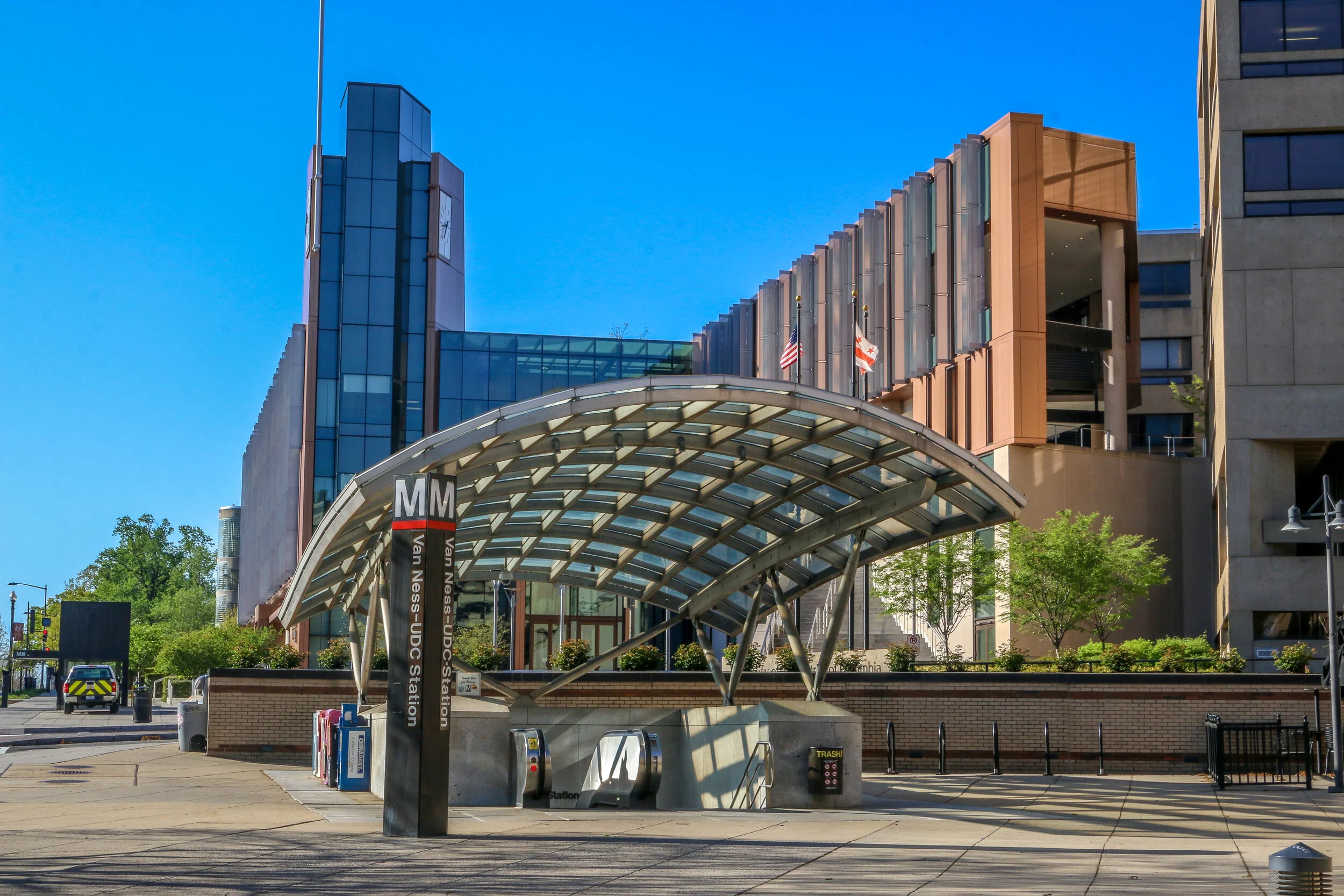
Resting quietly between Cleveland Park and Chevy Chase and bordered by Rock Creek Park to the east is the quaint neighborhood of Forest Hills. Those of us who grew up in the era of the Metro are probably more likely to think about this neighborhood as Van Ness/UDC. The station takes its name from Van Ness Street, the main cross street in the neighborhood, and the University of the District of Columbia. Since the northern border of the neighborhood is considered to be Nebraska Avenue, I grew up right across the street from Forest Hills.
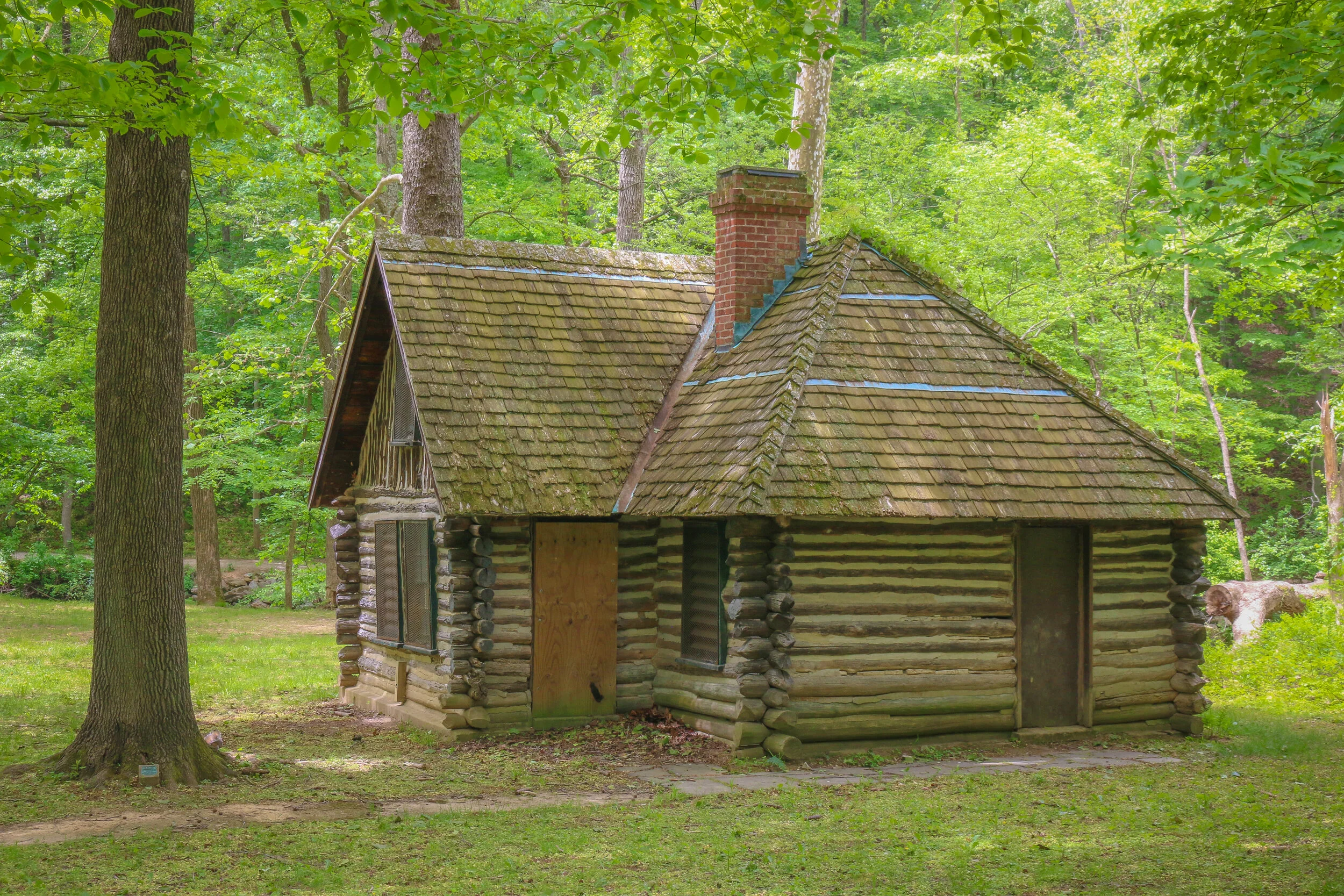
Once home to a Native American soapstone quarry, Forest Hills has quite an interesting history. In 1763, long before the creation of Washington D.C., Col. Samuel Beale was granted a tract of land by Lord Baltimore and named the area Azadia. Much of this tract would later be purchased by Isaac Pierce who would build his namesake mill along Rock Creek. In 1814, Revolutionary War veteran and retired land surveyor John Adlum bought a 200 acre tract of land in the area to start a vineyard. He named his estate Springland Farm and went on to become one of the first commercial producers of wine in the country (Adlum is buried at Oak Hill Cemetery in Georgetown). During the Civil War, Forest Hills was the site of Fort Kearny – one of the ring of forts protecting the Capital City…
Hello everyone, well we’ve made it through another week. I hope it’s been a good one wherever you’re reading this from today. Mine has been really good – probably the best I’ve had since returning home to D.C. now 2 months ago. After a positive start to being sheltered in place and having some free time to catch up on some work and try some fun stay-at-home hobbies, I really hit a downward spiral there for a while as claustrophobia and cabin fever kicked in. With the extended and indefinite closure of my industry (travel and tourism), I found myself staring out at an uncertain and challenging future. I usually keep my anxiety levels in check by being in control of certain aspects of the situation and then allowing the rest to unfold as it will. Under these circumstances, my environment is more controlled than usual, but there are thousands of moving pieces around the world that I have no control over, but which will help shape my near and distant future. I find that to be incredibly frustrating, and with limitations on how I normally deal with my frustration as the gym is closed, travel is limited and my camera is gathering dust.
I’m the kind of person who usually turns inward to sort things out, dealing with them in my own head with little or no outside influence. This week though, I’ve had a lot of outside influences help pull me up out of the mud. First I got some nice messages from some of y’all which is always appreciated. Believe me, I love to hear from you so don’t hesitate to comment or message me. Second, I met with a couple of different friend groups over Zoom which is always good. Third, I went to see some of my friends in person – masked and 10 feet apart, but it was still great to actually see people in the flesh. I hate the fact that I’m home and can’t see my friends or their kids, and this was a chance to at least pop around and say hello. And lastly, my mom came up with a plan to get us out of the house and provide some outlet for being stuck at home indefinitely.
Last Thursday, we went for a walk in Rock Creek Park, the large green space which surrounds its namesake creek through the middle of the city. We took a look at the earthworks that were once Fort DeRussy…
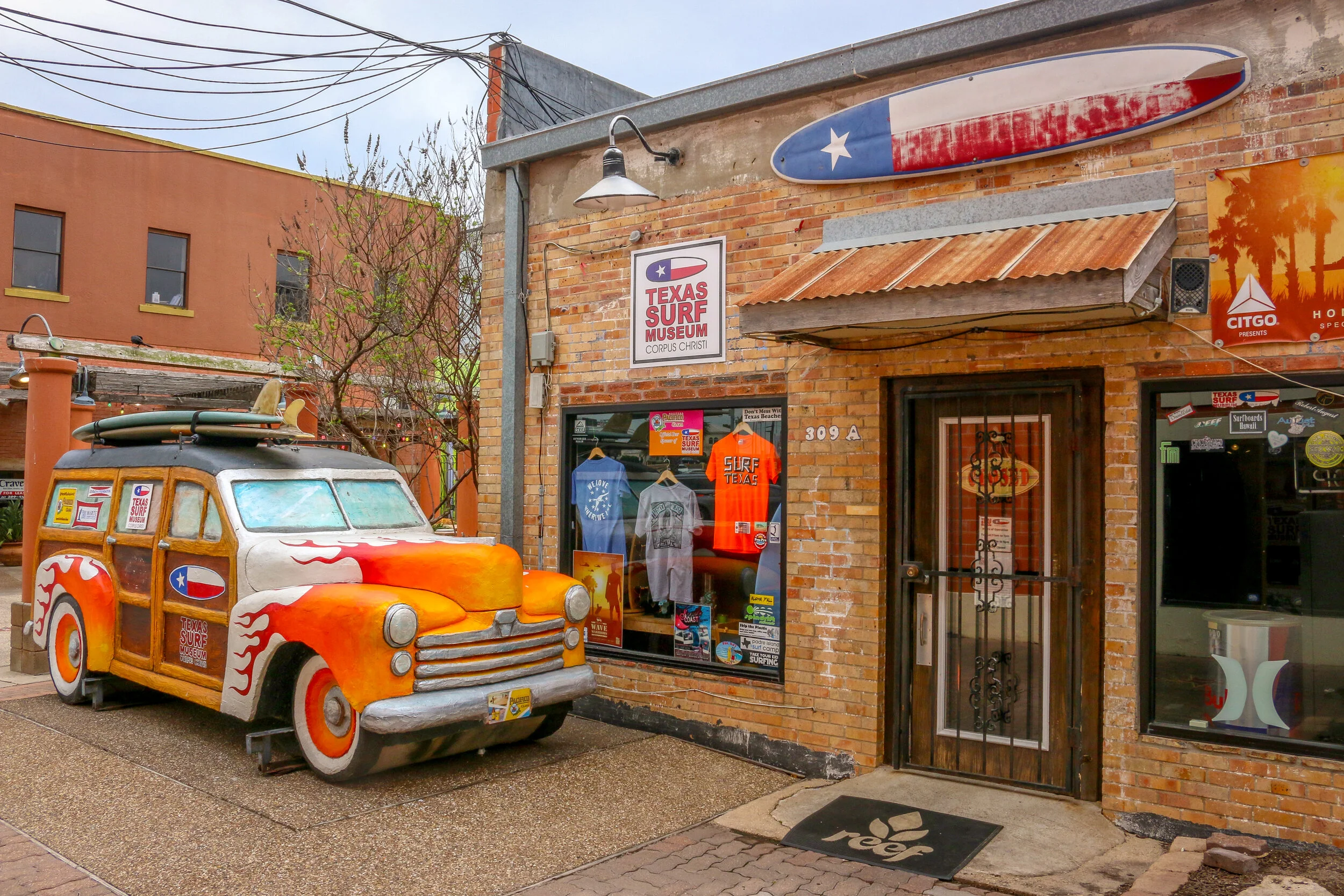
Corpus Christi’s Marina Arts District is a wonderful story of urban renewal and public art. When Terry Sweeny moved to Corpus Christi in 2014, he found a city, like so many others, which had sold its soul to suburban sprawl. He also saw an area with tons of potential and set about trying to revitalize downtown. He joined forces with Brad Lomax, who had been working on revitalizing downtown Corpus Christi for years, and a dedicated group of like-minded citizens. The result is staggering. The colorful murals and public art projects make downtown look clean, sharp and vibrant. If you look closely enough, you’ll see that there are still plenty of empty storefronts looking for an opportunity to be resurrected, but they are hard to spot as your eyes are constantly drawn elsewhere. My favorite part is the wonderful seawall walk overlooking the marina on one side, and the Arts District on the other.
I enjoyed my time in the Marina Arts District even though I was there right as everything was closing up shop for a while due to the coronavirus. As I wandered around taking these photos, I heard wonderful music echoing up and down the empty streets. When I finally found where it was coming from, I sat for a few minutes to listen to the performance of a wonderful street musician in front of the shuttered Executive Surf Club. I needed a few songs in my day to blow thoughts of the virus away, and he gave me hope with his music. And hope is a wonderful thing. It is, in fact, the only thing more powerful than fear. I know I’ll be back in Corpus Christi at some point when all of this has blown over. I’m looking forward to it already.
Hello everyone, I hope this update finds you all well. Although I had been socially isolated for almost two weeks before traveling home to DC, this was my first full week sheltered in place. To be honest, it was a pretty good week, the terrible news on TV notwithstanding.
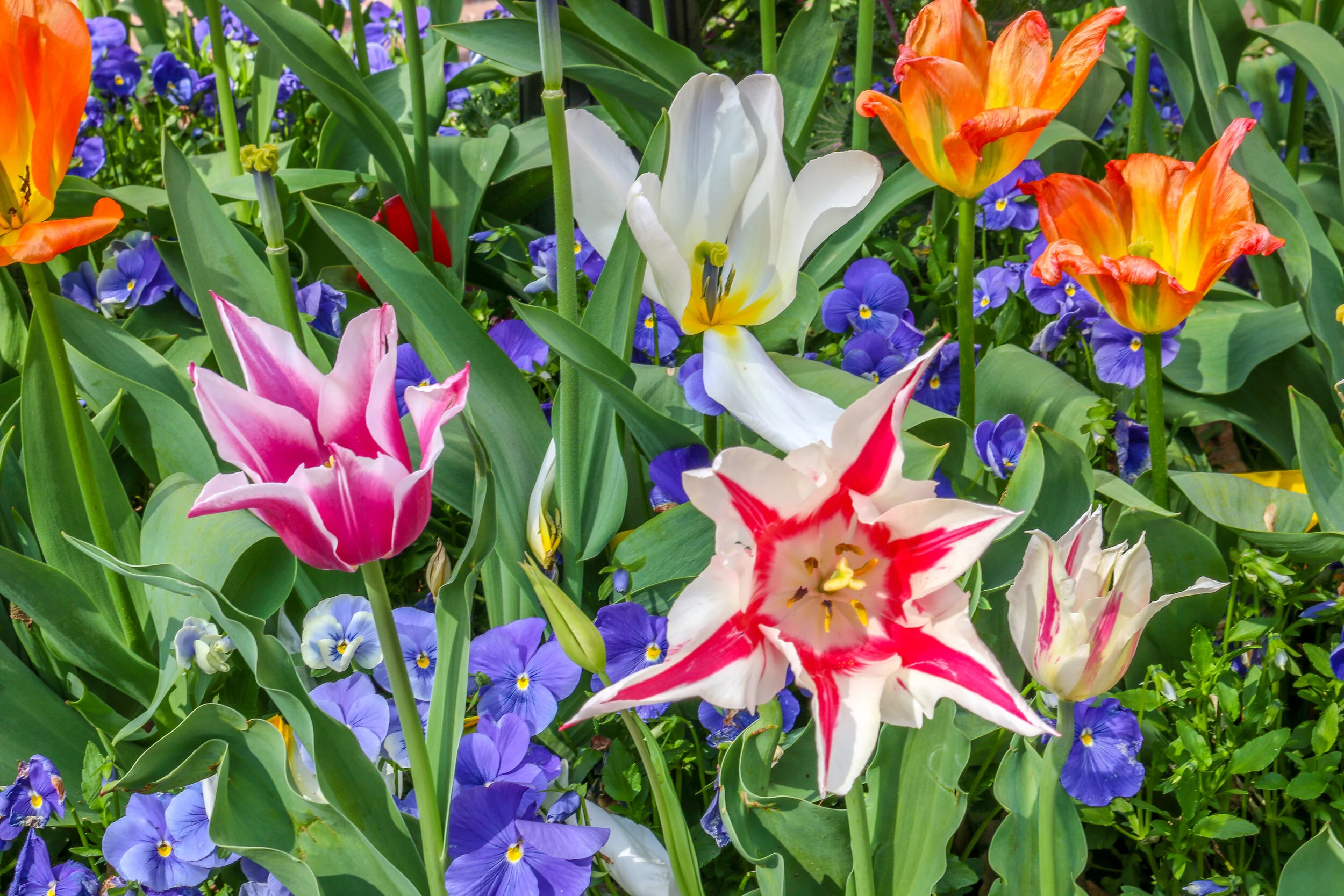
It’s springtime here in DC, and the days have been really nice and the nights cool but pleasant. The spring flowers are in bloom and are exploding with color all over our neighborhood. While DC is known for the cherry blossoms around the Tidal Basin downtown, there are actually plenty of them throughout the city. The tulips are fantastic and my mother’s azaleas are in full bloom. Because the traffic is so minimal right now, the air is cleaner and you can actually smell the flowers when you’re outside. It’s a wonderful sensory experience. The flowers are definitely brightening my days and helping keep my spirits up.
The city is very quiet right now, which I’m also really enjoying. Most people who live in touristy areas will tell you their favorite time of year is the off-season, when things quiet down and they get their town back for a while. In DC, we like the holiday weekends because the transient population goes home, and the traffic dies down and the city rests for a few days. It’s been like Memorial Day Weekend since I’ve gotten back, and I’m loving it.
Like many towns in America with Spanish Colonial roots, Goliad started out as a presidio (fort) and mission, both located on the San Antonio River. Presidio La Bahia and Mission Nuestra Señora del Espíritu Santo de Zúñiga had originally been located elsewhere, but were moved to their current location in 1749. One of the first schools in Texas was founded nearby in 1804. During the Mexican War for Independence, the presidio was a strategic target and changed hands between the Spanish loyalists and Mexican rebels several times. In 1829 La Bahia, the village which had grown up near the fort, changed its name to Goliad, an anagram of the name Hidalgo (minus the “H”) in honor of Father Miguel Hidalgo, a hero of the Mexican Revolution.
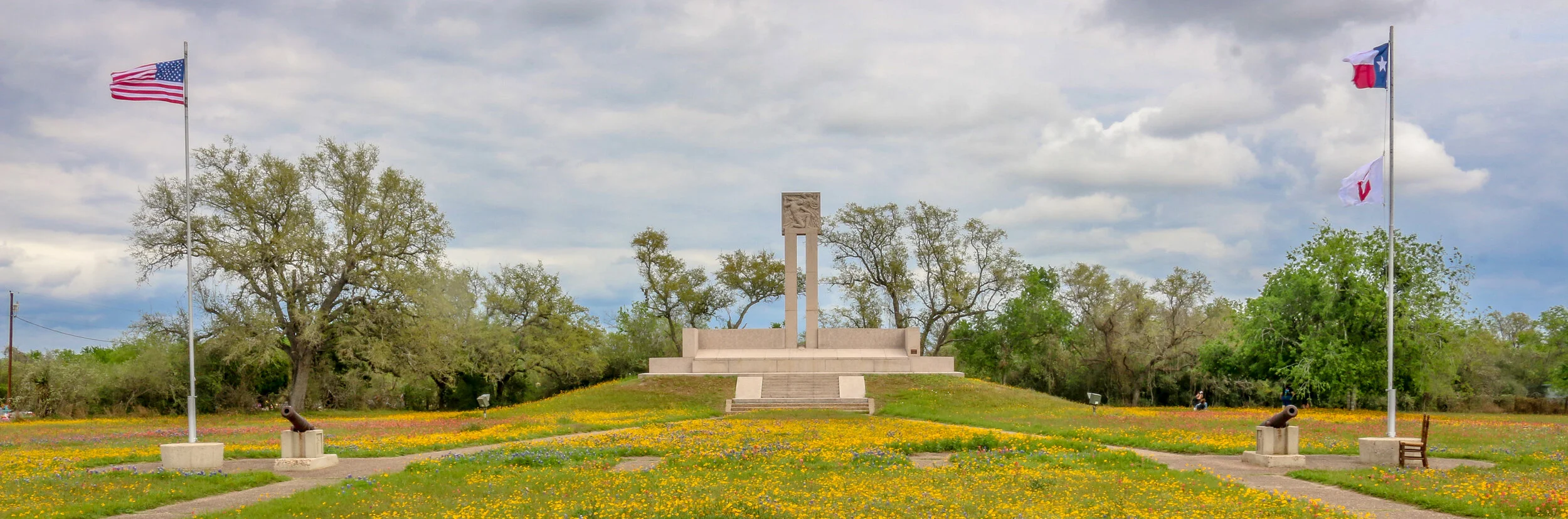
In the opening days of the Texas Revolution, American mercenaries captured the fort and held it for six months. It was within the fort’s walls that the first Texas Declaration of Independence was signed. In March of 1836, the American garrison, under the command of Colonel James Fannin, was defeated at the nearby Battle of Coleto. Under the agreement that they would be treated as prisoners of war, they surrendered and were marched back to the fort. A week later, on Palm Sunday, under the orders of Mexican President Antonio Lopez de Santa Anna, 342 of these men, including James Fannin, were marched out of the fort and executed. Just over three weeks after the massacre, at the decisive battle at San Jacinto, Sam Houston rallied his troops with cries of “Remember the Alamo, Remember Goliad” as he led his rebel army on to victory and Texas independence…
Port Lavaca is a lovely and quiet port town on Matagorda Bay and serves as the county seat of Calhoun County. Originally named simply La Vaca (“the cow”), the town was laid out in 1840 after Comanche raids forced people to abandon their homes in nearby Linnville. In addition to the port, the newly laid out town became the coastal terminus of a stagecoach route from Victoria, and eventually connected to the San Antonio and Mexican Gulf Railroad. In the early days, they did a fair trade in not just cattle, but also cotton, wool, pecans and precious metals. La Vaca lost its role as County Seat to nearby Indianola in 1852 but after a terrible hurricane hit the coast in 1886, it was moved back to La Vaca and remains there today. The port still plays a major role in the town’s economy, as do fishing and shrimping, but manufacturing employs many of the town’s residents today. I enjoyed my short stay in Port Lavaca with its charming downtown, beautiful marina and friendly people. I can see why locals refer to their hometown as “Paradise on the Bay”.
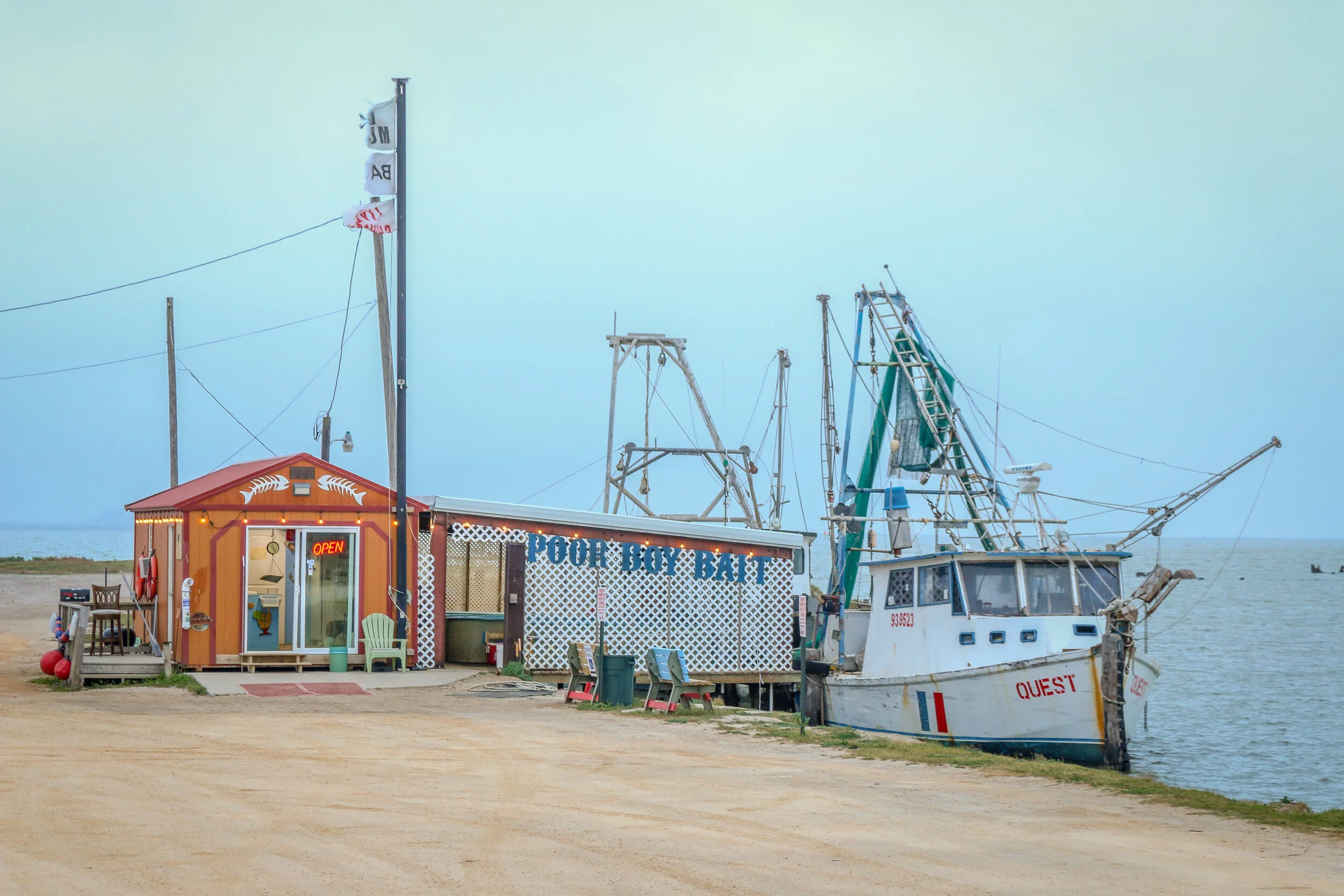
Originally home to the Karankawa people, Palacios was first settled by Europeans in the 1820s. In 1901, the land was purchased by a development company, divided into lots and sold to people looking to settle along the beautiful coast of the Gulf of Mexico. The Southern Pacific Railroad came through about the same time, providing overland access to the town-site. Over the next 20 years, the town grew as a resort community, and many businesses opened their doors to provide for the tourists flocking to the beaches. After World War I, a National Guard base called Camp Hulen opened nearby. The camp would be taken over by the War Department in World War II, eventually accommodating almost 15,000 soldiers. The base was also the site of a POW camp during the war. In the years following the war, Camp Hulen was closed and in 1961 Hurricane Carla slammed into the coast causing major damage. Today, Palacios is a quiet, pleasant seaside community of about 5,000. Home to about 400 shrimping boats, it has been called the Shrimp Capital of Texas. During my visit I found it quiet enough to enjoy its small-town tranquility but bustling enough to know it’s still alive and well. I had only planned on stopping for a few minutes to enjoy some sun by the water, and ended up staying most of the day, taking these photos, enjoying the views and chatting with the locals. I hope you enjoy these photos of Palacio, Texas, Matagorda County’s City by the Sea.
Hello Everyone, I’m sorry I haven’t had the chance to post anything these last two weeks, but it’s been quite a strange time. Two weeks ago I was writing to you from Texas with every intention of pushing on with this journey, come what may. I was well stocked with food, water, fuel and everything else I needed to survive for at least a month if need be. I headed south to South Padre Island where I holed up for almost a week, keeping my distance from everyone and everything and trying to read enough to make some educated decisions about what to do next. The beach was beautiful, and warm, and quiet and I enjoyed my daily walks, reading my books and enjoying a private Happy Hour with my feet in the sand every day as the sun went down. As I came to understand the coronavirus, how it was likely to spread and the best ways to minimize the damage it would cause, I realized we were going to be in this for way longer than a couple of weeks. I also read a post from a friend of mine who had contracted the virus and what that experience was like. While he is on his way to a full recovery, I realized that what he went through was not something I wanted to experience while living in the back of my van in 80 degree temperatures. To compound the situation, one of my teeth broke the night I arrived on South Padre, and while I was lucky to be able to get an emergency root canal in nearby Brownsville, I got in on the last day the dentist would be open. I was blessed to get this taken care of, but it made me realize how precariously perched I was so far from home during a worldwide crisis. Reading more, I came to realize that the governor of Texas was not putting into place the appropriate measures and was lagging way behind other states in that regard. I also came to understand that while there were no reported cases in that part of Texas, there was also almost zero testing going on which created a false sense of security. That all being said, I was truly impressed with the measures the local governments were enacting there on South Padre and in surrounding towns, closing all non-essential businesses and laying out simple to understand policies to keep their citizens safe. Finally, the day before I was going to splurge for a hotel room for the night, clean up and write my weekly This Week post, that same local government issued a Shelter in Place order. I couldn’t pay for a hotel for weeks on end with no end in sight, and I couldn’t sit in my van all day either. I could move on, but with nothing open it would be somewhat futile so what would be the point? As difficult as the decision was, it became clear that heading towards home was the safest, most responsible decision, so we fueled up and started on the 30+ hour drive back to Washington D.C.
Hello Friends, boy what a difference a week makes, huh? Last week at this time things were very different than they are now. While the coronavirus was definitely making news a week ago, over the course of this week whole countries have been shut down. American travel restrictions have gone into place and cities have started to shut down non-essential businesses. Grocery shelves are bare across the country and while panic hasn’t set in yet, at least here in Texas, some of the big cities on the coasts are on high alert. New phrases like “social distancing” and “self-quarantine” have entered our lexicons, and people are, and should be worried. To read about my plans and what life has been like this week and also to get an understanding of the importance of some of the public buildings I use on a regular basis, please be sure you read my post on the coronavirus HERE. I was also sad this week to see that the Trace Theater in Port Gibson, Mississippi, which I had photographed just a few weeks ago, had caught fire and burned out pretty badly. In addition, it was the 9 year anniversary of the tsunami which rocked Japan and started the Fukushima mess - another tragedy I lived through as I was teaching in rural southern Japan at the time. It’s been a tough week out here. I decided to finally finish watching Treme, the HBO show about the rebuilding of New Orleans after Katrina, something else I was a part of for two years, and it reminded me that this too shall pass and soon this will just be a memory.
Very soon after I hit “Publish” on last week’s This Week on the Road post, my friend Christian called to tell me the Houston Rodeo had been cancelled for the rest of its run over concerns regarding the coronavirus. I’ll admit I was pretty disappointed because I was looking forward to it, but it seems now like it was for the best. There will be other rodeos in the future, and better safe than sorry in a case like this.
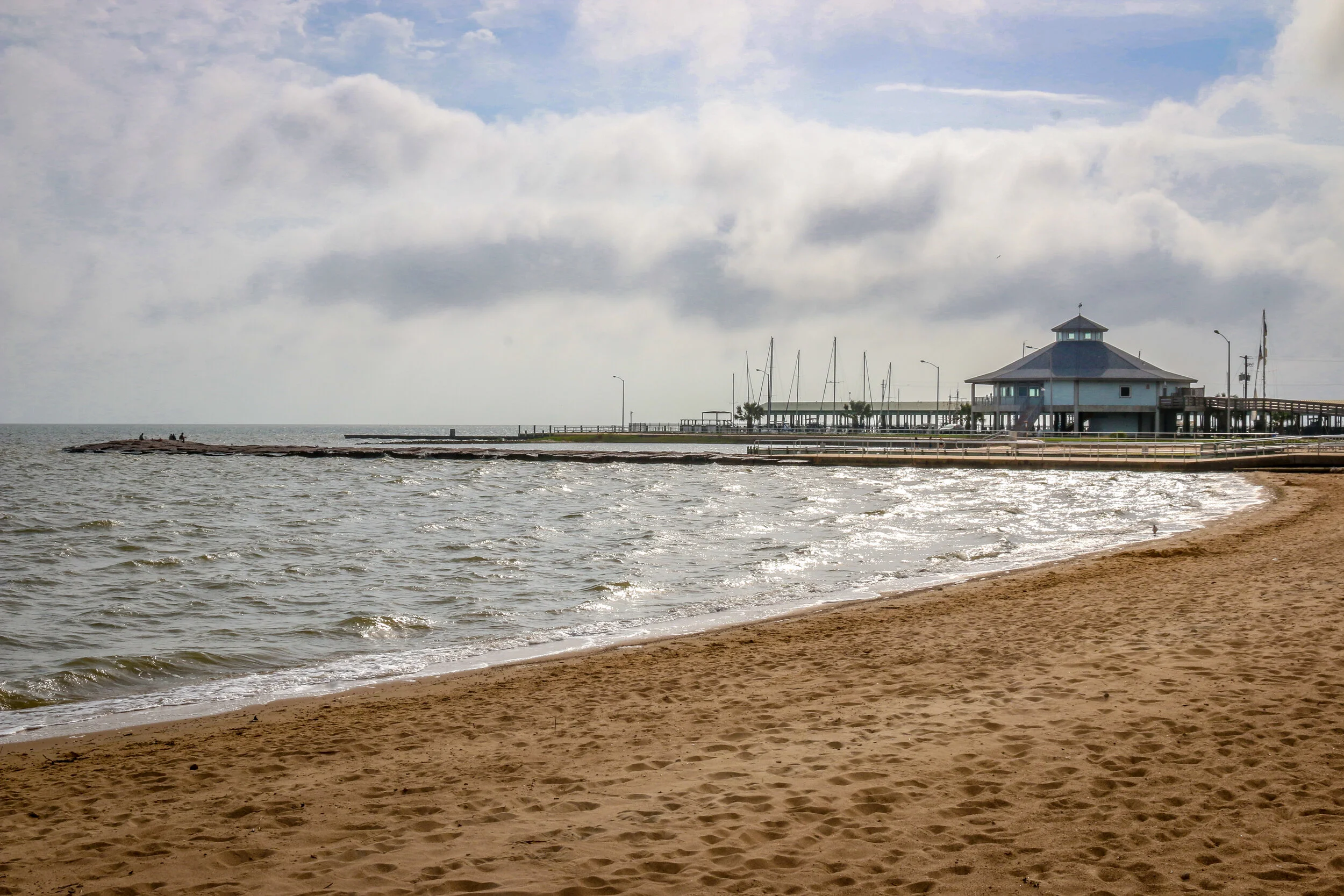
When I found out about the rodeo, I decided to pack up and head out of town. I made my way south to Galveston Island on the Gulf Coast. I had spent some time in Galveston before, but many years ago. It’s a beautiful place with an old, historic city on the bay side and a decent beach on the gulf side
What exactly is Galveston? Is it a typically Southern town? An island with a beach vibe? An historic port city like New Orleans? A Texan town? The answer to all of those is “yes”. Galveston is a fascinating place with so much to offer. Even after a few days there I felt like I had only begun to scratch the surface of the Queen City of the Gulf.
The first non-natives to inhabit Galveston came in 1816 with the pirate Louis-Michel Aury. When Aury went on a raid the following year, he returned to find that the island had been occupied by the infamous pirate Jean Lafitte. Lafitte set up a “Pirate Kingdom” there and remained with his people for the next 5 years. The Port of Galveston was established under the Mexican government in 1825, and the town would serve briefly as the capital of the Independent Republic of Texas in 1836. Galveston, along with the rest of Texas, joined the Confederacy during the Civil War and became a target due to its major port…
Hi Everyone, I feel like everyone else is speaking their piece on the topic, so I thought I would update you all on my status and my plans for the coming period of time as the country and the world deals with the pandemic caused by the COVID 19 coronavirus.
First and foremost, I am safe and sound and healthy. As I write this, I’m currently in Corpus Christi, Texas and there are, as of now, no reported cases in the city or in surrounding Nueces County. The hospitals are preparing to offer testing to anyone who meets the criteria to get one and respond accordingly. The stores have weathered the initial storm and while the toilet paper and hand sanitizer supplies have been depleted everyone remains civil and courteous. I think the fact that the Gulf Coast has had its share of hurricanes and tropical storms over the years leaves it a little less likely to react over-zealously. I have made some rounds and stocked up for myself with enough food to last for several weeks if the need arises. I have plenty of water, a full propane tank and yes, I even have enough toilet paper to last me if necessary. Most of my equipment, from my camera to my computer, can run or be recharged on board my van. We’re pretty self-sufficient at this point. In short, I’m good for the foreseeable future when it comes to supplies. Also, for those of you who don’t know, my mother is a nurse so I’m getting expert professional advice on keeping safe and healthy.
I’m pretty good at the whole idea of “social distancing” and have lived most of my life in at least a somewhat isolated space. I rarely get the flu because I’m rarely in that close a contact with anyone. But I cannot park and hide out in my van for the next few weeks or months. I would lose my mind and that’s too much to ask. I don’t think driving 24 hours to get home would be very helpful either as I think I would be putting my folks at risk just being there and I would be putting myself in a far more concentrated area than I’m currently in. It seems the more spread out people are, the better situated to deal with this. So for now, I’m staying put, and by that I mean I will continue on this journey albeit on a modified course with an eye towards safety always.
I’m keeping updated on the news but trying not to overdue it. I think many people aren’t listening critically and seem to be making up their own version of what’s going on. On the one hand, some people have watched too many disaster movies and feel like the apocalypse is upon us. It is not. Others think this whole thing is a hoax or a test or something significantly less serious than it is. It is not that either. It is a time for caution and a time to pay attention to real doctors giving out real advice. People have lost faith in the media and while some of that is deserved, there are still good reporters doing real coverage out there. Try and keep informed the best you can, and as a general rule it’s better to err on the side of caution…
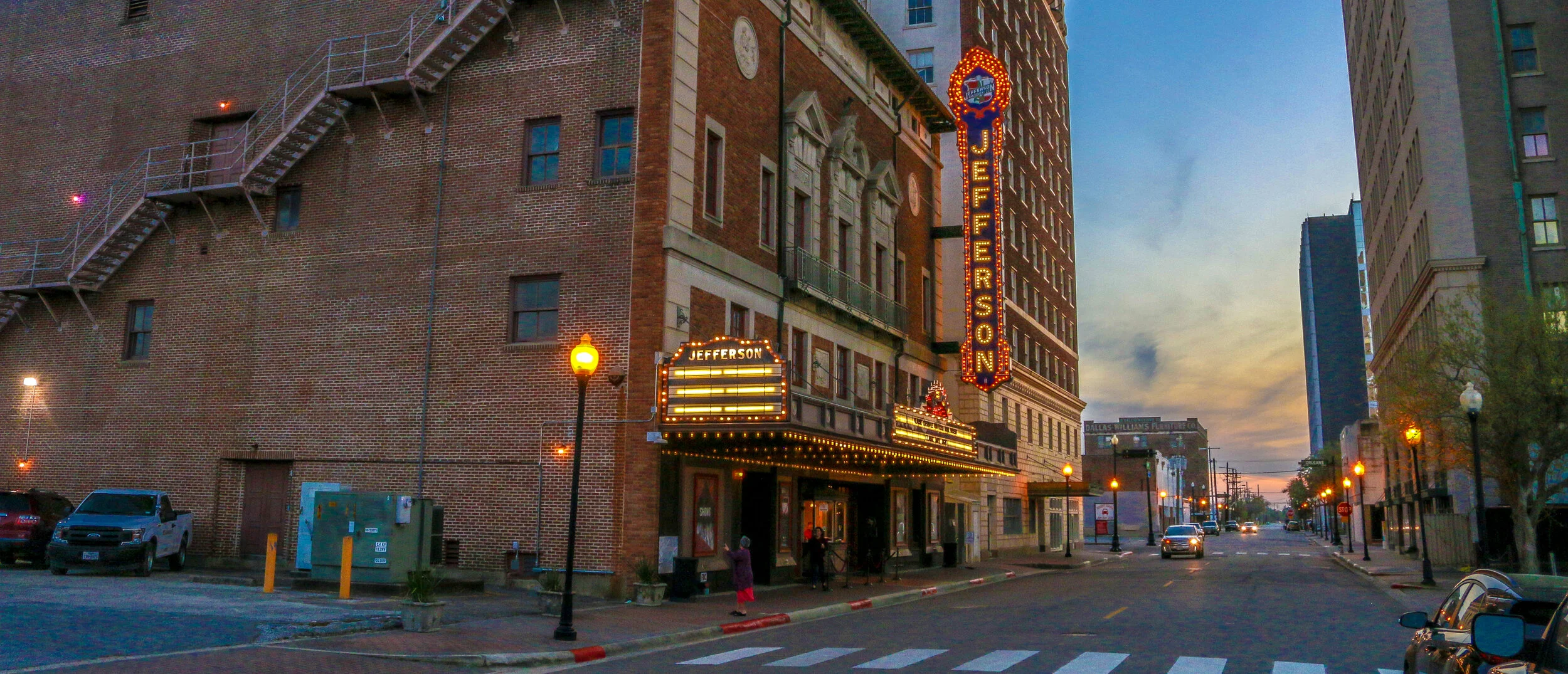
Beaumont, Texas traces its roots back to 1824 when Bobby and Nancy Tevis settled on the Neches River and built a small farm. A community grew up around them called Tevis Bluff. Developers Henry Millard, Joseph Pulsifer and Thomas Byers Huling purchased all of the land in the area in 1835 and began selling lots in a town to be called “Beaumont” after Henry Millard’s wife Mary Beaumont. Lumber, cattle and rice were early drivers of the local economy, as was the port which got these products to market. That all changed in 1901 when oil was discovered at Spindletop, and America’s first oil field was developed right there in Beaumont. The town’s population tripled almost overnight and oil has been the city’s main economic driver ever since. Today, Beaumont is a quiet city of about 120,000 people, with most living outside of the downtown core. I found the city to be charming, with a lot of great historical buildings. My favorites were the Jefferson Theater and Tyrell Historical Library. I was sad to see that despite some wonderful efforts at reviving the downtown area there didn’t seem to be much going on there during my visit. Regardless, I enjoyed my stay in Beaumont and it is definitely a city I will return to in the future.