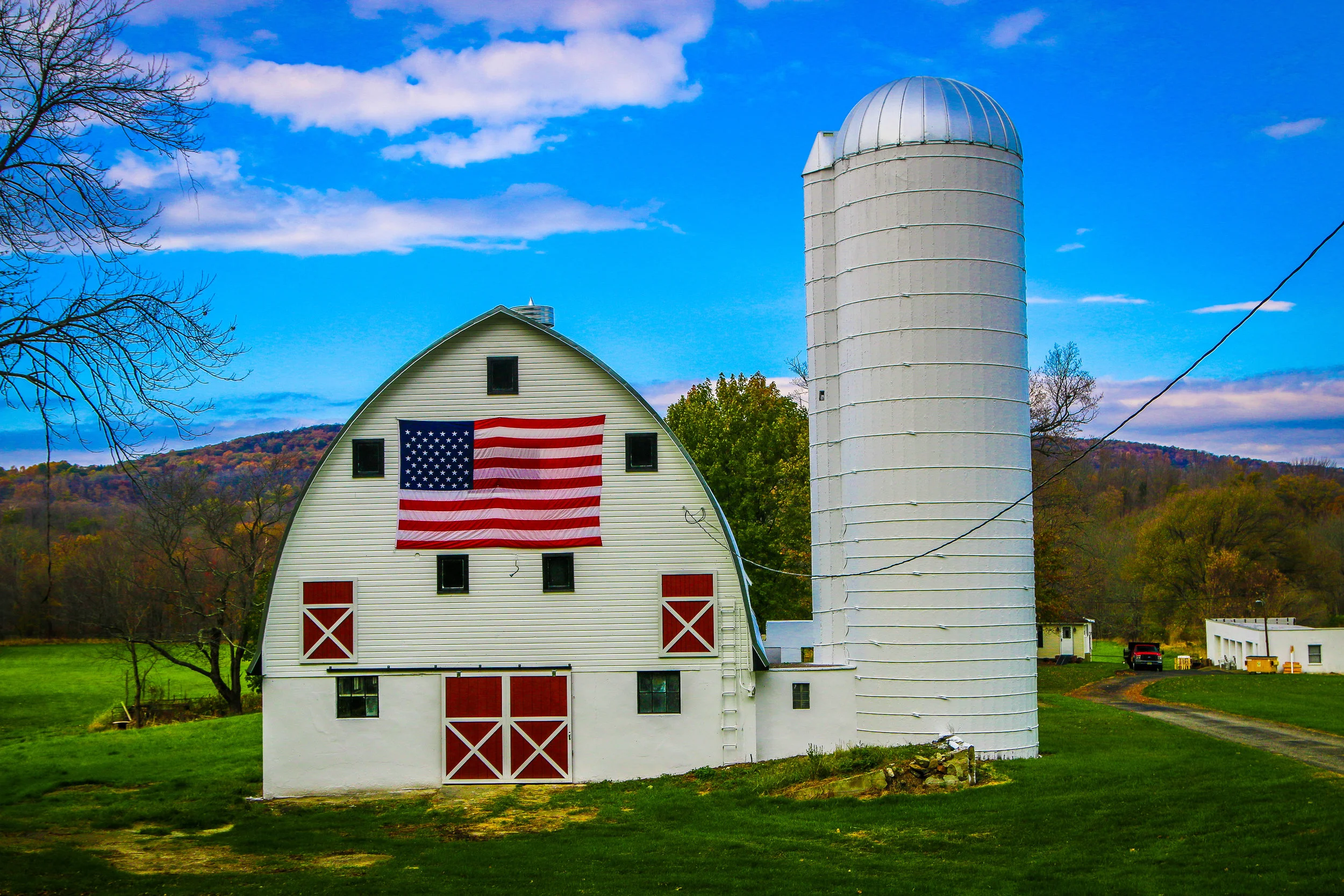
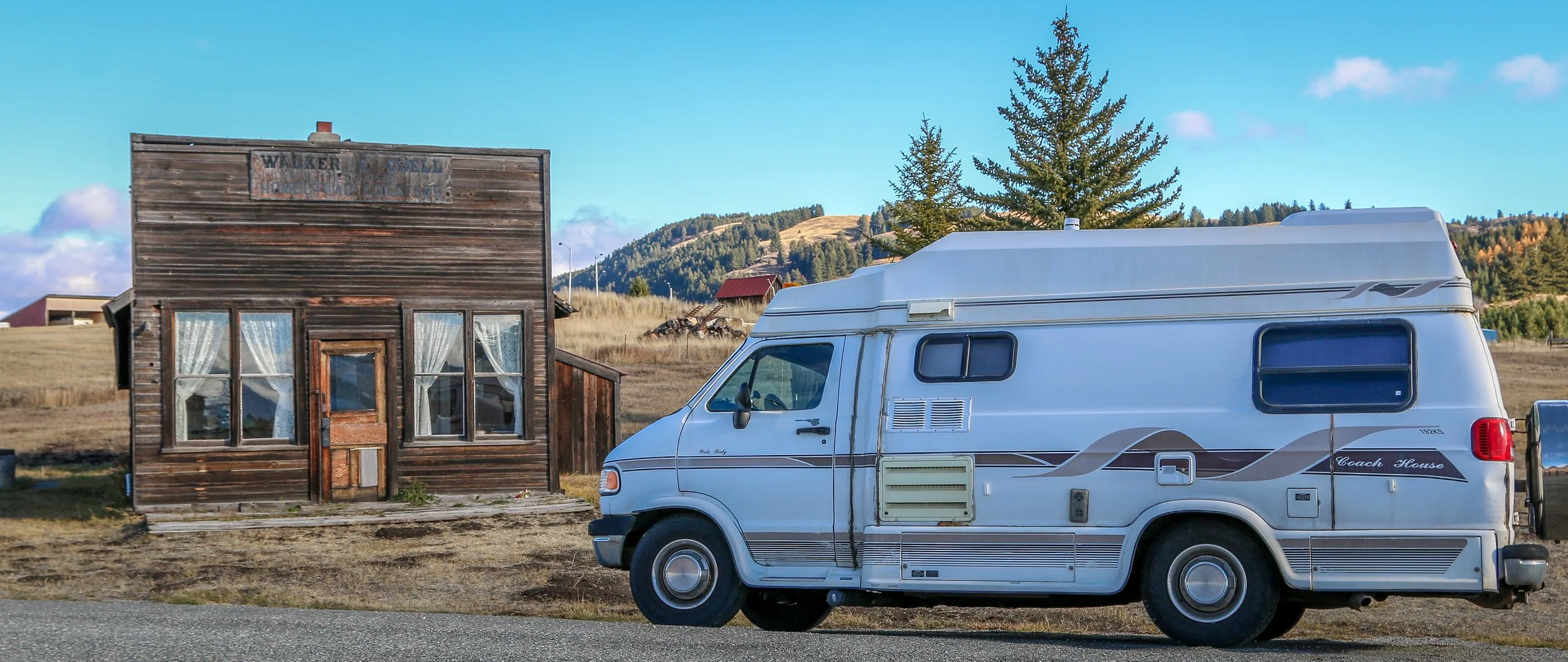
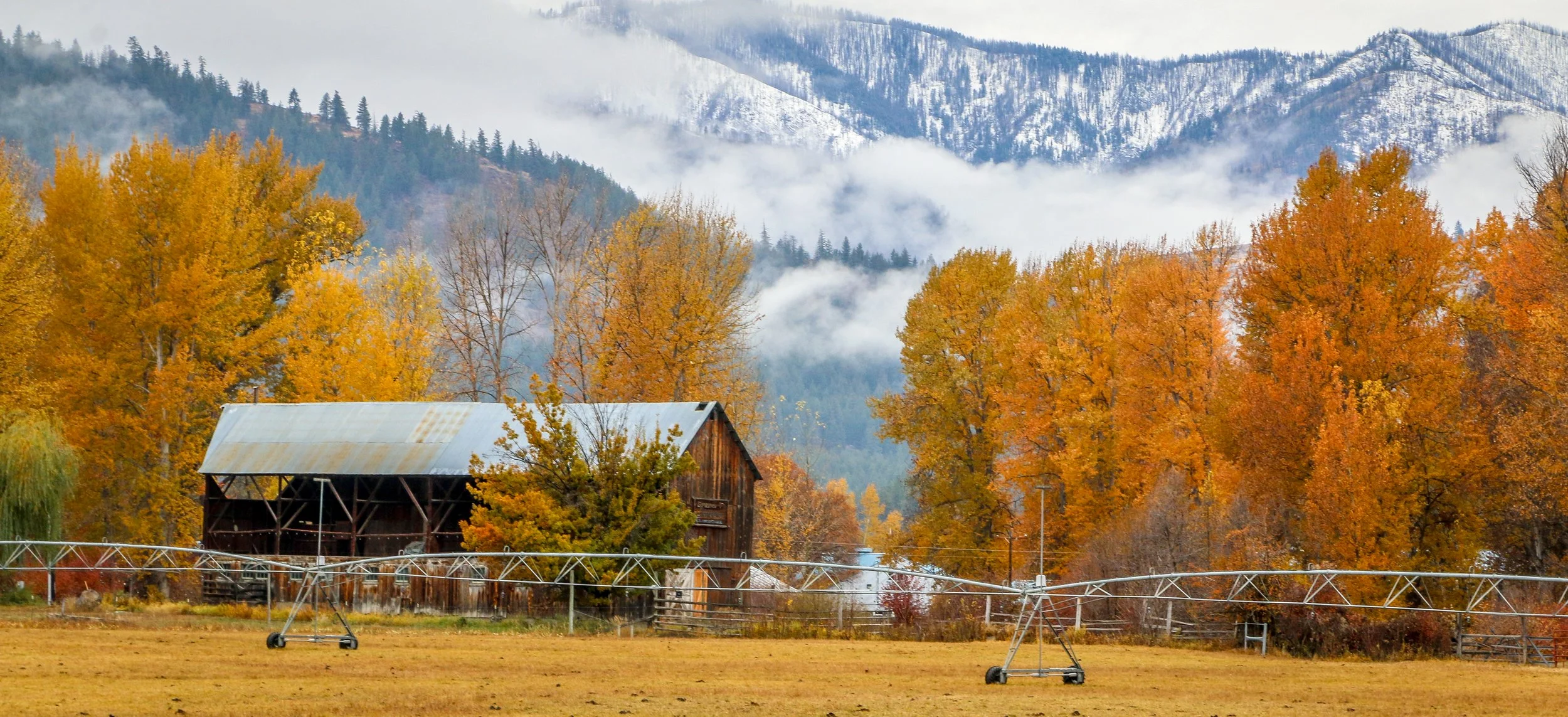
It’s been an interesting week out here in the “Inland Empire” of Washington State. The week started out in deserted ghost towns of the far northeast of the state, took me to the big city of Spokane, led me just across the border into Idaho for a night and finally back towards the center of the state and the enormous Grand Coulee Dam. I’ve passed through a lot of ranch country this week and a handful of railroad-and-grain-elevator towns similar to those found all across the heartland of the country. I caught a lot of live music this week, ate one too many burgers and somehow managed to dodge most of the raindrops in the area. All in all, I’d say it’s been a good week.
Most states have at least one town with a European theme and if you’ve been following this blog for a while, you've seen that they are too rich in photography opportunities to pass up. Which is the point. Poulsbo, a small town of just over 11,000 residents, is a beautiful example of how to do this well and judging by the number of tourists I saw there during my stay, it’s working well for them.
This area was originally inhabited by the Suquamish people who currently live on a reservation just down the road. After the Treaty of Point Elliott was signed in 1855 moving American Indians in Washington onto reservations, the vacated land was open to settlement. Norwegian immigrant Jørgen Eliason founded the townsite in 1880 and was soon joined there by other Scandinavians who appreciated the landscape and location on what’s now called Liberty Bay. When the town grew to a size that it needed a post office, one citizen recommended “Paulsbo” after his Norwegian hometown. The authorities in Washington DC misread the handwriting on the petition and the town would forever after be known as Poulsbo instead. Norwegian was the primary language spoken in the town until World War II when the town experienced an influx of GIs who came to work at the nearby Puget Sound Naval Shipyard in Bremerton.
I had a fantastic time in Poulsbo. I was thrilled to find some great Oktoberfest beers on tap and delicious European comfort food at Tizley’s Europub. I enjoyed another great fest beer while sitting next to a lovely outdoor fire pit at Valholl Brewery, and live music at The Brass Kraken finished off the night. The next morning I had a delicious pastry from Sluy’s Bakery and then sat down to all-you-can-eat pancakes at the Sons of Norway Hall. In between all of that fun, I managed to take some great photos, especially around dusk when the water was still and amazingly reflective. I hope you enjoy these photos from beautiful Poulsbo, Kitsap County’s Little Norway.
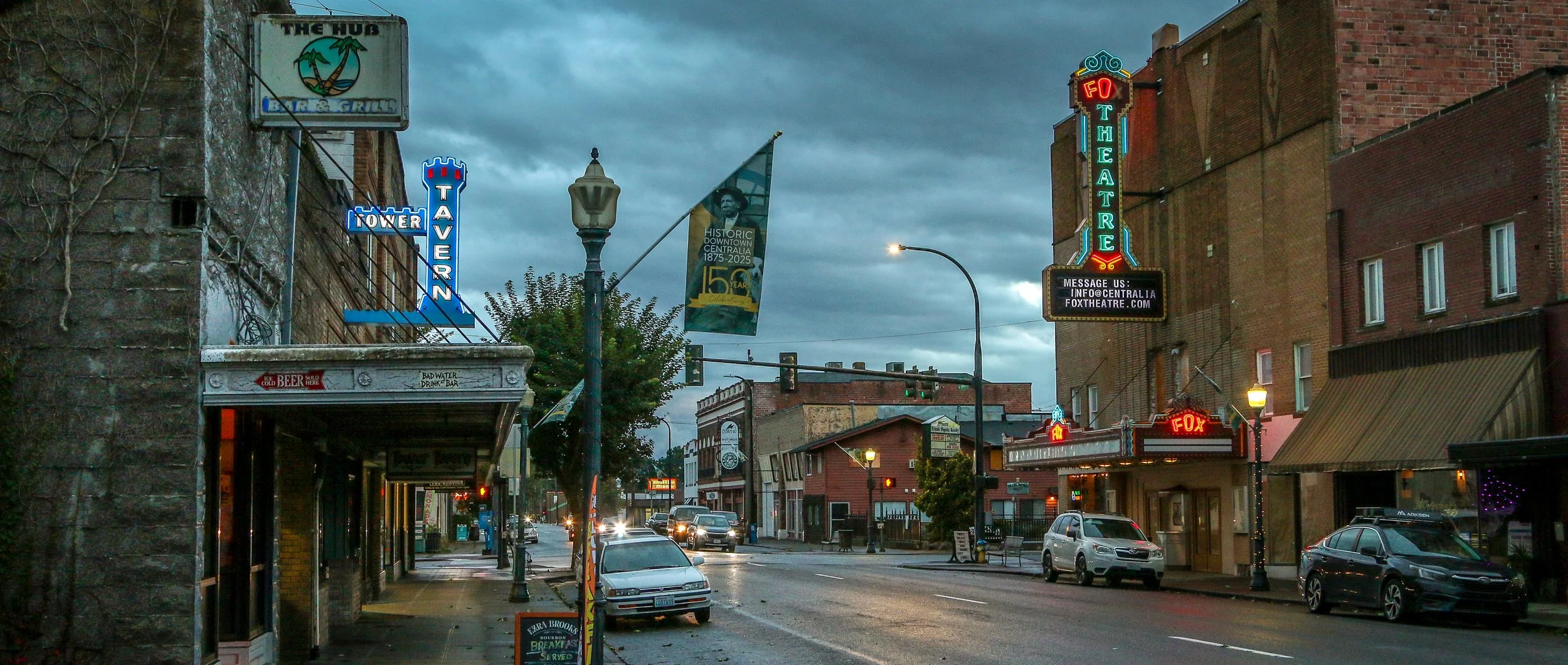
I came to Centralia to enjoy a night in the storied Olympic Club - a century old private men’s club turned hotel and bar. The beautiful, old mahogany bar, enormous woodstove, leaded glass fixtures and spacious pool room were all I imagined them to be and more and I definitely recommend a visit. But there was more to Centralia than the club. I found some great neon signs, a cool old theater, some colorful businesses, friendly locals and one of the prettiest tower clocks I’ve ever seen (so pretty I included day and nighttime photos below!).
This area was originally home to the Upper Chehalis people and settlers started arriving down the Oregon Trail in the mid 19th century. One of the original non-native settlers was a free Black man named George Washington who arrived in 1850 with his adoptive parents. Washington is remembered as the founder of Centralia and in 2023 his birthday was officially designated as Centralia’s Founder’s Day. When a road was built, it became the central stopping point on the stagecoach route between Tacoma and Kalama. When the Northern Pacific Railway came through in 1872, a town started to take shape and chose the name Centerville to denote its central location. A few years later, the townspeople worried they would be confused with another Washington town of the same name, so they changed their name to Centralia. It’s had its ups and downs since, but Centralia is still hanging on. Trains still come through town and it’s still a halfway stopping point, but now between Portland and Seattle. If you’re ever passing through on Interstate 5, stop through Centralia for a beer at the Olympic Club and stay for some classic Americana in Hub City. Enjoy these photos from beautiful Centralia, WA.
I have made it across the mountains and into Eastern Washington and it feels like I’ve landed in another country. While the west of the state is covered in evergreens, this side has a lot more deciduous trees and they are popping with fall colors at the moment. The towns are few and far between and the landscape is more wild west than coastal. I’m liking the change of pace and scenery. Daylight Saving Time has ended and it’s getting dark before 5pm which is always a challenge, but I’m happy it is light earlier and I’m not waking up in the dark. And I turned 50 this past week which I’m actually pretty okay with. It’s hard to believe in some respects, but I feel like I’ve lived several lifetimes in the last half century which is a good way to be. It hasn’t been a super-busy week, but let’s get into what I’ve been doing since I wrote last.
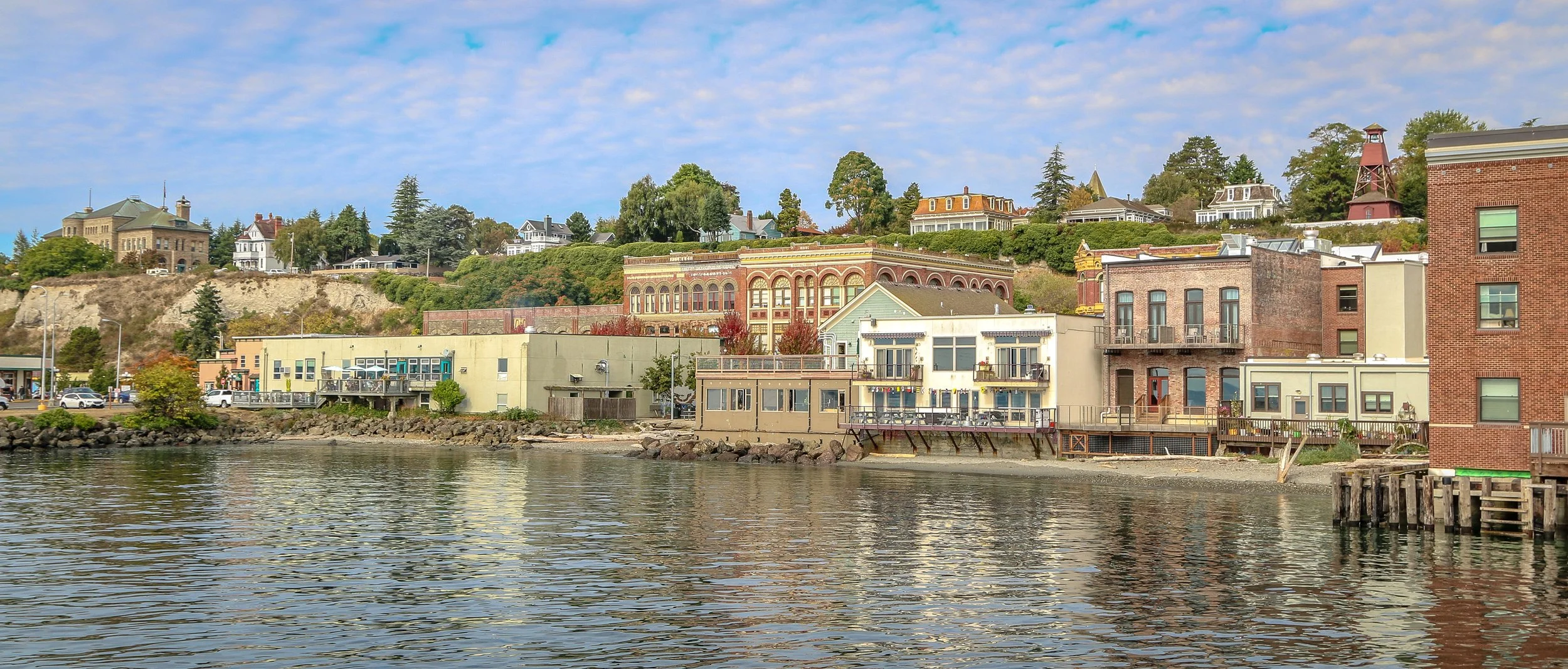
A Victorian waterfront town in a far-flung corner of America? You don’t have to tell me twice! Port Townsend is a magical place in the northeast corner of the Olympic Peninsula in the far north of Washington State. The bay on which the town sits was named “Port Townshend Bay” by George Vancouver way back in 1792. From the beginning it was recognized as a good, safe harbor and a town site was inevitable. Founded by Americans in 1851, it was the traditional homeland of no fewer than five American Indian bands. In the late 19th century, Port Townsend was called The City of Dreams and people imagined it would be the major port city to serve the Northwest United States. Grand buildings and homes were built in the Victorian style of the time and a magnificent county courthouse was erected to show the strength and stability of the town. Sadly an economic downturn caused the expected railroad links to stop far short of Port Townsend, choosing to end their cross country lines in Tacoma, Seattle and Tumwater instead. This was a huge blow to Port Townsend and one they would never really recover from. The construction of the U.S. Army base at Fort Worden around the turn of the century would keep the town afloat though and eventually people would recognize the beauty of Port Townsend. The town experienced a renewal of interest in the 1970s and many of the old buildings have been lovingly restored . Today it is a major tourism destination and has a busy ferry port as well. I really loved my stay in Port Townsend, especially exploring the downtown area and the fort (now a state park). I had a fantastic seafood feast at Sea J’s Café on the waterfront and the beers at Propolis Brewing were on a different level than most breweries. It’s a really cool town and one you should definitely put on your itinerary. Port Townsend is definitely the Crown Jewel of the Olympic Peninsula.
It’s been a tough couple of weeks for me out here. I spent all of last week in Charleston, West Virginia saying goodbye to my dad and trying my best to sort out his affairs. While he had many health problems over the last few years, his death still came as a surprise. It wasn’t something I was ready for at all. While my dad and I were not super close, I will still miss talking with him and visiting with him. I hope he is in a better place and I’m glad he is no longer suffering from any pain or discomfort. My brother flew in for a few days and we were able to spend time with Judy, my dad’s partner of 33 years, and their two Japanese chins Jake and Charlie. I was also really thankful to have a friend passing through Charleston while I was there who took me out to dinner and helped me talk through a lot of my pain. I had another friend drive out from D.C. for my dad’s memorial service which was really something. I’m very blessed to have so many good friends in this life. Since I last wrote, I also turned 50, a milestone birthday which snuck up on me with everything that was going on. I’m glad I didn’t have any exciting plans for it as they probably would have fallen through. Anyways, I am back in Washington State and I am writing to you today from Bellingham in the far north of the state. I’m still sorting out a lot of things in my head, but I wanted to write about my time leading up to my flight to WV because it will be good for me to write.
The area that is now Port Angeles was first occupied by the Klallam and Makah people who thrived with the abundance of natural resources the region provided. In 1774, Juan Perez sailed into the straight and in 1791 Francisco Eliza claimed the area for Spain and named it El Puerto de Nuestra Senora de Los Angeles which would later be anglicized and shortened to Port Angeles. White American settlers arrived in the area in the mid-19th century, and a man named Victor Smith came to town soon thereafter. Smith would have Port Angeles named the official U.S. Customs House and Port of Entry and convinced President Lincoln to support making the town a National Reserve. A lighthouse was built and the Army Corps of Engineers laid out a townsite. Since this made Port Angeles only the second federally planned city in the country after my hometown of Washington D.C. the town was dubbed the “Second National City". When Victor Smith died in 1865, the Port of Entry was moved back to Port Townsend and Port Angeles was all but abandoned. This changed in the 1880s when the railroad arrived and settlers soon chugged into town with it. Like so many other towns in the region, logging soon became Port Angeles’ main industry and the town even claimed the largest sawmill in the world for a bit. The natural deep water harbor has made Port Angeles a major port for both military and civilian ships over the years as well. Port Angeles is the site of the main visitor center for Olympic National Park and is also the hometown of NFL football legend John Elway.
I’ve been to Port Angeles a few times and I always get the same feeling when I’m there: it’s a town that keeps trying and I give it a lot of credit for that. The downtown area’s storefronts are full and there are several nice restaurants and bars to be found. There’s a great bookstore and a fantastic independent outdoor gear store. Port Angeles has supported a lot of cool public art displays and beautiful murals which really liven up the main downtown area. It’s also a great place to do some whale watching. I really like Port Angeles and I was happy to be able to spend some time there taking these photos. I hope you enjoy this little peak into the Olympic Peninsula’s City of Angels.
Breathtaking beaches, glacier covered mountains and incredible temperate rainforests all wrapped up in one amazing National Park? You must be talking about Olympic. Designates as Mount Olympus National Monument by Theodore Roosevelt, the area officially became Olympic National Park in 1938. Covering a massive 1442 square miles, the National Park covers most of Washington State’s Olympic Peninsula. 95% of the park is designated wilderness, meaning you’re going to have to hike in if you want to really see it.
I have been to Olympic before, but really just to catch the highlights at the Hoh Rainforest, Second Beach, Crescent Lake and Marymere Falls. On this trip I spent almost two weeks in the area and saw so much more of what the park had to offer. I did a four day, three night backpacking trip up the Hoh River Trail to Glacier Meadows and then a three day, two night hike around the High Divide/Seven Lakes Basin Loop, both of which were spectacular. I also visited the Quilault Rainforest, Ruby Beach, and Sol Duc Falls while I was there and stopped into the beautiful park lodges at Quinault Lake and Crescent Lake. The highlight for me was definitely the namesake Mount Olympus, but the quiet nights, the sound of water and the incredible wildlife also made me happy. I hope you enjoy these photos of the magical region of Olympic National Park.
Hello Everyone.
I hope you are all having a wonderful September out there. September and October are probably my favorite months of the year, with fall colors and moderate temperatures and when the days are still long enough to get a lot out of. I’ve spent all of this past week since my last newsletter in and around Olympic National Park. I’m headed back into the backcountry tomorrow, so I wanted to get this post done before I take off down the trail. It’s been a spectacular week in the scenery department and I will definitely have plenty of photo editing to do next week, but I’ll give you a preview of those photos along with this post.
When I wrote last week, I was on my way into Olympic and made my first stop at Lake Quinault on the southern end of the park. I enjoyed a couple of lovely short hikes in the rainforest there and a delicious dinner at the Lake Quinault Lodge. The lodge is a classic old park lodge designed by the same architect who did the Inn at Old Faithful in Yellowstone, and while I couldn’t afford to stay there, I could definitely afford dinner and a beer on the veranda. I had a lovely filet of King Salmon in the Roosevelt Dining Room and after the sun went down I sat reading my book by the fire until it was time to fade out into the night.
The following day I headed around the lake to the Wilderness Information Center to chat with the ranger there about my upcoming hikes and to have them print out my backcountry permits for me. They were great and very helpful and had a lovely ranger station in a field in the rainforest. I took a short stroll out to the old Kestler Homestead site nearby before making my way back to the highway and north to the Kalaloch campground along the coast. There I was able to get my backpacking gear out from where I store it under my bed, blow off the dust from not using it for a few years and get it packed and ready for the morning. The only issue I faced was the need to pack a warmer and bulkier sleeping bag than I would have liked which took up a lot of space in my backpack, but it was needed and definitely appreciated during the cold nights on the trail…
White Salmon is a cute little town up on the hill on the Washington side of the Columbia River Gorge. The area was historically Klickitat territory and was first settled by the Joslyn family in 1852. Cattle farming, timber, salmon fishing and wheat were the early industries in White Salmon, and later fruit farming and tourism would add to the economy. Today, the population rests right around 2500 people. It was the white salmon crosswalks that drew me in and the cute businesses and signs that kept me there. I wasn’t in White Salmon for long, but I really enjoyed my time there and I hope you enjoy this small handful of shots from the town ‘Where the Sun Meets the Rain”.
Hello Everyone! This newsletter is going to be a short one this week as I am going to be out in the wilderness of Olympic National Park for several days and away from my computer. I hope it’s a wonderful adventure out there, but I don’t want to forget about what I’ve been up to this week so I thought I’d just go ahead and get this done before I head out.
When I left you guys last week, I was on my way to tiny South Bend, Washington on the Willapa River. South Bend is a cute little town with a couple of oyster farms and a nice brewery and I availed myself of both while I was there. When I got to town, I popped into a tiny little hole-in-the-wall spot called the Chester Club for a cold beer and some oysters. If I stumbled into this place in Nebraska or Vegas I would order anything but oysters, but with the oyster fleet in view out the window and the World’s Largest Oyster just a block away, I knew they had to be good. And they were – probably some of the best fried oysters I’ve ever had. With my belly very happy, I moved up the road to the Willapa Brewing Company which is a part of one of my travel resources, Harvest Hosts, which hooks travelers up with businesses for overnight stays. I get a spot in their parking lot for the night and in return I buy a few beers. It works out well for everyone. It was a busy night there as the road crew who is doing construction on the highway was having a party, but it was fun to be there and enjoy some of their tasty brews.
The Columbia River is the largest river in the Pacific Northwest, and also the most important. It has always served as a trade route from the interior to the coast from the time American Indians paddled their dugout canoes up and down the river to the tall ships of the fur trade to modern trade ships of today. It also has several major dams which provide much needed power to the region and the river also serves as the border between Washington State and Oregon. The incredible waterfalls on the Oregon side bring in tourists by the thousands, but the small towns of the Washington side are friendlier and more livable. It gets hot out there, and it got too hot for me to stay too long and I ended up cutting my visit a little bit shorter than I would have liked, but I still had a great time out there. I hope you enjoy these photos from the beautiful Columbia River Gorge…