Viewing entries in
Photography

In Focus - White Sands National Park

Comment

In Focus - White Sands National Park

Magnificent White Sands National Park in central New Mexico preserves the largest gypsum dune field of its kind in the world. This dune field in the heart of the Tularosa Basin covers 145,762 acres and includes 4.5 billion tons of gypsum sand. This gypsum was left in the area after the Permean Sea retreated several million years ago, and water and wind shape the dunes we find there today. The dunes are ever changing, though, so you will never see the same landscapes on any two visits to the park.

People have been coming through the area for at least 11,000 years and we believe that a group we call the Jornada Mogollon were the first to farm the area (see my photos of their nearby petroglyph site here). Groups of Apache made their way into the area in the 1600s and European-Americans arrived in the 1800s. White Sands National Monument was created by Herbert Hoover in 1933 and it was made a National Park in 2019.

I arrived for my visit to the park just after dawn. The mountains to the east block the sunrise, but the skies were blue and full of amazing white clouds. I headed straight out to the heart of the dunes and hiked the wonderful 5 mile Alkali Flats Trail. The sun reflected brightly off the white sand making photography difficult, but I was grateful that there was no wind. In the late afternoon I set out to capture some of the beautiful plant life in the park, mainly different kinds of yucca, which contrast nicely with the white sand. I stayed to watch the sunset and found real peace and solitude out in the middle of the park. It was a wonderful day in White Sands National Park. You can find some of these photos for sale in my store , but please contact me if the one you want isn’t there and I’ll be happy to add it. I hope you enjoy these photos from my time in White Sands National Park.

Comment

Snapshots: Three Rivers Petroglyph Site

Comment

Snapshots: Three Rivers Petroglyph Site

The Three Rivers Petroglyph site offers an amazing look into the ancient rock carvings of the Jornada Mogollon people. These rock carvings, created between 900 and 1400 AD, are scattered across a boulder field in the Chihuahuan Desert between the San Andres and Sacramento Mountains. There are over 20,000 recorded petroglyphs in this area, making it one of the most prolific petroglyph sites in the country. While nobody knows the exact meaning of these chiseled carvings, some of the more recognizable animals and birds offer a glimpse into what these ancient people found important. Located 17 miles north of Tularosa and 28 miles south of Carrizozo, this site, managed by the Bureau of Land Management, makes an excellent detour. There is a $5 admission fee to the site, but it is federal land so all National Park passes are also accepted. You could make the one mile out-and-back hike in under an hour, but the longer you stay, the more you will see. I hope you enjoy these photos of a tiny fraction of the carvings at the Three Rivers Petroglyph Site.

Comment

This Week on the Road - February 24th-March 3rd

5 Comments

This Week on the Road - February 24th-March 3rd

Hello Everyone! Well it was a fun romp across the country and I’ve made it to New Mexico. I’ve definitely been having a wonderful first week here in The Land of Enchantment. I’ve traveled from the oilfields of the southeast, through UFO country at Roswell and into the Old West at Lincoln. I paid my respects at the grave of Smokey the Bear, passed through some beautiful ski resort towns and then down into the Tularosa Basin of the Chihuahuan Desert where I saw some cool petroglyphs and incredible White Sands National Park. My week is ending here in sunny Las Cruces where I celebrated Mardi Gras last night, far from New Orleans, but close in my heart. It’s been an amazing and incredibly diverse start to my New Mexican adventure, much like the people of the state itself. I can honestly say that my first impression of New Mexican people in the short time I’ve been here is that they are very sweet. That’s probably not a good word, but it’s the one which constantly comes to mind. I’ve had quiet and pleasant conversations with roughnecks, bouncers, a bartender missing his front teeth and a guy with neck tattoos and every one of them just seemed like a teddy bear who would giggle if you tickled them (an impression I did not test out on any of them). I have, of course, met wonderful people all over the country, but there are places where you get a particularly good feeling and so far this part of New Mexico has given me that feeling. The places I’ve traveled have been great and the food has lived up to my memories of how good New Mexican cuisine can be. All in all, it’s been a fantastic week on the road and just what I needed to start off this leg of my journey.

When I left you last week I was headed towards Luckenbach in the Hill Country of Texas. On my way, I stopped into Lyndon B. Johnson National Historical Site in Johnson City, a town named after one of Lyndon’s relatives, James Polk Johnson. The site was fascinating and included LBJ’s boyhood home in Johnson City and the Johnson Ranch and “Texas White House” a few miles down the road where he lived later in life and eventually retired. It’s also where he is buried in a very simple family cemetery. LBJ grew up in a humble home with no electricity, one of five children born to two local teachers. He went on to become a teacher himself and taught impoverished children of Mexican descent. LBJ entered politics in 1931 as a legislative secretary and went on to serve in both the House of Representatives and the Senate (where he rose to be the Majority Leader). In 1960, he ran against John F. Kennedy for the Democratic nomination for president, joining JFK’s ticket after his primary defeat. When LBJ became president after Kennedy’s assassination, he often returned to his Texas ranch, inviting friends, colleagues, and foreign dignitaries to join him there and experience some Texas hospitality. Their barbecues were both massive and legendary. While the Texas White House was closed during my visit, the grounds were open and I enjoyed learning more about Johnson, his early life and his political successes. I had always pictured Johnson as a Texas rancher, but never realized his humble upbringing and had always assumed he was just carrying on with Kennedy’s agenda instead of how much actually came from him. I’m glad I made the stop and after a few hours there, I was off to Luckenbach.

Luckenbach was settled in 1845 and steadily grew to a population of 492 people in 1904. By the 1960s, though, it was virtually a ghost town and the town was advertised for sale in the newspaper. Two men, Hondo Crouch and Guich Koock, bought the town for $30,000 and set about trying to revitalize its aging dance hall and country store. The town’s fate was sealed when Waylon Jennings recorded a song called Luckenbach, Texas (Back to the Basics of Love), a song he hadn’t written about a town he’d never been to. The song hit #1 on the charts and people have been coming to check out the town ever since. It hosts concerts, festivals and live music daily. The night I arrived the scheduled musician had called off due to the weather but luckily a group of musicians just happened to be there to celebrate a friend’s birthday and jumped at the opportunity to take the stage in such a storied venue. They were great and I enjoyed chatting with them after the show. I also enjoyed meeting the locals and talking about the history of the town and the people who have passed through over the years. It was a really fun night.

Freezing rain came overnight and caused both shows to cancel on Thursday so I decided to head on down the road. The rain had frozen in the trees, creating an absolutely mesmerizing landscape as I descended out of the Hill Country and into the flatlands of West Texas. When I got to a lower elevation, the frozen trees gave way to prickly pear cactus and I felt as though I had arrived in the West. I made my way through Mason, Menard and Eden before landing for the night in San Angelo. I hit the gym and then headed out for some delicious Tex-Mex food and a quick beer before calling it an early night.

5 Comments

Snapshots: Lincoln - The Baddest Town in New Mexico

Comment

Snapshots: Lincoln - The Baddest Town in New Mexico

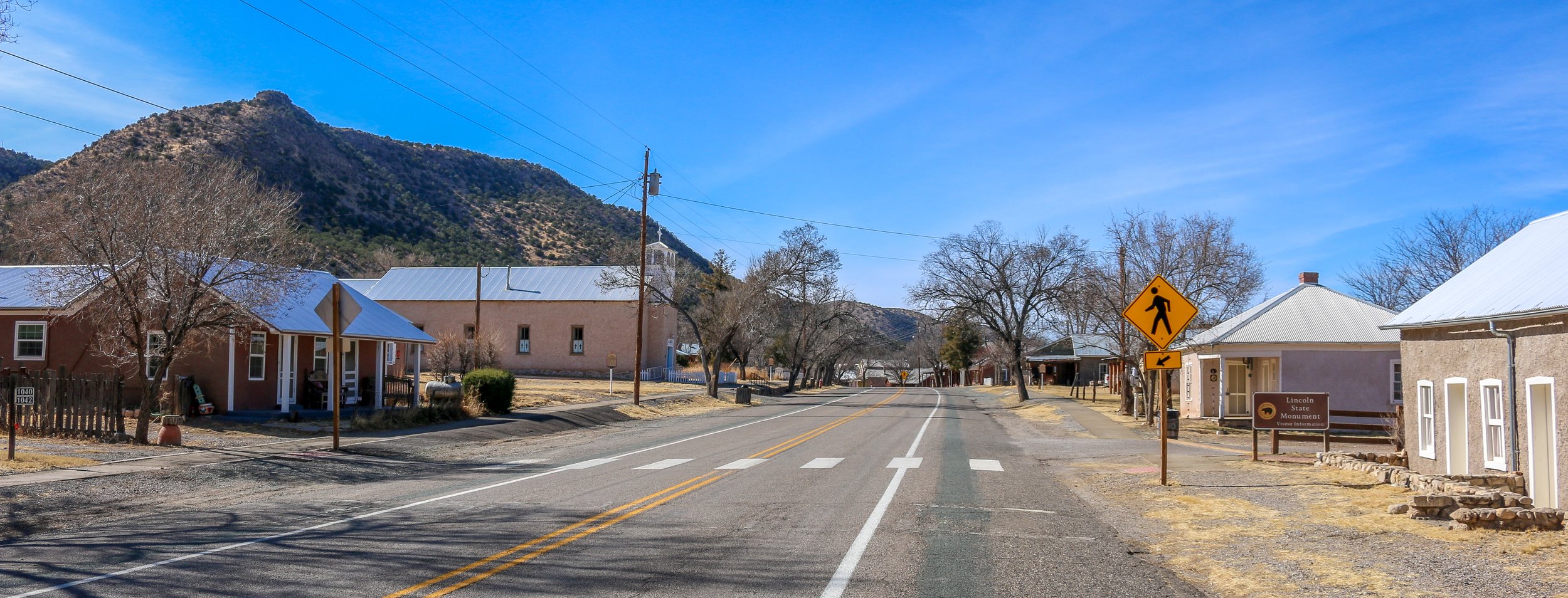
The area in southeast New Mexico that now includes the town of Lincoln was originally inhabited by Mogollon people and later by the Piros and Mescalero Apache. When a group of settlers arrived from the Rio Grande Valley, they named their new town La Placita del Rio Bonito, or “the place by the beautiful river”. The town was renamed soon after the Civil War in honor of President Lincoln and was made the county seat of the massive Lincoln County. In 1873, Irishman L.G. Murphy opened a general store and won the contract to supply beef to nearby Fort Stanton. When Englishman John Tunstall set up a rival store down the street and challenged Murphy’s monopoly on the beef contract, the Lincoln County War broke out with each man hiring his own army of gunslingers. One of Tunstall’s men, who the world remembers as Billy the Kid, has gone down in history as one of the most notorious figures from Old West lore. The Kid was arrested and tried for his role in the murder of the county’s sheriff and was held in the county courthouse, which had once been Murphy’s store, to await his hanging. He outsmarted and overpowered the two deputies who were watching him and escaped, only to be cornered and killed by the new sheriff, Pat Garrett, just a few months later at Fort Sumner. The volatility in Lincoln led President Rutherford B. Hayes to call the town’s main street "the most dangerous street in America". Today there are quite a few remnants from its wild past and much of the town is an historic site. I found the whole place fascinating and learned a lot while I was there. I wish I had had more time to explore it, but I hope you enjoy these photos from my brief stay in tiny Lincoln, New Mexico, once one of the Old West’s baddest towns.

Comment

Snapshots: Roswell - Alien City

Comment

Snapshots: Roswell - Alien City

Roswell is a town of about 48,000 people, making it the fifth largest city in New Mexico. The area was originally settled in 1869 when Van C. Smith and Aaron Wilburn built a small store, inn and post office. They named their settlement Roswell, which was Smith’s father’s first name. Roswell was the home of Walker Air Force Base from 1941-1967 and housed a POW camp during World War II, holding mostly German prisoners. In 1947, a UFO purportedly crashed in the area and the military seized the aircraft and its alien operators. This alleged incident has brought interest and controversy ever since, and you can read all about it and decide for yourself at the International UFO Museum and Research Center. Roswell has embraced the tourism opportunity from their UFO encounter and there are no shortage of T-shirts and bumper stickers to be had. Beyond that, I found Roswell to be a pleasant place full of kind and welcoming people and I’m definitely glad I stopped in for a while. I hope you enjoy these photos from fun and beautiful Roswell, New Mexico.

Comment

A Look Back at 2021 and a Look Ahead at 2022

Comment

A Look Back at 2021 and a Look Ahead at 2022

Happy New Year Everyone! I wanted to take a few minutes this week to take a look back at the year gone by and a look ahead at what I’m planning for 2022. It’s definitely been a year of ups and downs, but despite the many challenges, 2021 was a pretty good year for me. I’m hoping to build on that momentum and make sure the year ahead is even better. Before I get into the heart of this post, though, I wanted to take a minute to thank you all for your support over the years and especially through this last stretch. I didn’t know how I was going to keep my little travel blog going through the pandemic as I was at home in Washington for well over a year. Publishing this newsletter every week pushed me to try and get out and do something every week as I tried to make the most of the situation. Your comments, notes and emails really helped me through those trying times, and I wanted to say thank you very much. We did get out to see some pretty interesting and beautiful places this summer and fall, though, didn’t we? And hopefully I’ll be hitting the road again soon to even more beautiful places out west. I hope you’ll come along for the ride.

2021 began in the midst of the pandemic. By the time the new year rolled around, I had been home for almost eight months. I even convinced my folks to stay up until midnight on New Year’s Eve for the first time in many years to wave goodbye to 2020 and all of the challenges it had brought us. From the previous July until this past May, I spent my days with my friends’ two year-old son, Mason, going on adventures near their home in Glover Park. He was such a little trooper and we would go outside almost every day, no matter what the weather was like. We had dozens of different routes which took us to hundreds of different places, all within about a mile or two of his house. He was usually one step behind me with a fistful of worms and a brain full of questions. It was amazing what we got into during that time, but we both learned a lot about the world during those 10 months. I’ve done a lot of different things in my life, but the year I spent helping raise Mason was definitely the most rewarding experience I’ve ever had. I will always remember the sound of his little feet in the morning running out to greet me and the feel of his little hand in mine. Meanwhile, my mother and I would try and get out of town every week and go on at least one adventure of our own. We saw more of Washington D.C. than either of us imagined existed and traveled to small towns and down back roads in Maryland and Virginia as well. We watched movies every Wednesday and had parties in the basement every Friday. We brewed beer, played games and cooked all kinds of different foods and I got back to playing the violin after 35 years. I got a new compass and ran some orienteering courses for the first time in 30 years. Both felt really good. At home, we celebrated everything I could come up with, from Christmas in July to Up Helly Aa. Looking back, there are a lot of projects I wish I’d gotten to and a lot of other things I wish I had spent more time on during those pandemic months, but at the end of the day I got to spend a lot of time with my best friends, my family and a wonderfully curious little boy who really needed a friend through it all. They were some of the best days of my life…

Comment

Snapshots: Winona - My Last Stop in Minnesota

2 Comments

Snapshots: Winona - My Last Stop in Minnesota

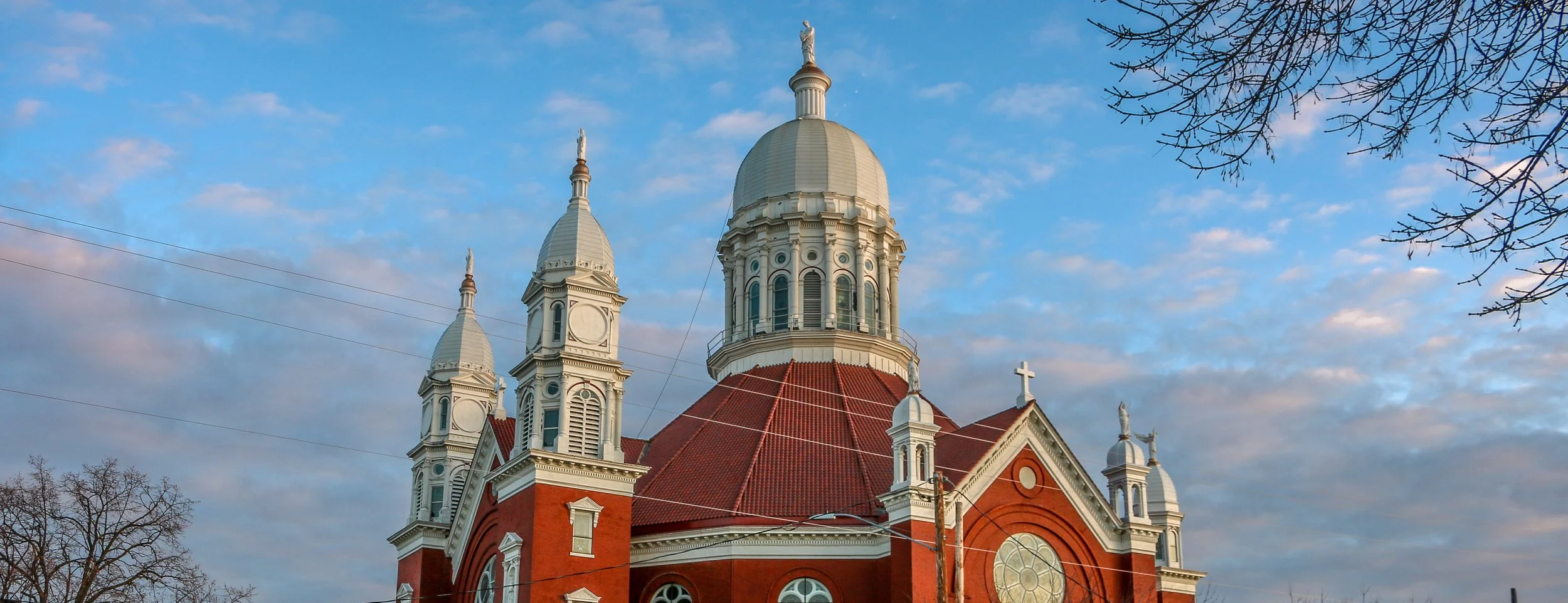
Winona was my last stop during my six week stay in Minnesota. This small city with a population of about 26,000 is right on the Mississippi River and the Great River Road in the far southeast of the state. This land was once home to the Mdewakanton Band of Lakota Indians and is named for the first-born daughter of Chief Wabasha III. Originally settled in 1851, Winona grew to be a major rail and steamboat town with wheat and lumber playing a major role as well. Today, there are some great old buildings lining the streets and the St. Stanislaus Basilica is one of the most beautiful churches in the state if not the country. I also enjoyed a stop in the Historic Society museum located in the old armory and the beautiful stained glass windows at Merchants National Bank. I wasn’t in Winona long as it was time for me to be heading on down the road, but I hope you enjoy these few photos from my stay.

2 Comments

Snapshots: Wabasha - A Hidden Gem on the Mississippi River

Comment

Snapshots: Wabasha - A Hidden Gem on the Mississippi River

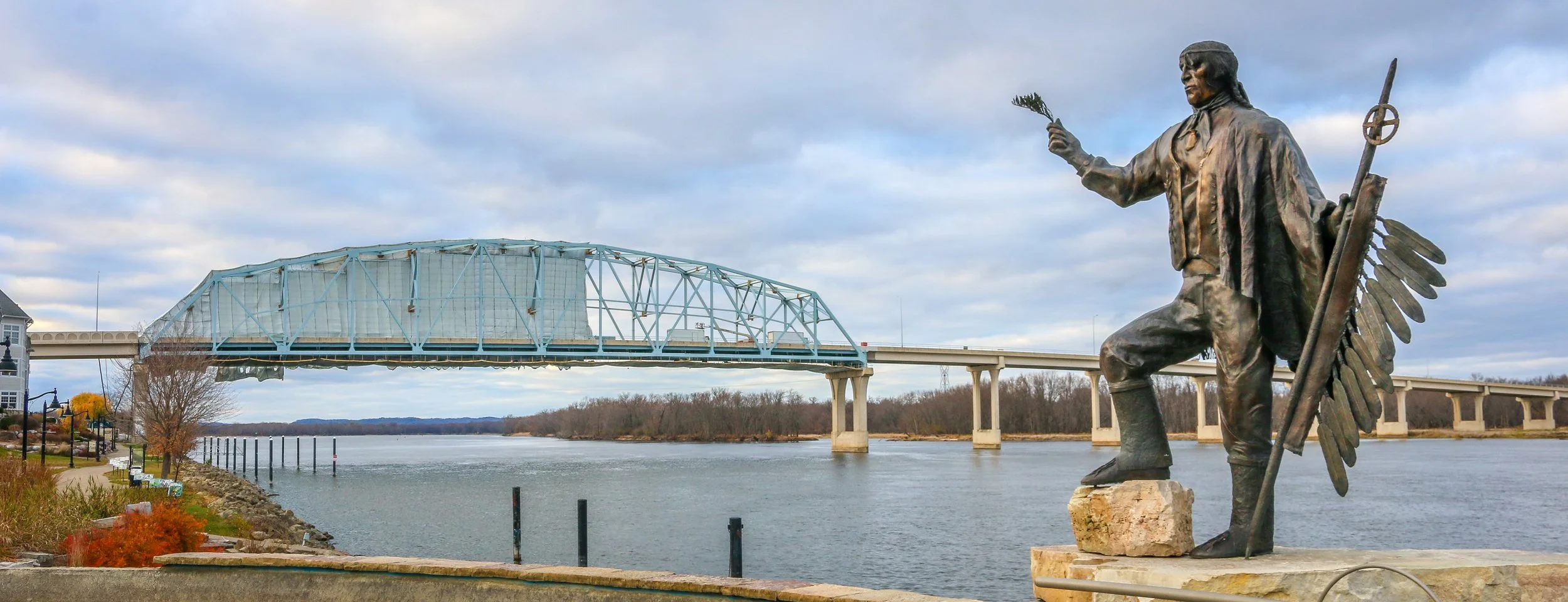
When Europeans first made their way up the Mississippi River, these lands were occupied by the Mdewakanton Dakota people who were led by Chief Wa-pa-shaw. The area was settled in 1826 and officially recognized after the Treaty of Prairie du Chien was signed in 1830. The fledgling town was named after the Chief as “Wabasha” and is now one of the oldest towns on the Upper Mississippi River. The early town’s economy was based on shipping, trading, lumber and flour and there was also a clamming industry and a button factory which utilized the discarded clam shells. Today, Wabasha is still undeniably a river town, but has made tourism a major economic interest - especially with the addition of the National Eagle Center. It’s probably most famous in recent times as the setting, though not the filming location, of the movie Grumpy Old Men. All of that being said, it would be easy to just blow on past Wabasha as it is just a small town of 2,500 or so people, but you’d be missing a real gem on Minnesota’s stretch of the mighty Mississippi. The historic buildings, the awesome statue of Chief Wabasha and the beautiful river setting combine with friendly people and some wonderful small businesses to make Wabasha a charming destination. Be sure you stop by Hoppy Girl Brewing Company while you’re there to taste some of the state’s best microbrews in one of its smallest and friendliest breweries. I had a wonderful visit to Wabasha even though the winter skies were definitely telling me it was time to head south. The next time I find myself in Minnesota, though, it will definitely be on my list of places to return. I hope you enjoy these photos from tiny Wabasha, Minnesota - a true hidden gem on the Mississippi River.

Comment

Snapshots: An Autumn Day in Red Wing, Minnesota

Comment

Snapshots: An Autumn Day in Red Wing, Minnesota

Red Wing was definitely one of the nicest towns I visited during my entire stay in Minnesota. It’s a beautiful historic city of about 16.000 right on the Mississippi River and the Great River Road. Before European settlement, this was Dakota territory and the town takes its name from Mdewakanton Dakota leader Tatankamani, whom Europeans referred to as “Red Wing”. As settlers came west, the Mississippi River was a major transportation corridor, and many people disembarked at Red Wing to begin their new lives on the frontier. A town sprang up and early industries included mills and tanneries. In 1905, Charles Beckman began crafting leather work shoes for the miners, loggers and farmers in the region, and Red Wing Shoes was born. Red Wing Shoes is still headquartered in the town and many of their brands are still produced there, contributing heavily to the local economy. Red Wing has some beautiful, historic architecture and many wonderful art displays around town. While I was there on an overcast, fall day I still found the city to be charming and extremely photogenic. It’s definitely a town I will return to in the future. I hope you enjoy these photos from beautiful Red Wing, Minnesota, an historic town on the banks of the mighty Mississippi River.

Comment

Snapshots: Henderson - A Quick Stop on the Minnesota River

Comment

Snapshots: Henderson - A Quick Stop on the Minnesota River

Little Henderson, Minnesota is a town of about 900 people on the Minnesota River just southwest of Minneapolis. Henderson was founded by Joseph Brown in 1852 and was originally a lumber town. Two brickyards soon joined in and the town grew. Henderson was originally the Sibley County seat, but would lose that role to nearby Gaylord in 1915 and its old courthouse was converted into a community building. Two scenes from Minnesota native musician Prince’s movie Purple Rain were filmed in Henderson, and the town has really tried to capitalize on that. There is a beautiful mural right on Main Street and there used to be a statue and bench there too, but both have unfortunately been moved inside and out of view during non-business hours. I enjoyed a quick stop in Henderson and a look at some of their wonderful historic buildings and an ice cream at Toody’s was definitely a highlight. I hope you enjoy these photos from tiny Henderson on the Minnesota River.

Comment

Snapshots: New Ulm - Minnesota's Most German Town

Comment

Snapshots: New Ulm - Minnesota's Most German Town

New Ulm is a mid-sized city which sits at the confluence of the Minnesota and Cottonwood Rivers in southern Minnesota. Founded by German-Americans, the town gets its name from the German city of Ulm in Bavaria. While not as over-the-top as Frankenmuth in Michigan, New Ulm has many German features to it and the longer you stick around the more you will see. I really enjoyed the Glockenspiel and the Hermann Monument and found several of the churches in town to be truly spectacular. The Historic Society Museum is housed in the eye-catching old post office, and even the fire hydrants brought a smile to my face. On the outskirts of town is the old A. Schell Brewery, which is definitely worth a stop. Founded in 1860, it’s Minnesota’s oldest brewery and one of the oldest in the country. Unlike most of the town, it was spared during the Dakota War of 1862 which devastated New Ulm. I had a wonderful German meal at the Ulmer Cafe and talked to some welcoming locals while I was in town. I hope you enjoy these photos from beautiful New Ulm, Minnesota’s Most German City.

Comment

Snapshots: Farwell, Minnesota. Population 51

Comment

Snapshots: Farwell, Minnesota. Population 51

Farwell, Minnesota was established in 1886 when the Soo Line Railroad came through the area. Today the population is just 51 people in 27 households and the town rests on a tiny .29 square miles of land. The main street in town, Stanley Avenue, is composed of a post office which operated from 1887 until 1996 and a long dormant one-room schoolhouse. While I was there a wonderful tumbleweed tumbled through town and I was the only one there to watch it go. I love towns this size, but have rarely found one so enjoyable to photograph. I smiled the whole time I was there. I hope you enjoy these photos from tiny Farwell, Minnesota.

Comment