Hello Everyone! September is upon us but you wouldn’t know it here in Wisconsin. It’s been hot and humid in the Badger State this week, but it does look like it’s supposed to be cooling down in the near future. The days are certainly getting shorter which wasn’t helped by the time change between Michigan and Wisconsin. I have had such a great summer, but I’m a huge fan of fall and am really looking forward to cooler temperatures and, of course, the changing leaves. To begin this week, I’m sending prayers and positivity to all of my friends around the country who are facing down storms and wildfires this week. As some of you know, I spent two years of my life helping re-open the public school system in New Orleans in the wake of Hurricane Katrina and it was hard to watch Hurricane Ida making its way towards the Big Easy on the 16th Anniversary of that storm. Of course, as I’ve pointed out to a lot of people this week, Katrina only did minor damage to the city, it was when the levies broke that the real problems began. Thankfully it looks like New Orleans has survived this storm relatively intact and I’m grateful for that. Hoping all of my friends and readers in the region are safe and sound. I also have a lot of friends in the Greater Lake Tahoe region on the California/Nevada border and many of them have evacuated as the fires get closer and closer. You’re all in my thoughts as well. With all of that going on, Wisconsin is a pretty good place to be right now, and I’m grateful for that. Also this week, for those of you who followed my D.C. Chronicles through the pandemic, my mother is watching Mason as he transitions between schools and is enjoying playing big trucks with him in his new house. As for me, I’ve been out exploring Door County and Central Wisconsin this week, so let me tell you what I’ve been up to.
When I left you last week I was in Sturgeon Bay and headed off into Door County which is the peninsula that looks like Wisconsin’s thumb jutting out into Lake Michigan. That day I headed up to a beach just south of Egg Harbor for a swim in Green Bay and then stopped off for a quick beer or two at One Barrel Brewery in town. Afterwards I headed on to Fish Creek which is where I spent that night. After watching the sun go down, I stopped into the Bayside Tavern for a fish sandwich and a beer and ended up meeting a nice lady who was really interested in lighthouses. We ended up talking about lighthouses and travel for a couple of hours which I really enjoyed and it was nice to have some company.
Thursday morning I was up bright and early as I had a lot I wanted to accomplish with the day. After a nice breakfast at FIKA bakery, I gassed up, bought my Wisconsin fishing license and my annual State Park Pass and headed off into Peninsula State Park. Peninsula was Wisconsin’s first state park and one of its best known and most visited. I stopped off at the Eagle Bluff Lighthouse and the Eagle Tower, which was just that – a tower built to observe the local eagles from above the tree line but also provided great views out over the water and the park. I was very impressed that they had built probably a quarter-mile ramp up to the tower to make it ADA accessible and there was someone there in a wheelchair and another person with physical challenges who were both using the ramp while I was there. From there I went to the beach…
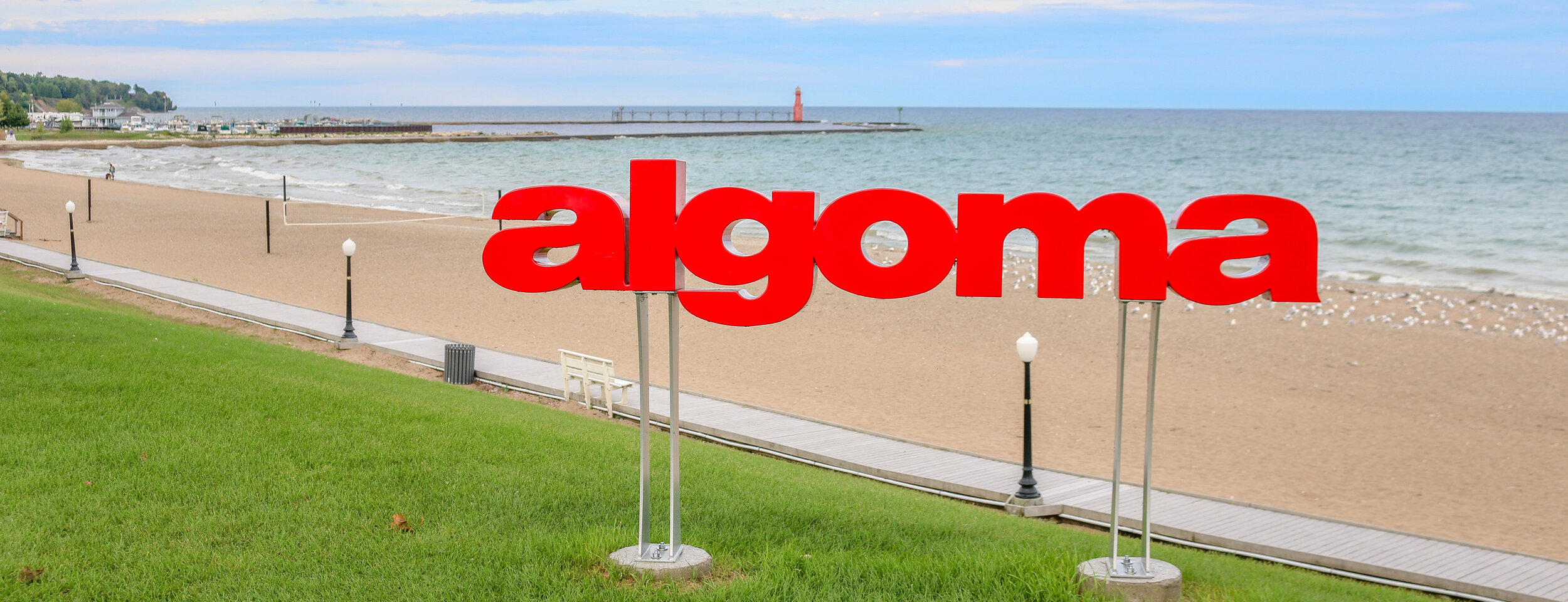
In its early days, Algoma was called Wolf River and attracted a diverse community of European settlers to the shores of Lake Michigan. In 1859, the name was changed to Ahnapee and in 1892 the Ahnapee and Western Railway came through and connected this lakefront town to the inland world. In 1897, they changed their name to Algoma and by then the town had grown to become home to one of the largest commercial fishing fleets on Lake Michigan. Today, Algoma has about 3,000 residents and fishing is still a major industry, although sportfishing has replaced commercial fishing. I had a wonderful visit to Algoma and was impressed by the beautiful Victorian architecture of some of the buildings downtown. and by the wonderful beach and lighthouse It was the historic advertising murals and stunning hand-painted signs that really blew me away though. That is until the sun went down and a beautiful dusk settled over this quaint little town painting it dozens of different colors. It takes a lot of effort to make a town look this cute, and Algoma has obviously chosen people with a true sense of the aesthetic who paid really good attention to detail. On your next visit to Door County, be sure you swing through Algoma, you may find yourself sticking around for a while. I hope you enjoy these photos of adorable Algoma, Wisconsin.
Cedarburg is a beautiful and vibrant old mill town in Ozaukee County, just a half-hour north of Milwaukee. Cedar Creek brought German immigrants to the area in the 1840s where they built grist mills and a small community began to develop. When the train came through thirty years later, the town expanded as it now had access to the larger markets of Milwaukee and Green Bay. Churches were built and streets were laid out, but Cedar Creek was still at the center of the community. As time passed, suburban Milwaukee started edging ever closer, but Cedarburg has been able to maintain its own identity and its small town charm. I enjoyed my visit to Cedarburg and hope you enjoy these photos of this beautiful historic mill town on Cedar Creek.
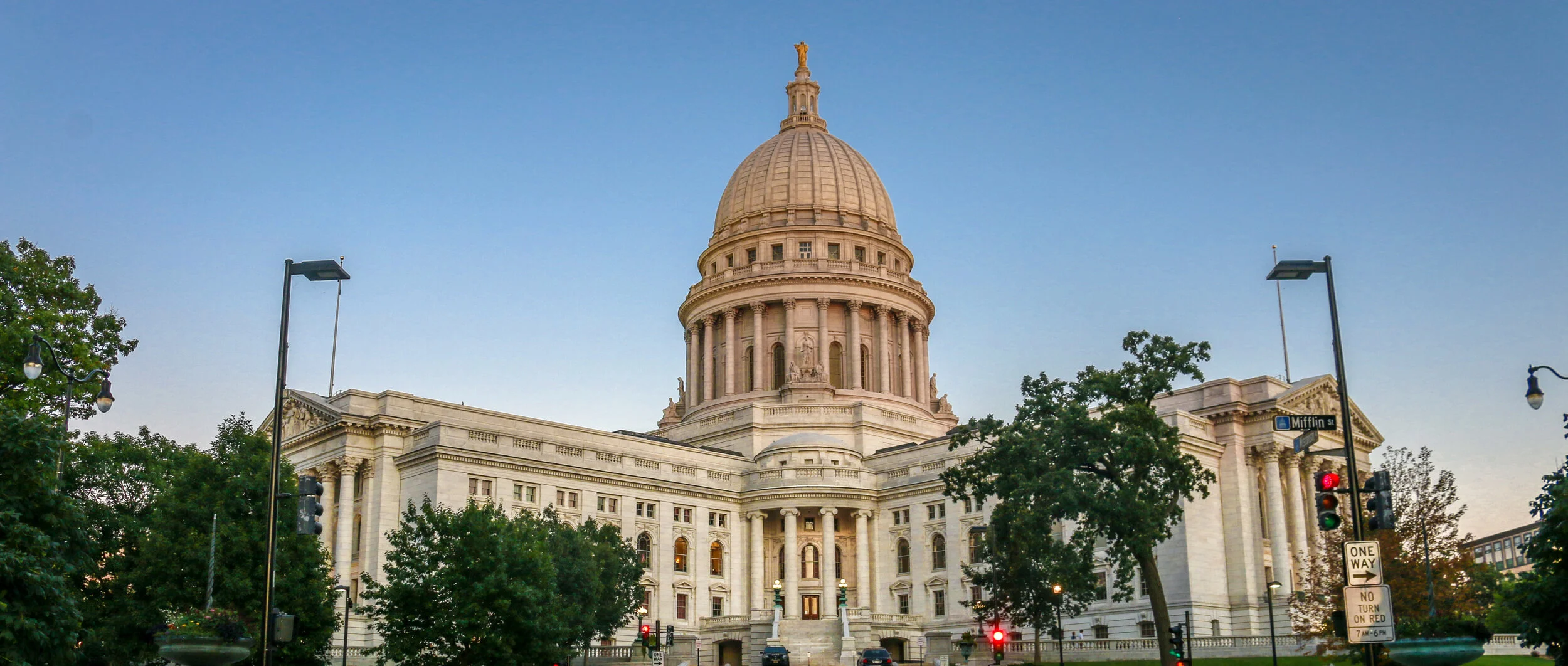
For those of you who have been following me for a while, you know I have a particular affinity for capital cities. Being from Washington D.C. there is a certain familiarity to a capital city and how it looks and operates. Madison is even closer to my heart since both of my parents attended the University of Wisconsin at Madison and I grew up hearing stories of their time there. The Capitol Building in Madison is actually the forth Capitol of the Badger State. The first Capitol was a hastily built wooden structure in Belmont, Wisconsin which was used for a mere 42 days, during which time a new site was chosen in Madison. The second Capitol was built in Madison in 1837 and the third Capitol was begun in 1857, nine years after the Wisconsin Territory became the state of Wisconsin. That building tragically burned to the ground in 1904 and construction of the current Capitol began soon thereafter under the watchful eye of famed architect George B. Post of New York. The statue of Wisconsin on the Capitol dome was sculpted by Daniel Chester French who also sculpted the statue at the Lincoln Memorial. I loved how many badgers were to be found in the building - in the murals, overlooking the four corners and even on the statue on the dome. Wisconsin is definitely fond of its badgers. I found it interesting that the mural in the state senate chamber commemorates the opening of the Panama Canal - big news when the Capitol was built but it seems odd a hundred years later. I think my favorite story from the Wisconsin State Capitol was that of Old Abe, a bald eagle who once served as the mascot for a Wisconsin Civil War unit and accompanied them into battle. Old Abe was shot during the war but survived and went on to tour the country after the war ended. He went to live in the Capitol building for many years but accidentally died of smoke inhalation when a fire started near his cage. Old Abe was stuffed and sat overlooking the House chamber for many years until he burned in the fire of 1904. A replacement eagle was placed in the rebuilt Capitol to commemorate Old Abe’s legacy. I really enjoyed my guided tour of the Wisconsin State Capitol and hope you enjoy these photos from my visit.
I love a good carnival, but all of the fairs and festivals in my life have been compared to the Wisconsin State Fair, the fair of my childhood. My dad is from Milwaukee and every year when I was a kid he would take my brother and I home to see our grandparents and every year he would make sure we went when the State Fair was in full swing. I was very happy to find that over 30 years later it was pretty much still how I remembered it. I used to say “one of these days I’ll make it back to the Wisconsin State Fair”, and finally “one of those days” was realized. I had a great time and hope you enjoy these just-for-fun photos of the Wisconsin State Fair.
Hello Everyone! I hope you’ve all had a great week since last I wrote. I can’t believe we’re already halfway through August, but it’s sure been a beautiful week here in Wisconsin. For me, it’s been a week of catching up – catching up on work and catching up with my family in the Greater Milwaukee area. Since my dad is from Milwaukee and I spent a lot of time here as a kid, there is a lot of familiarity to it even though it’s been many years since I last spent time in the area. It’s been great though, and I’m really enjoying it.
When I finished this post last week, I headed over to the Neville Public Museum in Green Bay. Right as I parked and got out of my van, the tornado sirens started going off downtown. The museum was clearly a better option than my van in a tornado, so I headed inside. The staff was great and moved us all into the theater to wait it out. Thankfully the tornados passed us by and I could go ahead and get a look at the museum. There were some interesting artifacts there, but I really wanted to learn more about the history of Green Bay and it didn’t quite deliver on that for me. I did enjoy the museum but I would have loved a better organized permanent collection. The top highlight was a very cool model of Lambeau Field built entirely out of Legos which was definitely worth seeing. When I left the museum, I went to a delicious little spot called PhoComa downtown. Green Bay (and Southern Wisconsin) has a huge Hmong population who settled there after escaping from Southeast Asia at the end of the Vietnam War. I have definitely been craving some good Southeast Asian food for a while, and this place was amazing. After dinner I went to see the Green Bay Booyah baseball team play. They play in the Northwoods League with the Traverse City Pitspitters, and that night they were playing against Racine. The storms had cleared out and it turned into a beautiful night for baseball, but the Booyah couldn’t pull one out for the home town crowd.
Thursday I headed out of Green Bay and drove through downtown Appleton to see where Harry Houdini spent much of his adult life. It seemed like a nice enough place but there was nothing to keep me there. I moved on to Fond Du Lac at the bottom of Lake Winnebago and visited the Lighthouse Park for great views out over the lake. Lake Winnebago is a massive lake but can’t really compare to the nearby Great Lakes. The Fox River passes through Lake Winnebago and connects the Great Lakes to the Mississippi River. It’s also one of the few northern flowing rivers in the country and was a major route for early traders. I really enjoyed learning about the area at the local Visitors Center but had to keep moving so I headed on towards Milwaukee where I met my cousin Emma at her office for an evening event. I got there a little early so we could catch up as it’s been 8 years since I saw her last. We had a great chat and then moved into the music venue at her office which does a monthly livestream of a local band. That night we got to see the wonderful duo of Andreas Transo and Charlene Adzima on guitar and fiddle, playing Irish tinged folk music with some definite Wisconsin flare. They were amazing and I really enjoyed the show and especially seeing it with my cousin.
The next day was State Fair Day for me and I was so excited to go. When I was growing up, the Wisconsin State Fair was a definite highlight of the summer for me every year I went. I’ve often said that one of these days I would make it back and on Friday “one of these days” became “today”.
The Keweenaw Peninsula juts north from Michigan’s Upper Peninsula far out into Lake Superior. The word “Keweenaw” comes from an old Ojibwa word meaning “a place where portage is made”. This area is home to one of the richest copper deposits in the world and has been mined for thousands of years. After Michigan became a state in 1837, prospectors started making their way into the Keweenaw and copper claims and mines were quickly established. These mines were often in operation until World War II. Around these mines, communities grew which were often settled by immigrants eager to build a life in the new world. Mining was dangerous work, but the promise of a decent wage was enough to lure people to this isolated northern region. When the price of copper dropped and the mining process was no longer profitable, whole communities packed up and moved elsewhere and once-bustling towns were quickly reclaimed by the forest. Some towns remain today, but many are struggling and reliant on tourism. I loved this region and spent a little over a week exploring its history and towns. I toured the Quincy Mine and enjoyed wandering around Houghton, Hancock, Calumet, Eagle River and Copper Harbor. I included a few photos from nearby Marquette as well since it traces its roots to the same time period. The whole region is now a part of Keweenaw National Historical Park and Keweenaw National Heritage Area and you can find the Visitors Center in downtown Calumet. I hope you enjoy these photos from the beautiful Keweenaw Peninsula, Michigan’s Copper Country.
The Ojibwa Indians called Isle Royale “Minong” meaning “a good place to be” and they certainly hit the nail on the head with that one. Isle Royale National Park consists of Isle Royale itself and over 400 smaller islands making up an archipelago in the middle of Lake Superior. Isle Royale is the largest natural island on Lake Superior and the second largest in the Great Lakes at 45 miles long and 9 miles wide. Some of Michigan’s earliest copper mines were established on Isle Royale in the 1840s, continuing the Ojibwa copper-mining tradition which stretched back hundreds of years. Commercial fishing operations also ran off of Isle Royale for many years, but it was the island’s beauty and ability to attract tourism which would create its lasting industry. Isle Royale National Park was established in 1940 and it was made a part of the UNESCO International Biosphere Reserve in 1980.
I had a wonderful 4 day/3 night visit to Isle Royale in the beginning of August. The island is only accessible by boat or plane, with ferries originating out of Houghton and Copper Harbor in Michigan and Grand Portage in Minnesota. I chose the Isle Royale Queen IV out of Copper Harbor which dropped me off in Rock Harbor on the island’s northeast side in about three and a half hours. After getting my backcountry permit from the ranger there, I headed off into the wilderness for the next three nights, staying at Daisy Farm, Lynn Cove and Three Mile campgrounds. I hiked about 25 miles during my time on Isle Royale and really found the island to be a beautiful place to be. After hiking all day, an afternoon dip in Lake Superior always felt great. I saw 9 moose during my visit and also a handful of beavers along with plenty of birds and toads. I really cherished my time on Isle Royale and hope you enjoy these photos from America’s least visited National Park.
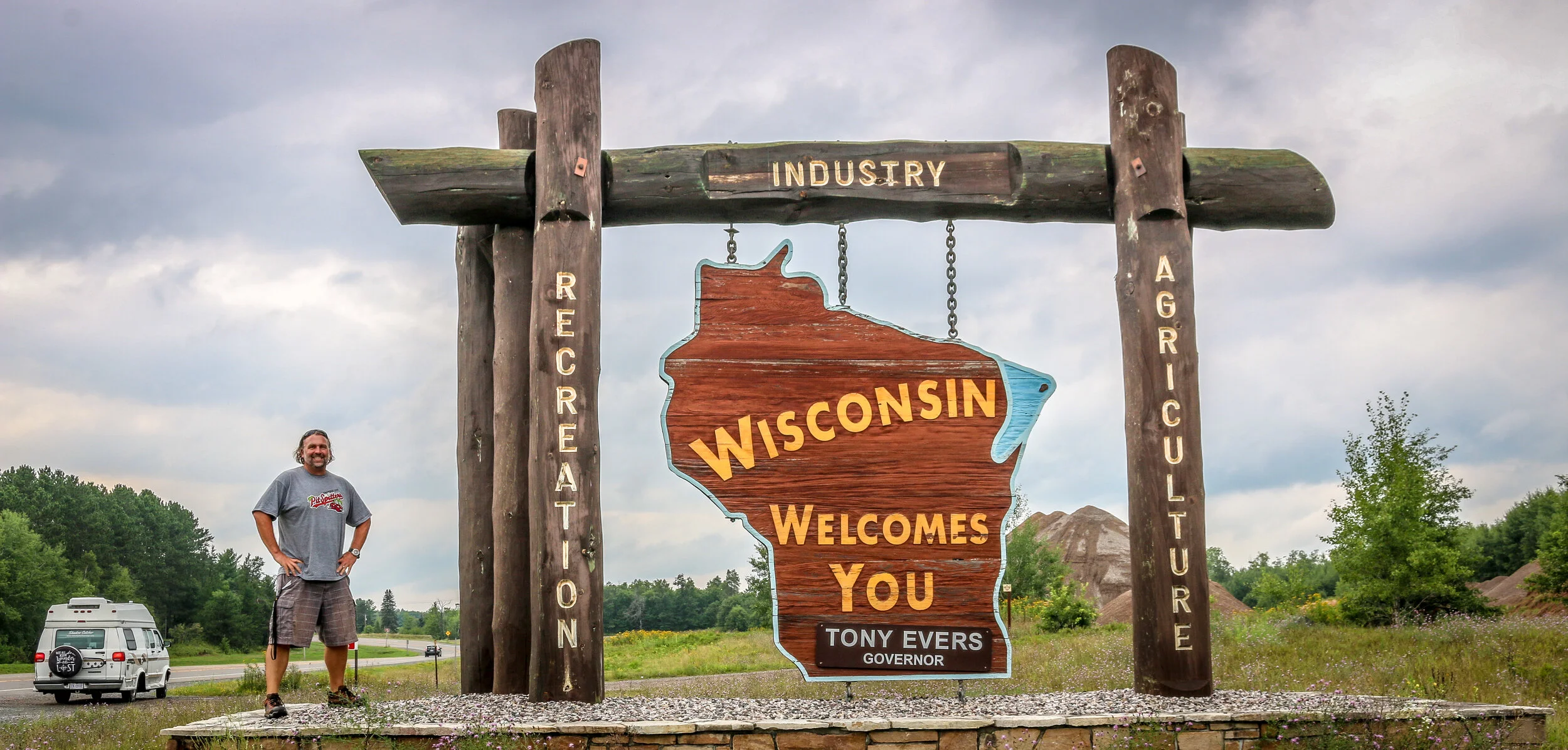
Hello Everyone and greetings from Green Bay, Wisconsin! I have completed my two month journey through Michigan and have moved on to the Badger State. I spent the first half of the week out in beautiful Isle Royale National Park, a destination I was really looking forward to and which definitely lived up to my expectations. Returning from the park on Saturday, it was time for me to make tracks and get myself into Wisconsin. Summer is passing quickly and I still hope to get through both Wisconsin and Minnesota before winter sets in. It’s been a good week, and I’m excited to tell you what I’ve been up to.
I headed out to Isle Royale on the Isle Royale Queen IV out of Copper Harbor bright and early on Wednesday morning. There are three boats that make the trip to the island, and this one just worked better with my schedule. It was fast and made the 55 mile crossing in about 3.5 hours and I enjoyed chatting with a mother and daughter who I sat with on the way out. The mother owned the rock shop in Copper Harbor and had a grandfather who once lived and worked as a fisherman on Isle Royale. Her daughter was in Copper Harbor for the summer and working at one of the restaurants in town. I was surprised by how many people I met who had family connections back to Isle Royale before it became a National Park.
When we arrived on the island, the rangers gave us their briefing, issued backcountry permits and we were off and running. Most of the park is designated wilderness, so unless you are staying at the lodge near the ferry dock you are on your own for the duration of your stay. I shouldered my pack and made my way a little over 7 miles to Daisy Farm Campground on the east side of the island. It’s been years since I’ve carried a full pack that distance, but I have been doing a lot of walking and hiking and it really wasn’t too bad. I even saw my first of nine moose I would see during my visit on this hike. Because I was there alone, it was easy to hear footsteps which weren’t my own and an adult moose has some pretty heavy footsteps. I was able to see the moose through the dense forest and enjoyed spending some time with her before heading on to camp where I took up residence in one of the shelters they had there. I had my tent with me, but since the shelters were available it seemed like an easier option even though it only takes 5 minutes to set up my tent. I had my first dehydrated meal in many years, something which has improved dramatically since the last time I ate one. It was a beautiful campground right on the lake and even though it was pretty busy, people were spread out and it didn’t seem crowded. I met some really nice people in camp and found it easy to talk to people as we obviously had shared interests in hiking, camping and/or National Parks and had gone to some length to get to this remote island.
Stretched between the towns of Munising and Grand Marais along the shores of Lake Superior in Michigan’s Upper Peninsula, Pictured Rocks National Lakeshore is a magical place filled with breathtaking scenery. From historical lighthouses to picture-perfect waterfalls, this small and often overlooked unit of the National Park Service is sure to have something for everyone. I enjoyed hiking many miles of trails along beaches and through the woods, past the waterfalls and overlooks that have captured peoples’ attention for hundreds of years. During the lumbering era, the area was clear cut, but the forest has regenerated in the last hundred years and is healthy again. It’s no wonder that Pictured Rocks was America’s first National Lakeshore, gaining this new designation in 1966. Pictured Rocks National Lakeshore is a must-see while visiting Michigan’s Upper Peninsula and a definite highlight of my time in the state. To truly see the rocks themselves, you do need to get on a boat and see them from the water. I chose the Sunset Spray Falls tour with Pictured Rocks Cruises and while I think the boat could have been better suited to sightseeing, it was a wonderful cruise nonetheless. If you’re ever traveling across northern Michigan, definitely plan on spending a day or two in beautiful Pictured Rocks National Lakeshore. You’ll be glad you did. I hope you enjoy these photos from my visit.
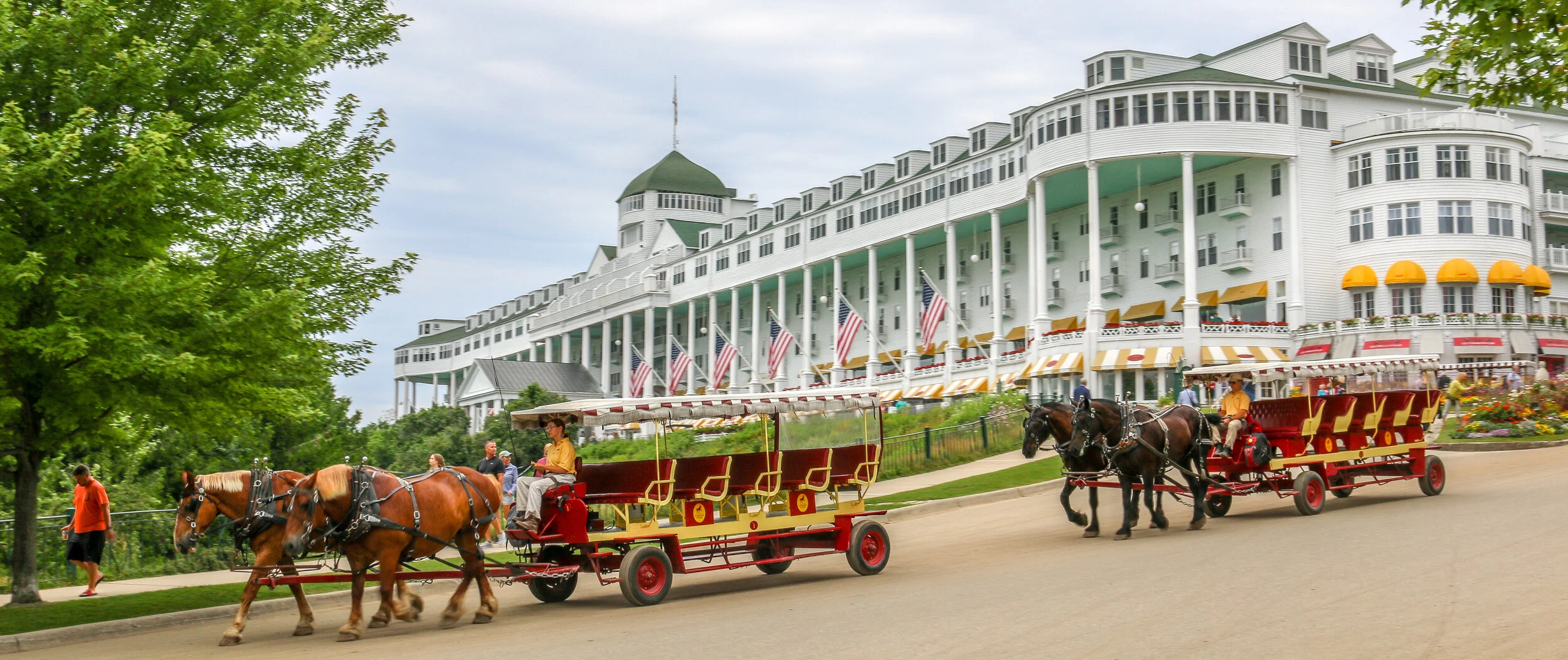
Stepping off the ferry on Mackinac Island is like stepping back in time. I’m sure that line has been used a million times, but it’s true. Way back in 1898 the city council banned “horseless carriages” from the entire island and that ban remains in effect today. Everything on the island is delivered and transported by horse-drawn cart or bicycle. This alone makes Mackinac Island special, but there’s so much more to this little corner of the world than its lack of cars.
Native Americans traveled back and forth to Mackinac Island for hundreds of years, by canoe in the warmer months and over the ice when the lake froze over. It became an outpost for the French fur trade in the 1700s and remained under French control until the end of the French and Indian War, at which time the British flag was raised on the island. During the American Revolution, the British moved Fort Michilimackinac from its former position on the mainland to a bluff high on top of Mackinac island. After the war, American troops occupied the fort, but a surprise attack during the opening days of the War of 1812 put it back in British hands. The Treaty of Ghent would return Mackinac Island to the Americans in 1815 and John Jacob Astor would soon set up his American Fur Company on the island.
After the Civil War, tourism boomed on Mackinac Island and it was named America’s second National Park with the army unit at the fort charged with the park’s protection. To accommodate the new influx of tourism, hotels were built including the incredible Grand Hotel which still sits high on a hill overlooking Lake Huron. Mackinac Island remained a National Park for twenty years, after which time it was turned back over to the state of Michigan and became Michigan’s first state park.
Today, Mackinac Island is one of Michigan’s top tourist destinations. While the population of the island is less than 500, as many as 15,000 visitors a day descend on the island in the middle of summer. I can certainly understand why as it is a truly beautiful and unique place. I arrived on the first ferry of the day and left on the last, so I did get to see the island in a fairly quiet state. The weather and photography conditions weren’t the best when I was there, but Mackinac Island is so photogenic that I took hundreds of photos anyway and included some of my favorites in this post. I haven’t captioned them all, because many are just of Main Street with horses and carriages but that was such a wonderful scene that I couldn’t help myself. I hope you enjoy these photos from beautiful Mackinac Island, definitely one of my favorite places I visited in my two months in Michigan.
Cheboygan was incorporated in 1871 and grew up around the timber industry, supplying wood for the westward expansion of the country. Located at the confluence of the Cheboygan River and Lake Huron, the town became known as the “Gateway to the North”, although now it goes by “Historic Rivertown” as well. Because of its location and proximity to the Mackinac Bridge and Mackinac Island, Cheboygan certainly sees its fair share of tourism, yet it maintains its small-town feel and felt more like a real, lived in town than many of the places I visited in the state. With two beautiful lighthouses and as the home port of the Coast Guard Icebreaker Mackinaw, Cheboygan maintains its maritime history as well. I had a wonderful time in Cheboygan and only captured some of the beautiful places the town has to offer, but it’s definitely a town worth seeing - ether as a less touristy gateway to the region or in its own right. I hope you enjoy these photos from my time in beautiful Cheboygan.