Viewing entries in
Off The Beaten Path

In Focus: Pecos National Historical Park

Comment

In Focus: Pecos National Historical Park

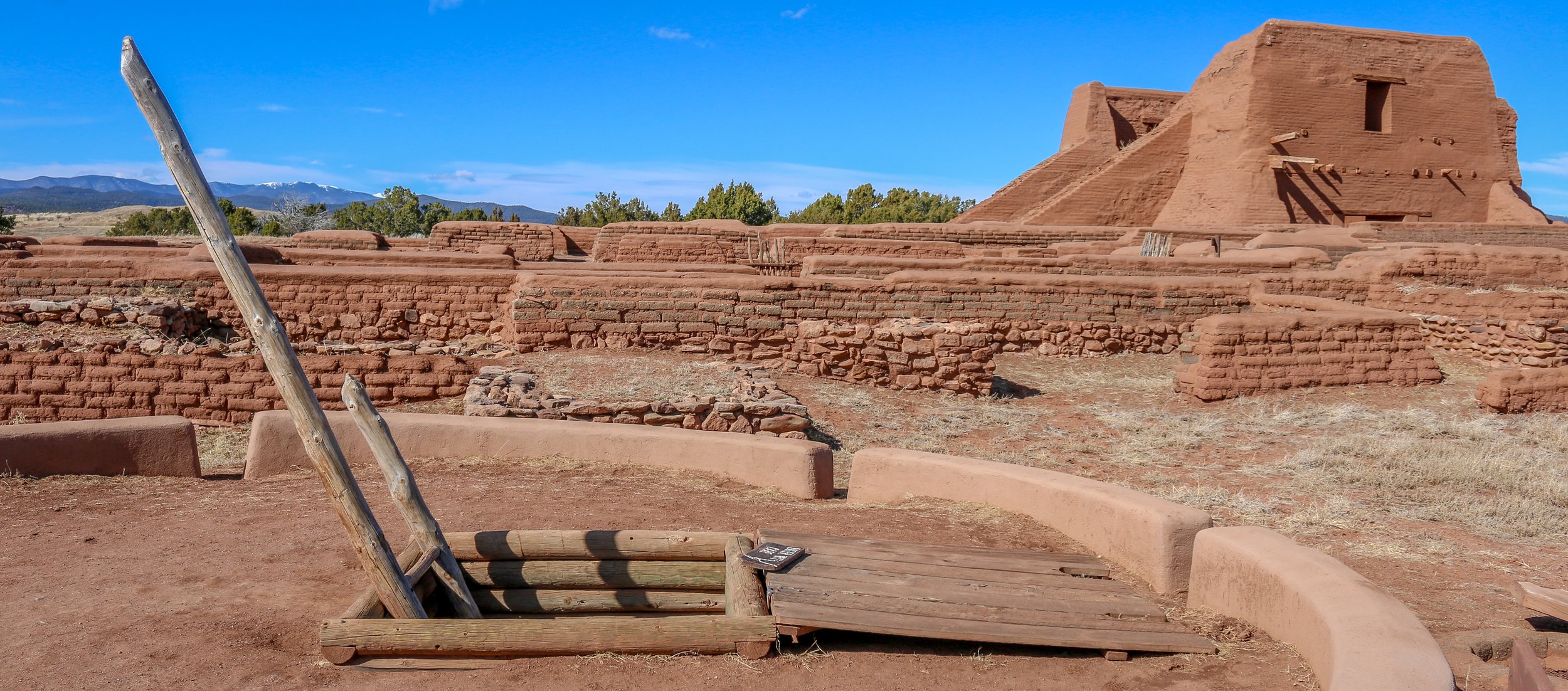
Construction of the pueblo at Pecos was begun sometime in the 12th century. Over the next few hundred years it would grow to become one of the largest pueblos in the area, supporting a community of perhaps 3,000 people. Sitting in what is now eastern New Mexico, this agricultural community was also a trade center between the mountains to the west and the plains to the east. Francisco Vázquez de Coronado visited Pecos on his 1540 conquest, as did Don Juan de Oñate 60 years later when he ordered construction of a mission church to help convert the Puebloans to Catholicism. That church was destroyed during the Pueblo Revolt of 1680 and a smaller church would be built in its place when the Spanish returned to the area twelve years later. The spread of European diseases would bring the ultimate demise of Pecos and in the 1830s the last of its old residents made their way to Jemez Pueblo where their culture and tradition is still remembered in the oral history. Emigrants on the nearby Santa Fe Trail no doubt used Pecos as a campground and marveled at the old pueblo. General Kearny and his troops camped at Pecos as well on their westward journey to claim New Mexico for the United States. During the Civil War, the Confederate army was making their way through New Mexico on a quest for Colorado and California gold. Their troops turned back to Texas after being defeated at the Battle of Glorieta Pass which is right up the trail from Pecos. Tex Austin purchased the land in 1925 and turned it into the Forked Lightning Ranch which was purchased in 1941 by Buddy Fogelson. The Fogelsons were instrumental in creating Pecos National Monument in 1965, and after their deaths the park’s boundaries were expanded to include the ranch and the designation changed to Pecos National Historical Park.

Today the park does an incredible job of interpreting all of this fascinating history in its wonderful museum. The 1.5 mile trail takes you through the remains of the pueblo and into the ruins of the old mission church. Two kivas have been reconstructed to provide some insight into Puebloan culture and religion as well. It’s a beautiful place to visit and just a short drive from nearby Santa Fe. I hope you enjoy these few photos from fascinating Pecos national Historical Park.

Comment

This Week on the Road - March 30th - April 6th

Comment

This Week on the Road - March 30th - April 6th

Hello Everyone! It’s been another amazing week out here in New Mexico and I can’t wait to tell you about it, but I’m going to start out this week with my most exciting news. As most of you know, I will be going back to my regular gig as an overland tour guide this summer. I’ll be working for a company called Incredible Adventures which is currently being run by my last two managers from my old company. I got a call from one of them yesterday with some thoughts on my start-up tour and I will be heading to Hawaii next month. Of all the places I thought I might go this summer, Hawaii was not on my list and I am so excited for this opportunity. It will be in the midst of my time in Arizona, but I will fly out and then back and be able to finish up my time there before heading on to San Francisco to begin my season in earnest. I am definitely looking forward to walking barefoot on a white sand beach and swimming in beautiful turquoise water. So with mai tais and sea turtles dancing in my head, let me tell you about my exciting week here in New Mexico.

When I left you last week, I was planning on heading to a place called Meow Wolf the following morning. Meow Wolf was an incredible experience which is really hard to explain. It’s essentially a big funhouse, full of fascinating and beautiful art installations. You enter it through the front door of a Victorian house and then you choose your own adventure from there. You can go through the fireplace into an ice cave with a mammoth skeleton which you can play like a xylophone. You can go through the refrigerator which takes you to a strange vacationland. You can go through the bookcase and come out in a circus-like room. You end up in treehouses and lighthouses and flying buses. It really is quite a place to experience and I was there for probably three hours and continued finding new rooms and passages right up until the end, and I’m sure I missed some along the way. It was weird and wonderful and I would definitely recommend it if you are ever in Santa Fe (or Denver or Las Vegas).

My Thursday afternoon was definitely one of ups and downs. I got a call from my dad telling me he had fallen and broken his ankle. He’ll be okay and is in a recovery facility, but I worry about some of these places and what floats around in them with Covid only being one such worry. On the flip-side, I got a nice email telling me one of my photos has been accepted to be published in a book of hiking trails from National Geographic called 100 Trails, 5000 Ideas. As a photographer, National Geographic is obviously one of the biggest names in the industry and while it will be a small photo in a big book, I’m still very happy to be included. In the afternoon I headed over to visit the Montezuma Masonic Lodge, where the gentleman I met in Taos told me I could find Kit Carson’s rifle. I met several of the Masons who were a part of the Lodge when I walked in, and they were incredibly warm and welcoming. The Secretary, Don, told me the whole story of the rifle and how Kit himself had instructed that it be hand delivered to the Lodge upon his death. It was, and they’ve been caring for it ever since. I had to put on a pair of gloves to hold it, but it was amazing to have this piece of history in my hands. I’m very grateful to the gentlemen of the Montezuma Lodge for their hospitality and all of the fascinating stories they shared with me while I was there. I decided to celebrate the day with a few beers at La Fonda, a wonderful must-see hotel right off the central Plaza in downtown Santa Fe. Mark has been bartending at La Fonda for years and it’s always a pleasure to stop in and say hello and have a drink in historic surroundings. From there, I said goodbye to Santa Fe and headed up the highway to the Buffalo Thunder casino for the night.

I started my day on Friday at Bandelier National Monument, not far up the road. Due to its proximity to Santa Fe it’s a busy park and it was fairly crowded when I was there, but there were some great old ruins to poke around at the base of some beautiful cliffs. When I had had my fill of the ruins, I had some lunch and then set off up the other side of the canyon on the Frijoles Rim Trail. It was a wonderful and beautiful trail and, in contrast to the valley, I didn’t see a single person along the whole hike. The trail took me up to the top of the canyon and along its rim for a mile or so and there were wonderful views down the canyon and off to the mountains in the distance. When I made it back to my van, we were off and running to Los Alamos to have a short look around Manhattan Project National Historical Park before it closed. I had been to another section of this park several years ago in Oak Ridge, Tennessee where they had enriched the uranium which was then transported to Los Alamos and built into the atomic bombs. They tested their first bomb at the Trinity Site down near what is now White Sands National Park…

Comment

Snapshots: Las Vegas - New Mexico's Historical Gem

4 Comments

Snapshots: Las Vegas - New Mexico's Historical Gem

“The Original Las Vegas” was founded along the Galinas River in 1835 in the midst of Mexican rule in the area and quickly grew as a popular stop on the Santa Fe Trail. It was on the Plaza in Las Vegas where Stephen Watts Kearny claimed New Mexico for the United States during the Mexican-American War in 1846. In 1879, the Atchison, Topeka and Santa Fe Railroad came to Las Vegas and the town quickly grew into one of the largest in the region. The New Mexico Normal School (now Highlands University) was established in 1893 and Fred Harvey built the Castañeda Hotel in 1898 as part of his hospitality empire in the southwest. Las Vegas hosted Teddy Roosevelt’s Rough Riders’ first reunion in 1899, a tradition that continued for many years. In more recent years, Las Vegas has been the filming location for many movies including No Country For Old Men, Wyatt Earp (with Kevin Costner), and perhaps most notably for me, Red Dawn where it served as the fictional town of Calamut (the massive “Calamut Says Howdy” mural is still a prominent feature downtown). I found Las Vegas to be a quiet, charming University town with some spectacular architecture, fascinating history and friendly people. It may be the “other Las Vegas”, but it’s a town not to be missed on your travels in New Mexico. I hope you enjoy these photos from wonderful Las Vegas, New Mexico.

4 Comments

This Week on the Road - March 23rd-30th

Comment

This Week on the Road - March 23rd-30th

Hello Everyone! It’s been a wildlife viewing week out here on the roads of Northern New Mexico. I’ve seen eagles and hawks in the air, deer, bighorn sheep and pronghorns in the fields and lots of prairie dogs running around searching for their underground tunnels. I like seeing wildlife. These animals make me smile. I’ve actually done a lot of smiling this week as I’ve found myself in wild places surrounded by beautiful landscapes and breathtaking sunrises and sunsets. I’ve managed to keep most of the demons in my head at bay this week and have felt pretty good all around. The weather has generally been great this week as well which hasn’t hurt. Warm, sunny days and cool, pleasant nights work really well for me. I do find that I need to change from shorts to long pants very soon after the sun goes down – it doesn’t take long to cool down in this dry air. It’s hard to believe I’ve been in New Mexico for over a month at this point, but I’m starting to make plans for the final stretch of my time here and then I’m off to Arizona for the rest of my winter/spring. My month in New Mexico has been special and memorable and I definitely understand why they call it The Land of Enchantment.

When I left you last week, I was in tiny Clayton, New Mexico in the far northeast of the state. I did head out to Clayton Lake State Park that evening which has a fascinating “pad” of over 200 dinosaur footprints from when the area was the muddy shoreline of a vast inland sea. Some of the footprints were very pronounced in the evening light and while it was very windy out there it was still really cool to see. I decided to spend the night at one of the campgrounds by the lake and ended up having the whole place to myself which was really nice. It was windy and cold, but I stayed out to watch the sunset and then popped out periodically to check out the stars which were really bright and mesmerizing.

Thursday morning I stuck around my campsite for a bit, enjoying my coffee and the warm sun on my face by the lake. I’ve been rereading the book Blood and Thunder by Hampton Sides which essentially tells the history of early American New Mexico. It’s an excellent book, and I’m enjoying it even more now that I’ve been to a lot of the places he writes about. A pair of bald eagles were cruising around the lake while I read which was awesome. Eventually I pulled up stakes and headed back into town to take a few more photos and then got on the road west to Capulin Volcano National Monument. I had noticed on my way out to Clayton Lake the evening before that the landscape was much more volcanic in that part of the state and it became even more pronounced as I went west. I drove past Sierra Grande, which is an incredible example of a shield volcano and then headed towards Capulin which is one of the country’s best specimens of a cinder cone volcano. This volatile and quick-forming volcano (which looks like what you imagine in your head when you think of a volcano) formed sometime around 60,000 years ago. The fertile soil it produced made for some fine grazing land so ranchers have used the land around the volcano for centuries and its distinct and easily recognizable shape made it a landmark on the Santa Fe Trail. Today, you can drive right to the top which is pretty cool but probably not for the faint of heart as there is a pretty severe drop-off and not many guardrails on the road. Once you get up there, though, you are rewarded with remarkable views in all directions and you can hike around the rim and down into the crater. You can look east at the seemingly endless plains stretching to the horizon and west to where they run into the Rocky Mountains. When I left the park, I headed north to Folsom and planned on taking the road over Johnson Mesa to Raton so I could drive past the Folsom Man Site, an archaeological area similar to the Clovis Man Site I talked about last week when I visited the Blackwater Draw museum. Somehow I took a wrong turn and ended up going a half hour down the wrong road but it was a beautiful road and a nice detour. When I finally figured out I had gone astray, I returned to Folsom and found the road I wanted to take. It was poorly marked and when I made the turn, I found it was also closed. Two hours later, I was back at Capulin but thankfully it was only a short drive from there to Raton. Raton is a cute little town on the railroad line with an old theatre and an older train station. I did wander around town a little bit but I was pretty tired and didn’t find out much about it. I stopped in for a great craft beer and one of the best burritos I’ve ever had at the Cellar Brewery (which is actually on the first floor, but they brew the beer in the basement) and then called it a night.

On Friday morning I headed just down the road to the town of Cimarron. Their sign reads “Where the Plains Meet the Mountains” and you can look west from town and see the Rockies emerging from the flat plains. Cimarron is also home to the Philmont Scout Ranch, a massive wilderness area donated by oilman Waite Phillips to the Boy Scouts in 1938. Way back in 1992, I came to Philmont on my very first trip to New Mexico and my first trip anywhere west of the Mississippi. My Boy Scout troop spent 10 days backpacking through the Sangre de Cristo Mountains and covered about a hundred miles on foot if my memory serves. It was an amazing experience for a city kid like me and a formative one…

Comment

Snapshots: Madrid - An Old Coal Town Reborn

Comment

Snapshots: Madrid - An Old Coal Town Reborn

Madrid was the first town I came to along the beautiful Turquoise Trail, the scenic byway which connects Albuquerque and Santa Fe. Pronounced MAD-rid for some maddening reason, I couldn’t find a clear story as to how the town got its name. The earliest Europeans in the area most likely came from Spain, but it doesn’t appear that Madrid got its name until New Mexico was an American territory. First lead and then coal were mined in the surrounding hills and in 1892 a 6 mile spur was built to connect the town to the Santa Fe Railway. By 1906, coal mining in the area was consolidated under the Albuquerque and Cerrillos Coal Company and a company town grew to a population of over 3,000, more than that of Albuquerque at the time. In 1922, Madrid boasted the only baseball field with lights west of the Mississippi River, and the Brooklyn Dodgers’ minor league affiliate the Madrid Miners played there for many years. The mines did well until the early 1950s and in 1954 the Coal Company left Madrid and many of the residents went with them. By the early 1970s, Madrid was almost a ghost town but then artists discovered the town and started moving in. Today, Madrid is a vibrant and colorful town with many reminders of the old mining town that it once was, but truly reborn as an artists’ colony and a tourism destination. I hope you enjoy these photos from beautiful Madrid, New Mexico.

Comment

Snapshots: Socorro - A Lucky Stop Under Perfect Skies

Comment

Snapshots: Socorro - A Lucky Stop Under Perfect Skies

In 1598, Juan de Oñate y Salazar was on a conquest to colonize Nuevo Mexico for Spain. Traveling north of El Camino Real, his caravan had just passed through the dreaded 90 mile stretch known as the Journada del Muerto or “Journey of the Dead Man” when they encountered the Piro people of the Tempana Pueblo. These people offered the party food and water and Oñate called the place “Socorro” meaning succor or aid. In 1626, the Spanish built a mission church nearby and christened it Nuestra Señora del Perpetuo Socorro or Our Lady of Perpetual Succor. The mission was abandoned and destroyed during the Pueblo Revolt of 1680 and wouldn’t be resettled until 1815. A beautiful new church was built and named after San Miguel.

I came to Socorro because it was where I was when I ran out of steam for the day. It was on my radar, but I didn’t know if I would have time to stop. I’m sure glad I did. There are so many wonderful historic buildings around town, and the evening was absolutely perfect for photography. I enjoyed a nice long walk around downtown and then settled into the mining-era Capitol Bar for a couple of their house-brewed beers. Then I ventured out to El Camino Restaurant and Lounge, a holdover from another time. Both the restaurant and the lounge are worth visiting for the ambiance alone. It snowed overnight and while there wasn’t much on the ground, the mountains had a lovely dusting. I happily snapped a few more shots with the snow before hitting the road. Socorro is definitely worth a stop on your way through New Mexico and I hope you enjoy these photos from my brief time in this wonderful little town.

Comment

Snapshots: Hiking Organ Mountain - Desert Peak National Monument

Comment

Snapshots: Hiking Organ Mountain - Desert Peak National Monument

Organ Mountains - Desert Peaks National Monument is a beautiful park in Southeast New Mexico managed by the Bureau of Land Management. Just 25 minutes from Las Cruces, this park makes for a great day trip from the city or a stop-off on your way to or from White Sands National Park. I enjoyed a wonderful 7 mile round-trip hike up to Baylor Pass, a saddle with wonderful views out over the Chihuahuan Desert. In the afternoon, I made a 3 mile round-trip hike to the ruins at Dripping Springs. This area, which contains a natural spring deep in a hollow, was once home to Boyd’s Sanitarium and Van Patton’s Mountain Camp. The sanitarium catered to tuberculosis patients while the mountain camp was a fancy hotel and resort. Opened in 1897, the hotel had 15 guest rooms, a dining hall, a concert hall, a gazebo and a roller-skating rink and hosted the likes of Pat Garrett and Pancho Villa. The resort fell on hard times during World War I and Eugene Van Patten sold it to Dr. Boyd who ran the sanitarium. The Great Depression would be the final blow to the resort and it closed for good in the 1920s. Today it is maintained in a state of arrested decay and makes for a cool walk in the late afternoon. There is so much more to this park than just these two hikes, but they were all I had time for during my visit. I hope you enjoy these photos from Organ Mountains - Dripping Springs National Monument.

Comment

This Week on the Road - March 4th-10th

2 Comments

This Week on the Road - March 4th-10th

Hello Everyone! It has been an amazing week here in New Mexico as I’ve been out hiking, exploring state and national parks, visiting small towns and soaking in some wonderful hot springs. The wind has been blowing tumbleweed across my path and the roadrunners make me smile. I even popped over to Mexico for a couple of beers this week. I’ve been feeling great and riding on a real high since arriving in New Mexico, and I’m hoping to keep cruising happily along for as long as I can. When I started this journey four years ago, I really wanted to take a deep dive into the Deep South and Appalachia and learn more about the history, culture, music and food of those regions. I had a fascinating time doing just that, but I also wanted to get west and visit old cowboy towns and hike through the desert. I didn’t know it was going to take quite so long to get here, but I’m sure glad I have finally made it. It’s so quiet out here and I’ve been so happy to get on the trail and explore a region so different from the places I’ve been for the last few years. I’ve spent some time out here on tour, but very little in New Mexico and mostly just cruising through. It’s been really great to be here and it’s been a fascinating week.

I know the world is struggling right now, and being partly of Ukrainian descent, I’m very aware of and unhappy with what Putin is doing in Eastern Europe. I don’t think there is much I can do about it, though, so I’m going to keep pushing onward and upward. The price of gas has skyrocketed in the last couple of weeks as a result of this invasion. I paid $2.98 a gallon just a couple of weeks ago in East Texas and today it was $4.49. I have travelled enough to know that that is still cheaper than in much of the world before all of this started, but when I have to fill up my tank every couple of days it hits hard. It means I have to plan things out more to avoid backtracking and make other adjustments accordingly, but I'm not going to let it stop me. It is actually an incredibly small price to pay to support the Ukrainian cause and while I wouldn’t say I’m happy to do it, I’m willing to do it. I’m very grateful to have work lined up for this summer though.

When I left you last week, I had just arrived in Las Cruces. After I finished writing this post, I decided to head down to Old Mesilla and have a look around and maybe grab some dinner. Mesilla is a town just south of Las Cruces which was created after the Treaty of Guadalupe Hidalgo (which ceded New Mexico to the United States) as a town for those who wished to remain in Mexico. The border was later moved south and Mesilla officially became an American town. It’s a really cute little place, centered on an old central plaza with plenty of adobe buildings surrounding it. I loved that they had ristras of red chiles hanging from their light posts which brought a big smile to my face. I wandered around for a while and then took a seat in the plaza to listen to the Ash Wednesday sermon coming from the speakers attached to the central Basilica of San Albino, built in 1906. It was a quiet and pleasant sermon and I enjoyed listening to it in the quiet plaza as the sun was going down. When the sermon was over and the sun had set, I dropped into the Double Eagle for a margarita. The Double Eagle is apparently one of the fancier places in the area, and one that families tend to visit on special occasions. The bar area was absolutely stunning and the bar itself was constructed from the old high school basketball floorboards. They made a good margarita and there was a perfect single seat in the corner made just for me. When I finished my margarita, I made my way just down the block to La Posta de Mesilla, the other legendary venue in Mesilla and a restaurant recommended by more than one friend. I loved the piranhas and parrots in the waiting area and soon got a seat at the back bar. I had a hankering for a prickly pear margarita and was thrilled they could accommodate this request. The couple next to me were retired Border Patrol, and they were really wonderful to talk with. On my other side was a gentleman who grew up in L.A. but had moved to Phoenix many years ago. Both were such easy and gentle conversations, maintaining my first impression of the people of the region. My second drink was a chile margarita which definitely had a little spice and kick to it. The drinks and people were great but sadly the food wasn’t very good at all. It was quite ordinary actually and quite disappointing for such a large and historic spot. I had a great time in Old Mesilla despite my tasteless burrito, and decided to call it a very early night.

I was up and at ‘em early on Thursday, though, and on my way out to the Baylor Pass Trail in Organ Mountains - Desert Peaks National Monument. This is a beautiful natural area just north and east of Las Cruces, and I was happy to get out there while the sun was still behind the clouds. The hike up to the pass was steady and moderate, but gained a good bit of elevation over the 3.5 miles to its crest. It took me through prickly pear and yucca and even some sagebrush on my climb…

2 Comments

This Week on the Road - February 24th-March 3rd

5 Comments

This Week on the Road - February 24th-March 3rd

Hello Everyone! Well it was a fun romp across the country and I’ve made it to New Mexico. I’ve definitely been having a wonderful first week here in The Land of Enchantment. I’ve traveled from the oilfields of the southeast, through UFO country at Roswell and into the Old West at Lincoln. I paid my respects at the grave of Smokey the Bear, passed through some beautiful ski resort towns and then down into the Tularosa Basin of the Chihuahuan Desert where I saw some cool petroglyphs and incredible White Sands National Park. My week is ending here in sunny Las Cruces where I celebrated Mardi Gras last night, far from New Orleans, but close in my heart. It’s been an amazing and incredibly diverse start to my New Mexican adventure, much like the people of the state itself. I can honestly say that my first impression of New Mexican people in the short time I’ve been here is that they are very sweet. That’s probably not a good word, but it’s the one which constantly comes to mind. I’ve had quiet and pleasant conversations with roughnecks, bouncers, a bartender missing his front teeth and a guy with neck tattoos and every one of them just seemed like a teddy bear who would giggle if you tickled them (an impression I did not test out on any of them). I have, of course, met wonderful people all over the country, but there are places where you get a particularly good feeling and so far this part of New Mexico has given me that feeling. The places I’ve traveled have been great and the food has lived up to my memories of how good New Mexican cuisine can be. All in all, it’s been a fantastic week on the road and just what I needed to start off this leg of my journey.

When I left you last week I was headed towards Luckenbach in the Hill Country of Texas. On my way, I stopped into Lyndon B. Johnson National Historical Site in Johnson City, a town named after one of Lyndon’s relatives, James Polk Johnson. The site was fascinating and included LBJ’s boyhood home in Johnson City and the Johnson Ranch and “Texas White House” a few miles down the road where he lived later in life and eventually retired. It’s also where he is buried in a very simple family cemetery. LBJ grew up in a humble home with no electricity, one of five children born to two local teachers. He went on to become a teacher himself and taught impoverished children of Mexican descent. LBJ entered politics in 1931 as a legislative secretary and went on to serve in both the House of Representatives and the Senate (where he rose to be the Majority Leader). In 1960, he ran against John F. Kennedy for the Democratic nomination for president, joining JFK’s ticket after his primary defeat. When LBJ became president after Kennedy’s assassination, he often returned to his Texas ranch, inviting friends, colleagues, and foreign dignitaries to join him there and experience some Texas hospitality. Their barbecues were both massive and legendary. While the Texas White House was closed during my visit, the grounds were open and I enjoyed learning more about Johnson, his early life and his political successes. I had always pictured Johnson as a Texas rancher, but never realized his humble upbringing and had always assumed he was just carrying on with Kennedy’s agenda instead of how much actually came from him. I’m glad I made the stop and after a few hours there, I was off to Luckenbach.

Luckenbach was settled in 1845 and steadily grew to a population of 492 people in 1904. By the 1960s, though, it was virtually a ghost town and the town was advertised for sale in the newspaper. Two men, Hondo Crouch and Guich Koock, bought the town for $30,000 and set about trying to revitalize its aging dance hall and country store. The town’s fate was sealed when Waylon Jennings recorded a song called Luckenbach, Texas (Back to the Basics of Love), a song he hadn’t written about a town he’d never been to. The song hit #1 on the charts and people have been coming to check out the town ever since. It hosts concerts, festivals and live music daily. The night I arrived the scheduled musician had called off due to the weather but luckily a group of musicians just happened to be there to celebrate a friend’s birthday and jumped at the opportunity to take the stage in such a storied venue. They were great and I enjoyed chatting with them after the show. I also enjoyed meeting the locals and talking about the history of the town and the people who have passed through over the years. It was a really fun night.

Freezing rain came overnight and caused both shows to cancel on Thursday so I decided to head on down the road. The rain had frozen in the trees, creating an absolutely mesmerizing landscape as I descended out of the Hill Country and into the flatlands of West Texas. When I got to a lower elevation, the frozen trees gave way to prickly pear cactus and I felt as though I had arrived in the West. I made my way through Mason, Menard and Eden before landing for the night in San Angelo. I hit the gym and then headed out for some delicious Tex-Mex food and a quick beer before calling it an early night.

5 Comments

Snapshots: Lincoln - The Baddest Town in New Mexico

Comment

Snapshots: Lincoln - The Baddest Town in New Mexico

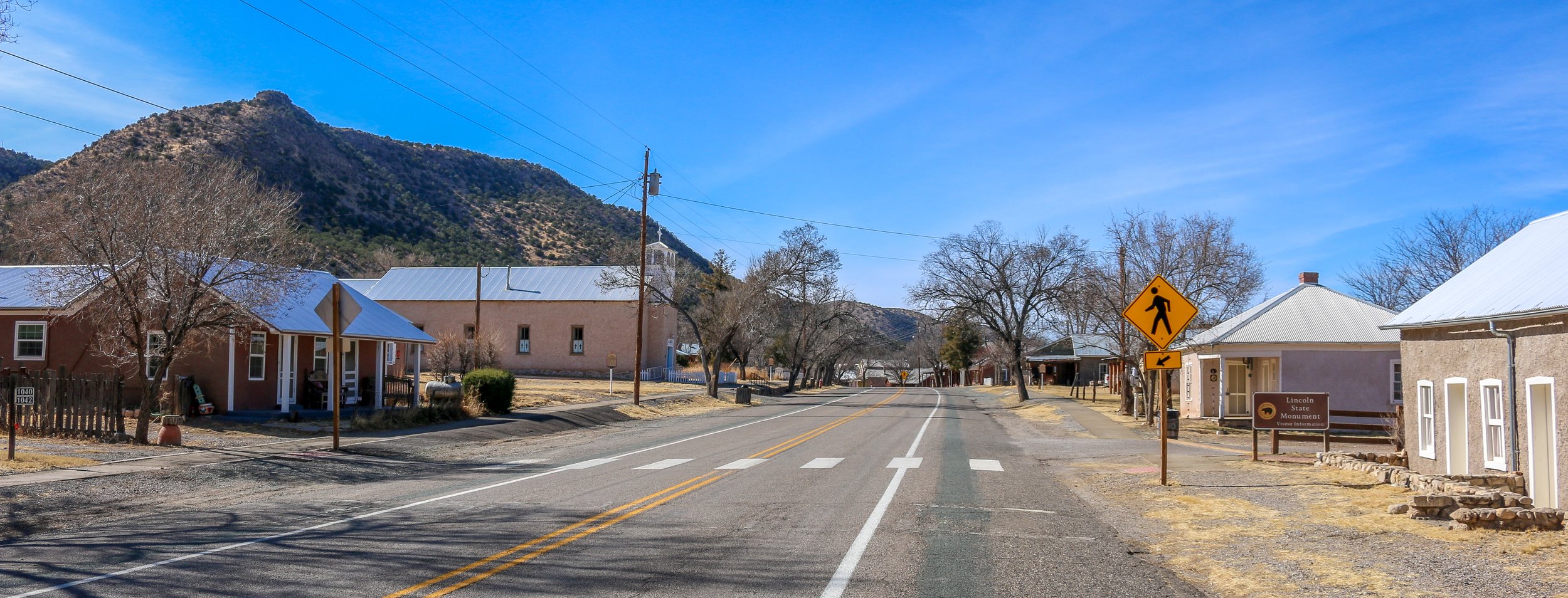
The area in southeast New Mexico that now includes the town of Lincoln was originally inhabited by Mogollon people and later by the Piros and Mescalero Apache. When a group of settlers arrived from the Rio Grande Valley, they named their new town La Placita del Rio Bonito, or “the place by the beautiful river”. The town was renamed soon after the Civil War in honor of President Lincoln and was made the county seat of the massive Lincoln County. In 1873, Irishman L.G. Murphy opened a general store and won the contract to supply beef to nearby Fort Stanton. When Englishman John Tunstall set up a rival store down the street and challenged Murphy’s monopoly on the beef contract, the Lincoln County War broke out with each man hiring his own army of gunslingers. One of Tunstall’s men, who the world remembers as Billy the Kid, has gone down in history as one of the most notorious figures from Old West lore. The Kid was arrested and tried for his role in the murder of the county’s sheriff and was held in the county courthouse, which had once been Murphy’s store, to await his hanging. He outsmarted and overpowered the two deputies who were watching him and escaped, only to be cornered and killed by the new sheriff, Pat Garrett, just a few months later at Fort Sumner. The volatility in Lincoln led President Rutherford B. Hayes to call the town’s main street "the most dangerous street in America". Today there are quite a few remnants from its wild past and much of the town is an historic site. I found the whole place fascinating and learned a lot while I was there. I wish I had had more time to explore it, but I hope you enjoy these photos from my brief stay in tiny Lincoln, New Mexico, once one of the Old West’s baddest towns.

Comment

This Week On the Road - December 23rd-January 5th

2 Comments

This Week On the Road - December 23rd-January 5th

Hello Everyone. Happy New Year to you all – may 2022 be everything you hope and dream it can be. I apologize for this newsletter not going out last week, but my folks and I were out of town on a little trip I will tell you all about later in this post. I had hoped to get my newsletter done before we left, but it just didn’t happen. Then the New Year came and went and then a snowstorm hit us on Monday and now it’s a whole week later. I’m sure you all had plenty to do as well this past week, but I missed writing this post nonetheless. It was definitely a festive week here at home and we enjoyed spending a lot of time together. We got out and saw some very cool places these last couple of weeks which I’d love to share with you here.

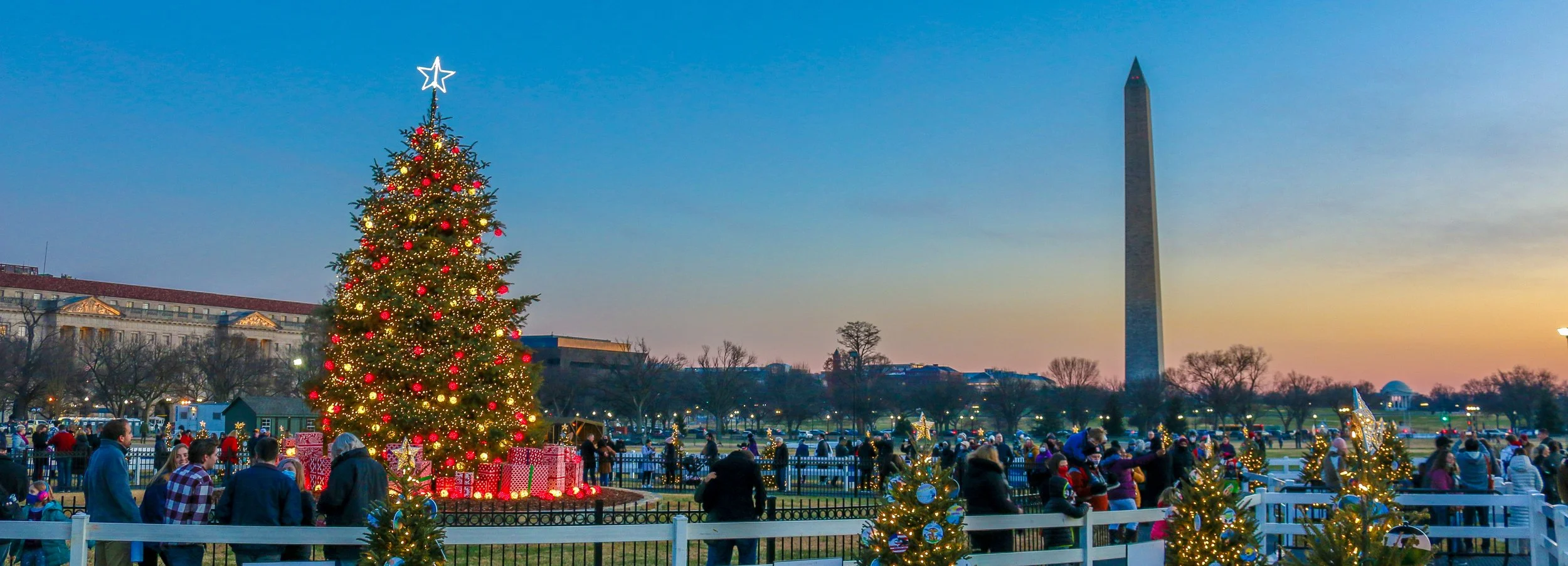
The Thursday before Christmas, we all headed down to Old Town Alexandria for lunch at Gadsby’s Tavern which was opened in 1770 and hosted two of George Washington’s birthday celebrations. It’s a great little colonial inn and our lunch was really good. From there we wandered around the Alexandria waterfront a little bit and then made our way back to downtown D.C. We had a nice visit to the National Christmas Tree in front of the White House and to the Capitol Christmas Tree at the U.S. Capitol. On the drive between the two, we were really struck by the beautiful tree at the Canadian embassy as well. Downtown Washington is a beautiful place every day, but it’s especially nice at Christmas and a really nice day really put us in the mood for the holiday weekend.

And a wonderful Christmas weekend it was, with lots of cooking and eating and music and fun. It was wonderful to get together and cook all day on Christmas Eve and Christmas Day and turn out both an excellent breakfast and dinner on both days (no lunch was required, believe me). Everything came out well, and I was very proud of my first cheesecake which was delicious. While I don’t really want or need anything in the whole world, my mother really surprised me with a wonderful gift this year. I had mentioned in my blog a few weeks ago when I was out in Minnesota how much I had wanted an Indian pipestone pipe carved from their sacred quarries, but simply couldn’t justify the purchase. I don’t get a lot of souvenirs on the road, but that was one I had wanted and was disappointed about not getting. My mom found a really beautiful pipe online which had been hand carved by Roy Redwing of the Santee Dakota Nation from the quarry I visited while I was there and it’s something I will really treasure. I got a Roku for each of them so that when they are watching TV they can watch what they want as opposed to what’s on, and they are enjoying them so far.

After Christmas we lay low for a couple of days and then headed north and west to Pennsylvania. We had visited the National Historical Sites of Western Pennsylvania before, but it had been a bit rushed and we hadn’t had the chance to really dig into them as much as we would have liked, so this trip set out to remedy that. Our first stop was Allegheny Portage Railroad NHS, which tells the fascinating story of the first continuous transportation link between Philadelphia and Pittsburgh (and also, therefore, between the eastern seaboard and the Ohio and Mississippi Rivers). The biggest challenge on this route was over the mountains between Hollidaysburg and Johnstown. In 1834 a system was completed by which canal boats could be towed onto railcars which could then be towed up the mountain by being attached to cables which were powered by steam powered engines. It was quite the engineering feat and was utilized for 20 years to make the crossing. Charles Dickens passed this way on his travels, as did the bodies of two presidents (William Henry Harrison and Zachary Taylor) on their way west for burial. With the opening of the Pennsylvania Railroad and the Baltimore and Ohio Railroad, this route became obsolete in the 1850s and not much of it remains today, but it is a fascinating place and the National Park Service does a great job of interpreting the site, as usual.

From there we headed on to Johnstown Flood National Memorial which commemorates the tragic 1889 flood which occurred following the failure of the South Fork Dam on the Little Conemaugh River.

2 Comments

Snapshots: Wabasha - A Hidden Gem on the Mississippi River

Comment

Snapshots: Wabasha - A Hidden Gem on the Mississippi River

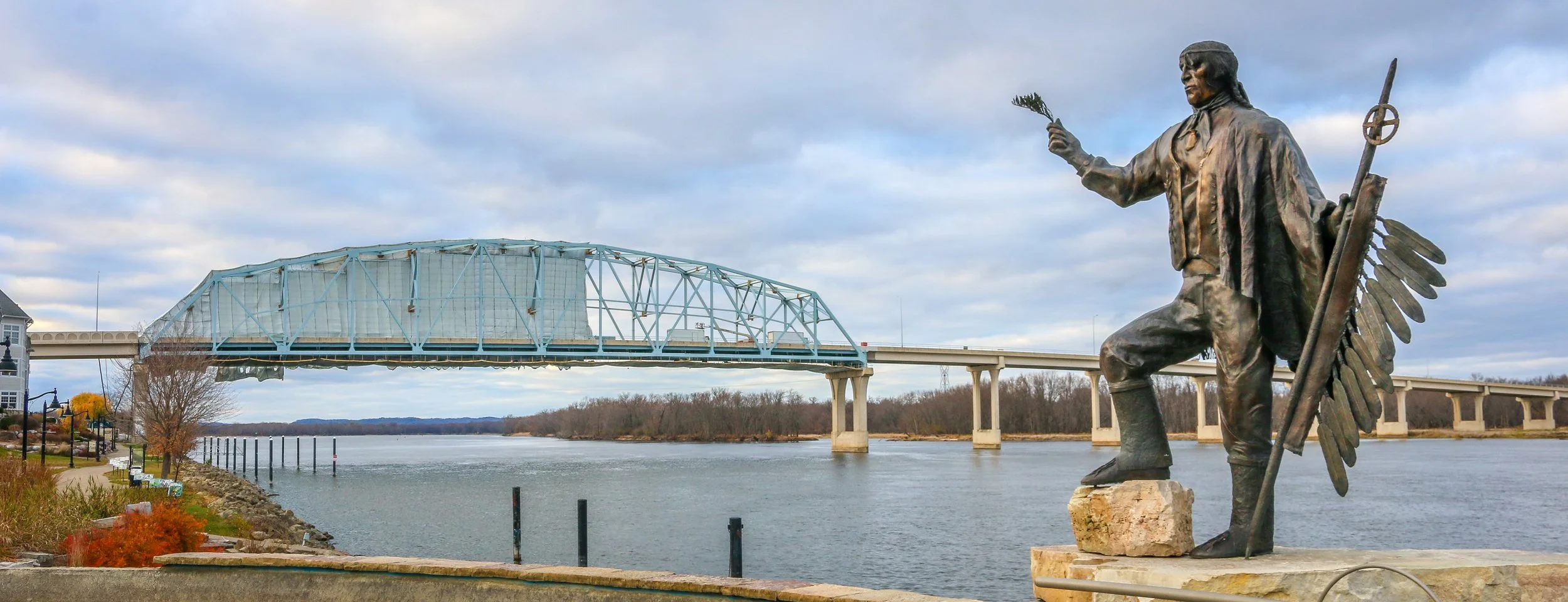
When Europeans first made their way up the Mississippi River, these lands were occupied by the Mdewakanton Dakota people who were led by Chief Wa-pa-shaw. The area was settled in 1826 and officially recognized after the Treaty of Prairie du Chien was signed in 1830. The fledgling town was named after the Chief as “Wabasha” and is now one of the oldest towns on the Upper Mississippi River. The early town’s economy was based on shipping, trading, lumber and flour and there was also a clamming industry and a button factory which utilized the discarded clam shells. Today, Wabasha is still undeniably a river town, but has made tourism a major economic interest - especially with the addition of the National Eagle Center. It’s probably most famous in recent times as the setting, though not the filming location, of the movie Grumpy Old Men. All of that being said, it would be easy to just blow on past Wabasha as it is just a small town of 2,500 or so people, but you’d be missing a real gem on Minnesota’s stretch of the mighty Mississippi. The historic buildings, the awesome statue of Chief Wabasha and the beautiful river setting combine with friendly people and some wonderful small businesses to make Wabasha a charming destination. Be sure you stop by Hoppy Girl Brewing Company while you’re there to taste some of the state’s best microbrews in one of its smallest and friendliest breweries. I had a wonderful visit to Wabasha even though the winter skies were definitely telling me it was time to head south. The next time I find myself in Minnesota, though, it will definitely be on my list of places to return. I hope you enjoy these photos from tiny Wabasha, Minnesota - a true hidden gem on the Mississippi River.

Comment