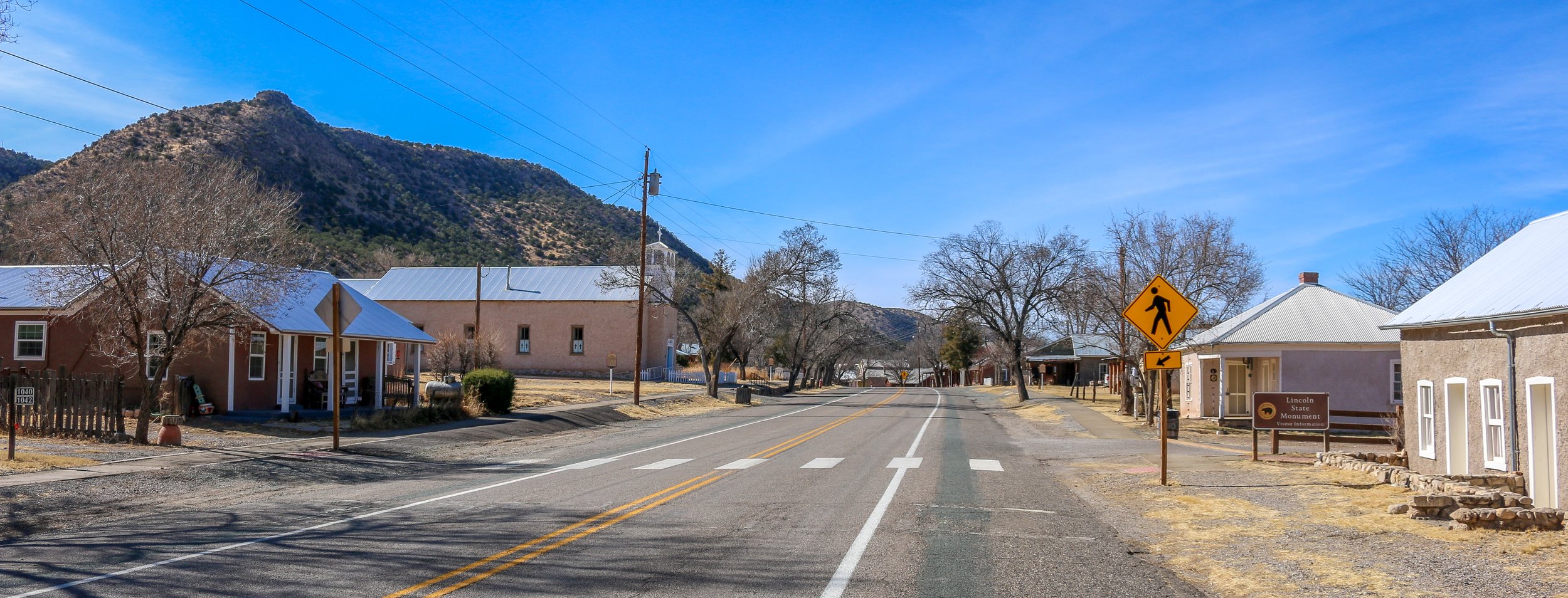
The area in southeast New Mexico that now includes the town of Lincoln was originally inhabited by Mogollon people and later by the Piros and Mescalero Apache. When a group of settlers arrived from the Rio Grande Valley, they named their new town La Placita del Rio Bonito, or “the place by the beautiful river”. The town was renamed soon after the Civil War in honor of President Lincoln and was made the county seat of the massive Lincoln County. In 1873, Irishman L.G. Murphy opened a general store and won the contract to supply beef to nearby Fort Stanton. When Englishman John Tunstall set up a rival store down the street and challenged Murphy’s monopoly on the beef contract, the Lincoln County War broke out with each man hiring his own army of gunslingers. One of Tunstall’s men, who the world remembers as Billy the Kid, has gone down in history as one of the most notorious figures from Old West lore. The Kid was arrested and tried for his role in the murder of the county’s sheriff and was held in the county courthouse, which had once been Murphy’s store, to await his hanging. He outsmarted and overpowered the two deputies who were watching him and escaped, only to be cornered and killed by the new sheriff, Pat Garrett, just a few months later at Fort Sumner. The volatility in Lincoln led President Rutherford B. Hayes to call the town’s main street "the most dangerous street in America". Today there are quite a few remnants from its wild past and much of the town is an historic site. I found the whole place fascinating and learned a lot while I was there. I wish I had had more time to explore it, but I hope you enjoy these photos from my brief stay in tiny Lincoln, New Mexico, once one of the Old West’s baddest towns.
Hello Everyone. Happy New Year to you all – may 2022 be everything you hope and dream it can be. I apologize for this newsletter not going out last week, but my folks and I were out of town on a little trip I will tell you all about later in this post. I had hoped to get my newsletter done before we left, but it just didn’t happen. Then the New Year came and went and then a snowstorm hit us on Monday and now it’s a whole week later. I’m sure you all had plenty to do as well this past week, but I missed writing this post nonetheless. It was definitely a festive week here at home and we enjoyed spending a lot of time together. We got out and saw some very cool places these last couple of weeks which I’d love to share with you here.
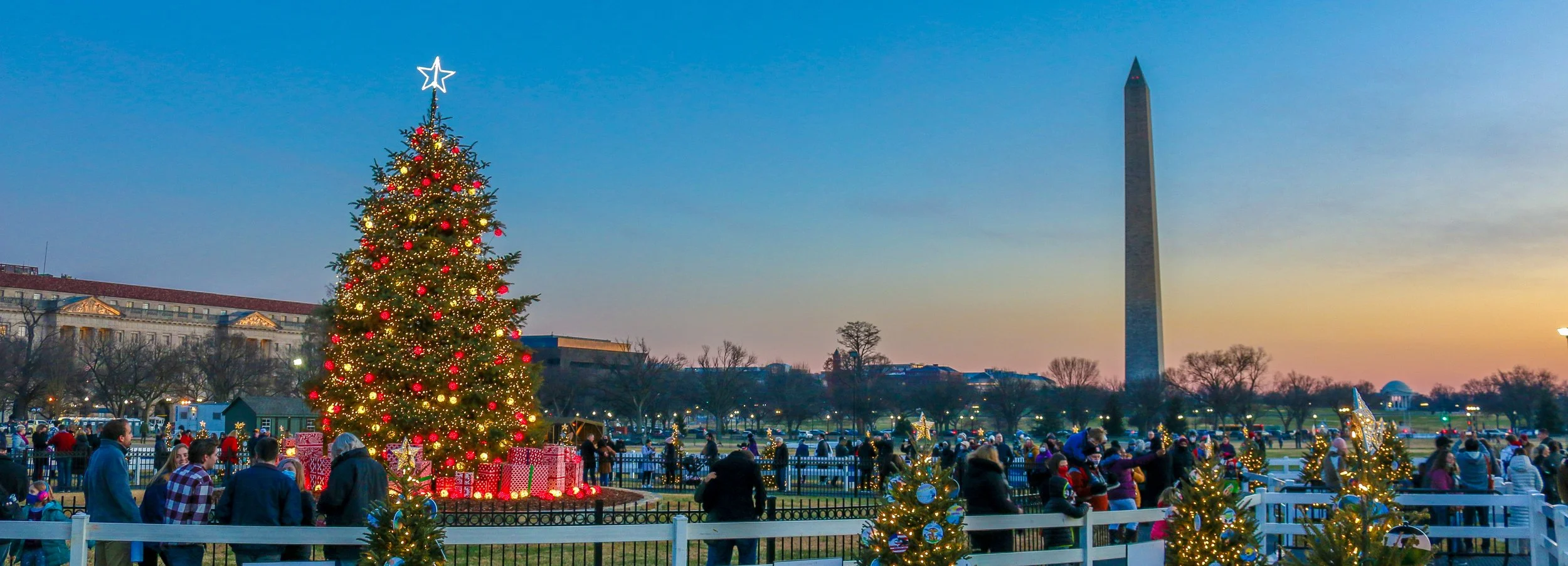
The Thursday before Christmas, we all headed down to Old Town Alexandria for lunch at Gadsby’s Tavern which was opened in 1770 and hosted two of George Washington’s birthday celebrations. It’s a great little colonial inn and our lunch was really good. From there we wandered around the Alexandria waterfront a little bit and then made our way back to downtown D.C. We had a nice visit to the National Christmas Tree in front of the White House and to the Capitol Christmas Tree at the U.S. Capitol. On the drive between the two, we were really struck by the beautiful tree at the Canadian embassy as well. Downtown Washington is a beautiful place every day, but it’s especially nice at Christmas and a really nice day really put us in the mood for the holiday weekend.
And a wonderful Christmas weekend it was, with lots of cooking and eating and music and fun. It was wonderful to get together and cook all day on Christmas Eve and Christmas Day and turn out both an excellent breakfast and dinner on both days (no lunch was required, believe me). Everything came out well, and I was very proud of my first cheesecake which was delicious. While I don’t really want or need anything in the whole world, my mother really surprised me with a wonderful gift this year. I had mentioned in my blog a few weeks ago when I was out in Minnesota how much I had wanted an Indian pipestone pipe carved from their sacred quarries, but simply couldn’t justify the purchase. I don’t get a lot of souvenirs on the road, but that was one I had wanted and was disappointed about not getting. My mom found a really beautiful pipe online which had been hand carved by Roy Redwing of the Santee Dakota Nation from the quarry I visited while I was there and it’s something I will really treasure. I got a Roku for each of them so that when they are watching TV they can watch what they want as opposed to what’s on, and they are enjoying them so far.
After Christmas we lay low for a couple of days and then headed north and west to Pennsylvania. We had visited the National Historical Sites of Western Pennsylvania before, but it had been a bit rushed and we hadn’t had the chance to really dig into them as much as we would have liked, so this trip set out to remedy that. Our first stop was Allegheny Portage Railroad NHS, which tells the fascinating story of the first continuous transportation link between Philadelphia and Pittsburgh (and also, therefore, between the eastern seaboard and the Ohio and Mississippi Rivers). The biggest challenge on this route was over the mountains between Hollidaysburg and Johnstown. In 1834 a system was completed by which canal boats could be towed onto railcars which could then be towed up the mountain by being attached to cables which were powered by steam powered engines. It was quite the engineering feat and was utilized for 20 years to make the crossing. Charles Dickens passed this way on his travels, as did the bodies of two presidents (William Henry Harrison and Zachary Taylor) on their way west for burial. With the opening of the Pennsylvania Railroad and the Baltimore and Ohio Railroad, this route became obsolete in the 1850s and not much of it remains today, but it is a fascinating place and the National Park Service does a great job of interpreting the site, as usual.
From there we headed on to Johnstown Flood National Memorial which commemorates the tragic 1889 flood which occurred following the failure of the South Fork Dam on the Little Conemaugh River.
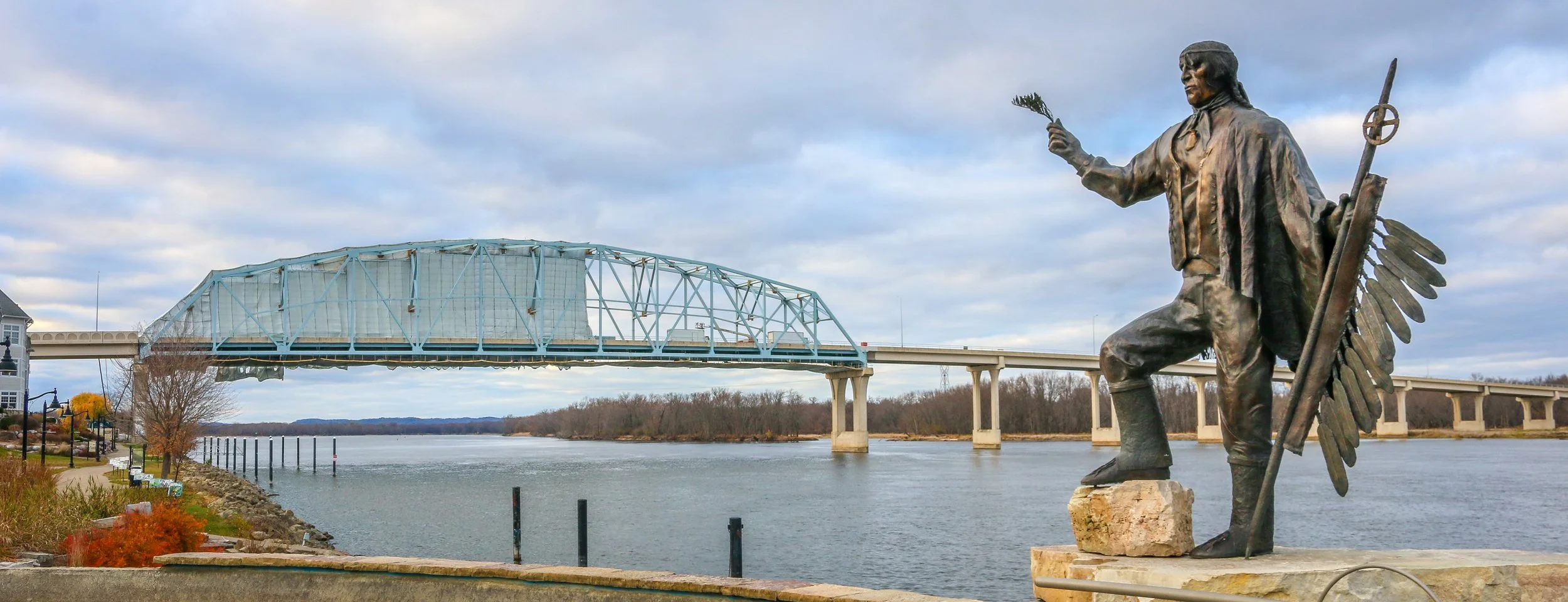
When Europeans first made their way up the Mississippi River, these lands were occupied by the Mdewakanton Dakota people who were led by Chief Wa-pa-shaw. The area was settled in 1826 and officially recognized after the Treaty of Prairie du Chien was signed in 1830. The fledgling town was named after the Chief as “Wabasha” and is now one of the oldest towns on the Upper Mississippi River. The early town’s economy was based on shipping, trading, lumber and flour and there was also a clamming industry and a button factory which utilized the discarded clam shells. Today, Wabasha is still undeniably a river town, but has made tourism a major economic interest - especially with the addition of the National Eagle Center. It’s probably most famous in recent times as the setting, though not the filming location, of the movie Grumpy Old Men. All of that being said, it would be easy to just blow on past Wabasha as it is just a small town of 2,500 or so people, but you’d be missing a real gem on Minnesota’s stretch of the mighty Mississippi. The historic buildings, the awesome statue of Chief Wabasha and the beautiful river setting combine with friendly people and some wonderful small businesses to make Wabasha a charming destination. Be sure you stop by Hoppy Girl Brewing Company while you’re there to taste some of the state’s best microbrews in one of its smallest and friendliest breweries. I had a wonderful visit to Wabasha even though the winter skies were definitely telling me it was time to head south. The next time I find myself in Minnesota, though, it will definitely be on my list of places to return. I hope you enjoy these photos from tiny Wabasha, Minnesota - a true hidden gem on the Mississippi River.
Little Henderson, Minnesota is a town of about 900 people on the Minnesota River just southwest of Minneapolis. Henderson was founded by Joseph Brown in 1852 and was originally a lumber town. Two brickyards soon joined in and the town grew. Henderson was originally the Sibley County seat, but would lose that role to nearby Gaylord in 1915 and its old courthouse was converted into a community building. Two scenes from Minnesota native musician Prince’s movie Purple Rain were filmed in Henderson, and the town has really tried to capitalize on that. There is a beautiful mural right on Main Street and there used to be a statue and bench there too, but both have unfortunately been moved inside and out of view during non-business hours. I enjoyed a quick stop in Henderson and a look at some of their wonderful historic buildings and an ice cream at Toody’s was definitely a highlight. I hope you enjoy these photos from tiny Henderson on the Minnesota River.
Farwell, Minnesota was established in 1886 when the Soo Line Railroad came through the area. Today the population is just 51 people in 27 households and the town rests on a tiny .29 square miles of land. The main street in town, Stanley Avenue, is composed of a post office which operated from 1887 until 1996 and a long dormant one-room schoolhouse. While I was there a wonderful tumbleweed tumbled through town and I was the only one there to watch it go. I love towns this size, but have rarely found one so enjoyable to photograph. I smiled the whole time I was there. I hope you enjoy these photos from tiny Farwell, Minnesota.
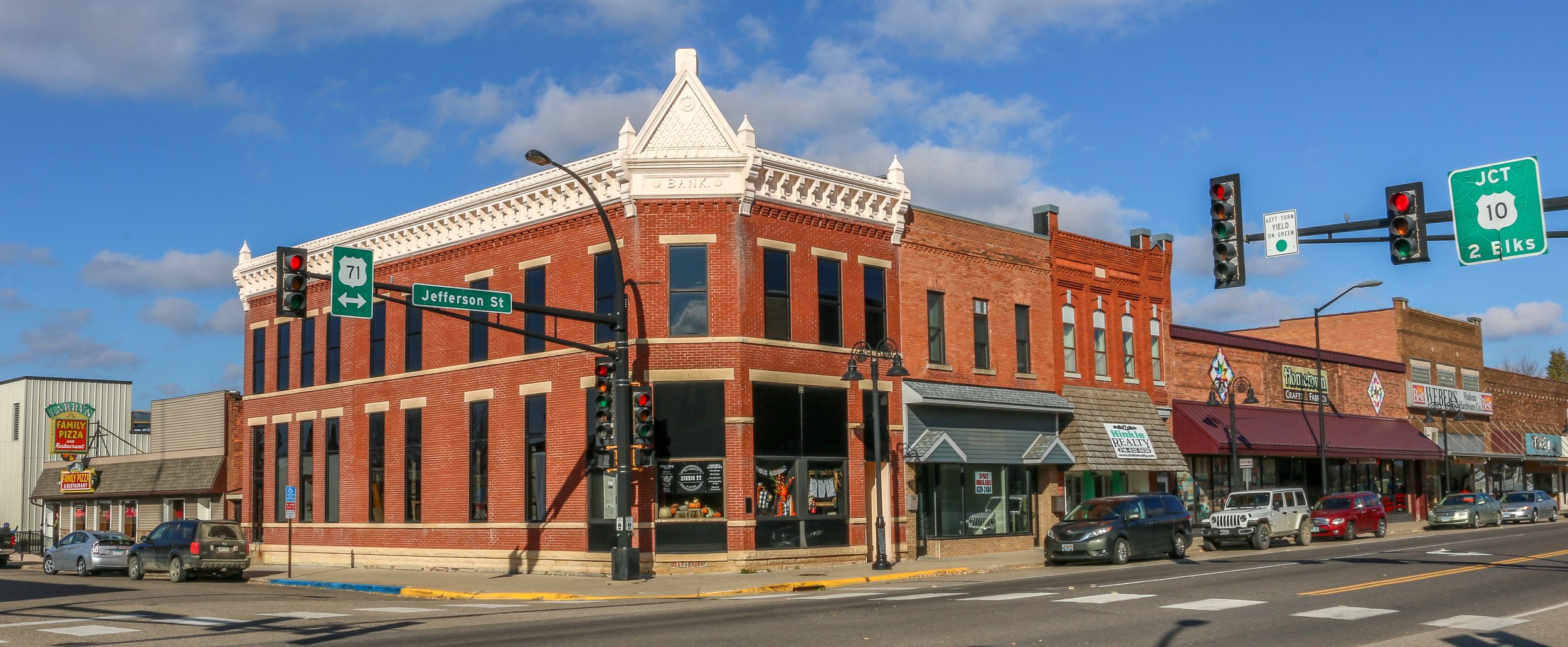
Wadena is a cute little town of just over 4,000 people which straddles the border between Wadena and Otter Tail Counties. The town was founded in 1871 and takes its name from an Ojibwe Chief. The town created a public art display called The World’s Largest Puzzle which is composed of a hundred puzzle-shaped murals scattered around town. It was the wheat-themed light posts that pulled me in, though, and the bright white water tower that got me to stay. You’ll see both featured prominently in these photos. I had a nice stay in Wadena and found it a pleasant place with friendly people. The highlight for me was a visit to the Little Round Still, one of Minnesota’s up-and-coming craft distilleries. The folks there were kind and welcoming and I enjoyed sampling their Gunflint whiskey. I even took a bottle to go. Wadena seems like the kind of place most people just blow on past, but if you’re ever in the area, stop on in and give it a chance. You may find yourself staying for longer than you imagined. I hope you enjoy these photos from friendly and historic Wadena, Minnesota.
Taylors Falls is a tiny little town of about a thousand people which rests high up on the banks of the St. Croix River and right across the water from Wisconsin. The town gets its name from one of its early settlers, Jesse Taylor. The “falls” are really just a set of rapids, but they made riverboat travel impossible beyond this point in the early years, making Taylors Falls the jumping-off point for many an immigrant headed west into the Minnesota Territory. The town contains half of the beautiful Interstate State Park which protects the Dalles section of the river and their fascinating potholes which were carved by glacial runoff whirlpools and can be 30+ feet deep. I found a lot to smile about in Taylor Falls and it seemed like every time I took a photo, I saw another one just down the road. It’s a fun little town to explore and definitely worth a visit if you’re in the area. I hope you enjoy these photos from my stay in Taylors Falls, Minnesota.
Hello Everyone! When many of you will be reading this, Shadow Catcher and I will be celebrating the 4 year anniversary of this project. We set out together on November 11th, 2017 from our home base in Washington D.C. to Harpers Ferry, West Virginia. At the time, the plan was to spend a month in each of the 48 contiguous states, which, if done in one long stretch, would have put an end date right around now. I learned very quickly that a month isn’t very long when it comes to really getting to know a state and while I still try and move right along, six weeks seems like a more realistic timeframe. My dreams of financial success with this project have been all but a complete bust, so I have had to stop and go back to guiding to replenish my coffers. Thankfully, it’s a job I love and it’s fairly easy to put away money in a short time and keep going. And of course who could have predicted a global pandemic, which grounded us for 15 months at home? That time was a blessing as I got to spend it with my folks and watching young Mason every day on his journey from 2 to 3 years old. On the plus side, I’ve seen and done so much, learned more than I ever thought possible and met many truly wonderful people along the way. It’s been everything I hoped it would be and infinitely more and I’m grateful every day for this project, this journey, and all of you who have chosen to share in it. Like any journey, it’s had its ups and downs, but at the end of the day, I wouldn’t trade it for anything. As I wind up my time in Minnesota, my 16th of 48 states, that would leave me 1/3 of the way there. I don’t know if I’ll finish this project, but I’m definitely planning to keep going for the near future. Thank you all for coming along for the ride.
It’s been a very busy week blazing across the prairies of Southwest Minnesota. With daylight savings time ending and snow in the forecast, it is definitely time to start making an exit plan, but I didn’t want to miss out on a whole region. I’ve definitely driven more this week than I usually do and I’ve seen some pretty amazing places but it’s also been pretty fast and furious. That being said, I’ve driven past some fascinating things this week that either gave me pause or a good chuckle. When I drove through Brainerd again this week, I passed by the Warriors Early Childhood Learning Center. Their school team name is the Warriors, but to an outsider I thought this was pretty funny. I also drove past the towns of Nimrod, Sleepy Eye and Weetown – all of which made me smile. I saw a Sasquatch Reporting Station in Starbuck and a street called Oink Joint Rd. The Starbuck High School mascot is the Bucks, the Fergus Falls (county seat of Otter Tail County) is the Otters and of course in Pelican Rapids they went with… the Vikings! It was wonderful to see Amish buggies driving on the roads and tumbleweed tumbling down dusty city streets. It was a wonderful week of clear sunny days and I tried to make the most of it. Here’s what I got into:
When last I wrote I was headed clear across the state of Minnesota back to the western border. Along the way I stopped in the cute little town of Wadena to take some photos and have a wander. I ended up popping into the Little Round Still Distillery and talking with the nice folks there for a while. They gave me a lesson on Minnesota’s complicated liquor laws and it sounded like there is a lot to overcome when starting a brewery or distillery in the state. I ended up buying a 375ml bottle of their Gunflint whiskey which was quite good and the biggest bottle they could legally sell me. From Wadena, I headed on to the even smaller town of New York Mills to check out the Regional Cultural Center there. For a small town, this center is pretty well known and has a wonderful gallery and shop and hosts classes, workshops and events. There was a nice display of “wet felting” wall hangings by Kristen Anderson in the gallery when I was there which were beautiful and told an interesting story. There were also some other smaller pieces from previous exhibits upstairs. I was there for longer than I thought I would be but really enjoyed it. From there I headed on to Perham where I jumped on the Otter Trail Scenic Byway. This beautiful loop road took me through small towns and past some amazing prairie scenery as I made my way around Otter Tail County. I stopped in Pelican Rapids to take a photo of the world’s largest pelican and pulled into Phelps Mill right as the sun was setting to get some great photos of this historic mill now owned by the county. It was a great place to end my day and then I headed on to Fergus Falls for the night. I went downtown and found it pleasant but empty without a single bar or restaurant around. I really find it strange and sad when towns roll up their sidewalks after dark like that. I headed out of town and stopped for a quick beer at their brewery which was actually really tasty but way overpriced. I was sad that my only option for dinner at 8pm was Applebee’s which was on the low side of mediocre. For a town of 13,000 people I had expected a little more, but it was still a nice place to spend the night and it would redeem itself the following day.
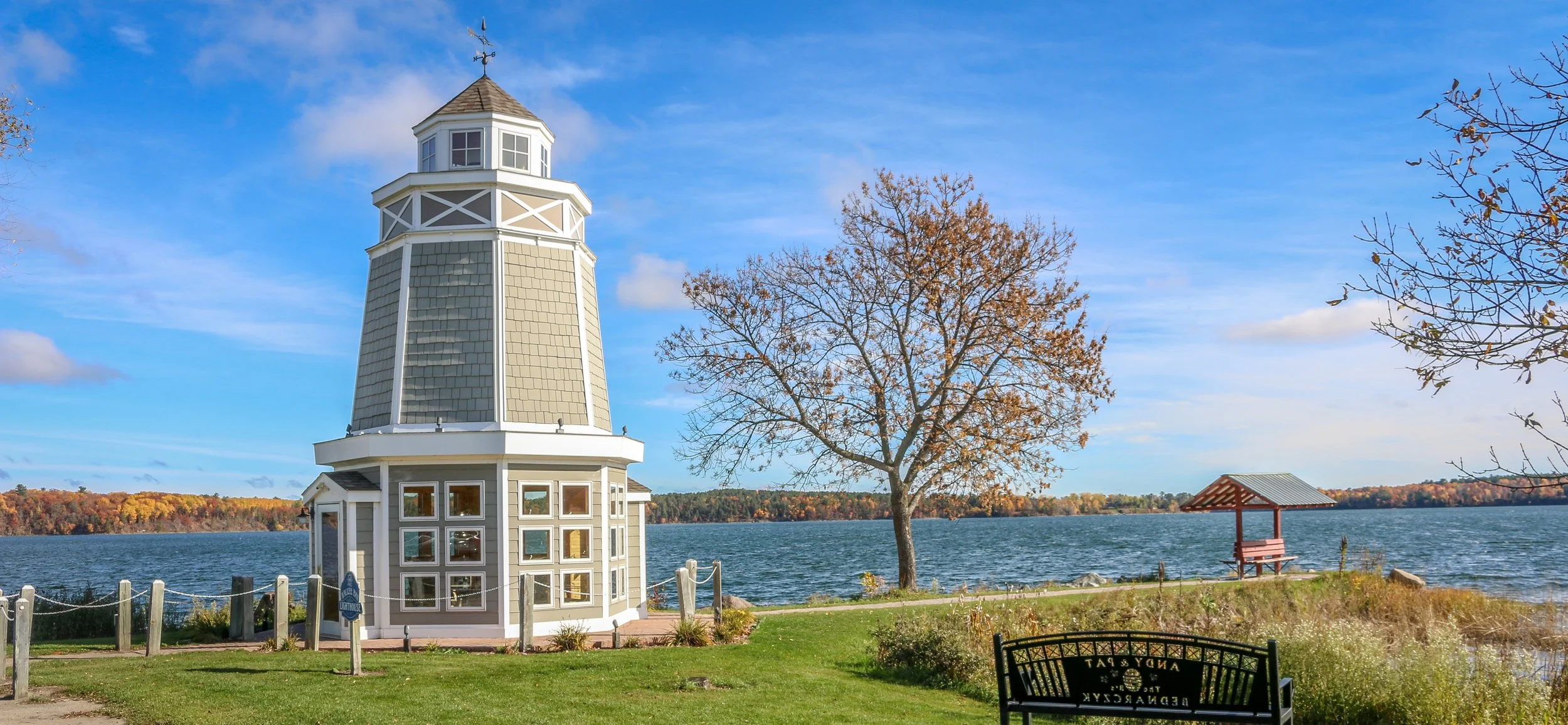
The area surrounding massive Leech Lake, which now includes the town of Walker, Minnesota, has been visited by Native Americans for centuries. When European fur traders arrived, the Ojibwe occupied the area. The railroad came through in the late 19th century and a small lumber town was established and named after Thomas B. Walker, a lumber baron and one of the wealthiest men in America. Logging was king in those early days, but the beauty of Leech Lake soon started to attract tourism as well. Today, tourism is the main draw to the area but Walker also serves as the Cass County seat. Leech Lake is beautiful and I can certainly understand the draw. The town itself is also very attractive with a cute downtown area and some wonderful parks along the lakefront. While Walker was on one of my lists of photogenic towns to visit in the state, when I found out one of my friends grew up there I definitely knew I had to pass through. While she lives in Moab, Utah at the moment, her parents were kind enough to take me in for the night and show me a good time. When I went to take these photos the next morning, the sky was so blue I found it hard to leave. I hope you enjoy these photos of beautiful Walker, Minnesota, a pleasant town worth checking out on the shores of fabulous Leech Lake.
The Ojibwe referred to the body of water we now call Detroit Lake as “Gaiajawangag", meaning a lake with a crossing in a sandy place. The name “Detroit” was given to the area by a French missionary as “Detroit” means “straight” in French. The Old Red River Road came through Detroit in the early 1800s and was traveled by fur traders and Indians alike. When the Northern Pacific Railroad was pushing west through Minnesota, there was a small village on the lake known as Tylerville, named after Merwin Tyler whose small cabin on the lake also served as a hotel and post office. As the railroad came through, the city of Detroit was established in 1871 and in 1877 it became the county seat. The town provided ice and water to the railroad in the early days, but today’s economy relies heavily on tourism. The name was eventually changed from Detroit to Detroit Lakes in 1926 to avoid confusion with Michigan’s Detroit. I really enjoyed my stay in Detroit Lakes and found the downtown area to be quaint and historic while the lake itself was stunning - especially around sunset. I loved watching the trains cruise past the historic station and found beautiful art all over town. I hope you enjoy these photos from Detroit Lakes, Minnesota, a little town with a lot to offer.
Thief River Falls gets its name from the falls at the confluence of the Red Lake River and the Thief River (which traces its name back to a conflict between the Ojibwe and Dakota people). These falls made navigation by boat impossible beyond this point, so a town was born here in 1887. Thief River Falls was originally a lumber town and then shifted to wheat farming, but it really took off when the Great Northern and Soo Line railroads came to town in the end of the 19th and beginning of the 20th centuries respectively. The rivers and railroads still power the local economy today and Thief River Falls is also the home of an Arctic Cat Snowmobiles plant. Thief River Falls has a population of around 8,600 people today and it really put on a show for me during my visit. The temperature hovered around 70 degrees under sunny skies and the sunset was absolutely spectacular. I hope you enjoy these photos from my visit to beautiful Thief River Falls, Minnesota.
According to their Chamber of Commerce, Bayfield is one of USA Today's Best Coastal Small Towns, Wisconsin's Smallest City, the Berry Capital of the State, and the Gateway to the Apostle Islands. That’s a lot for a place with a population of only around 500. the town was named in 1856 for Henry Bayfield, a British admiral and topographic engineer who explored the region in the 1820s.Lumber and fishing were the big industries in the early days and Bayfield also served as a port city. You can tell from some of the beautiful Victorian homes in town that at least a few people made their fortunes here. I found Bayfield to be a charming place with beautiful architecture and wonderful views out over the lake. It was my jumping-off point to both Madeline Island and Apostle Islands National Lakeshore. If you visit, be sure you try the local delicacy of whitefish livers which was one of the tastiest dishes I’ve had in a long time. I hope you enjoy these photos from this wonderful lakefront city.