Viewing entries in
National Park

In Focus: Petrified Forest National Park

Comment

In Focus: Petrified Forest National Park

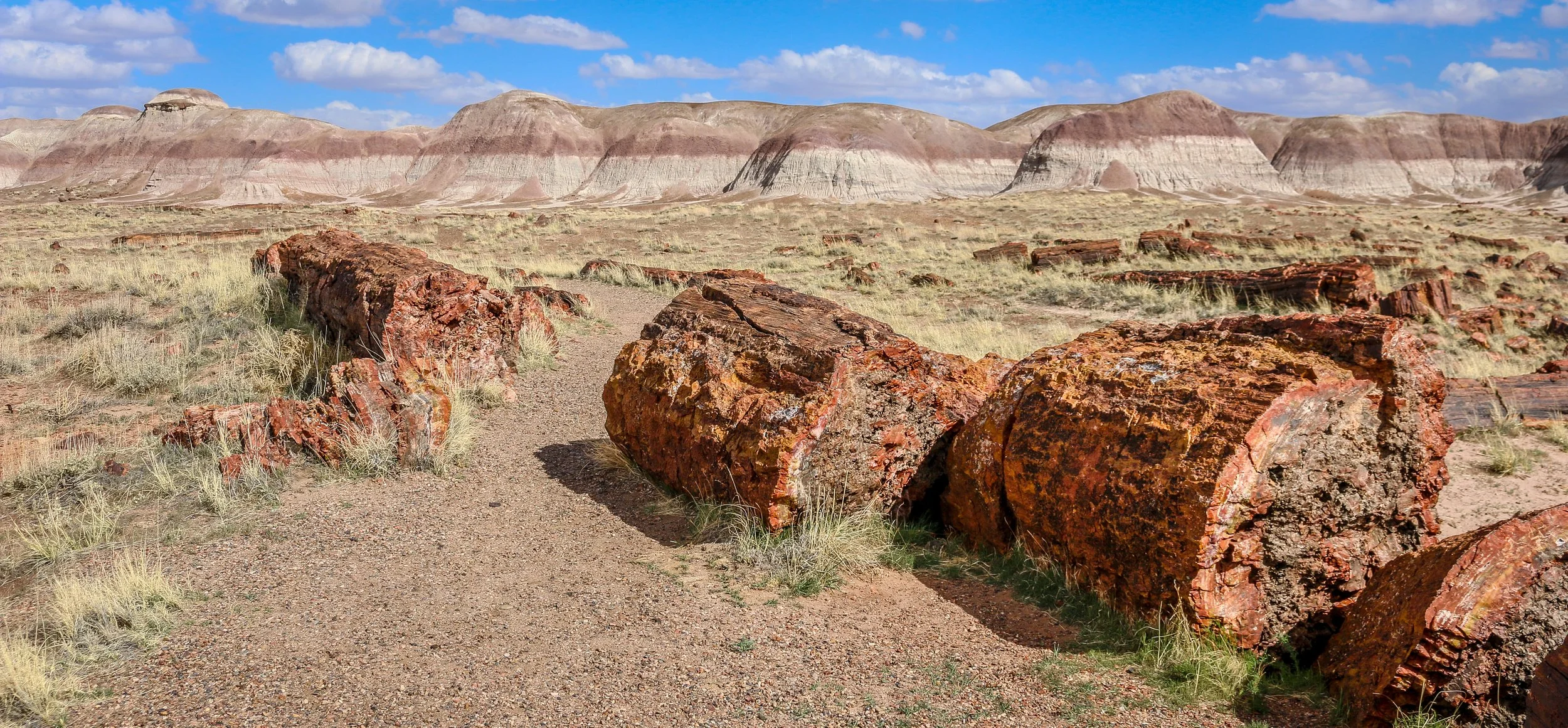
Petrified Forest National Park in eastern Arizona contains a beautiful collection of petrified wood and also includes the Painted Desert, Blue Mounds and an old stretch of Route 66. It’s a park best explored by car, but you won’t really appreciate it unless you get out and hike out into the wilderness. Petrified Forest was designated a National Monument back in 1906 and was upgraded to a National Park in 1962. I enjoyed my visit to the park and hope you enjoy these photos I took exploring the Petrified Forest.

Comment

Snapshots: Rio Grande del Norte National Monument

Comment

Snapshots: Rio Grande del Norte National Monument

Rio Grande del Norte is one of our more recent National Monuments, having been designated as such in 2013. It protects the confluence of the Red River and the Rio Grande which are both designated Wild and Scenic Rivers. Both gorges are gorgeous and the point of land above the confluence, called simply El Punto, provides amazing views from high above the two rivers. I hiked the Little Arsenic Trail while I was there, which brought me down to the Rio Grande and led me straight to the confluence. It was one of the better hikes I did during my stay in New Mexico and was very rewarding around every turn. I spent the night at the campground on the canyon rim and enjoyed a beautiful sunset in the evening and a magical sunrise the following morning. In between, the stars were spectacular. I debated whether to drive out to this park as it was somewhat out of the way, but I’m sure glad I did as it is stunning from end to end. If you’re ever in the area, you should as well. I hope you enjoy these photos from beautiful Rio Grande del Norte National Monument.

Comment

In Focus: Fort Union National Monument

Comment

In Focus: Fort Union National Monument

After the Treaty of Guadalupe Hidalgo ended the Mexican-American War in 1848, New Mexico officially became a part of the United States. Americans started moving west to try and stake a claim in this new territory, but were often met with hostility by Indians trying to protect what they believed belonged to them. In response, the U.S. government built Fort Union at the main junction on the Santa Fe Trail. The original fort was good enough for that purpose, but a second, stronger, fort was built during the Civil War and a third fort soon replaced the second. The fort served two main purposes which were independent of each another - one being a military post and the other, a quartermaster depot. The depot was the supply hub for the government in the southwest and received hundreds of wagonloads of supplies daily to support 46 regional posts. There was also an arsenal on the base which could have also been seen as a separate entity as it had its own commander and staff. In addition, the base hospital provided the best medical care for hundreds of miles around. Fort Union served as the jumping-off point for Union forces on their way to fight at Glorieta Pass, the last Civil War battle fought in New Mexico. After the Civil War, African-American soldiers with the 57th U.S. Colored Infantry arrived at Fort Union and later the 9th U.S. Cavalry, remembered today as the Buffalo Soldiers, would join them. When trains started rumbling across the country at the end of the 19th century, Fort Union became obsolete and was decommissioned in 1891. The last soldiers left on May 15th of that year. In 1954, it became Fort Union National Monument and its history is now interpreted by the National Park Service.

Most of the fort was built of adobe which, without regular maintenance, will melt back into the desert. Some exceptions were the stone jail and the brick chimneys which provide a glimpse into what Fort Union once was. This park site doesn’t get many visitors, but it’s a fascinating place to learn about the Santa Fe Trail and early American history in the New Mexico Territory. I hope you enjoy these photos from fascinating Fort Union National Monument.

Comment

In Focus: Pecos National Historical Park

Comment

In Focus: Pecos National Historical Park

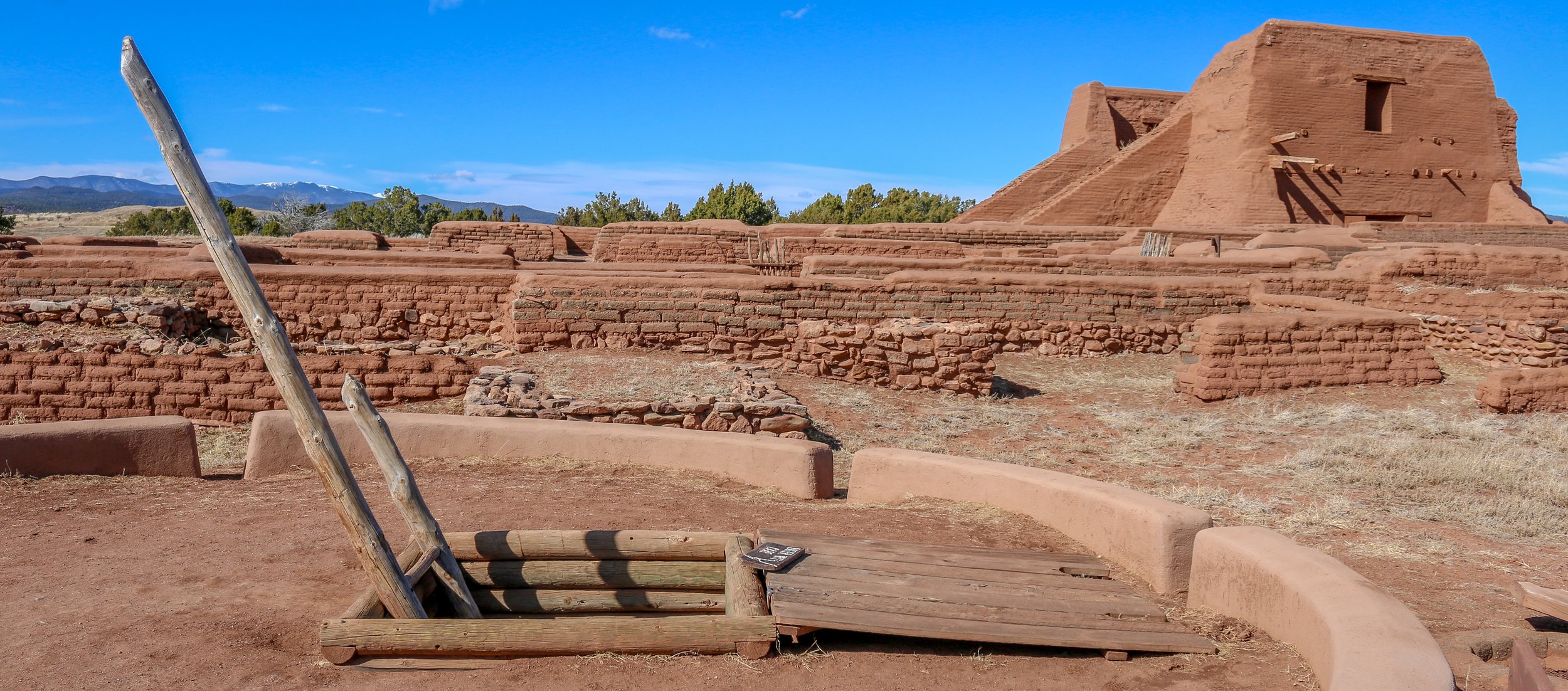
Construction of the pueblo at Pecos was begun sometime in the 12th century. Over the next few hundred years it would grow to become one of the largest pueblos in the area, supporting a community of perhaps 3,000 people. Sitting in what is now eastern New Mexico, this agricultural community was also a trade center between the mountains to the west and the plains to the east. Francisco Vázquez de Coronado visited Pecos on his 1540 conquest, as did Don Juan de Oñate 60 years later when he ordered construction of a mission church to help convert the Puebloans to Catholicism. That church was destroyed during the Pueblo Revolt of 1680 and a smaller church would be built in its place when the Spanish returned to the area twelve years later. The spread of European diseases would bring the ultimate demise of Pecos and in the 1830s the last of its old residents made their way to Jemez Pueblo where their culture and tradition is still remembered in the oral history. Emigrants on the nearby Santa Fe Trail no doubt used Pecos as a campground and marveled at the old pueblo. General Kearny and his troops camped at Pecos as well on their westward journey to claim New Mexico for the United States. During the Civil War, the Confederate army was making their way through New Mexico on a quest for Colorado and California gold. Their troops turned back to Texas after being defeated at the Battle of Glorieta Pass which is right up the trail from Pecos. Tex Austin purchased the land in 1925 and turned it into the Forked Lightning Ranch which was purchased in 1941 by Buddy Fogelson. The Fogelsons were instrumental in creating Pecos National Monument in 1965, and after their deaths the park’s boundaries were expanded to include the ranch and the designation changed to Pecos National Historical Park.

Today the park does an incredible job of interpreting all of this fascinating history in its wonderful museum. The 1.5 mile trail takes you through the remains of the pueblo and into the ruins of the old mission church. Two kivas have been reconstructed to provide some insight into Puebloan culture and religion as well. It’s a beautiful place to visit and just a short drive from nearby Santa Fe. I hope you enjoy these few photos from fascinating Pecos national Historical Park.

Comment

In Focus: Salinas Pueblo Missions National Monument

2 Comments

In Focus: Salinas Pueblo Missions National Monument

Native Americans have been passing through the area we now call the Salinas Valley for thousands of years. As agricultural techniques developed, hunter-gatherer societies began to settle down, plant crops and build permanent communities. The communities which grew in the Salinas Valley combined the traditions of the people we call Mogollon with those of the Ancestral Puebloans. They traded with other Puebloan groups to the west and with the Plains Indians to their east.

When the Spanish arrived in 1540, Coronado was searching for the 7 Lost Cities of Gold. He never found gold, but found abundant salt deposits in these mountains which is where they get their name (“salinas” means “salt” in Spanish). While the treasure seekers were met with disappointment, the Franciscan priests who accompanied them found whole towns of souls they believed needed saving. They took up residence in these remote pueblos and oversaw the construction of massive churches. They brought with them items which changed these societies for the better like wheat, fruit, cattle, goats and sheep. They also brought disease and demands for the Native people to give up their rituals and traditions. Some of these pueblos contain kivas, the underground centers of Pueblo communities and religion which point to some level of compromise, since later missions had kivas filled in and destroyed. Spanish priests and governors were often in disagreement over how to treat the Puebloan people, and cultural conflicts would often erupt…

2 Comments

This Week on the Road - March 17th-23rd

Comment

This Week on the Road - March 17th-23rd

Hello Everyone! First and foremost this week, I want to say how much my heart goes out to those affected by the tornadoes yesterday in New Orleans and across Texas. The Lower 9th Ward of New Orleans suffered enough for a lifetime with Hurricane Katrina and I’m heartbroken by the images coming from there today. I wish them well with their recovery. As for me, I’ve spent most of this week traveling across the Llano Estacado or the “Staked Plains” of northeastern New Mexico. This is not an area that sees a lot of tourism, but there is actually quite a bit to see out here and I’ve been enjoying it. The winds, however, have been blowing hard at me all week, which makes it hard to drive and since no matter which way you turn it never seems to be at your back, it doesn’t help with my gas mileage. When I pulled into Clayton an hour ago though, gas was at $3.70/gallon, the cheapest I’ve seen in over a month! It would have seemed expensive 3 months ago, but for today it brought a smile to my face. I’ve spent a lot of the week dodging suicidal tumbleweeds which wait until the last second and then make a beeline for my undercarriage. The beautiful pronghorns I’ve seen out in the grasslands have made up for it, though. I’ve actually been feeling really good this week and have been enjoying seeing this region of the state. Even though towns are few and far between and the wind makes me feel like I’m captaining a boat instead of driving a van, it’s been a really good week out here.

When I left you last week, I was on my way out to take some photos around Santa Fe, but clouds had moved in and it was a bit gloomy. I tucked into a little bar and met the most cantankerous person I’ve met thus far in New Mexico. Since he was the bartender and owner, it seemed like a good sign to call it an early night and get a good jump on my Thursday.

I hit the gym first thing Thursday morning and came out to find it snowing pretty heavily out. Since I couldn’t take my camera out in the snow, I went for an early lunch at a spot called Horseman’s Haven which my friend Estilla had recommended. When I got there, I double checked my phone to make sure I was in the right place because it was a little plain-looking spot tucked into the corner of a gas station parking lot. I’m sure glad I didn’t judge the book by its cover, because it turned out to be a really great restaurant. I had some chicken adovado, a New Mexican dish of chicken marinated and cooked in red chili, and I also got a side of their famous green chili which was as good as I had been promised (Anthony Bourdain apparently said it would “melt your face off”). It may be the best restaurant I’ve been to thus far in the state.

From there I headed back downtown and went to see the New Mexico History Museum and the Palace of Governors. The museum was pretty good and set out to tell the history of the state from the earliest Paleo-Indians to the modern day. I must admit my ignorance on a lot of the details of this region. Even though the names were all familiar from guiding tours here for many years, I didn’t have a good chronological understanding in my head and this museum really helped with that. I also enjoyed their in-depth look at the Harvey Hotels, an early chain of hotels and restaurants that grew up with the railroad, of which Santa Fe’s own La Fonda was one. I’ve been to La Fonda many times, and El Tovar and the Bright Angel Lodge at Grand Canyon, but I’ve always been interested in the brand, which was also one of the first big tourism operations in the Southwest. After early run-ins with locally hired employees, Fred Harvey decided to hire mostly young, single women - lovingly remembered as the Harvey Girls. In doing so, the Harvey brand may have had more responsibility for populating the region than they intended by bringing single, adventurous women to the Southwest. The Palace of Governors, which is attached to the museum, has been on the plaza in Santa Fe since 1600. It’s been occupied by the Spanish, the Pueblo Indians, Mexico, the United States and even, briefly, the Confederacy. The building has been altered, expanded, contracted, and was even given Victorian flourishes at one point. When you learn all of this, it’s amazing that this adobe building has survived for 400 years. Sadly, there isn’t much to it on the inside except a bunch of whitewashed walls and I wish they would furnish it from its many different periods. It was still interesting to see and I’m glad I went.

It being St. Patrick’s Day, my next stop was Boxcar – a very un-Irish bar, but seemingly the only game in town for the big day. To be fair, they did try and they all worked very hard to make it enjoyable. There was corned beef, Guinness and green beer…

Comment

In Focus: Gila Cliff Dwellings National Monument

Comment

In Focus: Gila Cliff Dwellings National Monument

The homes we now refer to as the Gila Cliff Dwellings were built beginning around 1276. The rivers in the area provided a constant source of water, a necessity in the desert and probably the reason the people who built these dwellings chose this location. While they were contemporaries of the people we now call the Ancestral Puebloans, differences in their construction styles, pottery and art have caused archaeologists to give them a different name and we refer to them as the Mogollon. The time that the Mogollon spent in these dwellings, approximately 25 years, coincides with prolonged drought in the area which caused many groups to move in search of water. It seems that the Mogollon moved into these alcoves near the beginning of the drought, and left as it was ending. When looking at history, it’s easy to think of 25 years as the blink of an eye, but it’s a whole generation of children growing to adulthood and having their own babies and adults moving into the roles of elders as elders pass on. There was love and loss and laughter as this group passed the time farming, hunting, building, creating and growing.

The Mogollon seem to have moved on around 1300 as the drought was coming to its end and these isolated dwellings likely remained empty for quite some time. The Chiricahua Apache migrated to the region in the 1500s and the great leader Geronimo was born near the headwaters of the Gila River around 1820. Spanish settlers came to the area in 1598, but there is no evidence they penetrated the wilderness anywhere near to the dwellings. Prospector H.B. Ailman documented the cliff dwellings in 1878 and by the time archaeologist Adolph Bandelier arrived in 1884, looters had ransacked the alcoves and made off with whatever artifacts were to be found. Homesteaders, miners, prospectors and ranchers arrived over the next few decades and President Theodore Roosevelt protected the area as Gila Cliff Dwellings National Monument in 1907. Not too long after he did, Aldo Leopold came to the region as a forester and lobbied the Forest Service to establish the GIla Wilderness, the first designated wilderness area in the country and an inspiration for the 1964 Wilderness Act.

Today, the Gila Wilderness is a quiet and magical place. It’s a two hour drive from Silver City, the nearest town of any real size, to the Cliff Dwellings. The road that brings you in is the aptly named Trail of the Mountain Spirits National Scenic Byway and it is a truly beautiful drive. During my visit, I toured the cliff dwellings, scouted out some beautiful pictographs, hiked the fabulous Little Bear Creek Canyon trail to the Middle Fork of the Gila River and soaked in wonderful hot springs. I loved my time in the Gila Wilderness and hope you enjoy these photos from my visit.

Comment

Snapshots: Hiking Organ Mountain - Desert Peak National Monument

Comment

Snapshots: Hiking Organ Mountain - Desert Peak National Monument

Organ Mountains - Desert Peaks National Monument is a beautiful park in Southeast New Mexico managed by the Bureau of Land Management. Just 25 minutes from Las Cruces, this park makes for a great day trip from the city or a stop-off on your way to or from White Sands National Park. I enjoyed a wonderful 7 mile round-trip hike up to Baylor Pass, a saddle with wonderful views out over the Chihuahuan Desert. In the afternoon, I made a 3 mile round-trip hike to the ruins at Dripping Springs. This area, which contains a natural spring deep in a hollow, was once home to Boyd’s Sanitarium and Van Patton’s Mountain Camp. The sanitarium catered to tuberculosis patients while the mountain camp was a fancy hotel and resort. Opened in 1897, the hotel had 15 guest rooms, a dining hall, a concert hall, a gazebo and a roller-skating rink and hosted the likes of Pat Garrett and Pancho Villa. The resort fell on hard times during World War I and Eugene Van Patten sold it to Dr. Boyd who ran the sanitarium. The Great Depression would be the final blow to the resort and it closed for good in the 1920s. Today it is maintained in a state of arrested decay and makes for a cool walk in the late afternoon. There is so much more to this park than just these two hikes, but they were all I had time for during my visit. I hope you enjoy these photos from Organ Mountains - Dripping Springs National Monument.

Comment

In Focus - White Sands National Park

Comment

In Focus - White Sands National Park

Magnificent White Sands National Park in central New Mexico preserves the largest gypsum dune field of its kind in the world. This dune field in the heart of the Tularosa Basin covers 145,762 acres and includes 4.5 billion tons of gypsum sand. This gypsum was left in the area after the Permean Sea retreated several million years ago, and water and wind shape the dunes we find there today. The dunes are ever changing, though, so you will never see the same landscapes on any two visits to the park.

People have been coming through the area for at least 11,000 years and we believe that a group we call the Jornada Mogollon were the first to farm the area (see my photos of their nearby petroglyph site here). Groups of Apache made their way into the area in the 1600s and European-Americans arrived in the 1800s. White Sands National Monument was created by Herbert Hoover in 1933 and it was made a National Park in 2019.

I arrived for my visit to the park just after dawn. The mountains to the east block the sunrise, but the skies were blue and full of amazing white clouds. I headed straight out to the heart of the dunes and hiked the wonderful 5 mile Alkali Flats Trail. The sun reflected brightly off the white sand making photography difficult, but I was grateful that there was no wind. In the late afternoon I set out to capture some of the beautiful plant life in the park, mainly different kinds of yucca, which contrast nicely with the white sand. I stayed to watch the sunset and found real peace and solitude out in the middle of the park. It was a wonderful day in White Sands National Park. You can find some of these photos for sale in my store , but please contact me if the one you want isn’t there and I’ll be happy to add it. I hope you enjoy these photos from my time in White Sands National Park.

Comment

In Focus: Apostle Islands National Lakeshore

Comment

In Focus: Apostle Islands National Lakeshore

Apostle Islands National Lakeshore is a beautiful park which stretches along Wisconsin’s Lake Superior coastline. The park extends over 21 of the 22 islands in the area with only Madeline Island being outside its boundary. In addition to the islands themselves, the park extends to the historic fishing area at Little Sand Bay and the beautiful coastline and sea caves at Myers Beach. Nobody is quite sure who gave the islands their names, but French maps referred to them as the Apostle Islands as early as the 1700s. The National Lakeshore was established in 1970, having been proposed by Wisconsin’s Senator Gaylord Nelson who is also considered the founder of Earth Day.

During my time in the park, I enjoyed a scenic cruise around the islands with Apostle Island Cruises. Our 2.5 hour journey took us around most of the islands with special attention paid to the beautiful, outer Devil’s Island and the historic lighthouse at Raspberry Island. Unfortunately, the islands were closed to camping during my stay so I wasn’t able to spend the night out there which I really would have enjoyed. Beyond the cruise, I spent some time learning about the history of the area at the outdoor museum at Little Sand Bay (which was also a wonderful place to watch the sunset). There were also recorded stories from rangers, historians and Native Americans in this section to listen to. On my last morning in the park I visited the Myers Beach section to hike the Lakeshore Trail to The Bowl to view the amazing sea caves and beautiful coastline. I was also pleasantly surprised by the number and variety of mushrooms I experienced along this trail. I had a wonderful visit to the Apostle Islands and hope you enjoy these photos from my stay.

Comment

In Focus: Isle Royale National Park

Comment

In Focus: Isle Royale National Park

The Ojibwa Indians called Isle Royale “Minong” meaning “a good place to be” and they certainly hit the nail on the head with that one. Isle Royale National Park consists of Isle Royale itself and over 400 smaller islands making up an archipelago in the middle of Lake Superior. Isle Royale is the largest natural island on Lake Superior and the second largest in the Great Lakes at 45 miles long and 9 miles wide. Some of Michigan’s earliest copper mines were established on Isle Royale in the 1840s, continuing the Ojibwa copper-mining tradition which stretched back hundreds of years. Commercial fishing operations also ran off of Isle Royale for many years, but it was the island’s beauty and ability to attract tourism which would create its lasting industry. Isle Royale National Park was established in 1940 and it was made a part of the UNESCO International Biosphere Reserve in 1980.

I had a wonderful 4 day/3 night visit to Isle Royale in the beginning of August. The island is only accessible by boat or plane, with ferries originating out of Houghton and Copper Harbor in Michigan and Grand Portage in Minnesota. I chose the Isle Royale Queen IV out of Copper Harbor which dropped me off in Rock Harbor on the island’s northeast side in about three and a half hours. After getting my backcountry permit from the ranger there, I headed off into the wilderness for the next three nights, staying at Daisy Farm, Lynn Cove and Three Mile campgrounds. I hiked about 25 miles during my time on Isle Royale and really found the island to be a beautiful place to be. After hiking all day, an afternoon dip in Lake Superior always felt great. I saw 9 moose during my visit and also a handful of beavers along with plenty of birds and toads. I really cherished my time on Isle Royale and hope you enjoy these photos from America’s least visited National Park.

Comment

This Week on the Road - August 4th-11th

2 Comments

This Week on the Road - August 4th-11th

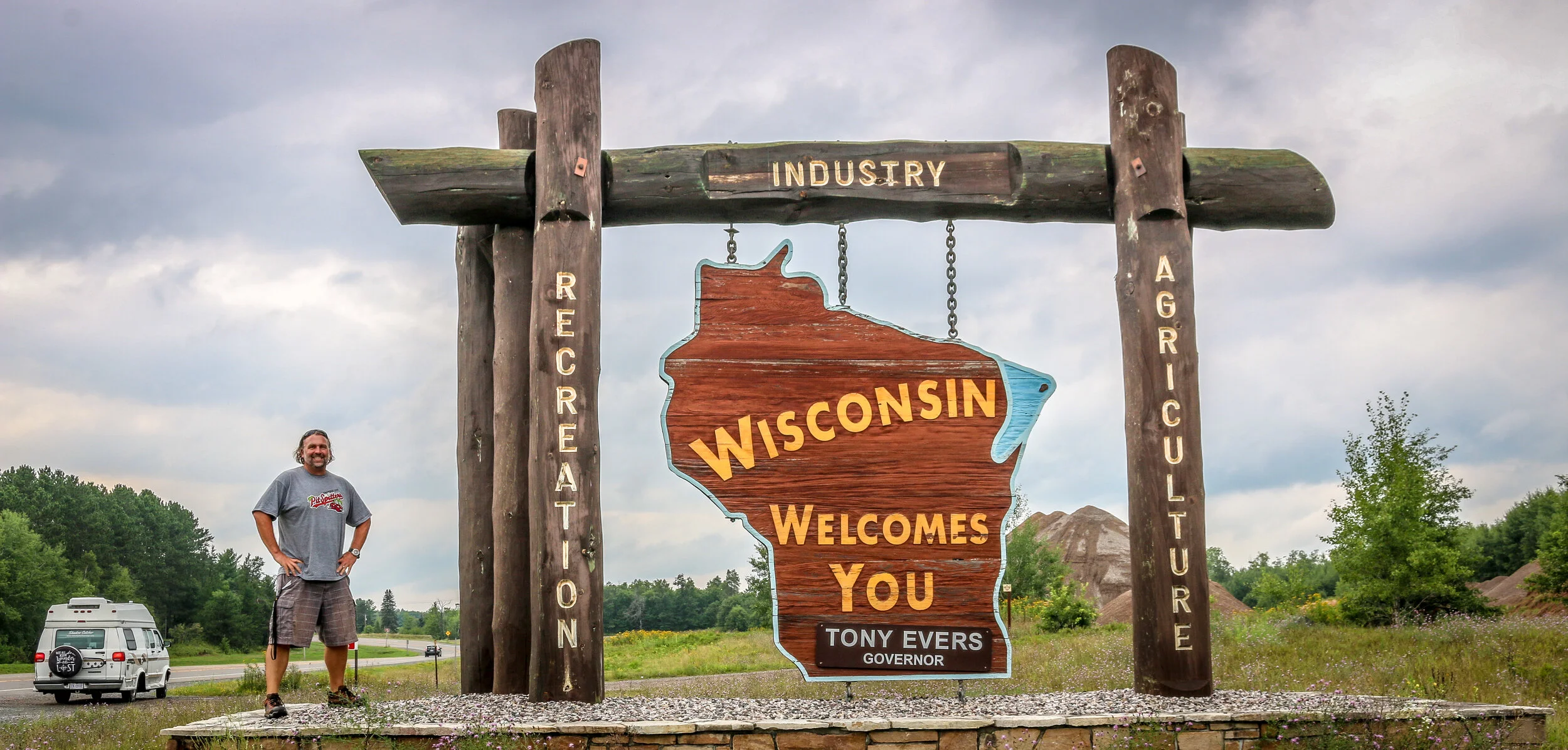
Hello Everyone and greetings from Green Bay, Wisconsin! I have completed my two month journey through Michigan and have moved on to the Badger State. I spent the first half of the week out in beautiful Isle Royale National Park, a destination I was really looking forward to and which definitely lived up to my expectations. Returning from the park on Saturday, it was time for me to make tracks and get myself into Wisconsin. Summer is passing quickly and I still hope to get through both Wisconsin and Minnesota before winter sets in. It’s been a good week, and I’m excited to tell you what I’ve been up to.

I headed out to Isle Royale on the Isle Royale Queen IV out of Copper Harbor bright and early on Wednesday morning. There are three boats that make the trip to the island, and this one just worked better with my schedule. It was fast and made the 55 mile crossing in about 3.5 hours and I enjoyed chatting with a mother and daughter who I sat with on the way out. The mother owned the rock shop in Copper Harbor and had a grandfather who once lived and worked as a fisherman on Isle Royale. Her daughter was in Copper Harbor for the summer and working at one of the restaurants in town. I was surprised by how many people I met who had family connections back to Isle Royale before it became a National Park.

When we arrived on the island, the rangers gave us their briefing, issued backcountry permits and we were off and running. Most of the park is designated wilderness, so unless you are staying at the lodge near the ferry dock you are on your own for the duration of your stay. I shouldered my pack and made my way a little over 7 miles to Daisy Farm Campground on the east side of the island. It’s been years since I’ve carried a full pack that distance, but I have been doing a lot of walking and hiking and it really wasn’t too bad. I even saw my first of nine moose I would see during my visit on this hike. Because I was there alone, it was easy to hear footsteps which weren’t my own and an adult moose has some pretty heavy footsteps. I was able to see the moose through the dense forest and enjoyed spending some time with her before heading on to camp where I took up residence in one of the shelters they had there. I had my tent with me, but since the shelters were available it seemed like an easier option even though it only takes 5 minutes to set up my tent. I had my first dehydrated meal in many years, something which has improved dramatically since the last time I ate one. It was a beautiful campground right on the lake and even though it was pretty busy, people were spread out and it didn’t seem crowded. I met some really nice people in camp and found it easy to talk to people as we obviously had shared interests in hiking, camping and/or National Parks and had gone to some length to get to this remote island.

2 Comments