Hello Everyone, it’s hard for me to even fathom that this is week 20 of this post series. I was hoping when I arrived home in the beginning of April that I would only be here for a few weeks and then I would be back out on the road, but here I am 20 weeks later. I’m still enormously grateful to have a place to weather this storm, especially knowing that things could be much worse if I didn’t. I just wish I knew what the end date to all of this was so I could make some plans. It’s been a quietly busy week here in Washington and I’ve actually done quite a bit which has been really nice. I’ve also had some good news in my feed this week which also helps. One of my best friends welcomed a new baby boy to the world this week in New Orleans, so welcome Theodore. Another friend of mine from grade school has announced his wife’s pregnancy this week as well. These are both reminders to me that the world has continued to turn even if my wheels have stopped doing so.
Last Thursday I began a new role which I’ve really enjoyed, even though I’ve only done it a couple of times. My friend James was called back to work after a few months of furlough, but his two year old son’s daycare is still closed. So I’m going to be spending some time with young Mason over the next few weeks or months so they can work and we can play. Mason is a sweet kid, and it’s been a real treat to watch him. His smiles and laughter are such a counterbalance to the challenges we are facing in this country and in the world, and it’s a welcome change. I’ve always loved working with kids, and it’s a wonderful opportunity to spend some time watching him grow up. It’s been great to experience the world through his eyes and I’ll be gladly helping out with this for a while until things change. That could happen tomorrow or a year from now, we’ll just have to wait and see.
Last weekend was also a lot of fun here. After celebrating the “holidays” the last few weeks, we settled in on Friday for a quiet “pub night” of wings, nachos and beers. It was nice to have a relaxing night, listen to some good music and enjoy our time together. Saturday my mom and I headed out to check out some of Washington D.C.’s oldest firehouses for an upcoming photo essay I’m putting together
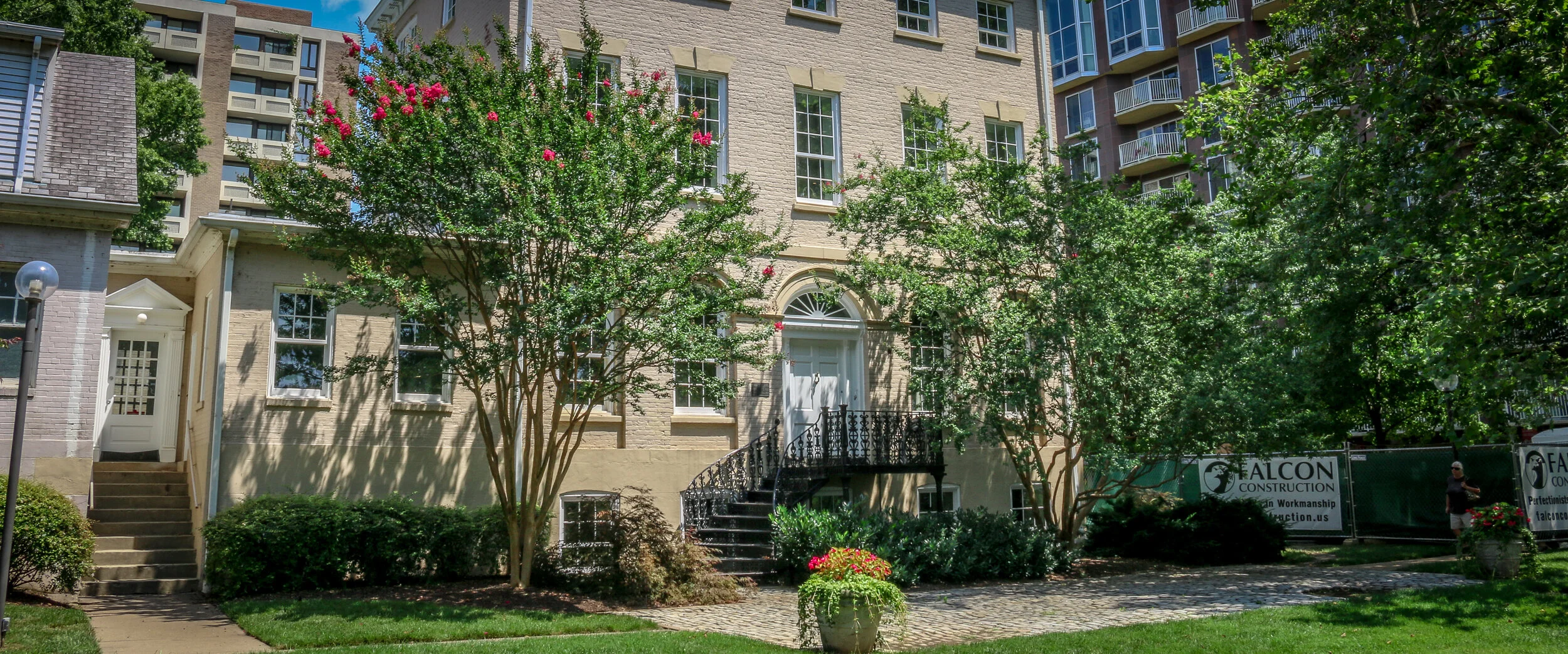
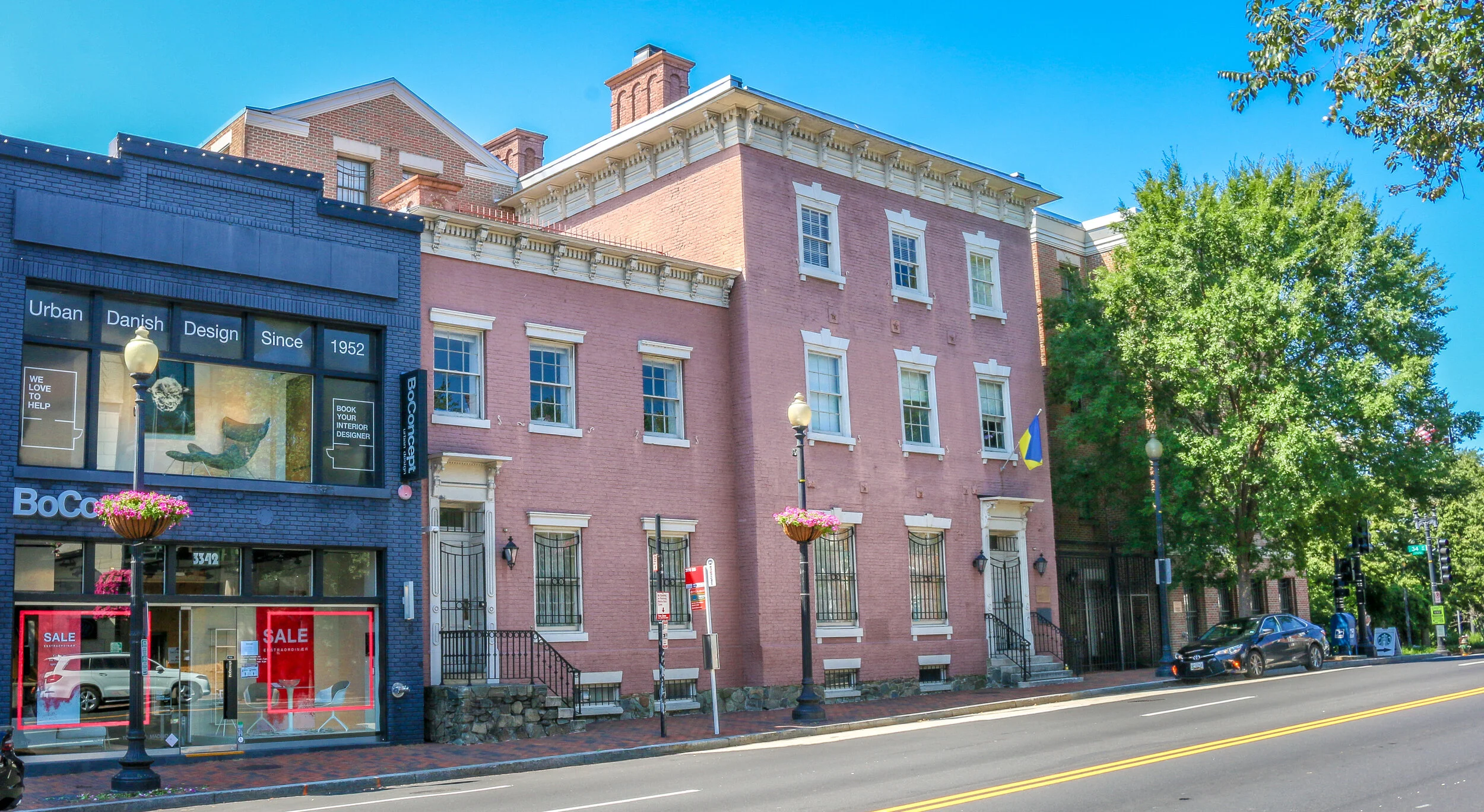
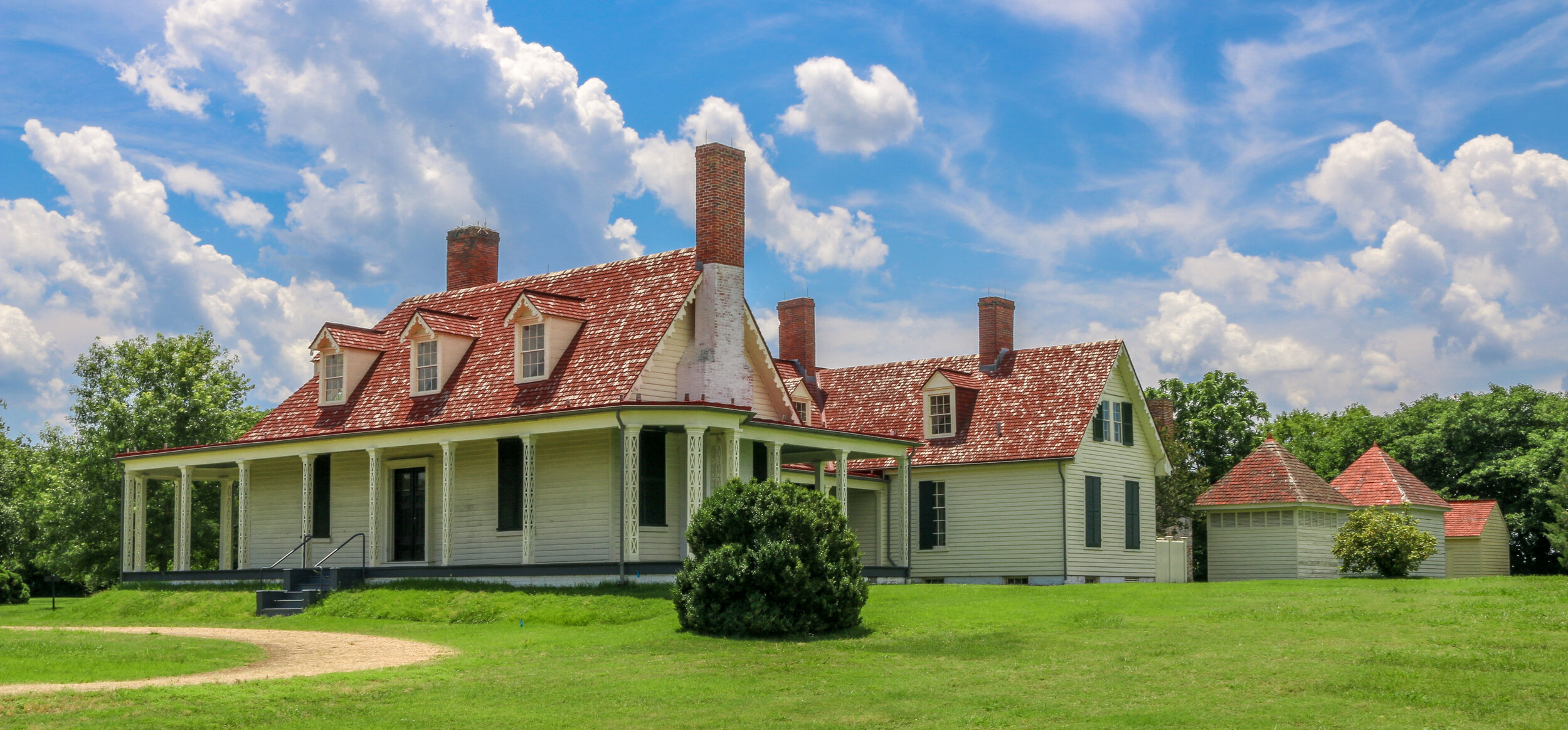
This post shares photos and a brief history of the Thomas Law House in Southwest Washington D.C.
The Thomas Law House was built between 1794 and 1796. It was designed by architect William Lovering who is credited with the design of several other properties which will be featured later in this series including The Octagon House, Wheat Row and the Duncannon-Cranch House. Thomas Law, formerly of the British East India Company, had recently immigrated to the United States with two of his three illegitimate sons born from his Indian mistress. He met and married Elizabeth Parke Custis, who was twenty years his junior, in 1796 and the couple moved into this newly built home which was then dubbed “Honeymoon House”. Elizabeth Parke Custis was the eldest granddaughter of Martha Washington from her first marriage. Elizabeth’s brother was George Washington Parke Custis, the builder of Arlington House (the Custis-Lee Mansion) and the father of Mary Anne Randolph Custis who would marry Robert E. Lee. Thomas and Elizabeth would live in this beautiful Federal Style home for only about five months before moving to a new home which was then under construction. They would divorce in 1811.
From 1814-1827, this house was occupied by Richard Bland Lee, brother of Henry “Lighthorse Harry” Lee and uncle of Robert E. Lee. Richard was the second cousin of Thomas Sim Lee, whose winter house in Georgetown was featured earlier in this series. Richard had served as a U.S. Representative from Virginia in the very first session of congress and had helped negotiate the Compromise of 1890 which established the Capital City of Washington D.C. He served three terms in congress and then returned to his family’s tobacco plantation – Sully – in Chantilly, Virginia. Financial hardships in the family eventually forced the sale of Sully after which Richard and his wife moved to the Thomas Law House. Richard would serve under President James Madison as a commissioner charged with helping rebuild the city after the War of 1812 and would later be appointed as a judge by James Monroe. He lived in this home until his death in 1827.
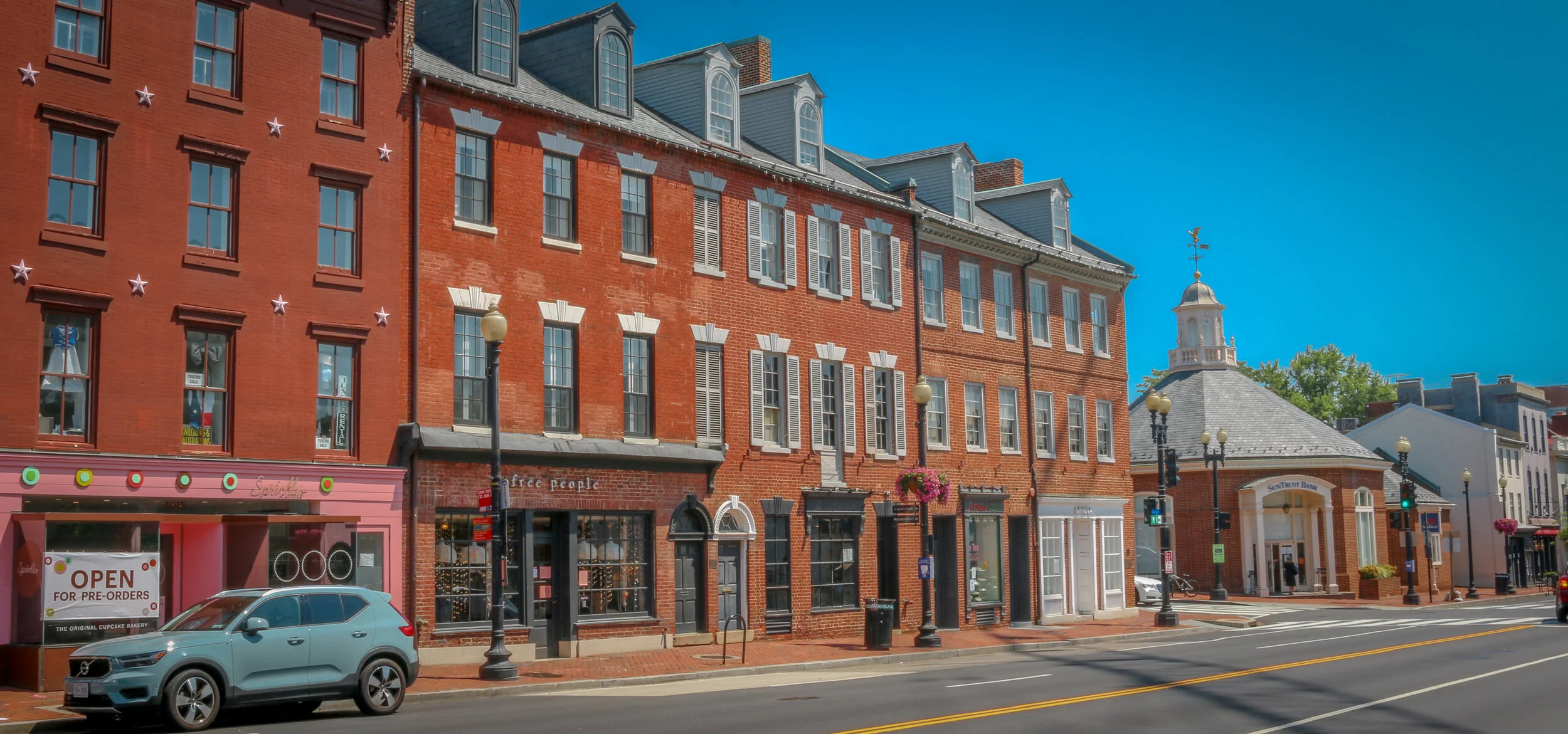
This post shares photos and a brief history of the Thomas Sim Lee Corner in Georgetown in Washington D.C.
At the end of the block where the Old Stone House has stood since 1765, you can find the historic winter home of Thomas Sim Lee, an associate of George Washington who had served as a colonel during the Revolution. He went on to become the 2nd and 7th Governor of the state of Maryland. During his first term, Lee consulted with then lieutenant colonel Uriah Forrest who would later live down M Street from Lee in what’s now known as the Forrest-Marbury House (read about it HERE). After his second gubernatorial term ended in 1794, Lee moved to Georgetown and built this lovely corner house. In July of that year, Washington offered Lee a role on the Board of Commissioners which was overseeing construction of the new capital city, but Lee turned him down. After the death of his wife, Mary, in 1805, Lee moved permanently to his country estate in Frederick County.
The Thomas Sim Lee house would go through several owners over the next century and a half, but it eventually fell into a dilapidated state and was slated for demolition in 1950. This was right about the time that congress had authorized the purchase of the Old Stone House a block away, and a Georgetown resident named Dorothea de Schweinitz quickly mobilized her friends to save the Lee Corner from the wrecking ball. The Architectural Review Board of the Commission of Fine Arts reviewed the property and recommended against demolition. Miss de Shweinitz organized her neighbors and helped found Historic Georgetown Inc. which sold shares at a dollar apiece and purchased the property outright. They then began renovations of the building and found renters to occupy it. The simultaneous preservation of the Old Stone House and the Thomas Sim Lee Corner was the beginning of a movement to save historic Georgetown, a move I’m sure area residents are grateful for today…
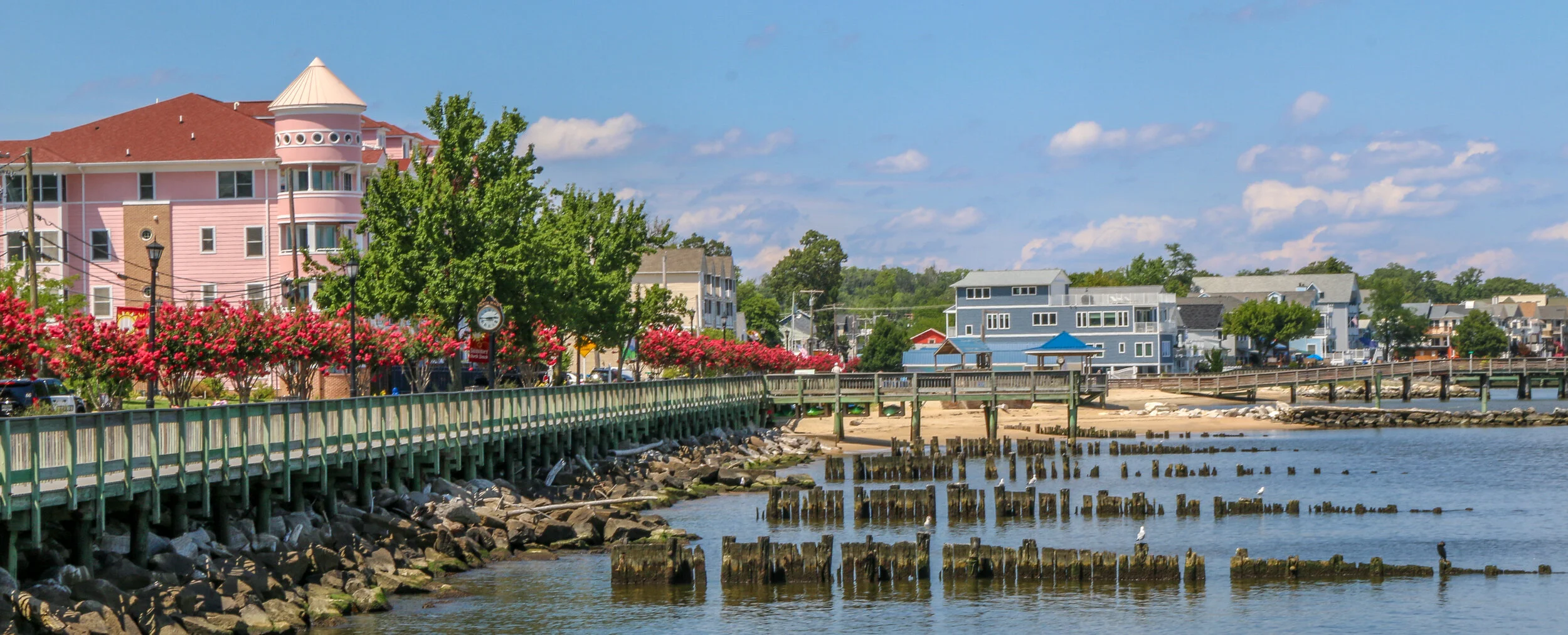
Last week I decided I wanted to check out a little bit of history and a little bit of seascape as well. It’s the middle of summer and I miss the beach but I’m not heading to the crowded Atlantic beaches right now. So I settled on a Chesapeake Bay view from the western shore towns of North Beach and Chesapeake Beach, only about an hour from Washington D.C. at a straight shot. I also wanted to take some photos at the beautiful Maryland State Capitol Building and wander around Annapolis’ Historic District as well. Connecting these two is Maryland’s Roots and Tides Scenic Byway.
Obviously, some of the key highlights of the journey were closed due to the pandemic, but I still enjoyed a little meander through the countryside, and the beach communities I ended up at sated my need for a little bit of time on the water. It’s definitely good to be out exploring, and I really enjoyed the Roots and Tides Scenic Byway. I hope you enjoy the photos I took along the way…
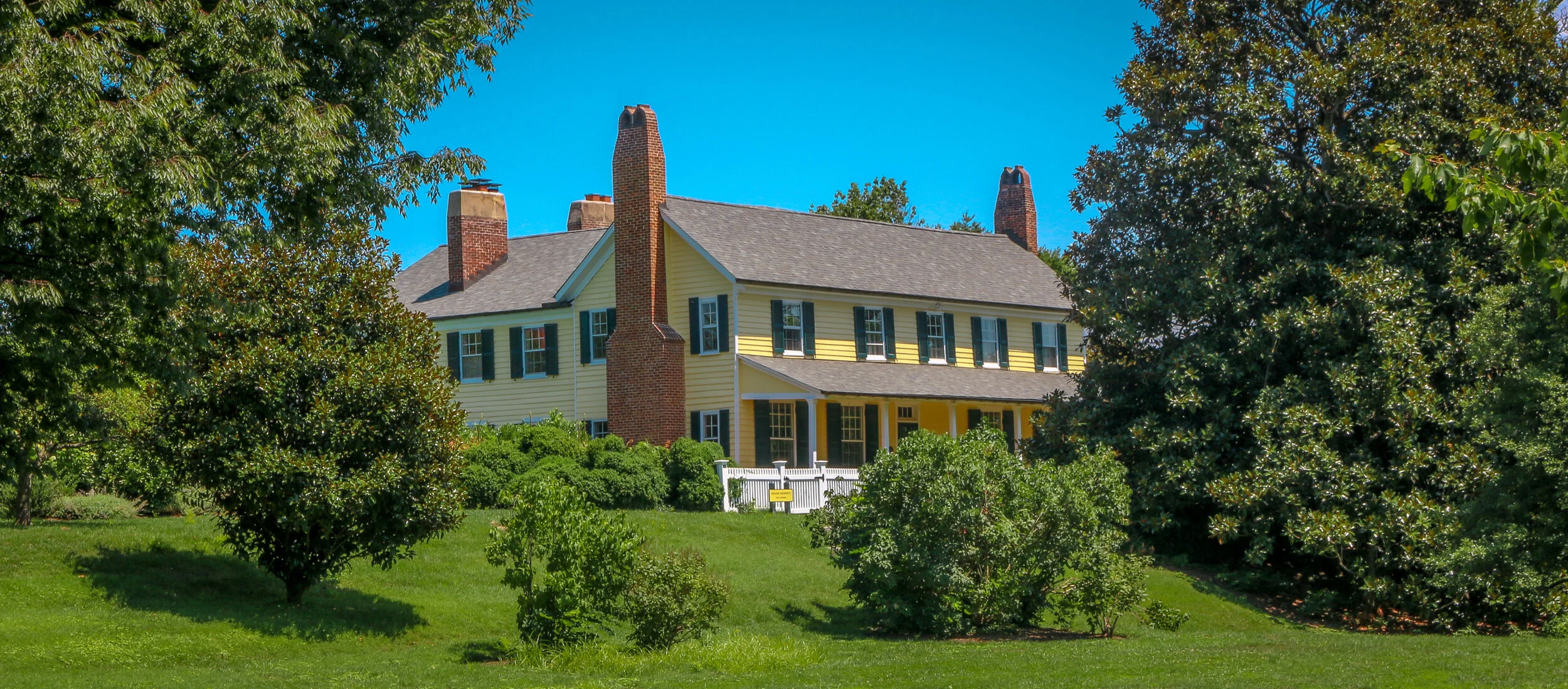
This post shares photos and a brief history of Rosedale in Cleveland Park in Washington D.C.
The area we now call Cleveland Park was once part of a massive 800 acre estate owned by Colonel Ninian Beall. After Beall’s death in 1717, his property was divided among his 12 children and a tract of it was bought by a man whose name is lost to history. This man built a small stone cottage on the property around 1740 and the estate was known as Pretty Prospects. In 1793, the property was acquired by General Uriah Forrest, who had been the mayor of Georgetown and was at that time serving in the U.S. House of Representatives. Forrest had a large wood-framed house built onto the front of the stone cottage and renamed the property Rosedale. Rosedale was the Forrest family’s country estate which they built while living in the Forrest-Marbury House in Georgetown (read about that house HERE).
General Forrest was a prominent citizen of early Washington D.C. and Rosedale played host to many important people including President John Adams. Forrest himself would die in the front parlor of the house in 1805. Rosedale remained in the family until 1917 when it was rented by the Coonley family.
This post shares photos and a brief history of the The Forrest-Marbury House in Georgetown in Washington D.C.
The Forrest-Marbury House was built in 1788 by John Stoddert and soon became the city home of Georgetown’s 3rd Mayor and Stoddert’s business partner, General Uriah Forrest. Forrest had lost a leg during the Battle of Brandywine in the Revolution, and would go on to serve in the U.S. House of Representatives. On March 29th, 1791 General Forrest hosted his old friend and former commander, George Washington, and other prominent local landowners for dinner before their historic meeting at Suter’s Inn which I discussed briefly in my last post in this series on The Old Stone House (read it HERE). In 1794, Forrest moved out of this house and to his country estate across town which he called Rosedale where he lived out his days. Rosedale will be featured next in this series.
From 1800-1835 this house was owned and occupied by William Marbury, a successful local banker. On the last day of John Adams’ presidency, Adams nominated Marbury to be a Justice of the Peace in Washington D.C. This nomination was blocked by incoming president Thomas Jefferson and his secretary of state James Madison. Marbury filed a lawsuit asking for a writ of mandamus which would force the Jefferson administration to complete his commission and in 1803 the U.S. Supreme Court heard the case of Marbury v Madison. This case would deny Marbury his commission not on the grounds that he didn’t deserve it, but on the grounds that to do so was outside the constitutional power of the Supreme Court. This famous early case established the principle of judicial review. Marbury’s adversary in the case, James Madison would later live in the Octagon House which will be featured in a later post in this series…
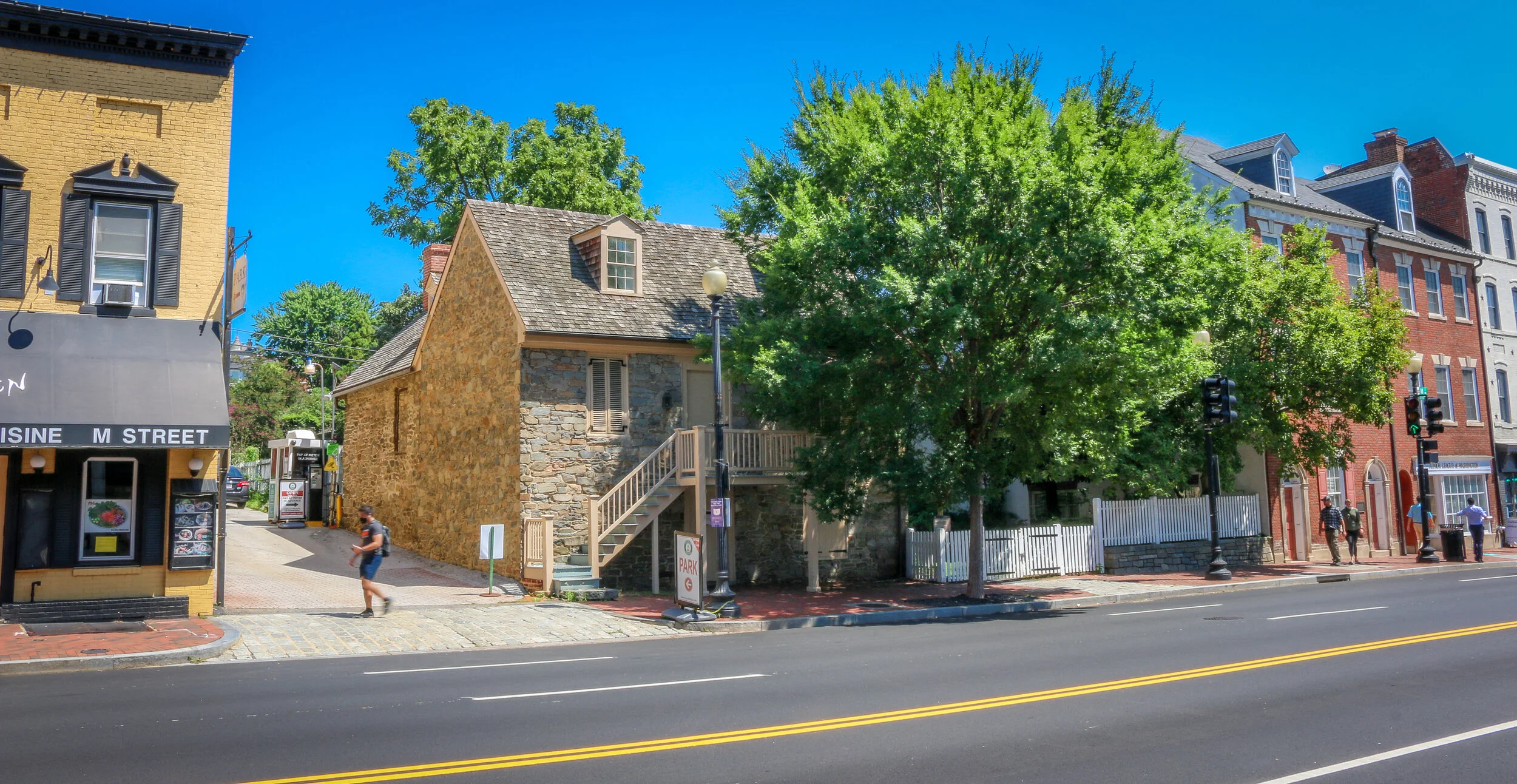
This post shares photos and a brief history of the The Old Stone House in Georgetown in Washington D.C.
The Old Stone House was built was built in 1765 on what was then Bridge Street (now M Street) in Georgetown, ten years before the Declaration of Independence and almost 30 years before the founding of Washington D.C. Built of locally quarried stone as a one story structure by a cabinetmaker named Christopher Layman, the building would serve as both his home and shop. After his death later that year, Layman’s widow sold the building to Cassandra Chew who added a rear kitchen in 1767 and a second floor soon thereafter. The third floor was added in the 1790s. Over the next hundred and fifty years, the building would change hands, and uses, many times. By 1953, when the National Park Service purchased the property, it was the site of a local car dealership. The Park Service has since restored much of the Old Stone House to an 18th Century appearance and it is open to the public as part of C & O Canal National Historical Park. It is considered the oldest standing structure in Washington D.C. on it’s original foundation, and is one of very few pre-Revolutionary buildings to be found in the District.
Interestingly, the Park Service points to a mistaken identity as one of the reasons the Old Stone House was preserved. On March 29th, 1791 George Washington was meeting with area landowners to discuss the purchase of land by the federal government to establish the new capital city.
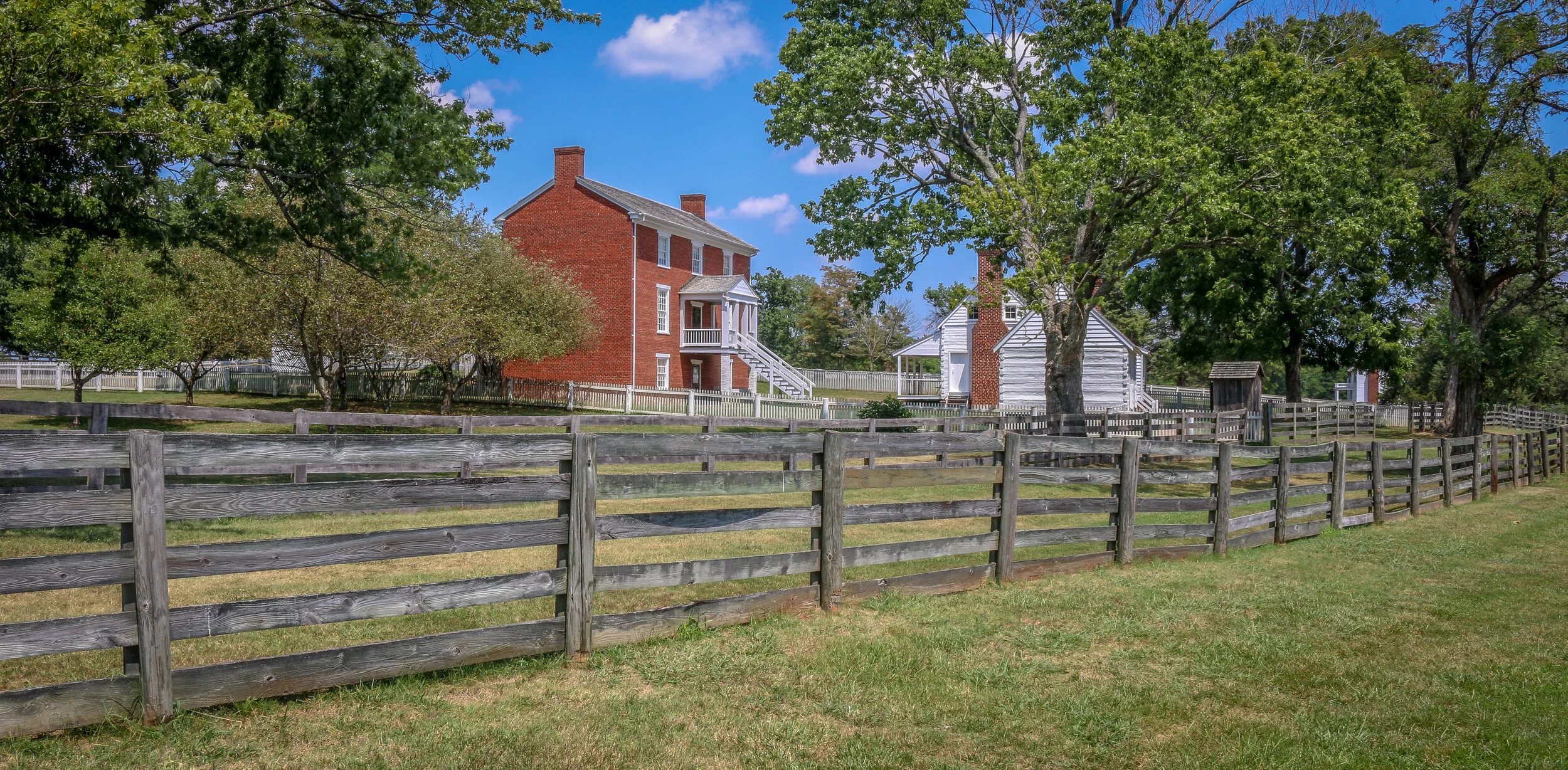
The photos below come from a recent visit to Appomattox Court House National Historical Park near the town of Lynchburg, Virginia. It was the site of the surrender of the Army of Northern Virginia which effectively ended the American Civil War.
After the siege of Petersburg and the fall of the Confederate Capital at Richmond, General Robert E. Lee led his Army of Northern Virginia west with the hopes of turning south to North Carolina and joining with General Joseph Johnson’s army there. They moved towards the train depot at Appomattox Station hoping to find much needed supplies waiting for them there. Union General Phillip Sheridan and his cavalry arrived first, capturing the supply trains and forcing Lee to turn his thoughts towards Lynchburg instead. Surrounded by Union troops, they made one final push at dawn on April 9th, 1865. It didn’t take long to realize that they were surrounded and Lee called for a meeting with Ulysses S. Grant to discuss the terms of surrender.
The site chosen for this conversation was the home of Wilmer McLean in the tiny village of Appomattox Court House. The generals met in the parlor, recreated above, to hammer out the details. The terms offered were very generous as the Confederate soldiers were to be immediately paroled and even allowed to keep their horses and sidearms. Their parole papers were printed in the nearby Clover Hill Tavern. The Southerners marched into town, stacked their rifles, turned over their cannons and marched out. While the surrender of Lee’s Army of Northern Virginia was not the end of the Civil War, there was little chance or hope for the Southern cause in its aftermath. The war would technically drag on until early summer, with skirmishes across the south, but the surrender at Appomattox Courthouse was the beginning of the end. Four long years of fighting which cost over 600,000 lives was finally nearing its conclusion…
I took these photos last week in the midst of the Confederate statue removal process in the old Confederate Capital of Richmond. It was a unique time to visit because some of the statues had already been removed, one of JEB Stuart was in the process of being removed and the two central ones to Robert E. Lee and Jefferson Davis still stood, although both have been slated for removal.
In taking these photos I wanted to capture the spirit of the protests which ultimately have led to the conversation over the removal of these statues, so I have included some close-up shots of the graffiti. Some of the graffiti is targeted towards police brutality while some supports the Black Lives Matter movement.
I am of the opinion that these statues cannot continue to stand in these central places in our nation’s cities. While there are aspects of all of these men which I admire and respect, the cause for which they fought was ultimately the continuation of slavery in perpetuity. There are places for these statues as I believe all art tells a story, but the story currently being told isn’t a complete one and needs to be adjusted with our current understanding of history. These statues coming down isn’t erasing history, it is history.
It’s time. It’s actually long past time for these monuments to come down across the South. When I say these monuments, though, I’m speaking very specifically. I don’t personally believe that all traces of the Confederacy should come down although I don’t believe that doing so would in any way erase history. History is history and no monuments or statues can change it. Many of these monuments, though, were put up not in tribute to fallen soldiers but specifically to support a platform of white supremacy, and that is a history that should be told too. In fact, that is an even more crucial topic for people to learn about if we want to move forward as a nation. But either way, statues to Confederate generals put up in prominent parts of town as hero’s monuments have no place in 2020 America. It’s time for them to come down.
The Civil War was a horrific chapter in our nation’s history which caused the deaths of over 600,000 people. Many of those soldiers’ bodies never came home and are either buried where they fell or among the thousands upon thousands of “unknown” graves around the country. I believe that no matter what their beliefs were, every mother has a right to bury her child and in this case, that wasn’t often possible. Many of the Civil War memorials around the South are depictions of a simple foot-soldier with the names of those soldiers from that town who went to fight in the war. We must also understand that many young men were drafted into the war and did not join of their own free will. Many joined to defend their towns and villages which were most certainly in harm’s way. Many were teenagers who couldn’t have possibly known or understood the larger implications of the war. Most didn’t own slaves. Before I go any further I want to make two things abundantly clear. First, I hate slavery with every bone in my body. I don’t think that owning another person has ever been right in the entire history of the world. Second, I am completely aware that slavery was the primary cause of the Civil War insomuch as had there been no slavery, there would have probably been no war. However the idea that the war began as a noble cause on the part of the abolitionist Northerners to end slavery is simply not true. I wish it was because then I could condemn all Confederates who took up arms and the men who led them. But I know too much about the war to believe that and feel too strongly that too many young men simply got caught up in the war and died too young. So I say let those local memorials stand, but every one of them should be removed from town centers and in front of county courthouses and placed respectfully and with dignity in the local cemeteries. It’s time to bury the dead.
As for these big statues which are coming down now, I know this may be unpopular, but I do respect them as both art and history and I think there is a place for them on the Civil War battlefields of the country. I’d like to see them placed in the hands of the National Park Service which will properly interpret them as to how, why and by whom they were originally erected, who they represent and why they were removed to the battlefield. As for those memorials which were specifically commissioned as a response to Brown vs. The Board of Education or similar hallmarks of progress in Civil Rights, I’d like to see a select few collected to interpret that time in our history and the rest smashed to pieces and used as the foundations to new memorials to the men and women who led that movement.
The photos below come from a recent visit to the battlefields of the greater Richmond/Petersburg Area. With the exception of the first few from Gaines Mill which was important to the Peninsula Campaign of 1862, most of these battles were part of the 1864 Overland Campaign. This long, brutal and bloody series of battles would eventually lead to the capture of Petersburg and the fall of Richmond which set the stage for the surrender of the Army of the Potomac at Appomattox. Civil War Chronicles will trace the major battles of the Eastern Theater of the war through photos and brief histories
Richmond was not the original capital of the Confederacy, but became the capital after Virginia seceded from the Union in April of 1861. Richmond and neighboring Petersburg were major industrial hubs with rail lines connecting to points near and far and the James River to further move supplies in and out of the area. The rivers surrounding the city made defending it somewhat easier as well. Because of the strategic importance of Richmond, it would be the focus of several major campaigns during the war.
Our visit started at Gaines Mill Farm which saw some of the worst fighting of the Seven Days Battle during the Peninsula Campaign of 1862. This battle was the first in which Robert E. Lee had command of the Army of Northern Virginia following the wounding of Joseph Johnston. Lee’s ability to hold off George McClellan and his Union forces would direct the war away from Richmond and back to Northern Virginia to Fredericksburg and Chancellorsville which we visited several weeks ago…
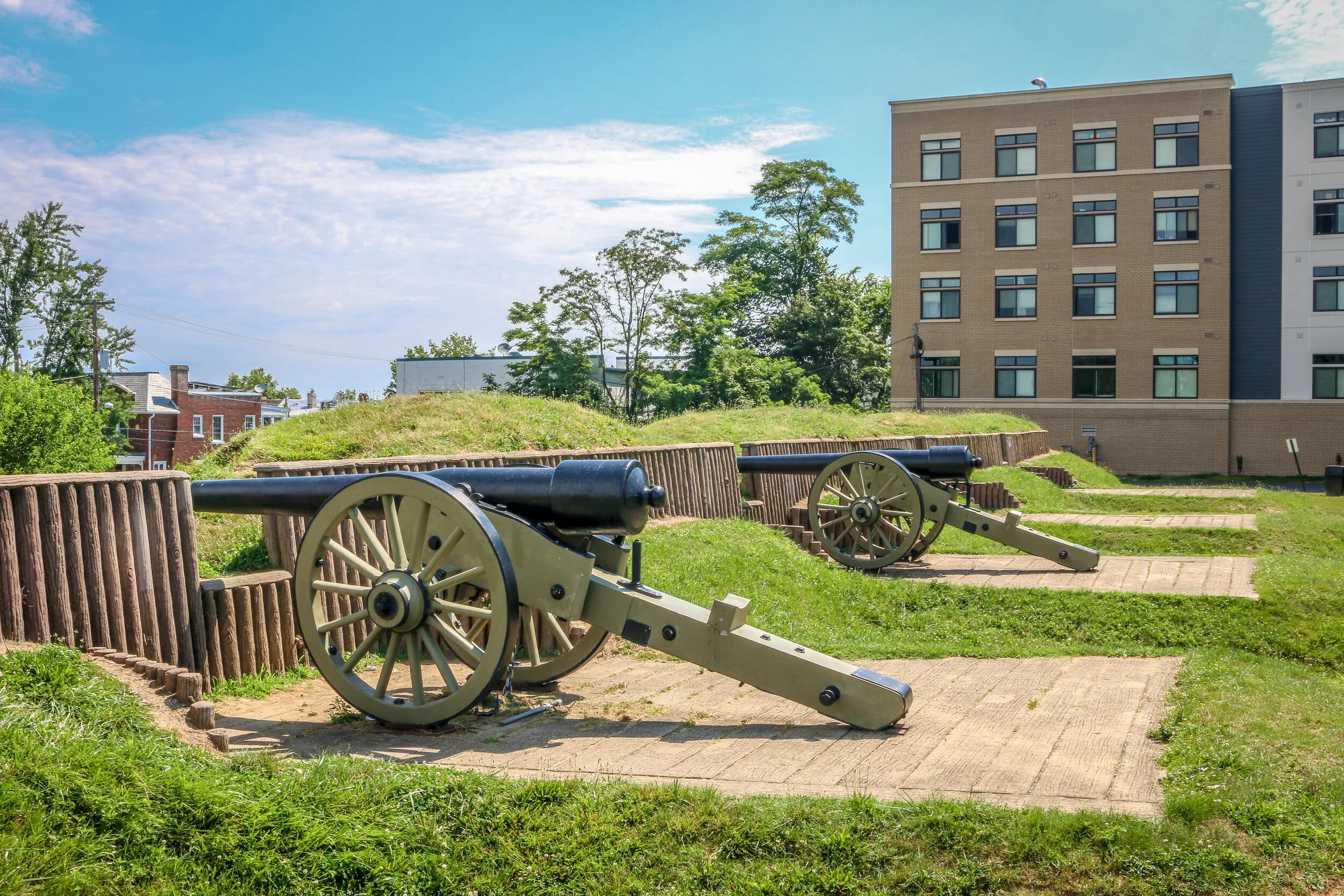
The photos below come from a recent visit to Fort Stevens in Washington D.C. - site of the only battle fought inside D.C. during the Civil War, and of Battleground National Cemetery up the street. The final photo came from Grace Episcopal Church in Silver Spring, MD. Civil War Chronicles will trace the major battles of the Eastern Theater of the war through photos and brief histories.
After overcoming Union General Lew Wallace and his men at the Battle of Monocacy on July 9th, 1864,, Confederate General Jubal Early continued his march towards the Capital of Washington D.C. The Confederate soldiers made the march in two days. Thankfully, Wallace had delayed the Confederates long enough for General Grant to send reinforcements via steamship from Richmond who soon took up position in the northern section of the circle of forts surrounding the city. Fort Stevens guarded the 7th Street Pike, one of the main roads into the city (now Georgia Avenue).
The armies exchanged fire on July 11th and 12th, but Early felt the city was too heavily defended to mount a full scale attack. Both sides lost men in the skirmishing, but casualties were relatively light by Civil War standards. Notably, President Abraham Lincoln came to Fort Stevens on July 12th with his wife, Mary. The two came under fire, the only time in American history that a sitting president was in the direct line of enemy fire. A memorial stone on the parapet marks that location today. That evening, Early would withdraw his men through Maryland and cross the Potomac back into Virginia, marking the end of the final Confederate attack into the North. They paused briefly en-route to bury 17 of their dead comrades at Grace Episcopal Church in Silver Spring…