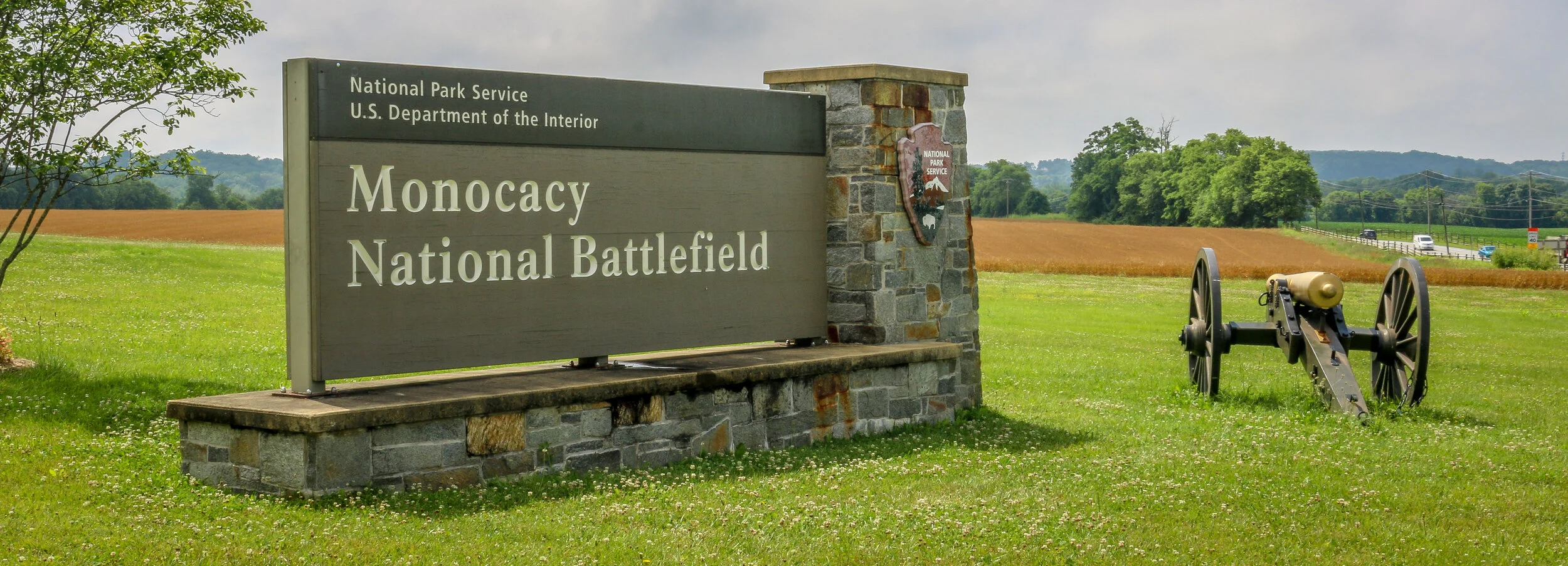
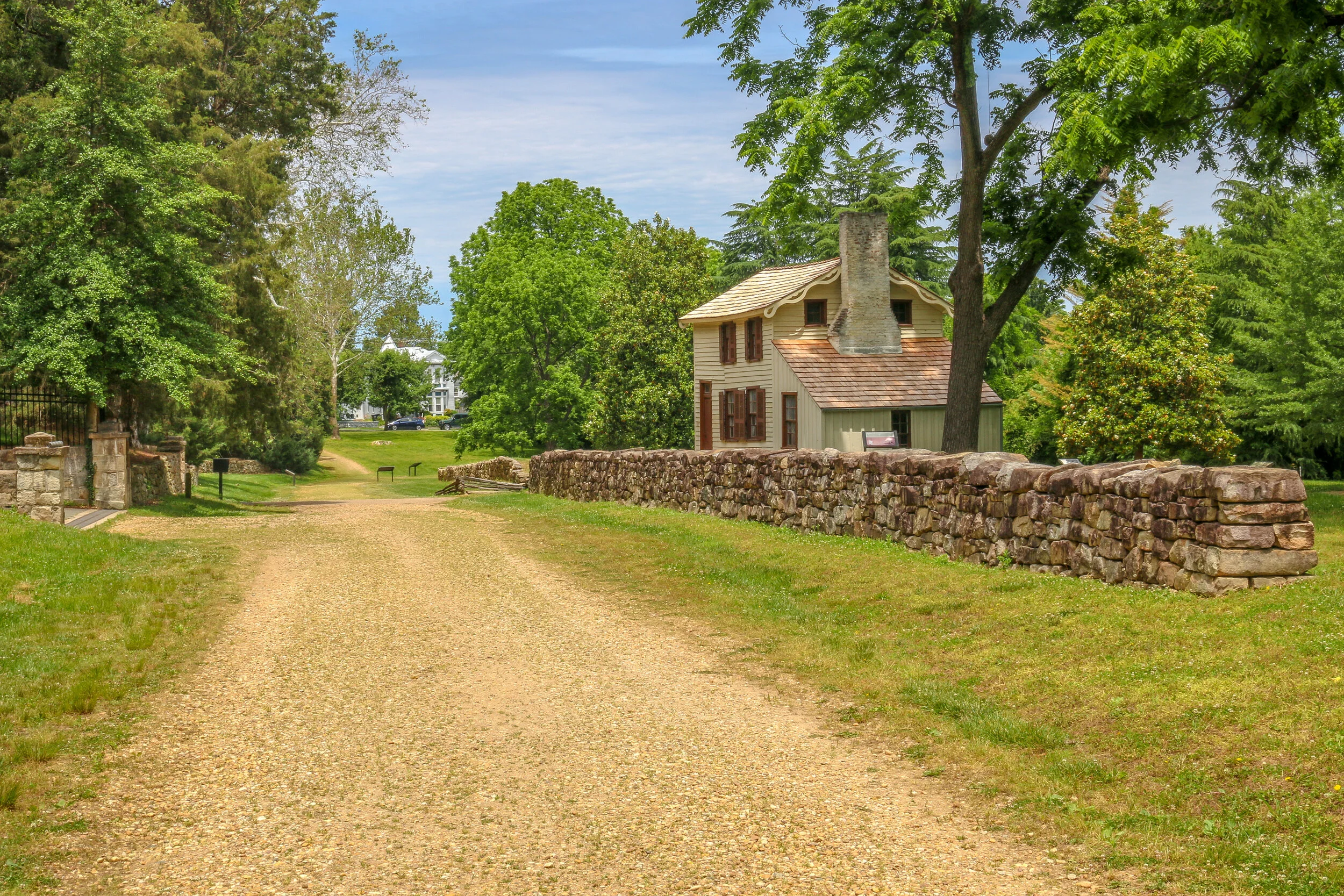
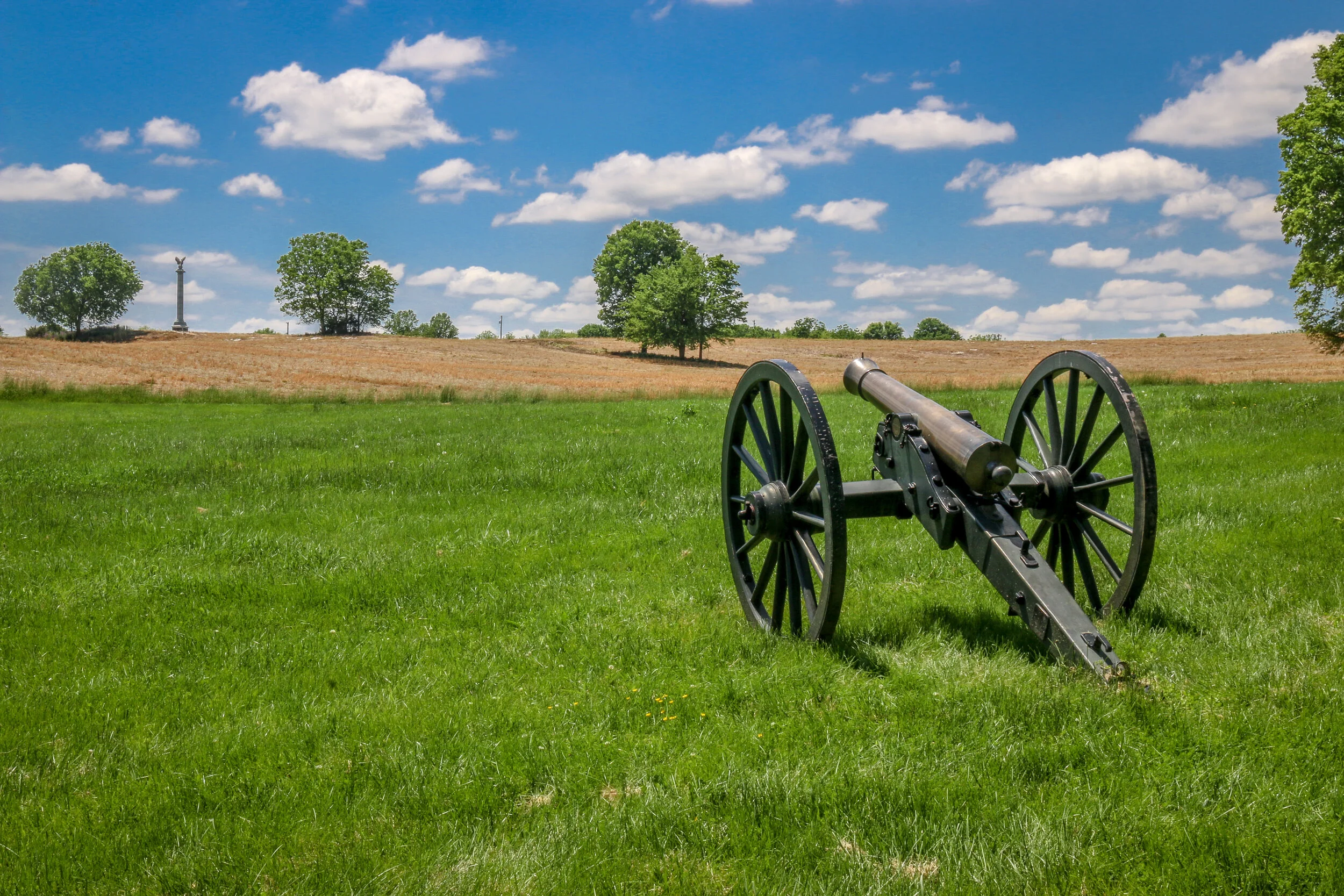
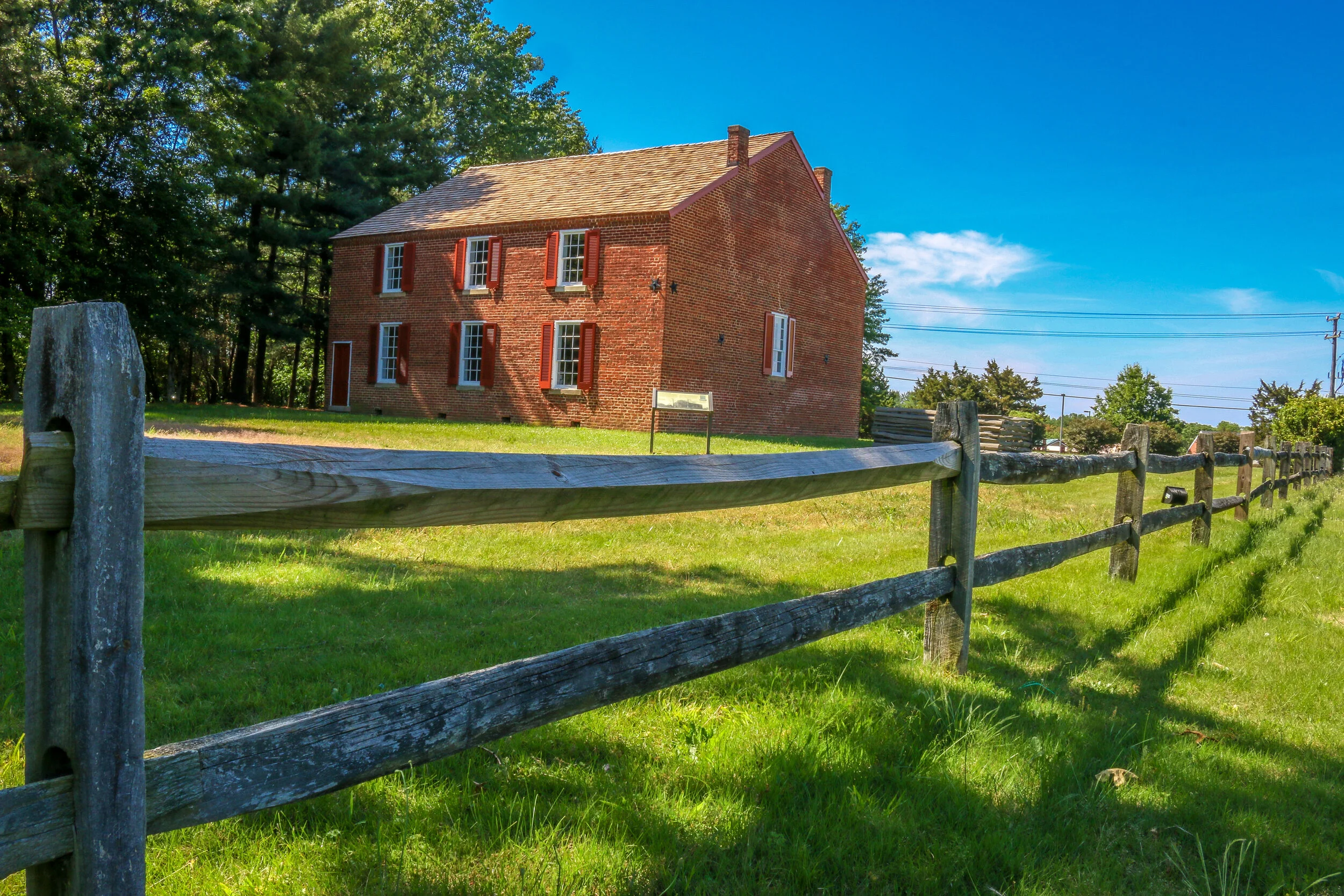
The photos below come from a recent visit to Monocacy National Battlefield Park just south of Frederick Maryland - site of the “Battle that Saved Washington”. Civil War Chronicles will trace the major battles of the Eastern Theater of the war through photos and brief histories.
The Battle of Monocacy is a bit of an outlier in that it wasn’t really a major battle of the Eastern Theater of the Civil War, but a minor one with major implications. While Generals Grant and Lee were engaged in the final grappling of the war around Petersburg, south of Richmond, Lee wanted a distraction to pull some of Grant’s army away. He attempted this by sending General Jubal Early to go on the offensive and attack into Union territory, the third Confederate invasion of the North during the war. Early was sent with 15,000 men to threaten Washington D.C. and, if possible, to raid the prison camp at Point Lookout and free the Confederate soldiers being held there. Lee also knew that a presidential election was looming and he hoped that another invasion of the North might bring about the defeat of Lincoln and a favorable end to the long and brutal war.
Early’s army crossed the Potomac River into Maryland on the 4th of July, 1864 and marched past Sharpsburg, the site of the Battle of Antietam two years earlier. You can’t march 15,000 infantry troops across a state without anyone noticing, and word quickly got to General Lew Wallace who was then the Union commander in Baltimore. Wallace gathered what men he could muster and quickly set off towards the west. Thinking quickly, Wallace decided to head towards Monocacy Junction, just south of Frederick, Maryland. He didn’t know where the Confederates were headed, but this point would allow his troops to defend the Georgetown Pike to Washington, the National Road to Baltimore and the Baltimore and Ohio Rail Line. If he got there first, he could strategically place his men along the Monocacy River and defend all three of those routes which crossed the river at that point. He arrived in time to dig in and establish a line of defense.
The photos below come from a recent visit to Fredericksburg and Spotsylvania National Battlefield Park, which also includes the Battles of Chancelorsville and The Wilderness. Civil War Chronicles will trace the major battles of the Eastern Theater through photos and brief histories.
It had been almost a year since the horrific battle of Gettysburg, and in the interim President Lincoln had turned command of the Union Army over to General Ulysses S. Grant. Grant would lay out a plan to attack the confederacy on many fronts including Sherman’s march towards Atlanta and an attack on Mobile, and Grant himself would ride with General George Meade’s Army of the Potomac. Their goal was to bring the war back to Virginia and keep the pressure on General Lee and his Army of Northern Virginia. This Overland Campaign would be a war of attrition and would bring the war to new levels of horror but ultimately lead to Lee’s surrender at Appomattox.
On May 4th, 1864 the Army of the Potomac crossed the Rapidan River and engaged Lee’s army in an area called The Wilderness. Apparently the area today bears little resemblance to what it did at the time when new growth underbrush made movement difficult, artillery less effective and confusion the norm. Fierce fighting took place on the scattered farms in the area which allowed for some open space in which to maneuver, but most of the battle took place in the dense forest. On May 6th, the Union Army had taken the upper hand and Lee’s men were in grave danger of being overrun on the widow Tapp’s farm. In a scene from the movies, Longstreet’s reinforcements arrived at just the right moment and Lee was prepared to lead them into battle himself, but the Confederates wouldn’t allow it and moved him quickly to the rear. After two days of heavy fighting neither side had gained a decisive victory. Unlike his predecessors, Grant didn’t pull back but rather pushed forward, ordering a night march towards the town of Spotsylvania Court House. His plan was to get between Lee and the Confederate Capital at Richmond. Sensing this move, Lee ordered his men to move that night as well.
I am not a protester. I don’t like chanting and I don’t want to carry a sign. I am, however, a historian and have spent a big chunk of my life studying U.S. history. I believe strongly in people’s constitutional right to protest and people need to be reminded that that right was not extended to black people in the U.S. until the 14th amendment passed in 1868, a full 80 years after the U.S. Constitution was ratified. That amendment only passed under duress during Reconstruction.
One of my many projects is my podcast American Anthology, and one of my goals with that project has been to call attention to some of the lesser known chapters in the struggle for Civil Rights in this country. We all know about MLK and Rosa Parks, but for a lot of people that’s where things start to fade out. The struggle has been long, painful and bloody beyond belief, and didn’t end with the Civil War or Civil Rights. It has always been just about being treated the same, about having the same rights as white citizens of this country.
My normal goal on this blog is to give people a break from the news and politics with some beautiful photos, but one of the main goals of my podcast has been to help educate people about American History, and especially some of these lesser known chapters. If you want some easily digestible (though not necessarily pleasant or easy to hear) lessons on the struggle and how things have gotten to where we find ourselves today, I’d like to call your attention to some of the topics I’ve covered:
Episode 5 – N.C. – The Wilmington Insurrection – the only successful Coup d’etat in American History
Episode 7 – S.C. – Briggs vs. Elliott – the struggle for a single bus for black students – became part of Brown vs. The Board of Education
Episode 9 – TN - The Lynching of Ell Persons – 5,000 people showed up to this public lynching advertised in the paper. Sandwiches were sold…
It’s been a warm week here in D.C. – summer has definitely arrived. I’ve had some nice days to get out and explore the city this week, but also some hot and humid ones and a few epic thunderstorms as well. It’s been a long time since I’ve experienced summer in our nation’s capital, and there are definitely pluses and minuses. I will say that the lack of traffic anywhere at any time makes the heat of summer a little more tolerable. As I’m sure I’ve mentioned before, that lack of traffic definitely makes for cleaner air and clearer skies – something my camera sees even more than I do. That is one of the plusses of the situation. We’ve been enjoying some summer fruit too, which is one of the best things about summer anywhere. We’ve had beautiful cherries, watermelon, strawberries and others and I’m looking forward to peaches very soon.
Last Friday my stepfather made some wonderful homemade pizzas and we sat in the basement and played some games and listened to some music while we chowed down on a couple of pies. It was another great Forget-About-It Friday, which we are grateful for. This coming week we will tap our homebrew and see how it turned out, and begin our next batch as well – an American Cream Ale. I’m looking forward to having a taste and to keeping the brewing going while I’m home. It’s fun and there’s a (hopefully) fine finished product at the end. After the cream ale, I want to try something a little more complicated now that I’m getting my brewing confidence back up.
The rest of the weekend was pretty quiet. My mom spent Saturday cooking up a storm and we had a wonderful dinner on Saturday night as well. Sunday I spent some time reading my new (to me) book about the Gettysburg Address which I’m really enjoying. I also got some photos edited and published from our trip to Antietam last week, and got some writing done as well. It was a pretty relaxing weekend all around, but it felt good to accomplish a few things along the way.
After being turned back south after the Battle of Antietam, Confederate General Robert E. Lee marched his army back to Virginia. Union General George McClellan was replaced by General Ambrose Burnside to command the Army of the Potomac, and President Lincoln urged Burnside to pursue the Army of Northern Virginia deep into the state and attack the Confederate Capital at Richmond. The major obstacle lying in their way was the Rappahannock River.
Burnside arrived at Stafford Heights overlooking the river and the small town of Fredericksburg in mid-November, 1862. He had sent orders to have pontoons at the ready to provide a means of bringing his army rapidly across the river. Tragically for Burnside and his men, the pontoons didn’t arrive for several weeks. Instead of crossing the river in boats or rafts, he chose to wait for the pontoons. By the time they got there, Confederate troops had dug in on the high ground south of the city called Marye’s Heights and behind a stone wall along a sunken road to the front of this position.
Union engineers worked through the night of December 10th to assemble the pontoon bridge, but their progress was slowed by Mississippi sharpshooters in town. A small group of Union soldiers crossed the river in boats and fought a battle to secure the streets of the town. They finally secured the town in late afternoon on the 11th, but it was winter and the daylight soon gave out. The bridge would be completed and most of the army would cross it on December 12th.
Antietam National Battlefield was the sight of the bloodiest day in American History and one of the best known battle of the American Civil War. Along Antietam Creek just north of the tiny town of Sharpsburg, Maryland, 100,000 soldiers marched into battle on September 17th, 1862. By the end of that day almost 23,000 were dead, wounded or missing.
After a Confederate victory at the 2nd Manassas/Bull Run, General Robert E. Lee pushed into the North for the first time. The Virginia countryside had been ravaged during the first year of the war, and Lee wanted to give it time to heal, plus a decisive victory in the North might bring President Lincoln to the negotiating table.
On September 15th, 1862, Lee crossed the Potomac River into Maryland and dug in along the high ground west of Antietam Creek. Union forces under Commanding General George McClellan moved in from the east. At dawn on September 17th, the battle began…
The photos below come from a cloudy visit to Antietam National Battlefield, the site of the bloodiest day in the American Civil War. Civil War Chronicles will trace the major battles of the Eastern Theater through photos and brief histories.
Hello everyone! 10 weeks later and I’m still here in Washington and with no end in sight I’m trying to make the most of it. It’s been another tough week across the country, and here in our Nation’s Capital, and I don’t want to downplay the significance of what’s going on so that’s where I’ll start this week. The murder of George Floyd in Minneapolis saddens me greatly. If you are a regular listener of my podcast, you know that I don’t shy away from talking about racism in America and some of the horrible incidents which have occurred in our country’s history. Racism and violence towards minorities is not something which ended with the Civil War or the Civil Rights Act and it’s something which is an everyday reality for many of our fellow Americans. I try and keep politics and controversy to a minimum in this space, but there should be no controversy in this. A man was killed for no good reason and when that happens the person who did the killing needs to face the harshest of consequences. In this case, all the good cops should be leading the charge as what happened was a disgrace to the badges they wear.
Beyond that, I don’t know the answers. I wish I did. It’s been hard to watch the vandalism going on in my city and in my neighborhood. I wish that it hadn’t come to that, but I’ve been watching backlash for years over peaceful protests and sadly this seems to be what it takes to peoples’ attention. I’m trying to keep my ears open right now and really listen to what my black friends are saying. Their reality is different from mine and I acknowledge that and I am listening. I think the thing which affected me most was a tweet by Seth Green which said “Black people are literally saying ‘stop killing us’ and there are people saying ‘but…”. A change has got to come. What’s past is past, but there is still hope for the future.
With all of this weighing heavily on my mind, I’ve been trying to stay productive this week. I’ve been getting some photos edited and published and some writing done as well. I’m also making some headway on one of the books I’m writing, although it will undoubtedly take longer than I anticipated.
I hope you enjoy this post with photos and history from Forest Hills, a beautiful neighborhood in Northwest Washington D.C.
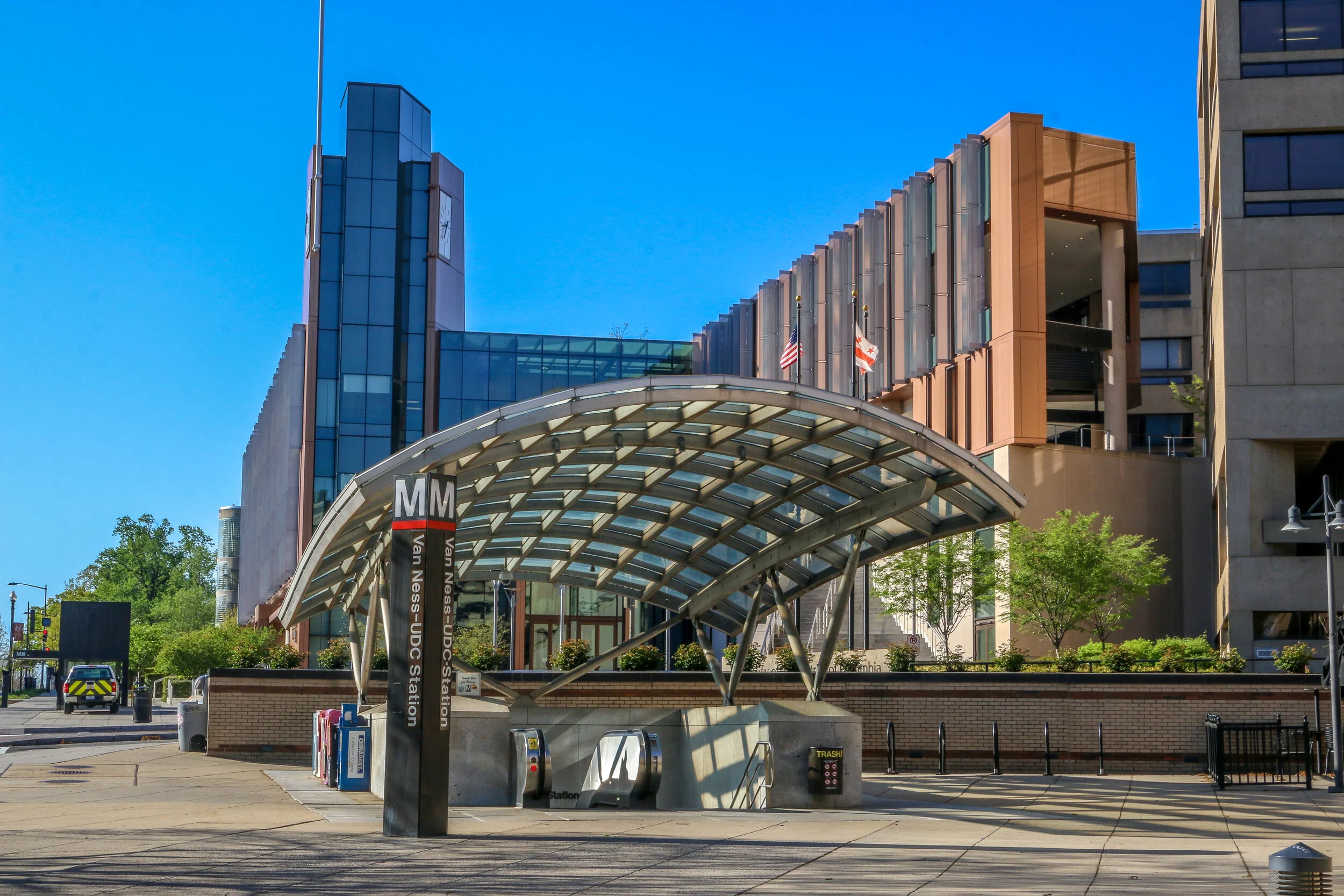
Resting quietly between Cleveland Park and Chevy Chase and bordered by Rock Creek Park to the east is the quaint neighborhood of Forest Hills. Those of us who grew up in the era of the Metro are probably more likely to think about this neighborhood as Van Ness/UDC. The station takes its name from Van Ness Street, the main cross street in the neighborhood, and the University of the District of Columbia. Since the northern border of the neighborhood is considered to be Nebraska Avenue, I grew up right across the street from Forest Hills.
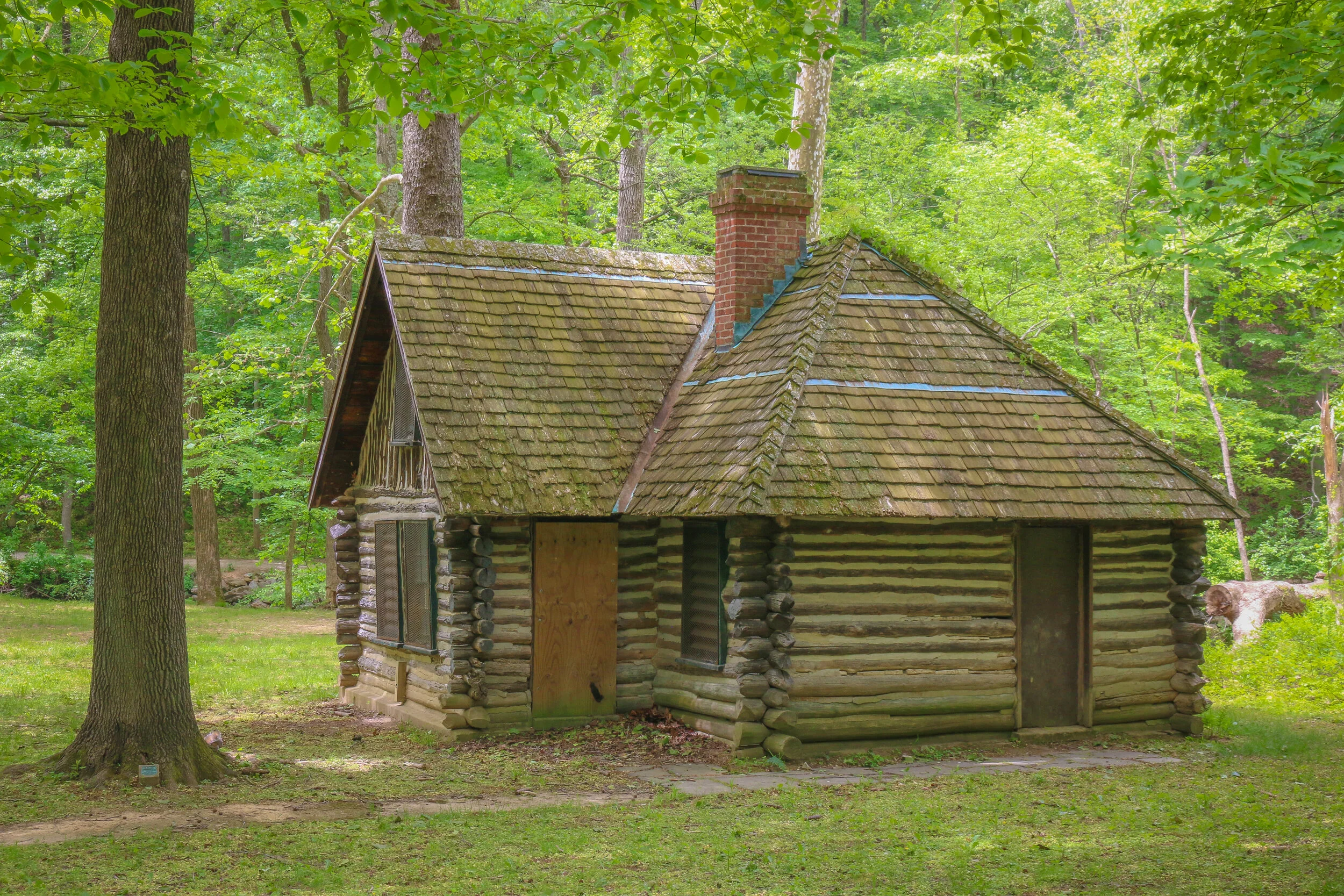
Once home to a Native American soapstone quarry, Forest Hills has quite an interesting history. In 1763, long before the creation of Washington D.C., Col. Samuel Beale was granted a tract of land by Lord Baltimore and named the area Azadia. Much of this tract would later be purchased by Isaac Pierce who would build his namesake mill along Rock Creek. In 1814, Revolutionary War veteran and retired land surveyor John Adlum bought a 200 acre tract of land in the area to start a vineyard. He named his estate Springland Farm and went on to become one of the first commercial producers of wine in the country (Adlum is buried at Oak Hill Cemetery in Georgetown). During the Civil War, Forest Hills was the site of Fort Kearny – one of the ring of forts protecting the Capital City…
Hello everyone, well we’ve made it through another week. I hope it’s been a good one wherever you’re reading this from today. Mine has been really good – probably the best I’ve had since returning home to D.C. now 2 months ago. After a positive start to being sheltered in place and having some free time to catch up on some work and try some fun stay-at-home hobbies, I really hit a downward spiral there for a while as claustrophobia and cabin fever kicked in. With the extended and indefinite closure of my industry (travel and tourism), I found myself staring out at an uncertain and challenging future. I usually keep my anxiety levels in check by being in control of certain aspects of the situation and then allowing the rest to unfold as it will. Under these circumstances, my environment is more controlled than usual, but there are thousands of moving pieces around the world that I have no control over, but which will help shape my near and distant future. I find that to be incredibly frustrating, and with limitations on how I normally deal with my frustration as the gym is closed, travel is limited and my camera is gathering dust.
I’m the kind of person who usually turns inward to sort things out, dealing with them in my own head with little or no outside influence. This week though, I’ve had a lot of outside influences help pull me up out of the mud. First I got some nice messages from some of y’all which is always appreciated. Believe me, I love to hear from you so don’t hesitate to comment or message me. Second, I met with a couple of different friend groups over Zoom which is always good. Third, I went to see some of my friends in person – masked and 10 feet apart, but it was still great to actually see people in the flesh. I hate the fact that I’m home and can’t see my friends or their kids, and this was a chance to at least pop around and say hello. And lastly, my mom came up with a plan to get us out of the house and provide some outlet for being stuck at home indefinitely.
Last Thursday, we went for a walk in Rock Creek Park, the large green space which surrounds its namesake creek through the middle of the city. We took a look at the earthworks that were once Fort DeRussy…
South Texas was the end of the road for me on this leg of my journey. I set out to make it across the country to the Pacific Ocean and back over the next 16 months or so, but the coronavirus put an end to all of that. When things started going from bad to worse further north, I made my way all the way south to South Padre Island and Port Isabel, stopping off at Palo Alto National Historical Park along the way. The battlefield was awesome to see and I had it almost entirely to myself. I learned a lot about the first battle of the Mexican-American War, and the two future presidents (Ulysses S. Grant and Zachary Taylor) who fought in it. The prickly pears were just starting to bloom, and the day was just on the verge of being too hot to be out in the sun. It was a beautiful and fascinating place. From there I headed to the coast and hunkered down for almost a week. While everything was pretty much shut down, I enjoyed the beach, sand art, peace and quiet and beautiful sunsets on the bay. When Shelter-In-Place orders came down for the beach communities, I knew it was time for me to head home, making this the end of the road for now. I was glad I saw it and had the chance to spend some time in this tiny, far out corner of America.
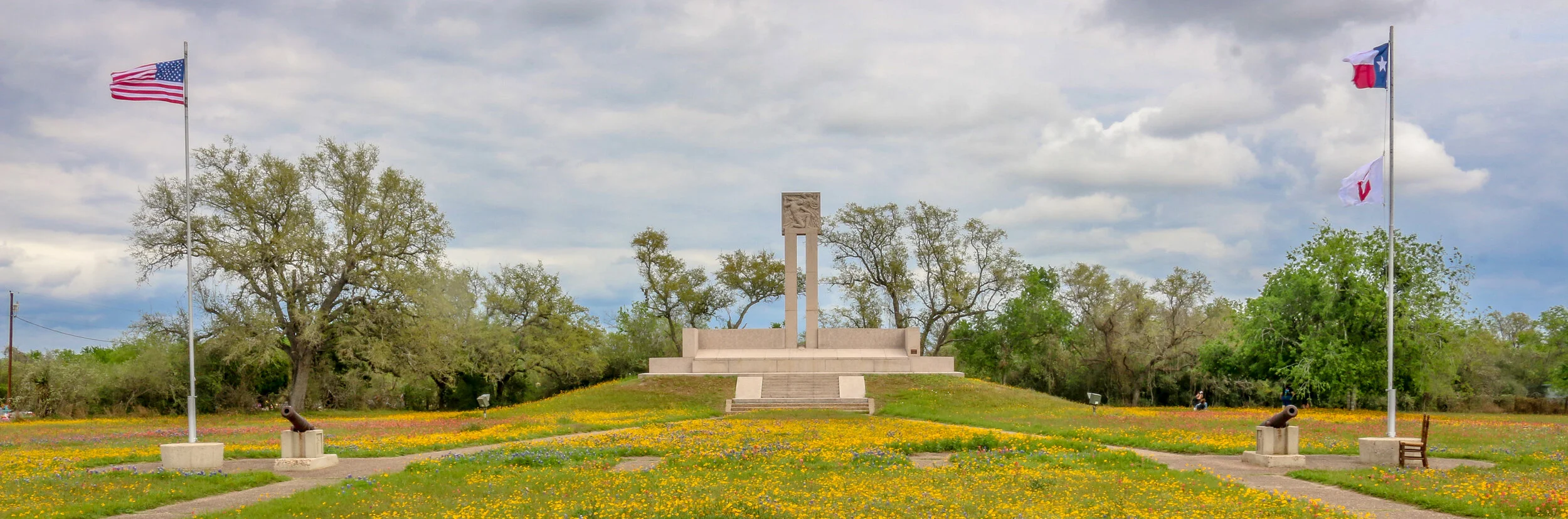
Like many towns in America with Spanish Colonial roots, Goliad started out as a presidio (fort) and mission, both located on the San Antonio River. Presidio La Bahia and Mission Nuestra Señora del Espíritu Santo de Zúñiga had originally been located elsewhere, but were moved to their current location in 1749. One of the first schools in Texas was founded nearby in 1804. During the Mexican War for Independence, the presidio was a strategic target and changed hands between the Spanish loyalists and Mexican rebels several times. In 1829 La Bahia, the village which had grown up near the fort, changed its name to Goliad, an anagram of the name Hidalgo (minus the “H”) in honor of Father Miguel Hidalgo, a hero of the Mexican Revolution.
In the opening days of the Texas Revolution, American mercenaries captured the fort and held it for six months. It was within the fort’s walls that the first Texas Declaration of Independence was signed. In March of 1836, the American garrison, under the command of Colonel James Fannin, was defeated at the nearby Battle of Coleto. Under the agreement that they would be treated as prisoners of war, they surrendered and were marched back to the fort. A week later, on Palm Sunday, under the orders of Mexican President Antonio Lopez de Santa Anna, 342 of these men, including James Fannin, were marched out of the fort and executed. Just over three weeks after the massacre, at the decisive battle at San Jacinto, Sam Houston rallied his troops with cries of “Remember the Alamo, Remember Goliad” as he led his rebel army on to victory and Texas independence…
Hello Friends, boy what a difference a week makes, huh? Last week at this time things were very different than they are now. While the coronavirus was definitely making news a week ago, over the course of this week whole countries have been shut down. American travel restrictions have gone into place and cities have started to shut down non-essential businesses. Grocery shelves are bare across the country and while panic hasn’t set in yet, at least here in Texas, some of the big cities on the coasts are on high alert. New phrases like “social distancing” and “self-quarantine” have entered our lexicons, and people are, and should be worried. To read about my plans and what life has been like this week and also to get an understanding of the importance of some of the public buildings I use on a regular basis, please be sure you read my post on the coronavirus HERE. I was also sad this week to see that the Trace Theater in Port Gibson, Mississippi, which I had photographed just a few weeks ago, had caught fire and burned out pretty badly. In addition, it was the 9 year anniversary of the tsunami which rocked Japan and started the Fukushima mess - another tragedy I lived through as I was teaching in rural southern Japan at the time. It’s been a tough week out here. I decided to finally finish watching Treme, the HBO show about the rebuilding of New Orleans after Katrina, something else I was a part of for two years, and it reminded me that this too shall pass and soon this will just be a memory.
Very soon after I hit “Publish” on last week’s This Week on the Road post, my friend Christian called to tell me the Houston Rodeo had been cancelled for the rest of its run over concerns regarding the coronavirus. I’ll admit I was pretty disappointed because I was looking forward to it, but it seems now like it was for the best. There will be other rodeos in the future, and better safe than sorry in a case like this.
When I found out about the rodeo, I decided to pack up and head out of town. I made my way south to Galveston Island on the Gulf Coast. I had spent some time in Galveston before, but many years ago. It’s a beautiful place with an old, historic city on the bay side and a decent beach on the gulf side