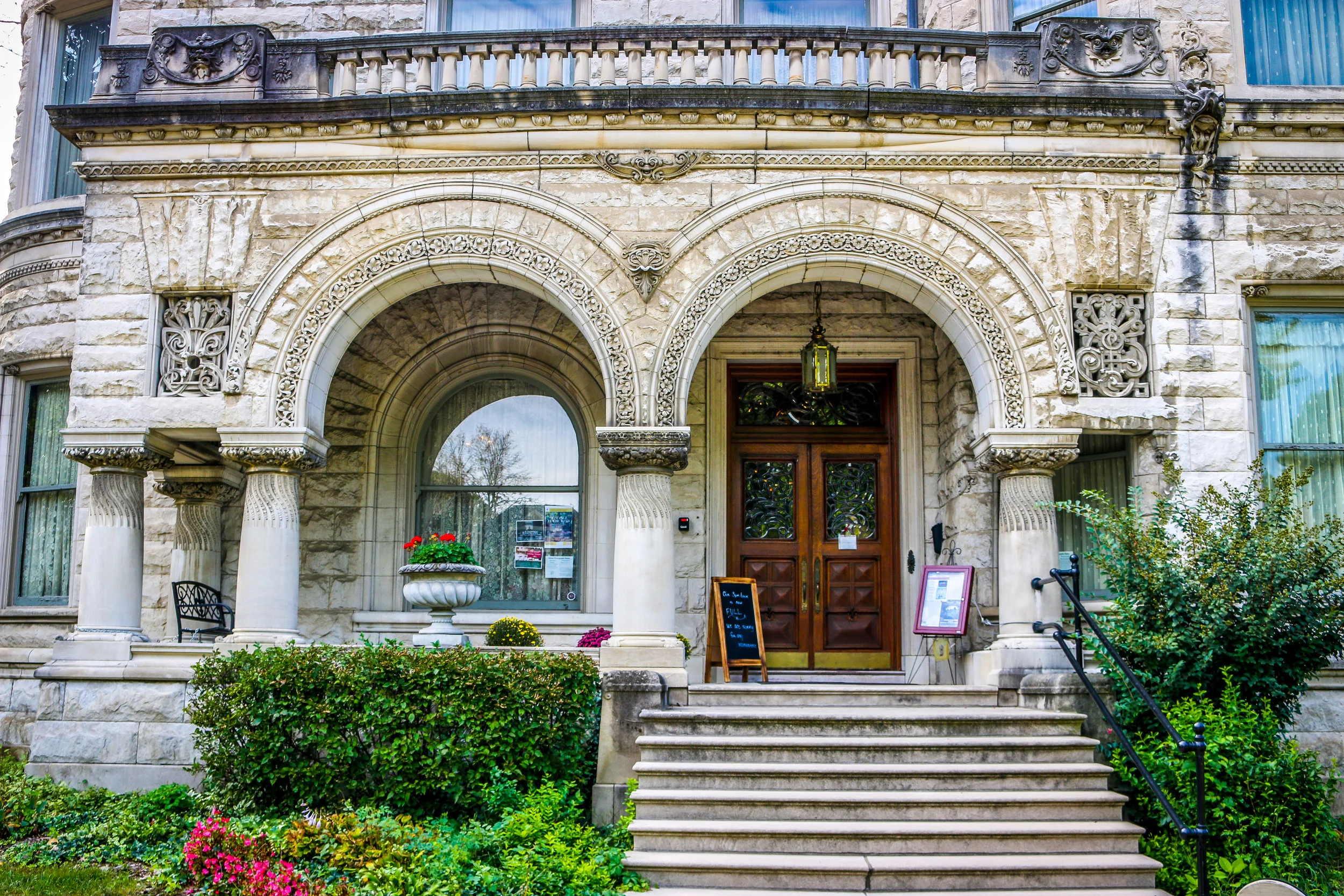
Despite its name, Old Louisville began as a suburb of Louisville sometime around 1870, nearly a century after the city’s founding. Old Louisville covers a 48 block area with one of the largest concentrations of Victorian architecture in the country. Unique to this time period and style, most of the houses in the neighborhood are brick or stone which has kept them in pretty good shape over the years. I loved wandering the neighborhood there and taking these photos. You will see some are of entire houses, while others are of specific details which caught my eye and others still are of neighborhood streets, parks and fountains. It’s a lovely place for a stroll and well worth a visit if you are ever in Louisville.
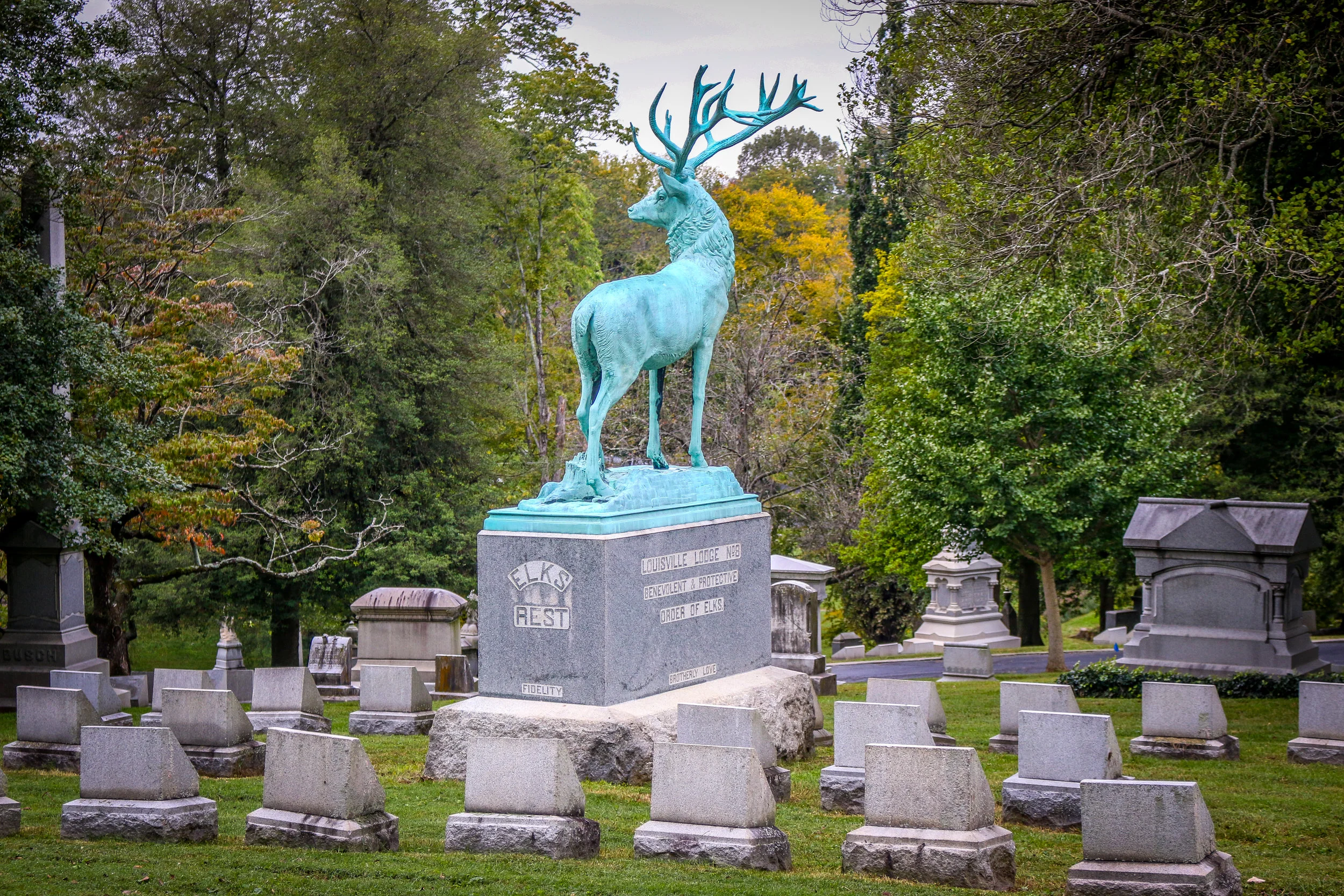
Louisville’s Cave Hill Cemetery was dedicated in 1848 and is the final resting place for over 120,000 people. During the Victorian Era and in a time before city parks were as prevalent as they are today, “garden cemeteries” were often designed and promoted for recreational activities. People would stroll down the winding lanes and maybe have a picnic by the lake. I like this idea and have always seen beautiful cemeteries as a nice place to walk and think and ponder life and death, a place to consider and draw from generations of people who came before us. Funerary art and statues are remarkable and often overlooked as a true art form. I spent several hours in Cave Hill over two visits, neither under the best of conditions for photography, but it was beautiful nonetheless. You will see photos of some of the famous people buried there like Colonel Harland Sanders, Muhammad Ali and Louisville founder George Rogers Clark. There are also lesser known people like Harry L. Collins, who was the official magician of Frito-Lay and Nicola Marschall who designed the official flag and uniforms of the Confederacy. Cave Hill is also a National Cemetery with graves for both Union and Confederate war veterans. It is a beautiful place to visit and was high on my list of sites I wanted to see in Louisville. I hope you enjoy my photos from Cave Hill.
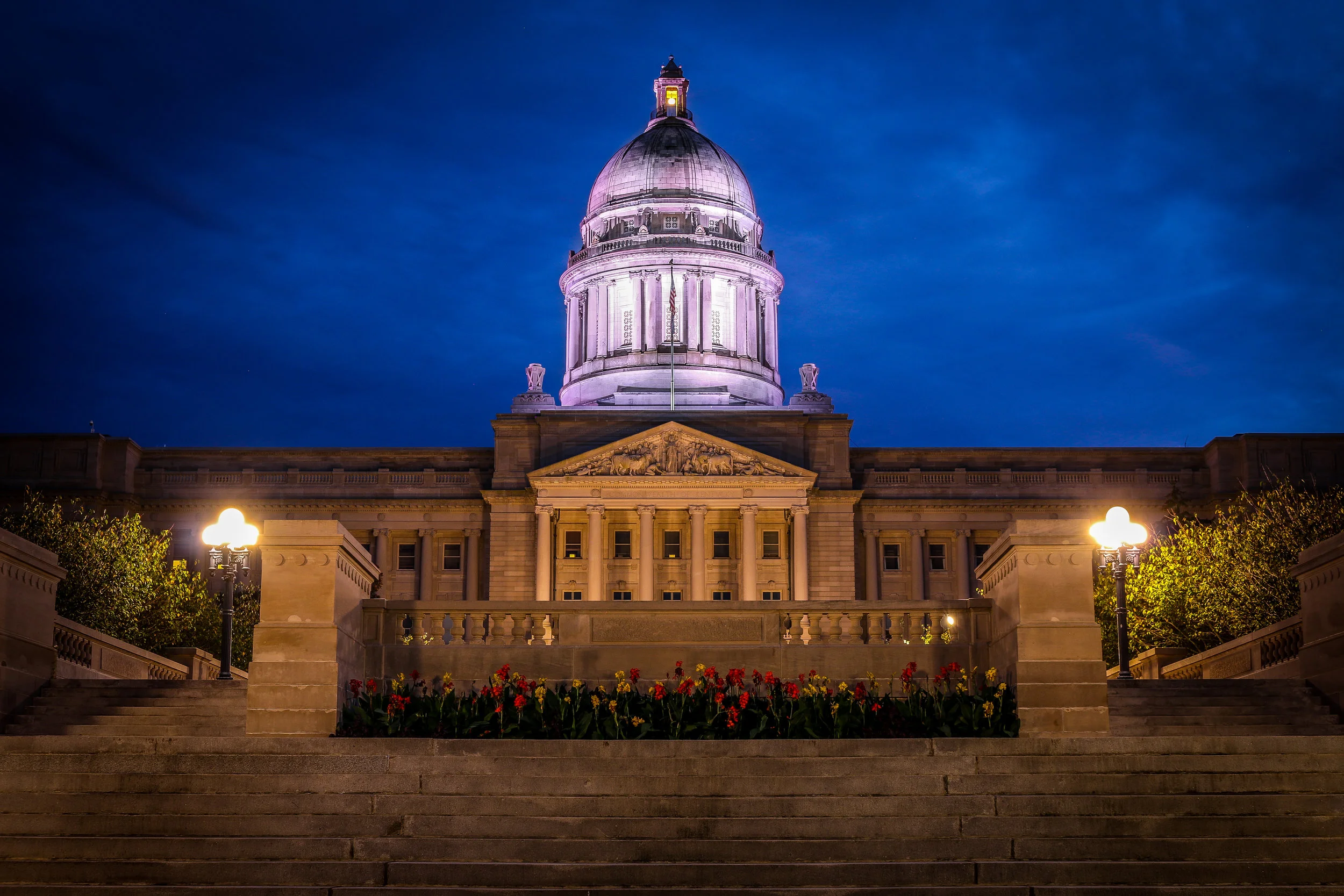
The “new” Kentucky State Capitol Building was built in 1910 at a cost of just over a million dollars. Designed by Frank Mills Andrews in the Beaux-Arts style, the beautiful Capitol sits high above Kentucky’s capital city of Frankfort. All three branches of the Kentucky government are housed within the Capitol building. The Capitol features a magnificent rotunda and some wonderful statues and artwork throughout. Entrance and tours are free. I hope you enjoy my photos of the Kentucky State Capitol…
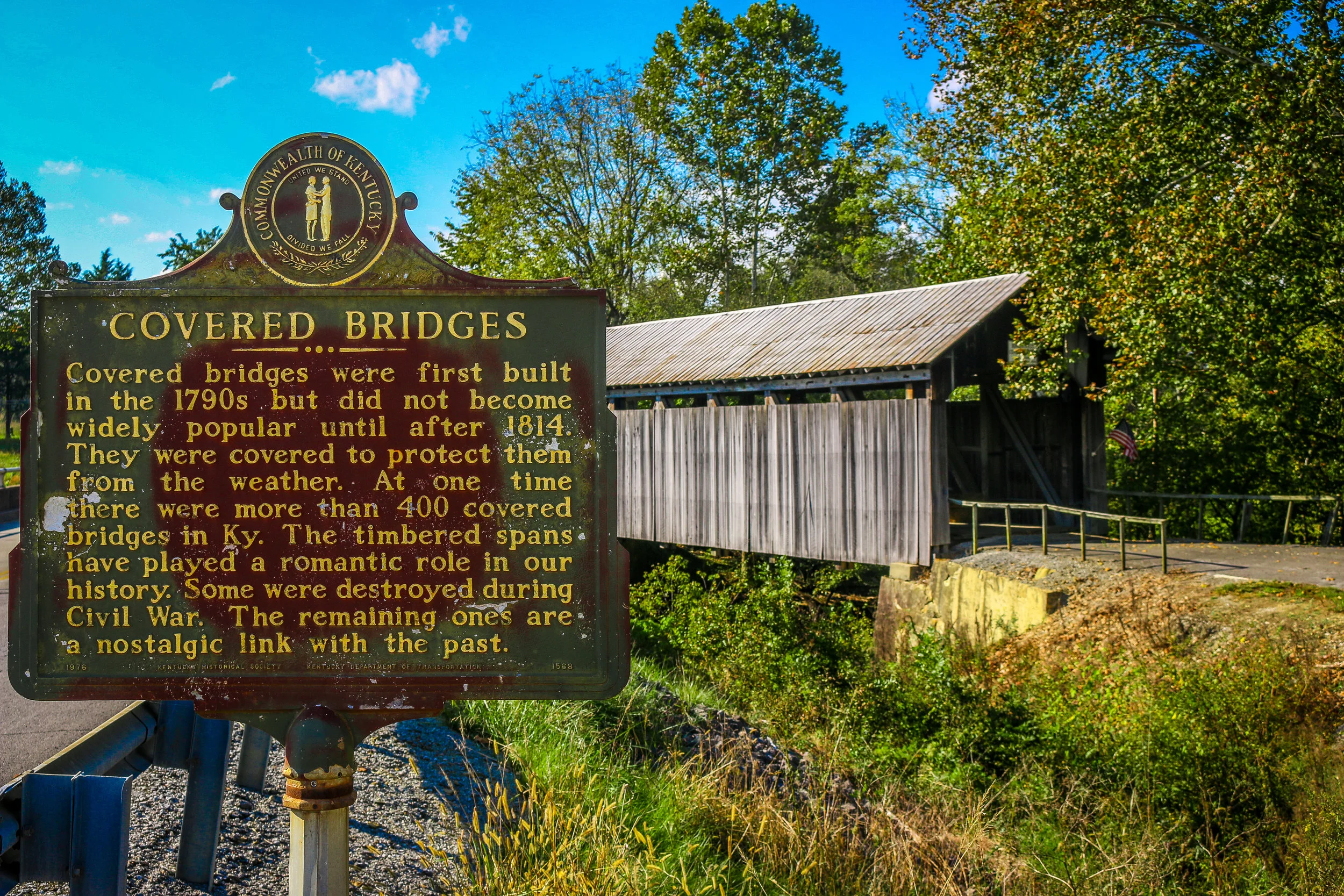
I love covered bridges as I think they hark back to a different time in this country. Because people always ask, covered bridges are covered to protect the main structure of the bridge from the weather. It is far less expensive to replace a roof than the bridge itself. Covered bridges really came into their own in the second decade of the eighteen hundreds, and at one time over 400 could be found all over Kentucky. Today, only 13 remain with three of them in Fleming County. Goddard Bridge is beautiful, and with the Goddard United Methodist church behind it, makes for some cool photos. Ringo’s Mill Bridge was built right after the Civil War, and while it’s not open to vehicular traffic anymore it’s still in pretty good shape. When I visited, they were preparing it for a wedding over the weekend which would probably be really pretty. The Grange City Bridge is also closed to traffic, but sits quietly off to the side where it has for over a hundred years. I enjoyed tracking down these three old bridges and taking these photos. I hope you enjoy them too
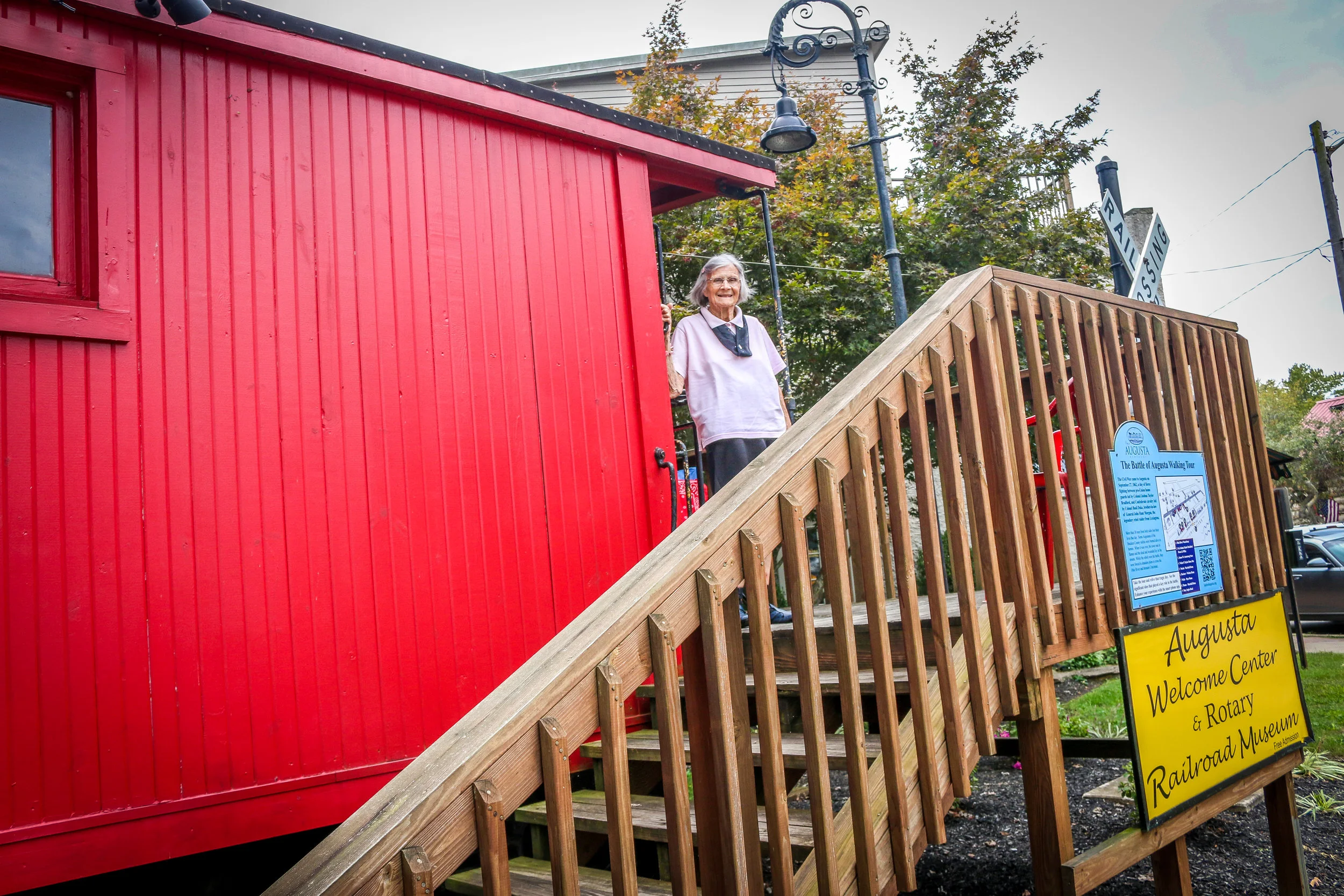
I started my exploration of Kentucky this week by driving east along the Ohio river from Covington to Maysville. Along the way I made a quick stop in the tiny town of Augusta, where I got the warmest welcome into a place I could possible imagine in an old red caboose at the very end of Main Street. The caboose was the site of the town’s Welcome Center, and the welcome came from Ms. Dorothy who has been welcoming visitors to Augusta for the last 16 years. I love stopping into local Visitors Centers wherever I go. I get travel ideas from younger people through Yelp and TripAdvisor, but I love the Visitors Centers because I can usually find someone there from an older generation, someone with stories to tell about wherever I am.
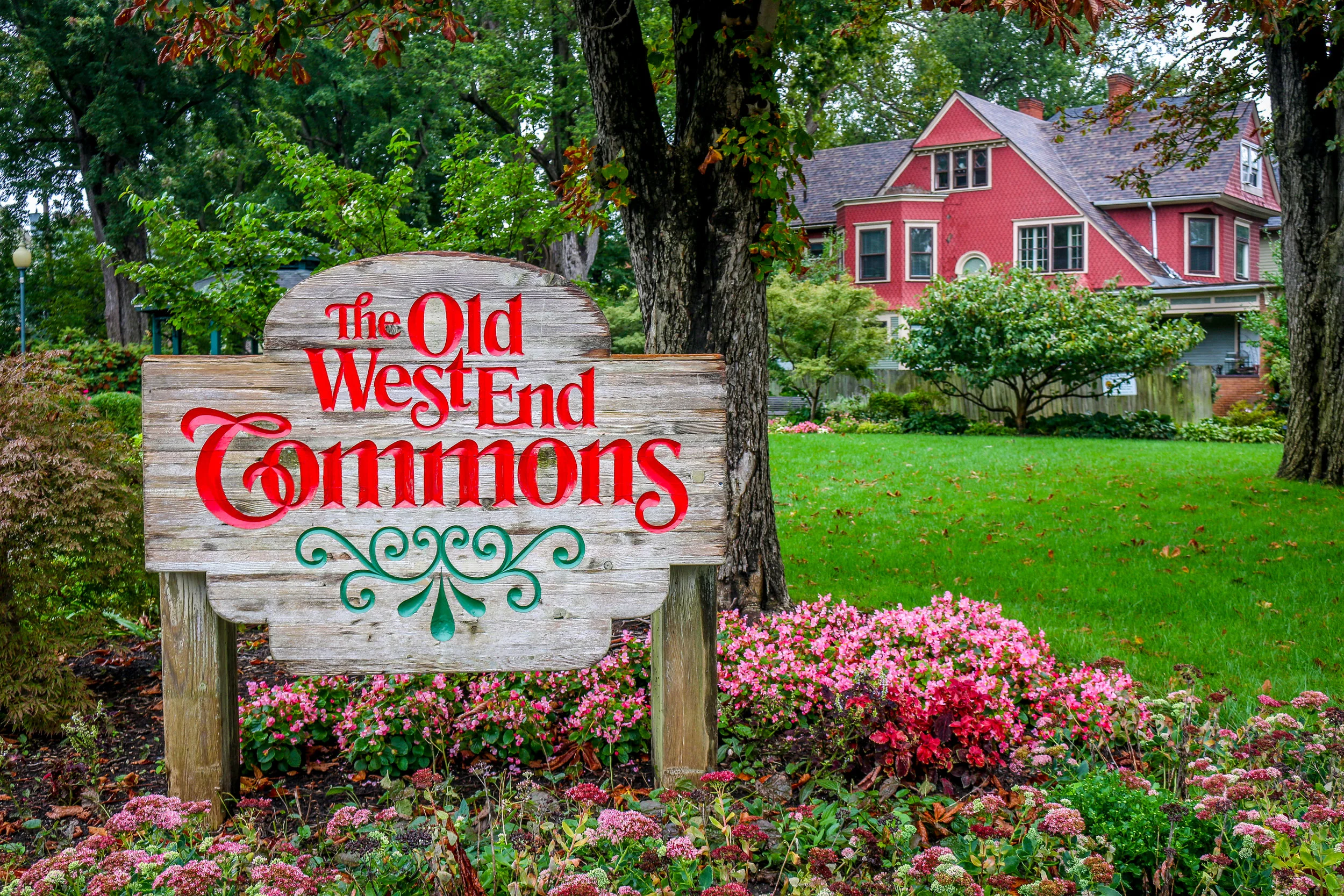
After the end of the Civil War, many of Toledo’s wealthiest residents began moving out of downtown and building houses “out in the woods”. This area developed over the next 50 years into the West End neighborhood, now called the Old West End. While it has ebbed and flowed over the years like most old neighborhoods, today it stands as one of the largest collections of intact Late Victorian Era homes in the country. It is a remarkable architectural gem, a living museum and a friendly and welcoming place for a visit. While I was walking around taking photos for this post, I met two long-time residents, Jim and Carol Kutsche, who you will see pictured at the bottom in front of their beautiful home. We sat on their porch for the better part of an hour talking about Toledo and the Old West End. The first day I visited the weather wasn’t in my favor, and the second the light was being difficult, but these photos still came out okay. It was too remarkable a neighborhood to pass by though, and I think you will definitely agree that many of these houses are real gems, even some which are in severe disrepair. If you are in Toledo, you must make time for a stroll around the beautiful Old West End.
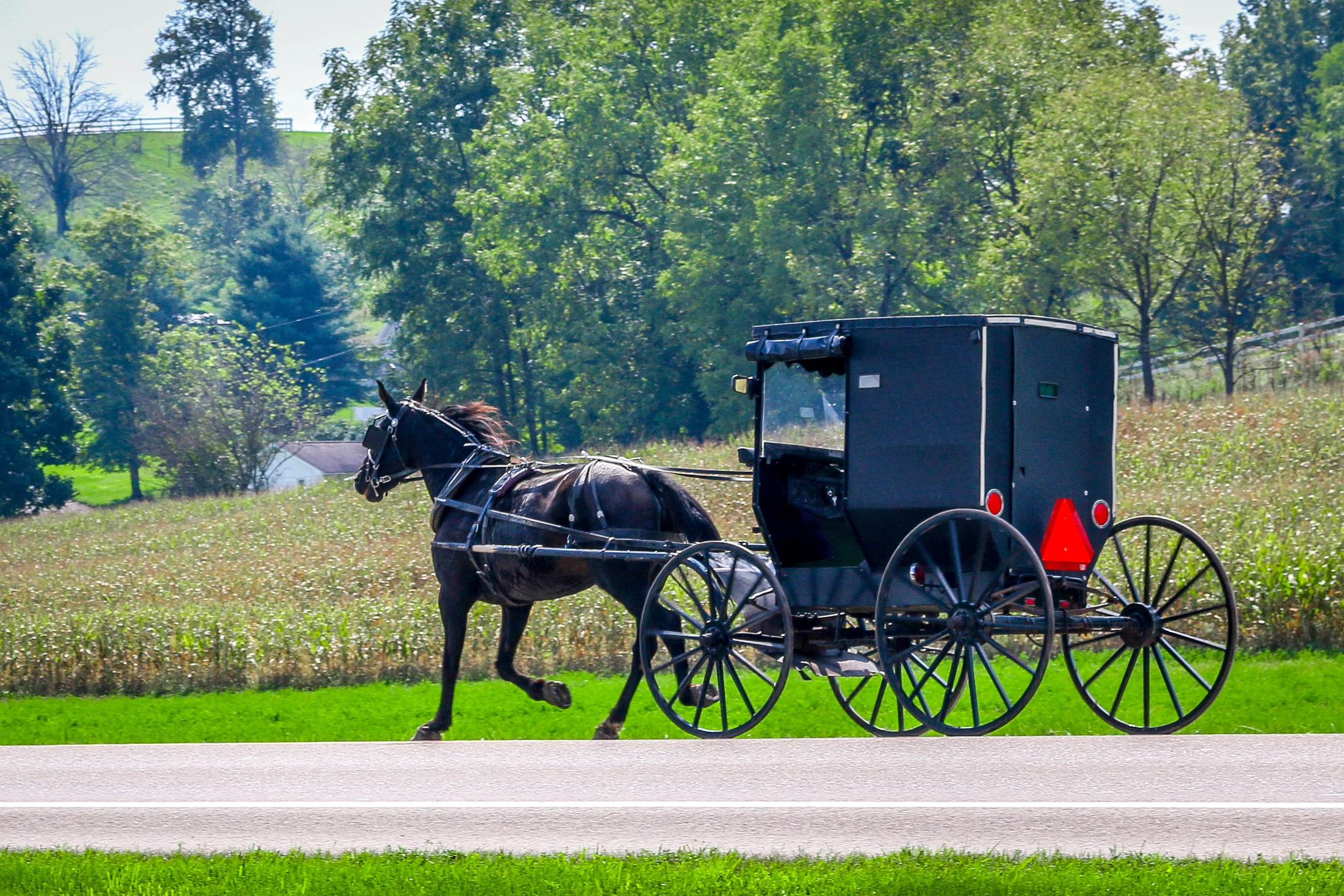
Holmes County, Ohio is home to over 10% of the world’s Amish population. The first Amish settlers arrived in the region in 1809 along Sugar and Walnut creeks, and today the area is home to over 35,000 members of the Amish community. Holmes County is also home to a large Mennonite population, who are similar to the Amish in their religious beliefs, but socially are more accepting of modern conveniences like cars and electricity. This area is mostly agricultural, but there are some small to medium sized towns as well. Visiting Amish Country in Ohio was similar to my experience doing so in Pennsylvania. There is great curiosity about the Amish which brings many visitors to the area, but in reality the Amish are busy working on their farms and would probably prefer to be left to their work. This leaves other people scrambling to scoop up those tourist dollars with things like the World’s Largest Cuckoo Clock (or Dutch Wonderland Amusement Park in Pennsylvania - nothing is more Amish than a good roller coaster) and can create a Disney-like atmosphere. You can definitely get some wonderful bread and cheese in these regions and also some delicious baked goods. I also really enjoyed visiting the Amish and Mennonite Heritage Center in Millersburg. There is a fascinating Cyclorama there which tells the entire history of the Amish and Mennonite religions and how they evolved over time. They also have a wonderful video which explains the key differences between the Amish and the Mennonites. Both point out that in many ways the Amish and Mennonites are like anyone else - they have marital issues and rebellious teenagers too. But they also point out that because their lives are simple with all of their basic needs met, they don’t long for material goods and are more likely to feel satisfied than those of us who live in a modern world of mass consumerism. I can certainly agree with that...
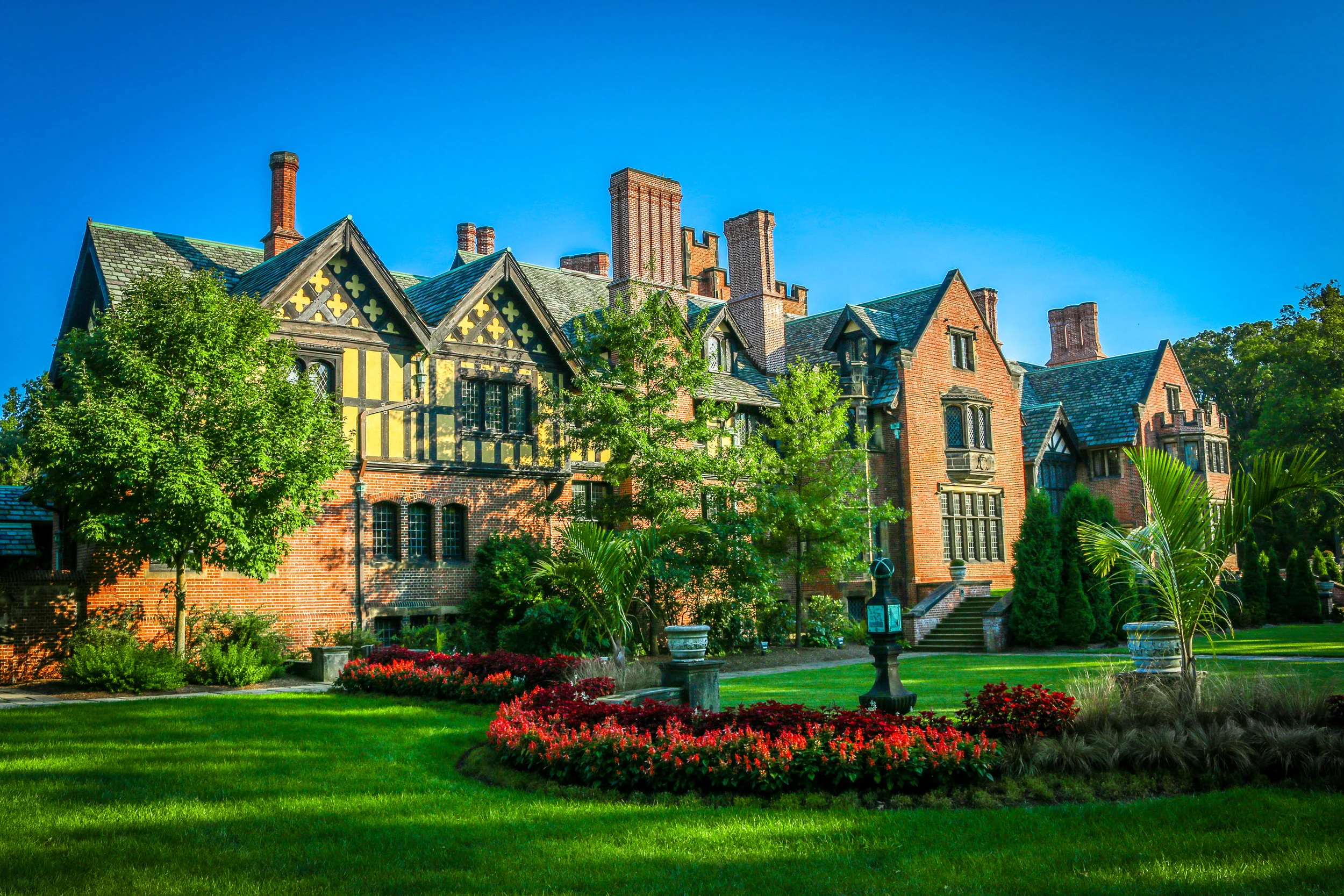
Stan Hywet is the one-time home of Goodyear Tire and Rubber Company co-founder F.A. Seiberling and his wife Gertrude. The Seiberlings started plans for Stan Hywet in 1912 and construction continued until 1915 when the house was completed. Cleveland architect Charles S. Schneider designed the house in the Tudor Revival style, and the completed home covered 64,500 feet and has 65 rooms, 23 bathrooms and 23 fireplaces. When the Seiberlings passed away, Stan Hywet passed down to their children who opened the doors for tours to the general public in 1957. Because of this continuity, the house is remarkably intact with all original furniture, artwork and many household items like sheets and clothing. Stan Hywet is an Old English term for “stone quarry”, one of the most prominent natural features on the grounds which was later turned into a lagoon for swimming. The estate is located just a few miles from downtown Akron, a town which Goodyear helped turn into the “rubber capital of the world”. I loved my visit to Stan Hywet and would definitely recommend it to anyone visiting the area. It is a beautiful home and is beautifully appointed, but it also feels lived in. I chose a guided tour when I was there which was definitely worth the extra $4 on top of the admission price of $15. The sun was really bright and intense during my visit which didn’t help my photos, but I think these will give you a good idea of what the house and grounds look like. I hope you enjoy them.
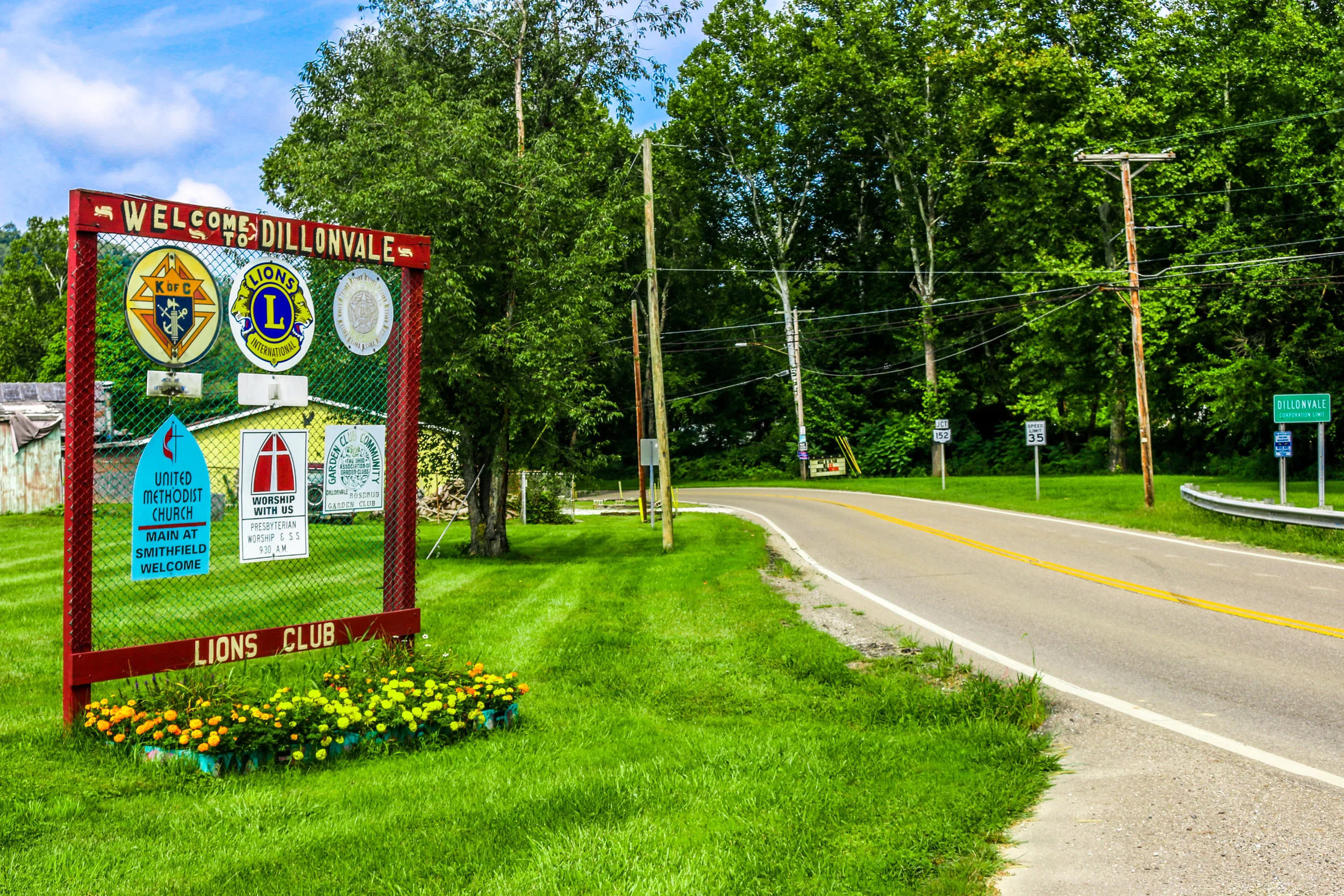
My maternal grandfather died when I was just 3 years old. I have only the faintest memory of him, and it's likely those memories come more from old photos and home movies than anything else. I know the waves in my hair are his. I know he was a bombardier in the Pacific theater and served in Korea. I remember being a teenager and slipping on his old leather bomber jacket and loving the way it felt and the smell of the leather. I know that he worked at Sears after he retired from the Air Force and I kind of believe I remember visiting him there as a kid (this website was built at the library across the street from that old Sears building). Visiting my grandmother's house growing up, I spent a lot of time in his workshop building model cars and airplanes. I liked his tool collection and how everything seemed to have its place, and I always felt connected to him there. Outside of these few small things though, I really only knew one thing about him and about that side of my family which was the name of his hometown: Dillonvale, Ohio.
Washington Court House is a quiet town in Fayette County in central Ohio. From what I've read and heard, it's always been a quiet town - always, that is, except for one night in October of 1894. That night, a mob formed outside the courthouse in an attempt to lynch a prisoner being held there. Shots were fired and five men were killed. This incident has come to be known as the Washington Court House Riot of 1894.
In March of 1913, massive rainstorms over Easter weekend caused the Miami River to swell and break through the levees built to contain it. Water rushed through downtown Dayton reaching depths of 20 feet. The flood would do $100 million in damage, destroy 20,000 homes and take 360 lives. Miamisburg was devastated with much of the city underwater.
Relief efforts arrived with the Red Cross setting up tent cities to provide shelter to the displaced population. Miamisburg resident Sherman "Cocky" Porter volunteered to try and help feed the people and the relief workers. Trying to feed hundreds of people a hot meal is no easy task, so Porter decided to cook up a huge batch of hamburgers and pass them out to the crowds. They were a hit…
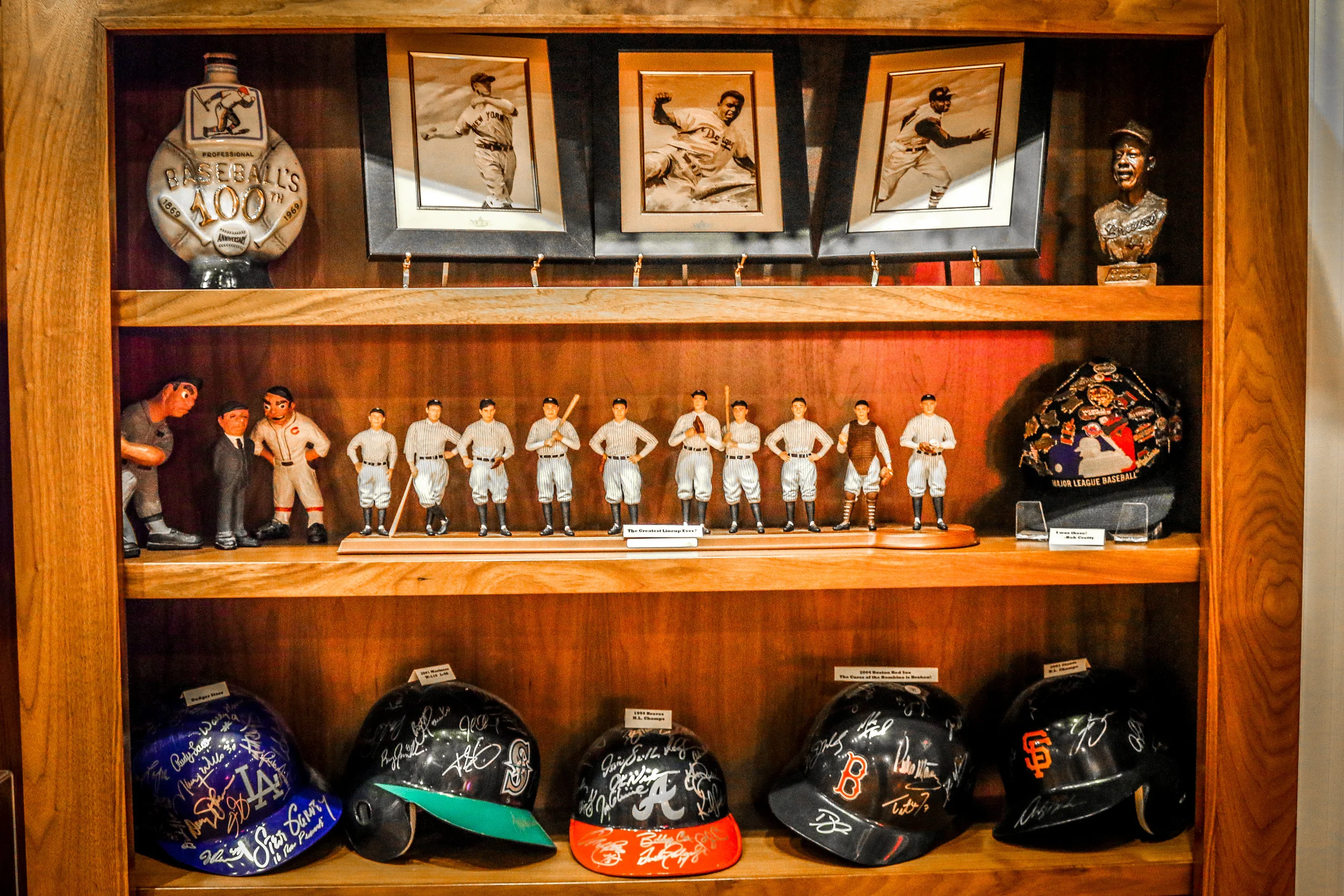
I love baseball. I couldn't quote batting averages off the top of my head nor could I tell you who's won every World Series, I simply love the game. I love the sight of a ball field with its crisp white lines, the call of "cold beer, peanuts, crackerjacks" from the vendors climbing the bleachers and the sound of a well hit ball as it leaves the bat headed for the outfield. I love the history and tradition of the game and how it has often marched alongside, and evolved with, the history of the country. You can probably imagine my excitement then, when, while visiting the city where professional baseball began, I was able to also view the largest private collection of baseball memorabilia in the world.
The Green Diamond Gallery, in suburban Cincinnati, is a magical place filled to bursting with some of the most awesome mementos to the history of the baseball. While it's not a massive place, I spent three hours there trying to take it all in…