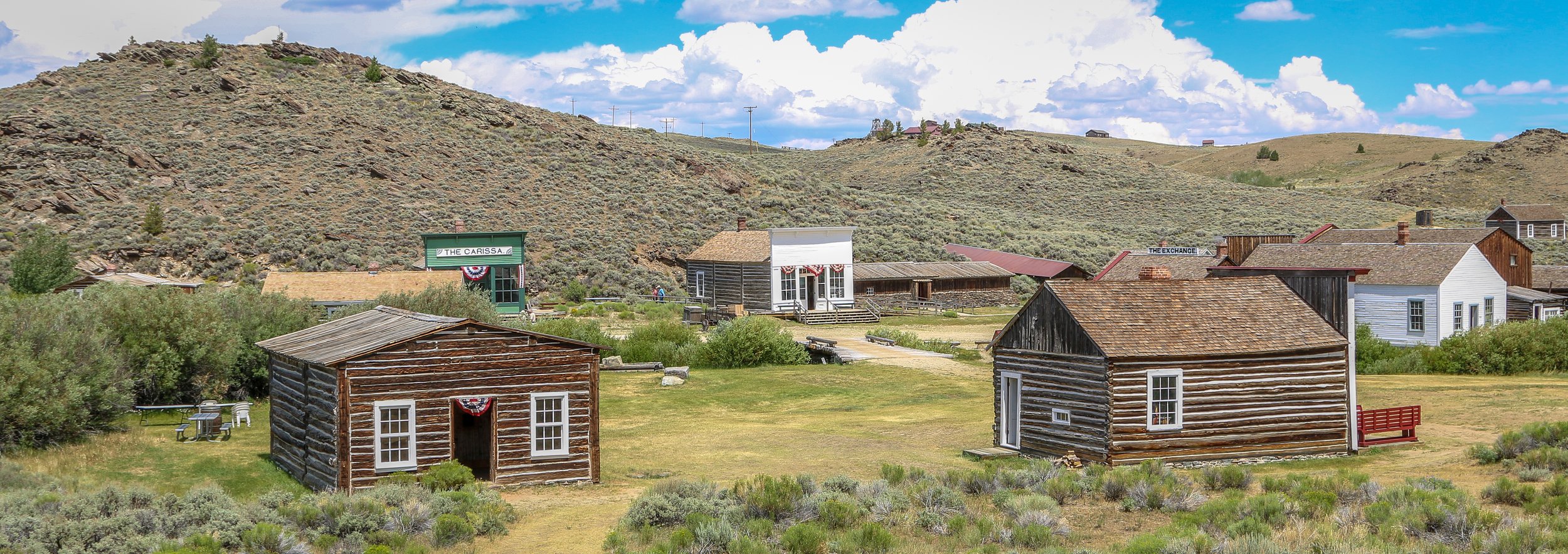
In June of 1867 a small group of soldiers from Fort Bridger, who were in the area to help protect the overland trails coming through South Pass, decided to try a little prospecting during their down time. They came up lucky and soon a small gold rush brought 2,000 people up the mountain, and South Pass City was born. The mines and the town would both go through a series of booms and busts over the next 90 or so years until, in 1968, the whole town was bought by the state of Wyoming and was designated a state park. The Carissa Mine was bought in 2003 and added to the park. Extensive restoration of the town makes it seem as if the citizens just left yesterday, leaving the store fully stocked and half drunk beers on the bars. The Carissa Mine and Mill are incredible to see as not only have the buildings been restored and stabilized, but much of the machinery is in working order. I had a great visit to South Pass City and found the whole place fascinating. They had a great display outlining South Pass City’s role in giving Wyoming women the right to vote back in 1869 and it was also home to Esther Hobart Morris, the country’s first female Justice of the Peace. You can even get a cold sarsaparilla in one of the saloons. I hope you enjoy these photos from old South Pass City, a beautifully restored Wyoming gold rush town.
Hello Everyone!
It’s been another hot week out here on the road in central Wyoming. July is historically the hottest month in both Wyoming and Montana, but this summer has brought record temperatures to both. Daytime temperatures are once again nearing 100° out here, but thankfully it’s been cooling off enough in the evenings to sleep in my van. I’ve been up and out early most days to get my driving done before it gets ridiculous out and have definitely been trying to scout out some shade whenever possible. Despite the heat, I’ve had an interesting week out here exploring some of central Wyoming’s small towns and what they have to offer. I also spent some time on the Wind River Reservation this week, home to the Eastern Shoshone and Northern Arapahoe Indians. Wyoming is the least populated state in the country and it’s definitely not hard to imagine that out here. Big lettered towns on the map are relative and mean that these are big towns for Wyoming, but not necessarily big towns. With only around 588,000 people in the entire state, Wyoming’s whole population is slightly more than that of Baltimore, Maryland and slightly less than Memphis, Tennessee. I definitely enjoy the small towns and the wide open spaces of the Cowboy State, and I’ve been happy to see so many new-to-me places this week.
After leaving you last week I headed out into the night there in Jackson. I’ve certainly seen a lot of changes in Jackson over the last 25 years since I first visited, and every year it gets a little more L.A. and a little less Wyoming. The place that continues to roll with all of the changes is the infamous Million Dollar Cowboy Bar right there on the town square. The Cowboy Bar opened its batwing doors back in 1937 and has always been a central gathering place for the town. It’s decorated with burled wood beams, taxidermied animals and cowboy relics and even has saddles in place of barstools. With live music every night, I’ve never been there when it wasn’t busy. On any given night, you’re likely to find locals and tourists, cowboys, rafting guides, drifters and beauty queens shooting pool, shooting whisky and tapping along to the band. This night was no different and I enjoyed a few cold ones and a few tunes while I chatted to some folks from Charlotte, N.C. who were in town for a wedding. Long live the Million Dollar Cowboy Bar – may it continue to evolve with the town and somehow still remain exactly the same as the first time I walked into it.
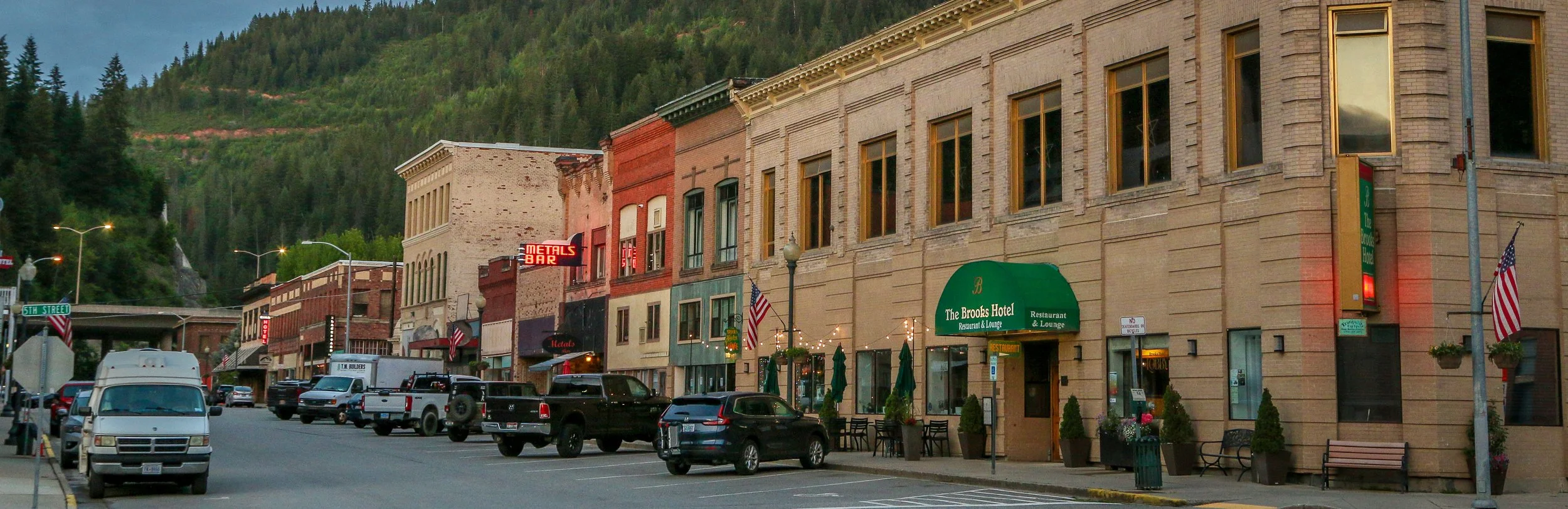
Colonel William Wallace purchased an 80 acre tract of land back in 1884 along the south fork of the Coeur d’Alene River. Over the next few years, several major silver deposits were discovered in the surrounding hills and a town grew up around Wallace’s cabin. By 1887, the railroad had made its way into Wallace and the town would grow even bigger. A fire in 1890 would burn much of the town and wooden buildings were rebuilt in brick. Despite this, Wallace would burn again in 1910 in what would come to be known as the “Big Burn”, one of the largest forest fires in American history. Wallace rebuilt again and the silver in the hills kept the town alive. The mines would thrive until after World War II and then slowly began to close. Today, Wallace’s population hovers around 800, with tourism being the town’s major industry. Wallace is the only town which is included, in its entirety, on the National Register of Historic Places. It’s a wonderful place to wander through with lots of old buildings, bars, hotels and restaurants. The historic Oasis Bordello Museum tells the story of Wallace’s storied red light district which lasted into the 1990s. Besides the history of the town, the area surrounding it is full of hiking and biking trails, ski slopes and a plethora of other outdoor activities. I first came to Wallace over 20 years ago and every time I return it makes me smile. It’s just a lovely little town, well preserved and open for business. I hope you enjoy these photos from fabulous Wallace, Idaho - small town perfection in Idaho’s Silver Valley.
Shhh. This is one of the towns nobody wants me to tell you about. Red River is a stunning little ski town along the Enchanted Circle in Northern New Mexico. It looks a lot like a Colorado ski town, but smaller, quainter, cheaper and with that special New Mexico sense of enchantment. I was there on a beautiful spring morning when the sun was shining but the air was cool and crisp. Despite plenty of snow on the mountain, it was sadly closed for the season.
Native Americans have hunted up and down the Red River for centuries, but the town’s beginnings were as a mining camp in the late 19th century when gold, silver and copper were being pulled from the hills. The town boomed to a population of around 3000 by the turn of the century, and as the mineral deposits started to dwindle, Red River gained a reputation as a cool weather getaway and a trout fishing paradise.
Red River today has a year-round population of just around 500, but it will multiply many times over on winter weekends when the town is buzzing with vacationers. No matter where you are staying in town, you could probably walk to the slopes with the lifts taking off from right in the center of town. In the warmer months, the area is full of trails and fishing is still a major draw and the the high elevation makes it cooler than towns to the south, east and west. I loved my short stay in Red River and it is one of the towns that I will definitely be returning to in the future. I hope you enjoy these photos from Red River, New Mexico’s classic ski town.