Hello Everyone!
Greetings from Pocatello, Idaho and Happy April to you all. I crossed the border into The Gem State yesterday morning and it is nice to be here. Leaving a state always feels bittersweet to me. After 5-6 weeks I feel as though I have a pretty good understanding of the people, places, history and culture of a state which is, of course, the whole point of this adventure. And then when I reach that point, it is time to move on and start fresh but it’s always a little sad to leave the familiar for the unknown. I can’t say enough good things about Utah and the last six weeks I spent in The Beehive. From tracing the trails of The Ancients to old cliff dwellings and petroglyph panels to following the Mormon pioneers as they spread out to create their New Zion to exploring truly incredible natural landscapes, Utah has really given me so much to be thankful for. I have loved almost every minute of my time in Utah and certainly look forward to returning in the future. That said, I’m also looking forward to the next few weeks here in Idaho and to seeing everything it has to offer. I hope you’ll come along for the ride.
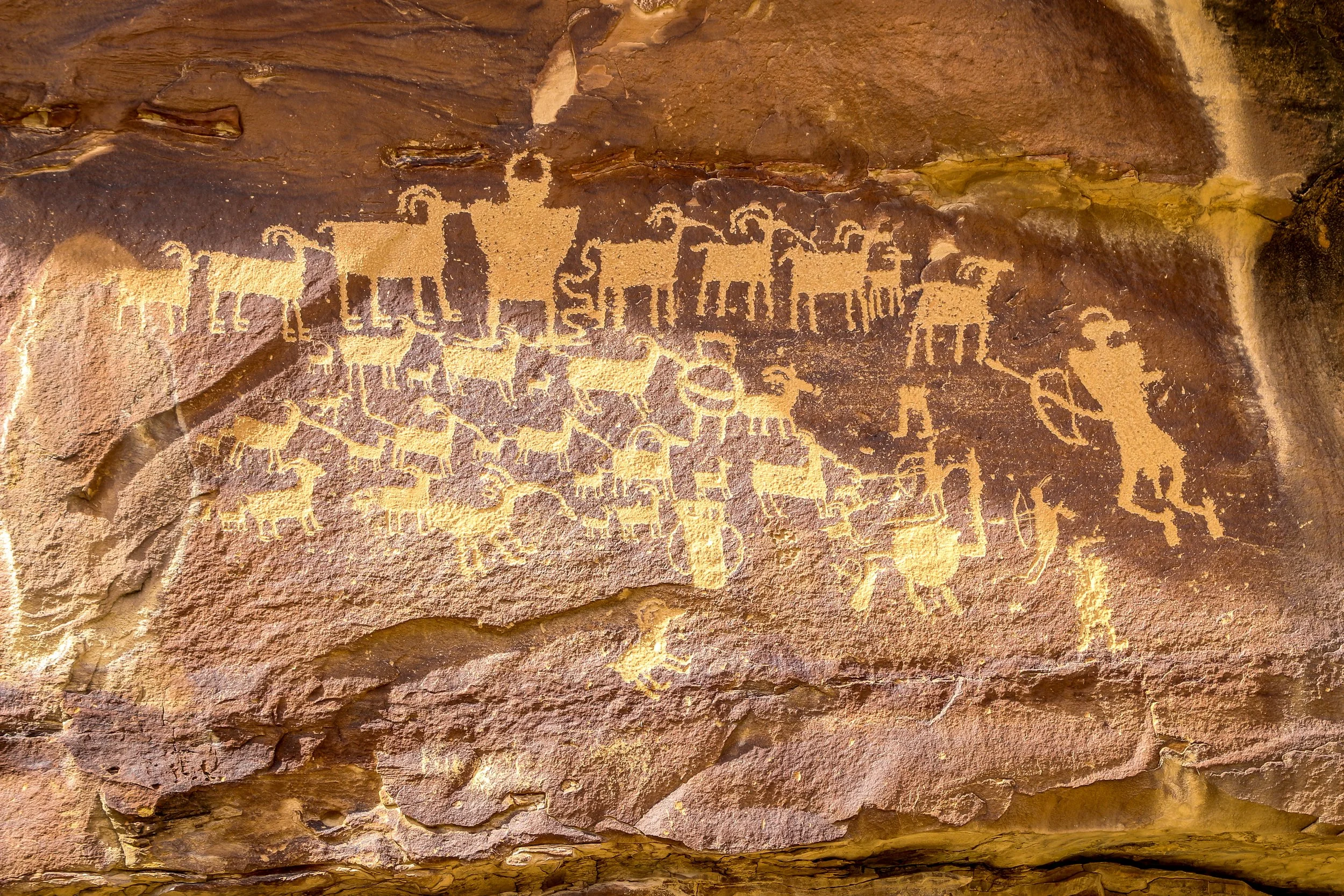
Nine Mile Canyon as often been called “The World’s Longest Art Gallery”. Despite its name, the canyon stretched 46 miles through east central Utah and has as many as 10,000 petroglyphs along its course. This route has been traveled for thousands of years, undoubtedly beginning as a wildlife trail which followed the easiest path through the mountains. It was used by a people we refer to as the Fremont People for many hundreds of years and they are responsible for most of the petroglyphs chipped into the canyon walls. Later, Ute Indians made their way through the canyon and made their own carvings, including those of horses and bison. Fur trappers and settlers followed the old Indian trails. The Nine Mile Canyon Road was originally built by the Black Buffalo Soldiers of the Ninth Cavalry to connect old Fort Duchesne to the railroad at Price. Once the road was complete, stagecoaches started using the canyon to deliver mail and freight and settlements began to spring up. Later, mining and natural gas extraction began in Nine Mile Canyon and continues today. Nobody knows how 46 mile long Nine Mile Canyon was named. Many people believe that explorer John Wesley Powell named it because the name first appears in his journals, but Powell was pretty good at naming things so I’m not buying that explanation. Also, I love a good mystery and don’t mind when one goes unsolved.
I started my drive from Wellington, just south of Price. The road is paved all the way to the Great Hunt Panel (and beyond if you continue up the side canyon), but has a stretch of decently maintained gravel road if you want to continue through to Myton (which I did). I loved seeing so many wonderful petroglyphs in such a small area and I know I only scratched the surface (pun intended) of what was out there. My favorite is the first one pictured below: Coyote Placing the Stars. I also loved the Owl Panel and the Juggling Man and of course the Great Hunt which is one of Utah’s most famous panels. There were a lot of old homesteads along the way and even an old townsite once called Harper but abandoned over a hundred years ago. There are some beautiful new homes out there as well and aside from the mining trucks rumbling past I imagine it’s pretty quiet out there most of the time. I really enjoyed my day out in Nine Mile Canyon and I hope you enjoy these photos I took along the way.
Hello Everyone. A belated Happy St. Patrick’s Day to you all from here in Fillmore, Utah. I’ve spent this last week cutting across the central part of the state, checking out petroglyphs and dinosaur fossils in the east, cruising down the beautiful agricultural region of the Sanpete Valley and finishing up here in Utah’s first territorial capital. It’s been windy out here this week, but the temperatures have been pleasant and the rain and snow have stayed away, which was a good thing as some of these high mountain passes have taken me up above 9000’. Central Utah is definitely a less-visited part of the state, but it has a lot of cute towns, friendly people and plenty to keep me busy. I’ve been moving fast this week because there’s a powwow I want to get to in Salt Lake City this coming weekend and these are all places I wanted to hit before heading in that direction.
When I left you last week, I was out in Grand Junction, Colorado after a quick visit to Colorado National Monument. After I wrapped up my newsletter, I made a beeline back to the Beehive State and headed straight to Green River. I wanted to get there with enough time to see the John Wesley Powell River History Museum. If you don’t know of him, Powell led the first expedition to float the length of Grand Canyon. A retired U.S. Army Major, he had lost his right arm due to a gunshot through the wrist he received during the Battle of Shiloh, one of the bloodiest and most fascinating battles of the Civil War. After the war, he went on to become the curator of a small natural history museum in Illinois and went west to gather some samples for the museum. While there, he became fixated on the idea of exploring Grand Canyon and collected a rag-tag crew of mountain men and explorers to come with him. It was quite the adventure and this museum does a good job of documenting their trip and providing some great information on Powell himself. There are also displays on the geologic and human history of the Green River (which joins the Colorado River in what is now Canyonlands National Park and which Powell floated to get to the Colorado on his journey). In addition to the permanent gallery…
Hello Everyone! Greetings to you all from Grand Junction, Colorado. As I mentioned last week, I have just dipped over the border for the day because I wanted to pay a quick visit to Colorado National Monument. While I’m here I got some groceries and now I’m going to hole up in the library and get this week’s newsletter done before returning to Utah later today. Crossing into another state is fascinating when you’ve really dug in somewhere for a few weeks and have been paying close attention to the culture of a place. Crossing from Nevada into Utah or Utah into Colorado is very much like crossing into a different country. Not like going from Sweden to Uganda, but more like going between England and Wales or between Cambodia and Laos – there are plenty of similarities, but they’re also remarkably different. I’ve really been enjoying my time in Utah and this feels like I’m cheating on it, but I’m sure Utah will get over it and I’m really looking forward to the rest of my time in The Beehive State. I’ve spent more of this last week on the trail than on the road, and that’s been an excellent use of my time. It’s been another soul-stirring week out here, so let’s get right into what I’ve been up to since last I wrote.
After I finished this post last week, I ended up spending another morning there in Blanding, a town I grew quite fond of during my three night stay. I started off my day with a quick visit to the Four Corners Cultural Park (the “four corners” refers to the shared border of Utah, Arizona, New Mexico and Colorado, the only place in the country where four states come together in a squared off fashion). I thought this cultural park was really cool because you could walk between examples of the “houses” of the different cultures that came together in Blanding. There were Ute teepees, Navajo hogans, a Mexican hacienda and Mormon pioneer cabins all within a short walk of each other and I thought it was just a neat place to check out. From there I went to the museum at Edge of the Cedars State Park which displays cultural artifacts found around the area and interprets the cultures which came before the modern inhabitants of the region. The museum’s pottery collection is remarkable and it’s amazing to see the artistic expression of the people who made these items. These bowls and jugs were not simply utilitarian, they were beautifully crafted and then painted with precise geometric designs and were all very impressive. The museum also had a beautiful macaw shawl which has kept its bright coloration for over a thousand years. I always find the macaw feathers found here fascinating because they are evidence of the vast trade networks of these earlier cultures which stretched deep down into what’s now Mexico (where macaws were commonly found). I’m sure this one cost someone a few beautifully crafted pottery items in trade. The museum was fabulous, and the ruins out back were okay but not nearly as good as so many others I have visited in the last few weeks.
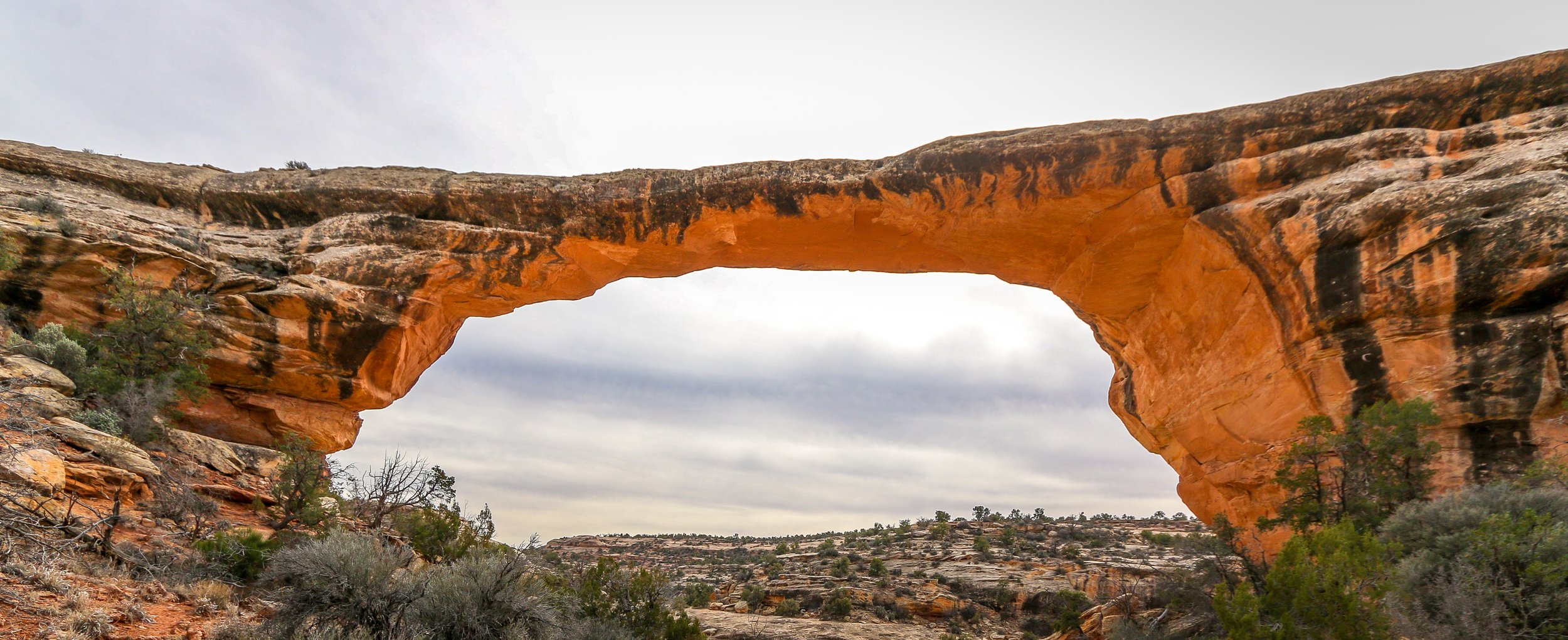
Natural Bridges National Monument became Utah’s first National Monument in 1908. It protects three impressive natural bridges situated in White and Armstrong Canyons in the southeast part of the state. A natural bridge is geologically different from an arch in that a bridge is formed by running water whereas an arch is not. Utah has quite a few of both.
The human history of this area stretches back at least 9,000 years as archaeologists have found tools and other evidence dating to that time. Ruins in the park show that the Ancestral Puebloans inhabited the area from around 700AD to around 1270AD. In more recent times, Paiute and Navajo people have made their homes in and around these canyons. in 1883, a man named Chris Hite wandered up White Canyon in search of gold and brought word of these magnificent natural bridges to the outside world. National Geographic did a story on the bridges in 1904 and in 1908 Theodore Roosevelt designated them a part of a new National Monument. Very few visitors came in the early years of the park as it was a three day horseback ride from the nearest town. A uranium boom in the 1950s brought roads to the area and those roads were paved in 1976, allowing easier access to see the bridges.
Natural Bridges National Monument is a beautiful place. It’s quiet and remote and definitely off the beaten path. Unfortunately, I imagine most people visit on their way between one place and the next and only stop at the overlooks to get a look at the bridges. To really appreciate them, you need to hike down into the canyon and get a closer look. The trail to Sipapu Bridge is an adventure in its own right, descending several ladders on the way to the canyon floor. Getting down to Kachina and Owachomo Bridges is easier, and I even enjoyed hiking between these two along the canyon bottom. Like most of the Desert Southwest, the natural bridges are at their best at the edges of the day when the sun is low and the sandstone lights up. I hope you enjoy these photos from beautiful Natural Bridges National Monument, well worth the detour if you’re ever in the area.
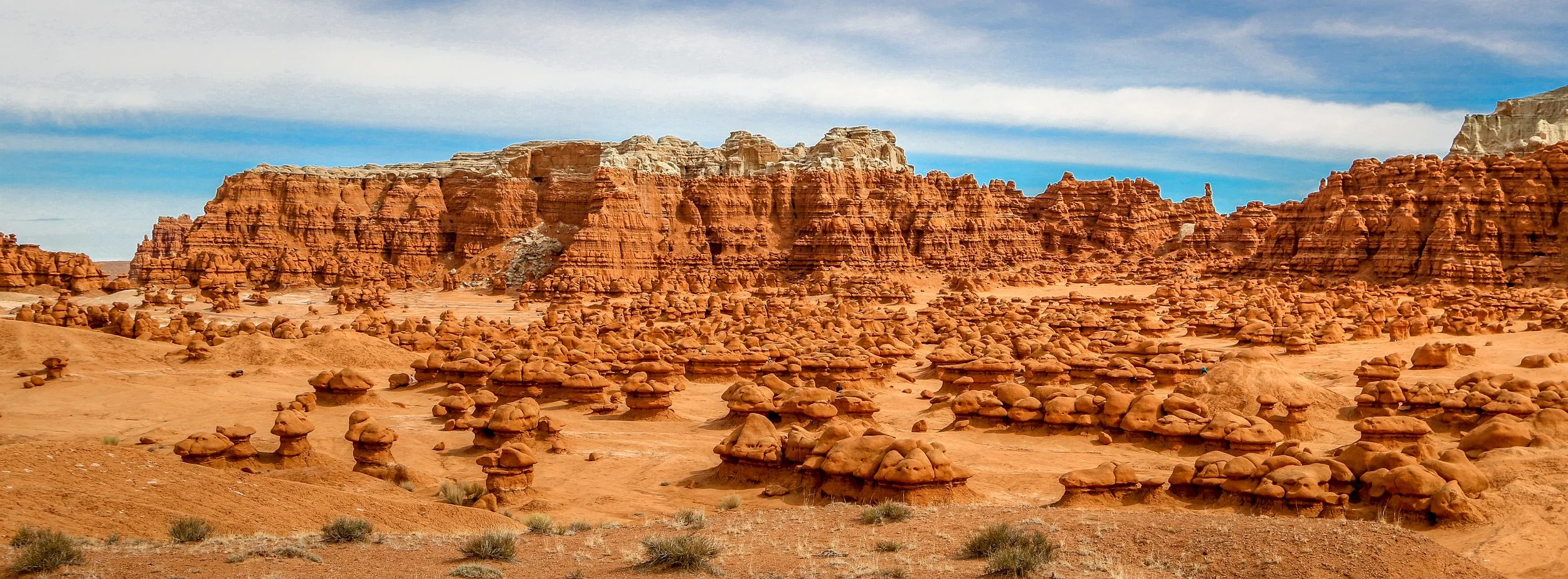
Goblin Valley is another of Utah’s incredible fantasy landscapes. It’s a place that quickly captures your imagination and leaves you smiling the whole time you are there. Located in a remote part of Emery County, you have to make an effort to get to Goblin Valley, but you’ll definitely be glad you did. The “goblins” are technically hoodoos, made of soft lower layers of sandstone and capped with a harder layer which causes water to erode them from the outside in instead of from the top down. The main amphitheater has thousands of goblins and is an incredible place to just wander, especially during the edges of the day when the low light illuminates the goblins and cooler air prevails. Beyond the amphitheater are other dream landscapes to explore, including the caves known as the Goblin’s Lair and the Goblette’s Lair, the Toadstools, beautiful Wild Horse Butte and the amazing Wild Horse Slot Canyon. Most people spend about an hour in Goblin Valley, but the longer you spend, the more you’ll find to keep you busy. Thanks to the prompting of my friend, Jack, I spent the whole day there and was definitely happy that I did. I hope you enjoy these photos from beautiful Goblin Valley - Magic in the Red Rocks of Utah.