Hello Everyone,
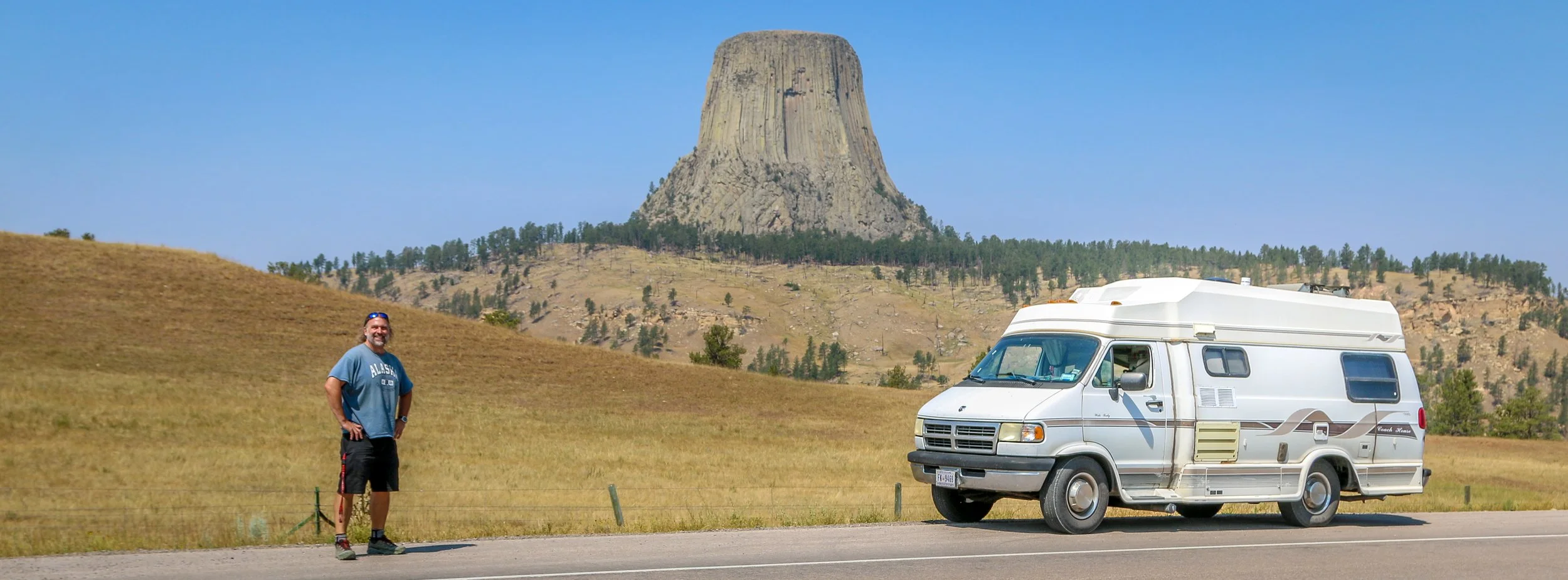
Greetings from America’s Dairyland. When I left you last week, I had no plan to be in Wisconsin quite this quickly, but once I got rolling, I just kept rolling. I took advantage of the cool of the early mornings to drive and then tried to make the most of my afternoons wherever I landed. Even though the name of the game this week was to drive towards home, it’s actually been a pretty great week on the road. I was sad to pass through South Dakota so quickly, but I will definitely be back when it’s cooler and I’m ready to really dive into it. Temperature-wise, it’s significantly cooler out here, but once I crossed the Missouri River the humidity started to increase with each passing mile. But it’s still cooler at the end of the day and that is making a huge difference after too many hot weeks out west. Now that I’m back on the eastern side of the Mississippi River and now that my brain isn’t frying every time I step outside, I feel like I’m in a better place mentally. My van did exceptionally well this week and it seemed much happier to be moving in the cool of the morning as well. All told, it was smooth sailing. While I didn’t get to see as much of Montana, Wyoming or South Dakota as I had hoped and planned for this summer, I was grateful for what I did see and will return another time for the rest. Now that I’m somewhere cooler, I will be able to slow down for a bit and see some friends and family before I make that last run for home. It may be cooler here, but it’s still blazing hot in D.C. so while I’m headed that way I’m not in a huge rush to get there at the moment. So let’s get into what I did see and do this last week as I made my way east.
When I left you last week, I was in the old coal mining town of Gillette, Wyoming. Gillette is not Wyoming’s biggest town and certainly not its prettiest, but it was nice enough for the night and the people were friendly. I had booked a Harvest Hosts stay at the Big Lost Meadery right in the heart of downtown Gillette and it was an excellent place to stay. Wednesday was bingo night, so I settled in to enjoy a couple of glasses of mead and try my luck. There weren’t too many people there, but there were obviously some regulars who come to play every week. One group had a very long basset hound which was absolutely adorable. I didn’t win a single game, but I enjoyed being there. After they wound up for the night, I wandered around downtown for a bit, but there wasn’t much happening so I called it a night and got a good night’s sleep.
It’s been a busy week out here on the road in Central and Southern Washington. I’ve traveled down some beautiful roads this week, many following winding streams and rivers, and stopped in some really cool little towns. I’ve been listening to a great radio station out here playing real oldies – like oldies that were oldies when I was a kid. I haven’t heard a lot of those songs in decades and my toes have been tapping as I cruise down the road. This is apple country and it’s cool to pass through the apple orchards and see many with fruit still on the trees, while the leaves have turned bright orange with the season. Empty apple crates dot the landscape from earlier picking. There are plenty of grapes out here too as this is Washington’s wine country. The weather hasn’t been great, but it hasn’t been terrible and there have been some wild clouds in the sky overhead much of the week. The days are short, but I’ve been trying to make the most of the daylight I have as I wind up my time in Washington State.
Most of the states I’ve been to seem to have a town like Solvang - a place with solid European roots that has developed into a tourism draw over the years. Some of my favorites have been Helen, Georgia, Frankenmuth, Michigan, New Ulm, Minnesota and Helvetia, West Virginia. All of these have had either a German or Swiss background, which made the Danish village of Solvang different and quite fun for me to explore.
The area where Solvang now stands was originally Chumash land. In 1804, the Spanish built Mission Santa Inés, one of 21 Catholic missions they would establish in Alta California to try and convert the native peoples and help the Spanish claim to the territory. After Mexico won its independence in 1821, the mission system was dissolved and the land was divided into land grants and this area became part of Rancho San Carlos de Jonata.
Beginning in 1850, many Danish immigrants began arriving on America’s shores including some of my ancestors on my father’s side. Communities would begin to form, especially in the Midwest. In 1910, a small group of Danish men decided to try somewhere a little warmer and purchased land in the Santa Inés Valley. A year later, a town plan had been drawn up and Solvang was born.
Originally, the town looked like many others in the region but after World War II many buildings were built or rebuilt in a more Scandinavian style. Today, Solvang is definitely an eye-catching place, especially the windmills which are scattered around the town. Tourism is a major draw with people coming from all over the world to visit the delicious bakeries and restaurants.
I had a great time in Solvang. It was busy but not crazy and I couldn’t help but smile as I wandered around taking these photos. It felt familiar yet different at the same time and it is definitely worth a visit if you’re looking for a break from the coastal beach towns and Mission architecture. I hope you enjoy these photos from beautiful Solvang, California’s Danish capital.