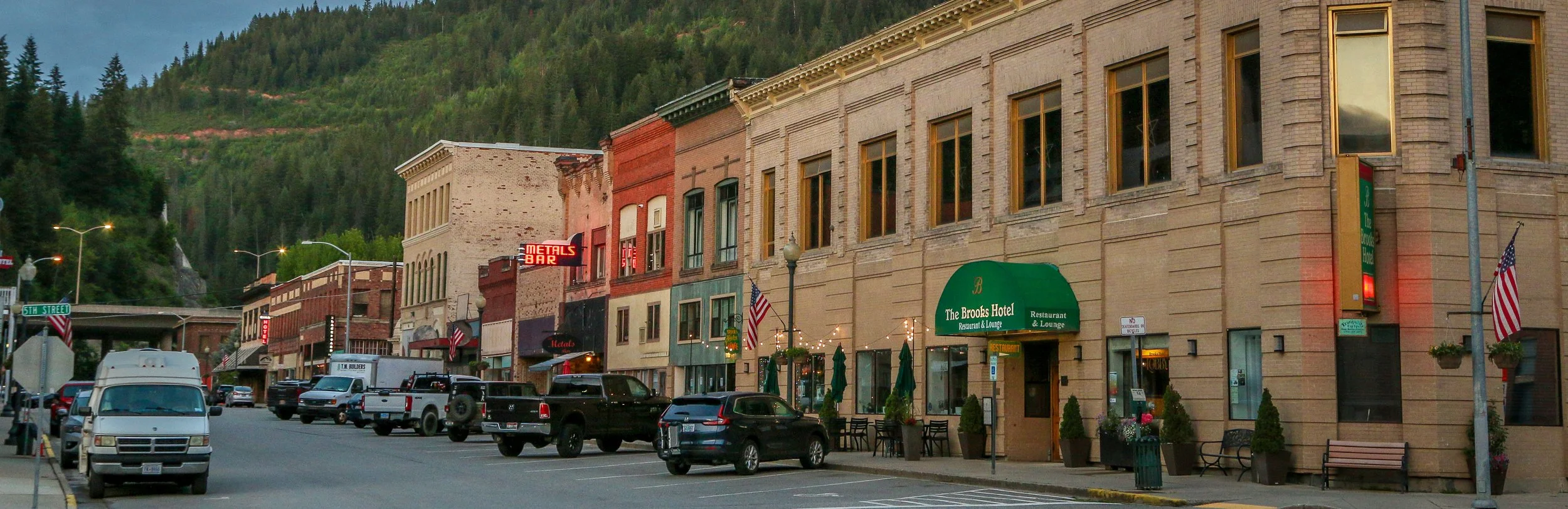
Colonel William Wallace purchased an 80 acre tract of land back in 1884 along the south fork of the Coeur d’Alene River. Over the next few years, several major silver deposits were discovered in the surrounding hills and a town grew up around Wallace’s cabin. By 1887, the railroad had made its way into Wallace and the town would grow even bigger. A fire in 1890 would burn much of the town and wooden buildings were rebuilt in brick. Despite this, Wallace would burn again in 1910 in what would come to be known as the “Big Burn”, one of the largest forest fires in American history. Wallace rebuilt again and the silver in the hills kept the town alive. The mines would thrive until after World War II and then slowly began to close. Today, Wallace’s population hovers around 800, with tourism being the town’s major industry. Wallace is the only town which is included, in its entirety, on the National Register of Historic Places. It’s a wonderful place to wander through with lots of old buildings, bars, hotels and restaurants. The historic Oasis Bordello Museum tells the story of Wallace’s storied red light district which lasted into the 1990s. Besides the history of the town, the area surrounding it is full of hiking and biking trails, ski slopes and a plethora of other outdoor activities. I first came to Wallace over 20 years ago and every time I return it makes me smile. It’s just a lovely little town, well preserved and open for business. I hope you enjoy these photos from fabulous Wallace, Idaho - small town perfection in Idaho’s Silver Valley.
Gold was discovered along Prichard and Eagle Creeks back in 1882, sparking a small rush to the area. The town of Murray was established in 1884 and named for a local miner, George Murray. 5000 miners made their way to the valley, but the placer gold soon played out and the town’s population would drop to about 500 by 1910. Mining would continue in the area until the late 1950s. Wyatt Earp spent some time in Murray at the end of the 19th century. Perhaps the most loved and remembered citizen of Murray was the prostitute turned madam Maggie Hall, AKA Molly Burdan, AKA Molly B’Damn. Maggie was born in England to Irish parents and moved to New York in 1870. She came west a few years later and made her way to Murray during the gold rush in 1884. While quite a popular prostitute in town, Molly was also known and remembered for her kindness and generosity, being sure that everyone in town was fed and clothed. She died of tuberculosis in 1888 at the age of 34 and was buried in the town’s cemetery. Murray still celebrates their favorite lady every year during the annual Molly B'Damn Gold Rush Days.
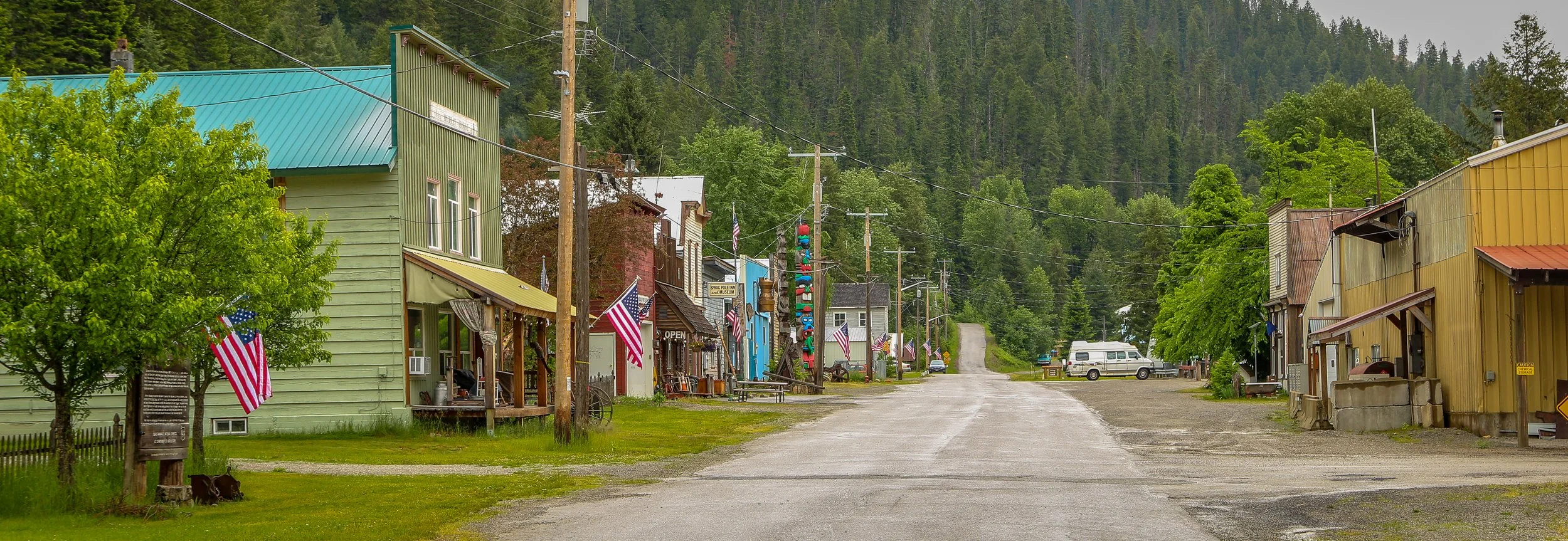
There isn’t much to Murray these days, but what there is is fantastic. The Sprag Pole Inn and Museum is a sprawling complex stretching through several buildings and containing the personal collection of Walt Almquist. It displays everything from old matchbooks and cigarette packets to one of the world’s longest wooden chains. Down the road is the Bedroom Goldmine which has a plexiglass covered mine shaft in the back room. Guests were allowed to pan for gold until a flood washed out all of the support structures. I thought Murray was just the coolest little town and I’m glad I stopped to check it out. I hope you enjoy these photos of tiny Murray, Idaho, an old gold rush town in the Silver Valley.
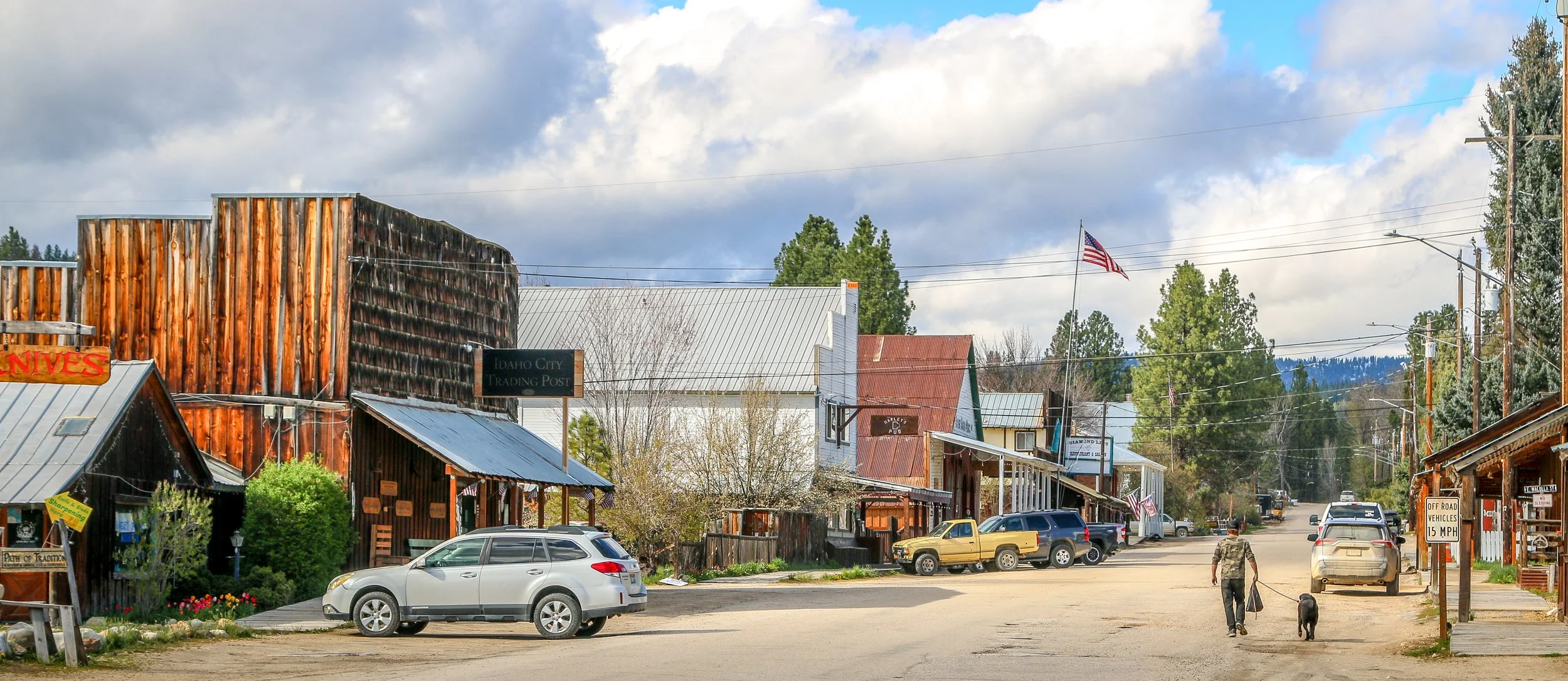
Gold was discovered in the Boise Basin on August 2, 1862 by a prospecting party led by George Grimes. After Grimes met an untimely end, the rest of his party made a quick exit from the area. Prospectors returned the following spring and the search for gold began in earnest, with settlements springing up throughout the region. The town of Bannock City was among them, a town which would later be renamed Idaho City after the Territory of Idaho was established in 1863. During its heyday, Idaho City was the largest city between St. Louis and San Francisco, even outgrowing Portland. It was known as “The Queen of the Gold Camps” and it was often said that the streets of Idaho City were paved in gold (although in reality they weren’t paved at all). Two years after its founding, Idaho City burned to the ground, losing 80% of its buildings in the flames. The town would quickly rebuild, only to suffer another devastating fire just a few years later. This time, wooden buildings were rebuilt with brick. Over $300 million dollars worth of gold was pulled out of the Boise Basin, which would be several billion dollars today. As the gold played out, the miners departed for other strikes in other places. Today, Idaho City has a year-round population of around 500 people. There are some great old buildings around town, beautifully preserved. Of note are the oldest Catholic church, Masonic Hall and Odd Fellow’s Hall (I.O.O.F.) in the state, all of which are still in use today. There’s a fantastic old two story schoolhouse which now serves as the City Hall and Idaho’s old territorial prison. Idaho City is a quiet town and I really enjoyed all of the old buildings and gold rush history. I hope you enjoy these photos from Idaho City, where the streets are (definitely not) paved in gold.
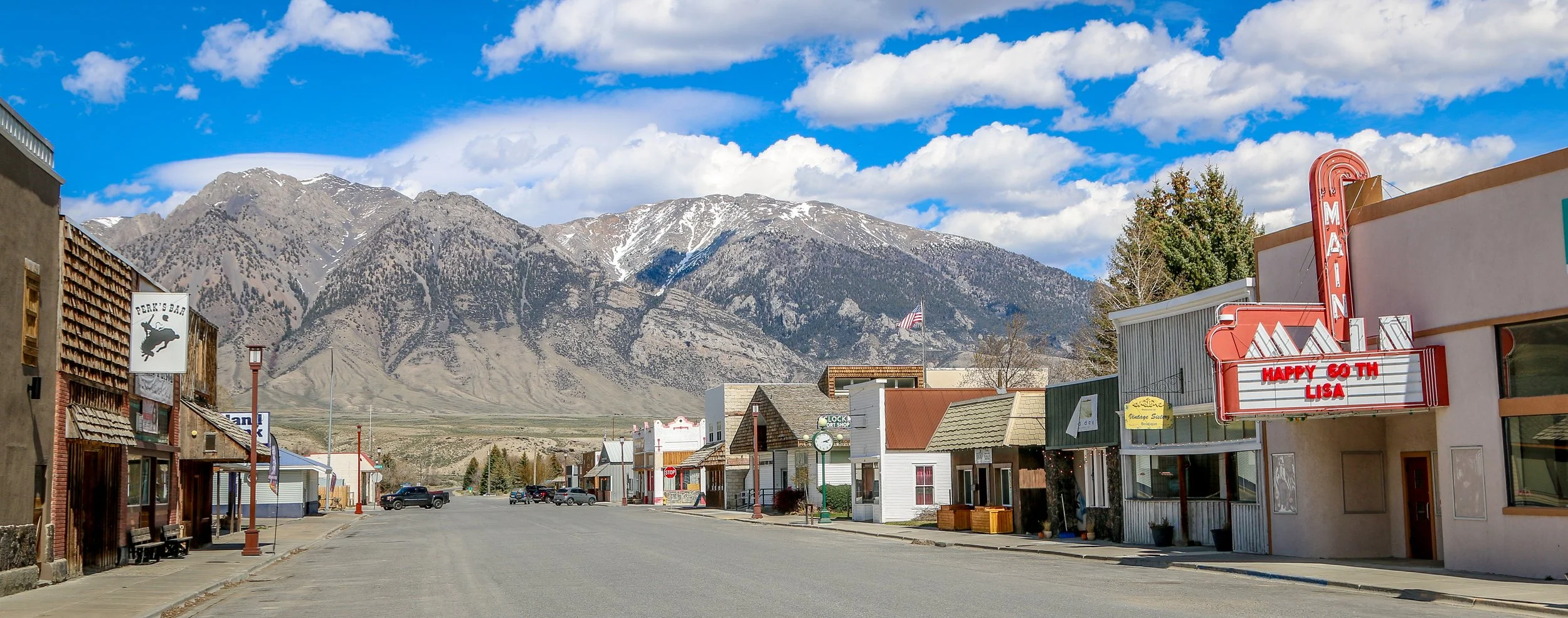
Every once in a while I drive into a town which is just too nice to leave. I pulled into MacKay, Idaho in the early afternoon with the plan to hop out and stretch my legs. , maybe take a few photos and then keep going. I found MacKay to be a cute town with some great historic buildings, all surrounded by the majestic peaks of the Lost River Range. With snow-covered mountains in every direction, I decided to stay for a while. I’m really glad I did, especially since it was a near-perfect, cool, sunny spring day.
MacKay was founded as a company town for the White Knob Mining Company in 1801 and named for the company’s owner John William Mackay. While the mines above Mackay closed down many years ago, MacKay has held on, bolstered by the agricultural businesses that have grown up in the surrounding area. I loved some of their historic buildings in town, especially the Clock Cigar Company which has been restored to show some of the businesses which have come and gone in the building over the years. While the original post clock out front has long since disappeared, the town had a replica made to the exact specifications and it looks great. I also enjoyed the L7 Bar and Grill which was the friendliest place I’ve stopped in a long time. I hope you enjoy these photos from tiny MacKay, Idaho, small town charm in the Lost River Valley.
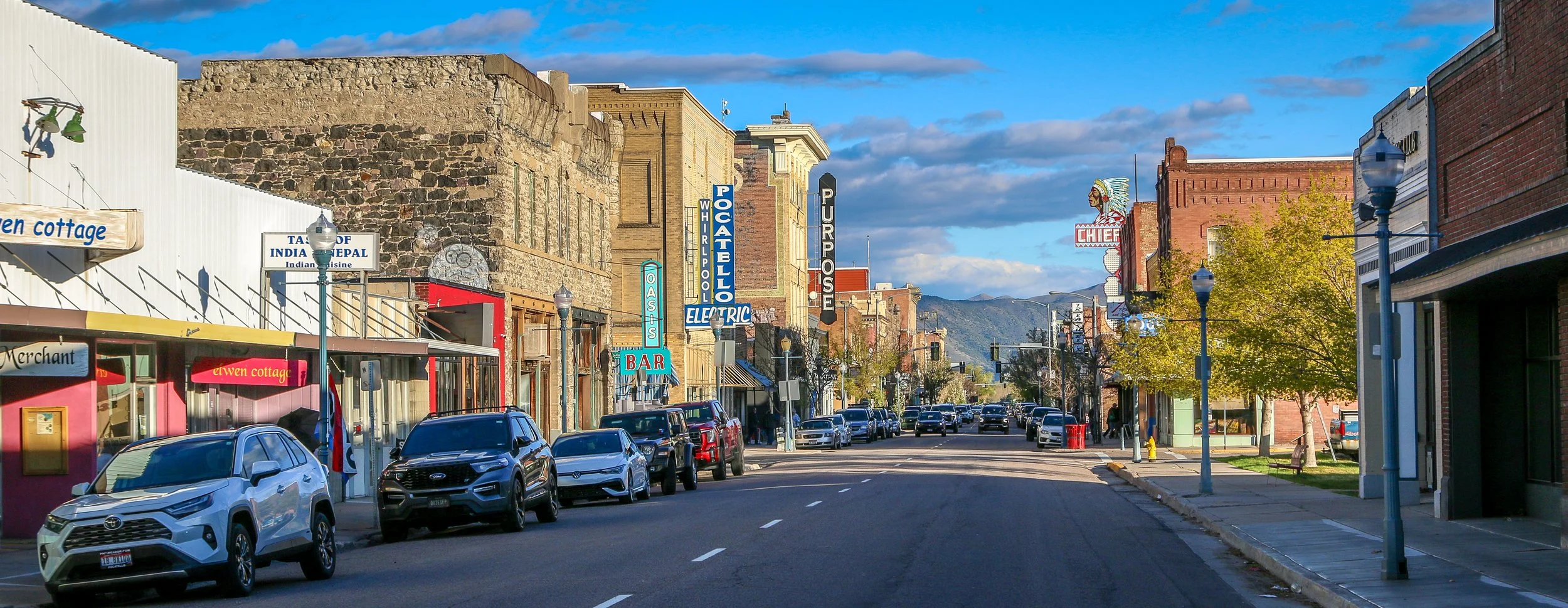
Pocatello, Idaho is a wonderful place to be. It’s a modern city and home to Idaho State University, but it maintains its historic charm and classic American downtown vibes. Originally part of the seasonal migration routes of the Bannock and Shoshone tribes, the city takes its name from Shoshone Chief Pocatello.
American explorers Meriwether Lewis and William Clark passed through the region on their Corps of Discovery expedition in 1805. A businessman from Massachusetts named Nathaniel Jarvis Wyeth came west in the 1830s to try to establish himself in the fur trade and set up Fort Hall as a trading post. Unable to compete with the Hudson’s Bay Company, he sold Fort Hall to them a few years later. Several years down the line, the fort would be a major stop on the Oregon Trail as emigrants made their way west across the country. When gold was discovered in 1860, the area experienced a minor rush and people began to settle in the beautiful Portneuf Valley. But more than anything, it was the coming of the train that would build the city of Pocatello. The area became a rest stop on the Utah and Northern Railroad and several years later the Oregon Short Line came to town, creating a junction and transfer point referred to as “Pocatello’s Junction”. In 1888, an executive order purchased land for a townsite from the Fort Hall Shoshone and Bannock Reservation and the city was incorporated the following year. Because of the train junction, Pocatello was known as “The Gateway to the Northwest”, or simply “Gate City” for short.
I had a great stay in Pocatello, enjoying their monthly art walk, a performance at the Palace Theatre and some live music in the downtown bars. The county history museum had some neat artifacts and I particularly enjoyed visiting the Shoshone Bannock Cultural Museum in nearby Fort Hall. Pocatello is a friendly city with a cool vibe and I will definitely be returning in the future. I hope you enjoy these photos from Pocatello, Idaho’s Gate City.