Mount Angel got its start as Roy, Oregon back in 1850. Thirty years later, Reverend Adelhelm Odermatt arrived with a group of Benedictine monks from Engelberg, Switzerland. Together, they established an abbey, a church and a school and were soon joined by a group of settlers from Bavaria. When a post office was established, they took the name “Mount Angel” which is the English translation of the town Engleberg. This sleepy little town of about 4,000 people grows a hundredfold each fall as tourists from around the world arrive for their annual Oktoberfest celebration. Mount Angel built their glockenspiel in 2006 and it is apparently the largest in the United States. It was a joy to watch when it came to life and on a quiet Sunday afternoon, I was the only one there to see it. There are some great old buildings and some beautiful cast iron signs and signposts around town which I have to believe came from the local Windischar's General Blacksmith Shop. I especially enjoyed the beer at the Benedictine Monastery’s wonderfully named St. Michael Taproom and will have to visit the monastery itself on my next visit. I definitely enjoyed wandering the streets of this little Bavarian town in the heart of the Willamette Valley and would absolutely recommend a stop to anyone passing through the area.. And if you’re there in September, you’ll be in for a real treat as their Oktoberfest looks like a heck of a good time. I hope you enjoy these photos from quaint and picturesque Mount Angel Oregon, the Willamette Valley’s Little Bavaria. Prost!
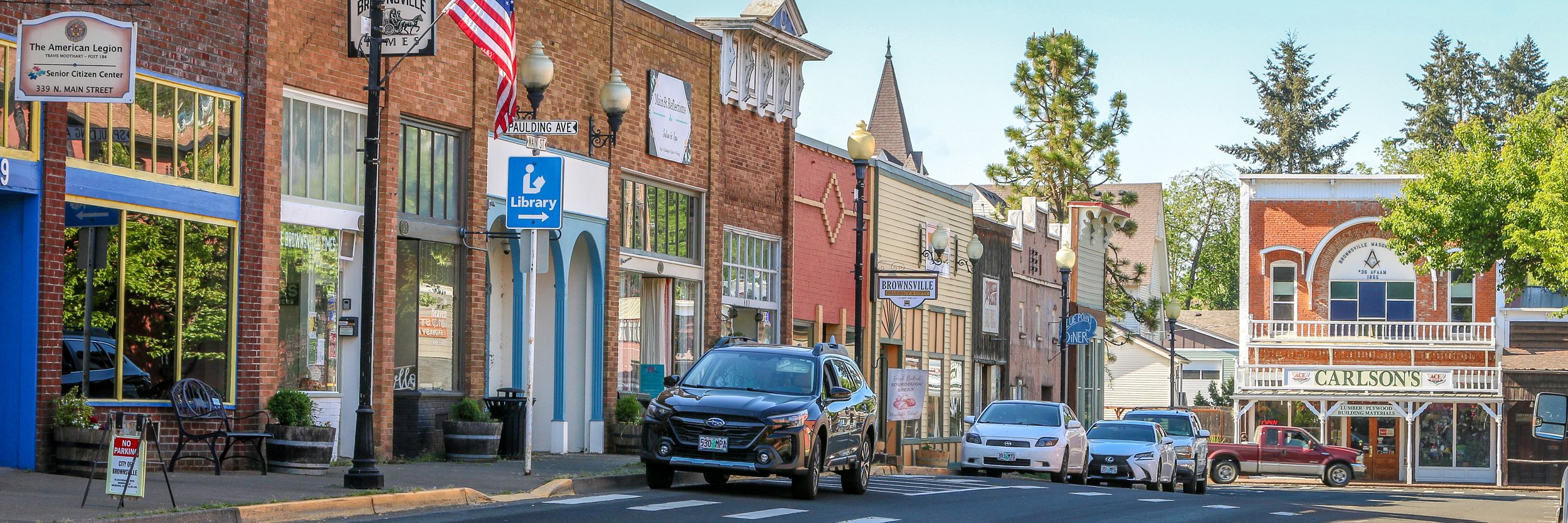
Driving into historic Brownsville, Oregon put a huge smile on my face. I first saw the movie Stand By Me as a teenager, and I had read the Stephen King novella The Body even earlier. This coming-of-age story of four boys navigating adolescence in the small town of Castle Rock (Maine in the novella, Oregon in the movie) really moved me. I’ve seen it dozens of times in the intervening years and Brownsville was where it was filmed. The whole town felt so familiar to me and it really is a quintessential small town and the perfect location for the movie to have been filmed in. I loved just walking the streets and taking it all in and I had a beautiful day to be there. I went to Pioneer Park and watched some young people playing baseball which was fun (the park was the scene of the pie-eating contest in the film with locals used as the extras in the scene). I enjoyed a great lunch at Randy’s and dinner at the Brownsville Tavern and just really enjoyed my visit. I even sat in my van and watched Stand By Me while I was there. I’m not the only person who visits Brownsville because I’m a fan of a 40 year old movie. They even have an annual festival to remember and celebrate the film. If you’re ever cruising through Linn County, pop in and have a look around. It’s a wonderful town full of wonderful people and I’m sure they’ll be glad to have you. Enjoy these photos from Brownsville, Oregon which will always be Castle Rock to me.
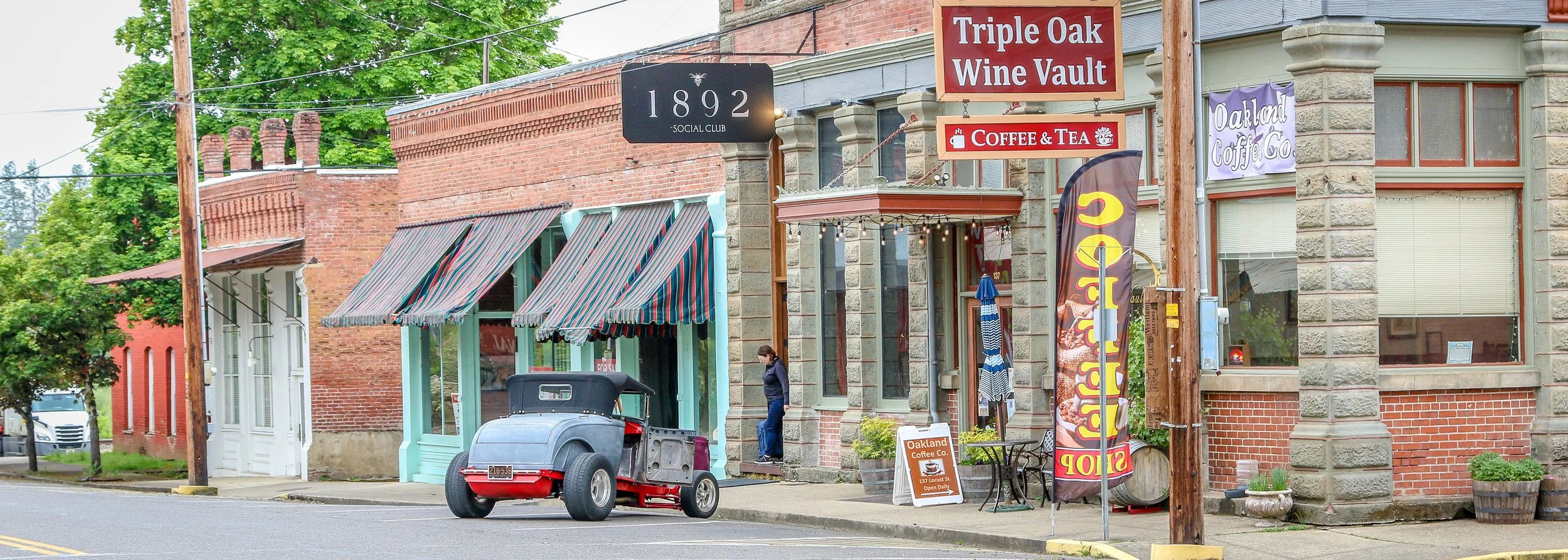
Pulling through Oakland, Oregon on an overcast spring morning, I caught a glimpse of a great, old Bull Durham Tobacco ghost sign next to a vacant lot. Turning onto Locust Street so I could hop out and take a photo of the sign, I found myself in the middle of a delightful historic district. Back in 1846 as westbound emigrants were making their way down the Oregon Trail, the last obstacle they faced was one of their greatest: navigating the treacherous Columbia River Gorge. A party led by Scott Applegate pioneered a cutoff from the trail to avoid the river and the Applegate Trail was born. Following this trail, the Campbell and Cornwall families ran into winter conditions before reaching the Willamette Valley and ended up settling right where they were. Their settlement would eventually grow into the town of Oakland. When the railroad arrived in 1872, Oakland would grow into a transportation hub. Stearns Hardware opened in 1887 and has been going ever since. Over 80 of the buildings in town were built between 1852 and 1890 which led to Oakland being the first city placed on Oregon’s historic register back in 1968. I didn’t stay in Oakland long, but it really made an impression and I hope to return in the future. For a small town, it sure seemed to have a lot to offer. I hope you enjoy these photos from historic Oakland, Oregon.
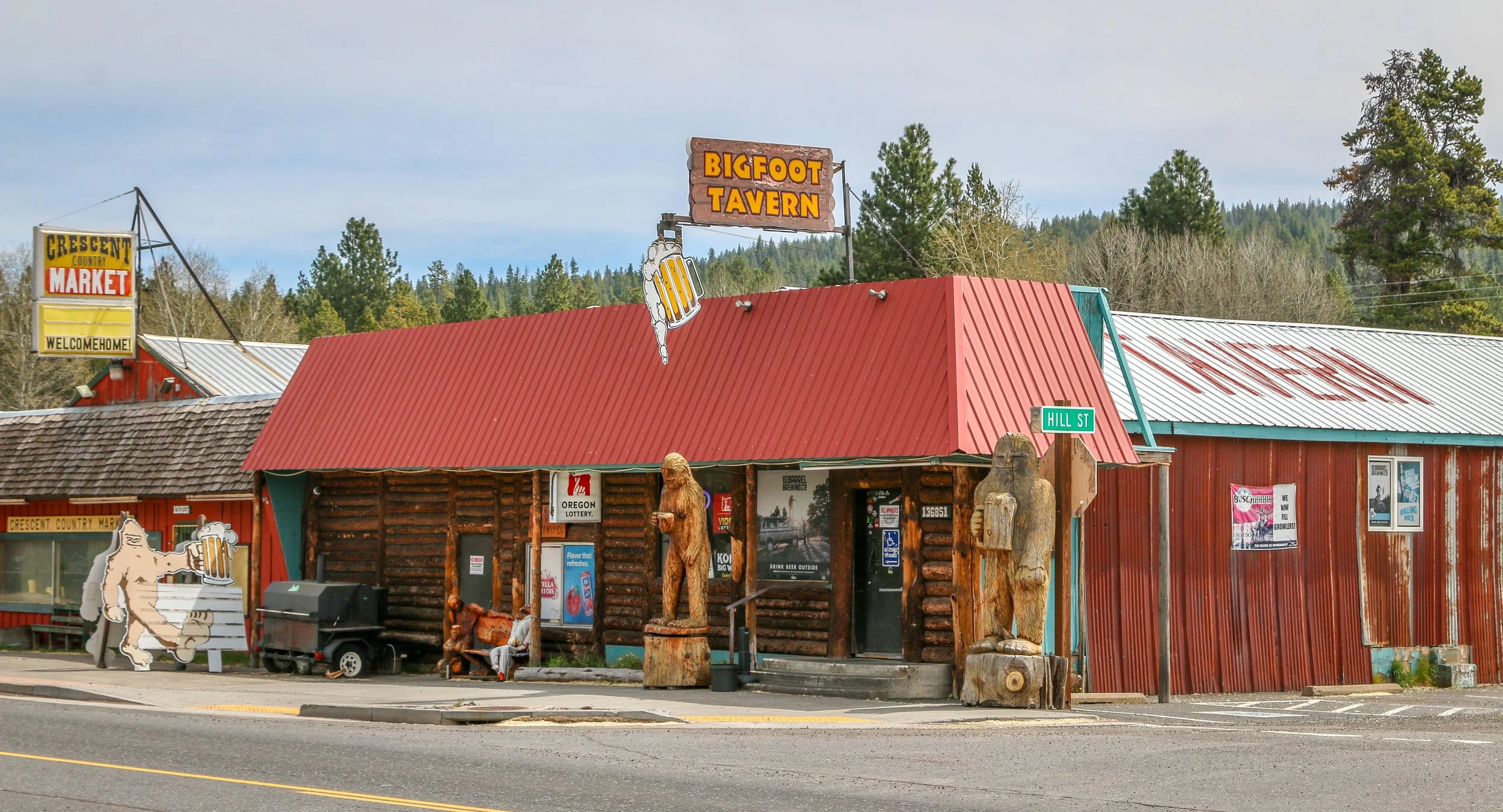
Crescent, Oregon is the kind of town that makes me hit the brakes as soon as I pull in. Coming from Bend in the North, the first thing I saw when I arrived in Crescent was the giant bear statue atop the public library. Next, the lumberjack on the Woodsman Inn caught my eye. Finally, the Bigfoot Tavern sealed the deal and I pulled over and came back to take some photos. Crescent got its start back in 1909 when Edward Rourk opened a small store in the area. A post office opened in the store the following year and Rourk would serve as the postmaster for several years (the store still stands today). The coming of the railroad and the opening of Highway 97 both contributed to the growth of Crescent and its population today hovers around 400 people. I wasn’t able to find out much more about Crescent online, but the next time I’m passing through I plan to stop and ask some questions. I hope you enjoy these photos from quirky little Crescent, Oregon.
Coupeville is an adorable little waterfront town on the shores of Penn Cove on Whidbey Island. The architecture reminds me of a quaint little New England town and is very well preserved. Originally Lower Skagit Indian land, the area was settled in the 1850s by Thomas Coupe, for whom the town is named. Coupeville is a small town with a population of right around 2000 people. It’s also home to Ebey’s Landing National Historic Reserve, the first site of its kind in the country which preserves the old buildings and countryside of the 19th century settlers. I had a great visit to Coupeville, enjoying coffee on the pier and wonderful views out over the water. There are some lovely little Victorian buildings around including the immaculate Anchorage Inn and Kineth House. I loved all of the seasonal and Halloween decorations that were up when I visited as well. The highlight of my visit was probably the fish and chips at Toby’s, though. You can get fish and chips everywhere in Washington, but these were the best I’ve had in a very long time. You should definitely check it out if you visit. I hope you enjoy these photos of tiny Coupeville, Whidbey Island’s waterfront gem.
Most states have at least one town with a European theme and if you’ve been following this blog for a while, you've seen that they are too rich in photography opportunities to pass up. Which is the point. Poulsbo, a small town of just over 11,000 residents, is a beautiful example of how to do this well and judging by the number of tourists I saw there during my stay, it’s working well for them.
This area was originally inhabited by the Suquamish people who currently live on a reservation just down the road. After the Treaty of Point Elliott was signed in 1855 moving American Indians in Washington onto reservations, the vacated land was open to settlement. Norwegian immigrant Jørgen Eliason founded the townsite in 1880 and was soon joined there by other Scandinavians who appreciated the landscape and location on what’s now called Liberty Bay. When the town grew to a size that it needed a post office, one citizen recommended “Paulsbo” after his Norwegian hometown. The authorities in Washington DC misread the handwriting on the petition and the town would forever after be known as Poulsbo instead. Norwegian was the primary language spoken in the town until World War II when the town experienced an influx of GIs who came to work at the nearby Puget Sound Naval Shipyard in Bremerton.
I had a fantastic time in Poulsbo. I was thrilled to find some great Oktoberfest beers on tap and delicious European comfort food at Tizley’s Europub. I enjoyed another great fest beer while sitting next to a lovely outdoor fire pit at Valholl Brewery, and live music at The Brass Kraken finished off the night. The next morning I had a delicious pastry from Sluy’s Bakery and then sat down to all-you-can-eat pancakes at the Sons of Norway Hall. In between all of that fun, I managed to take some great photos, especially around dusk when the water was still and amazingly reflective. I hope you enjoy these photos from beautiful Poulsbo, Kitsap County’s Little Norway.
The area that is now Port Angeles was first occupied by the Klallam and Makah people who thrived with the abundance of natural resources the region provided. In 1774, Juan Perez sailed into the straight and in 1791 Francisco Eliza claimed the area for Spain and named it El Puerto de Nuestra Senora de Los Angeles which would later be anglicized and shortened to Port Angeles. White American settlers arrived in the area in the mid-19th century, and a man named Victor Smith came to town soon thereafter. Smith would have Port Angeles named the official U.S. Customs House and Port of Entry and convinced President Lincoln to support making the town a National Reserve. A lighthouse was built and the Army Corps of Engineers laid out a townsite. Since this made Port Angeles only the second federally planned city in the country after my hometown of Washington D.C. the town was dubbed the “Second National City". When Victor Smith died in 1865, the Port of Entry was moved back to Port Townsend and Port Angeles was all but abandoned. This changed in the 1880s when the railroad arrived and settlers soon chugged into town with it. Like so many other towns in the region, logging soon became Port Angeles’ main industry and the town even claimed the largest sawmill in the world for a bit. The natural deep water harbor has made Port Angeles a major port for both military and civilian ships over the years as well. Port Angeles is the site of the main visitor center for Olympic National Park and is also the hometown of NFL football legend John Elway.
I’ve been to Port Angeles a few times and I always get the same feeling when I’m there: it’s a town that keeps trying and I give it a lot of credit for that. The downtown area’s storefronts are full and there are several nice restaurants and bars to be found. There’s a great bookstore and a fantastic independent outdoor gear store. Port Angeles has supported a lot of cool public art displays and beautiful murals which really liven up the main downtown area. It’s also a great place to do some whale watching. I really like Port Angeles and I was happy to be able to spend some time there taking these photos. I hope you enjoy this little peak into the Olympic Peninsula’s City of Angels.
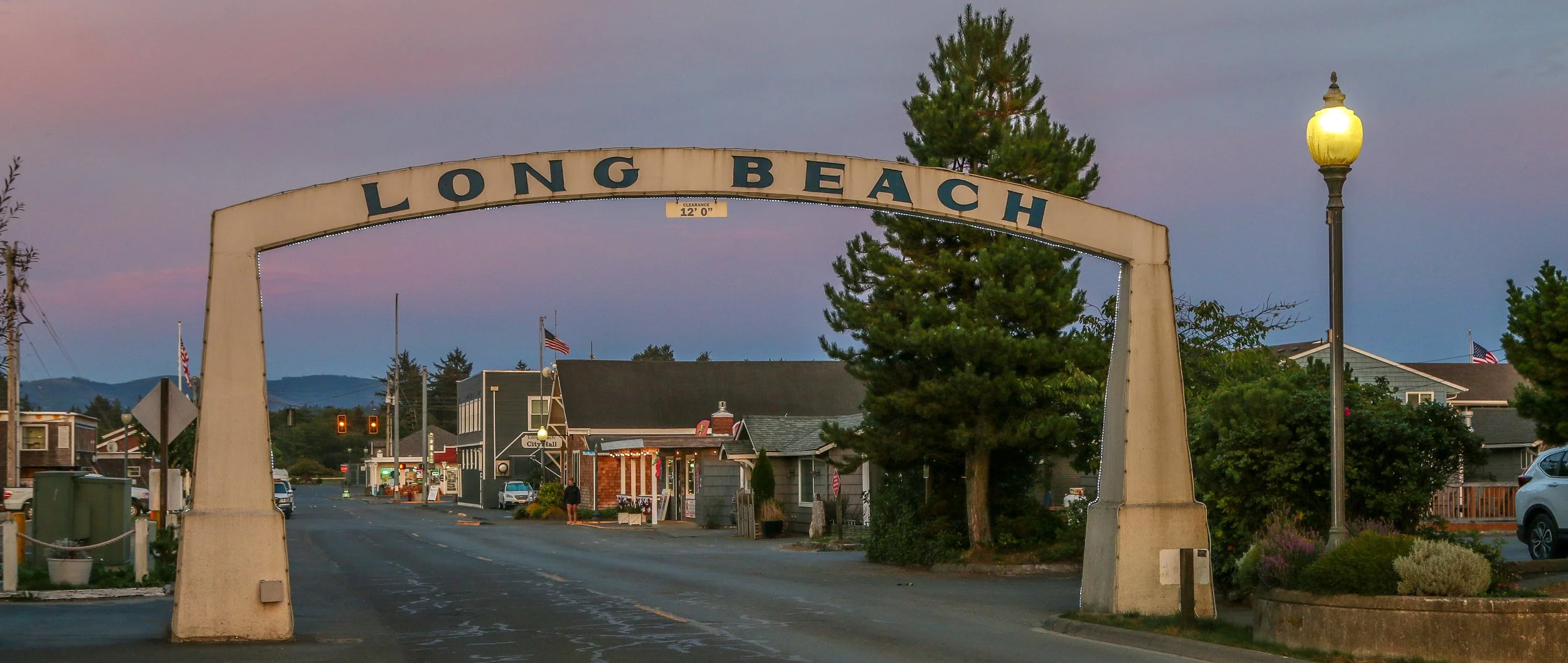
Long Beach, Washington is a wonderful little seaside town in the far southwest corner of the state. This area was originally home to Chinook Indians who later traded with European ships as they made their way up and down the coast. William Clark visited these beaches at the end of his Corps of Discovery’s overland voyage to the Pacific. White settlers started to arrive not long after the Civil War, originally coming to harvest the plentiful local oysters to ship to San Francisco. In the mid 1870s, steamships started bringing in tourists from nearby Portland and hotels and restaurants started to spring up. Long Beach has been a vacation destination ever since.
I absolutely loved my time in Long Beach. The beach itself is beautiful and the sunsets were magnificent. I really liked Dylan’s Cottage Bakery which is one of the best I’ve been to in a long time. I had a wonderful dinner at Castaways, drinks at the Long Beach Tavern and ice cream at Scoopers. The Marsh Free Museum is a wonderful old collection of oddities set around a modern souvenir shop. But mostly I loved the statues and public art, colorful buildings, hand-painted signs and the general laid back feel of the town. The attention to detail is amazing and even the parking signs and bike racks are adorable. I had a fantastic time in Long Beach and can’t wait to go back again. If you ever get the chance, you should definitely pop in. You may end up staying longer than you thought you would. I hope you enjoy these photos from beautiful Long Beach, Washington.
Bodega, California is an adorable historic town about 5 miles from the coast and 2 hours north of San Francisco on the Pacific Coast Highway. These were once Coastal Miwok lands and they made use of the bounty of the area’s vast natural resources. Juan Francisco Bodega y Caudra of Spain first sailed into the nearby harbor in 1775, but the area’s first settlers of European decent were Russians. It was fear of the Russians’ southern advances that prompted Spain to set up the mission system and claim and settle the area of what’s now California.
In 1843, Stephen Smith built a lumber yard in the area and John Sutter also bought land nearby. St. Teresa of Avila church was constructed in 1859 and a small community slowly grew up around it. Today, Bodega’s population is still just over 200 people, but it packs a lot of punch for such a small town. Bodega is probably best known as one of the filming locations for Alfred Hitchcock’s 1963 film The Birds. I used to drive through Bodega often on my way from Santa Rosa to the coast, and I was happy that I finally had the chance to stop and look around for a while. Bodega is definitely small-town California at its best. I hope you enjoy these photos from beautiful Bodega, California.
Nara Visa, New Mexico got its start as a rail town when the Chicago, Rock Island and Pacific Railroad was being built around the turn of the 20th century. It was originally called Narvaez after a local family who had farmed in the area for decades, but was eventually anglicized to some degree to Nara Visa. Within a decade, the town had grown to include 4 churches, 8 saloons, a couple of hotels and a whole array of small businesses. In 1921, with a growing population of 651, a fine school was built and the Works Progress Administration helped add a gymnasium a decade and a half later. The depression took its toll on the town though and lean years were ahead for Nara Visa. By 1968, there were only 7 students enrolled at the school when it closed its doors for the last time. Today less than a hundred people call the town home, and none of the businesses from this once thriving little community are open. It’s easy to pass through Nara Visa and not see it at all. I’m glad I got out and had a look. It makes me sad when towns die, but the reality is that everyone leaves at some point, one way or another. It looks like times were good there once, and maybe will be again at some point in the future. It sure made for some nice photos though. I hope you enjoy these photos from Nara Visa - a modern day ghost town in eastern New Mexico.
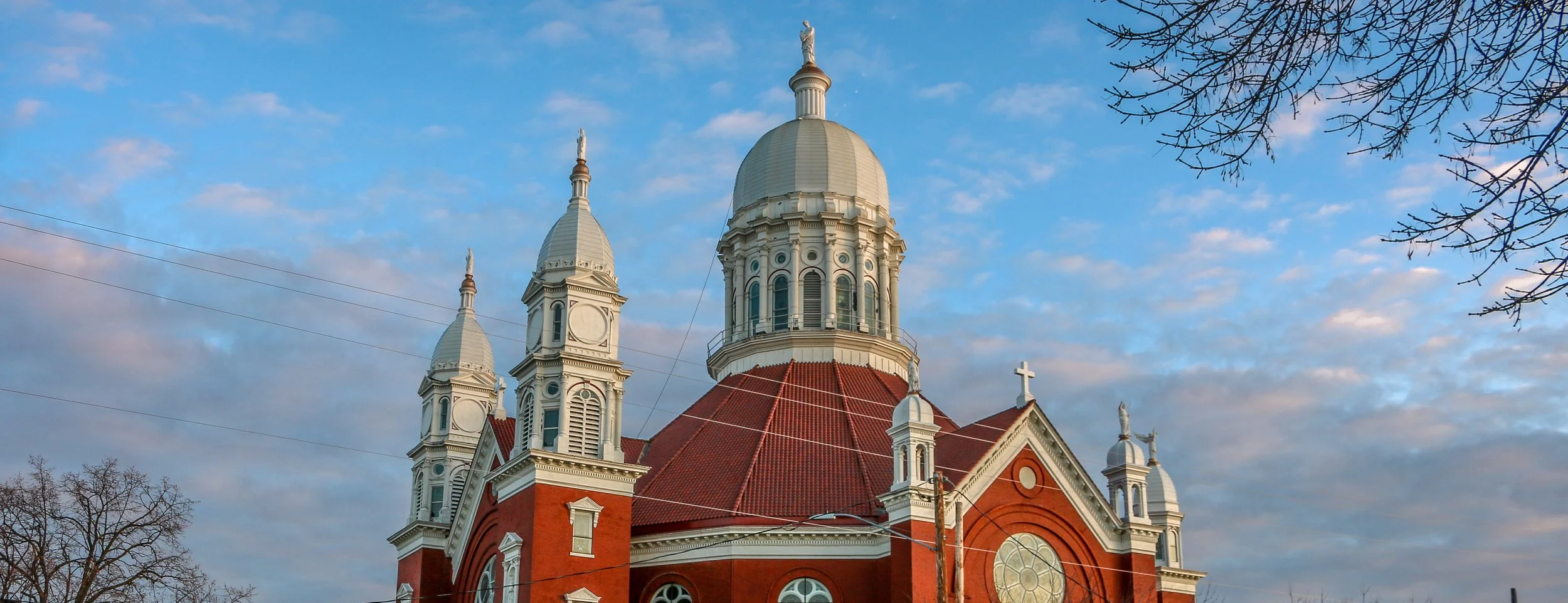
Winona was my last stop during my six week stay in Minnesota. This small city with a population of about 26,000 is right on the Mississippi River and the Great River Road in the far southeast of the state. This land was once home to the Mdewakanton Band of Lakota Indians and is named for the first-born daughter of Chief Wabasha III. Originally settled in 1851, Winona grew to be a major rail and steamboat town with wheat and lumber playing a major role as well. Today, there are some great old buildings lining the streets and the St. Stanislaus Basilica is one of the most beautiful churches in the state if not the country. I also enjoyed a stop in the Historic Society museum located in the old armory and the beautiful stained glass windows at Merchants National Bank. I wasn’t in Winona long as it was time for me to be heading on down the road, but I hope you enjoy these few photos from my stay.
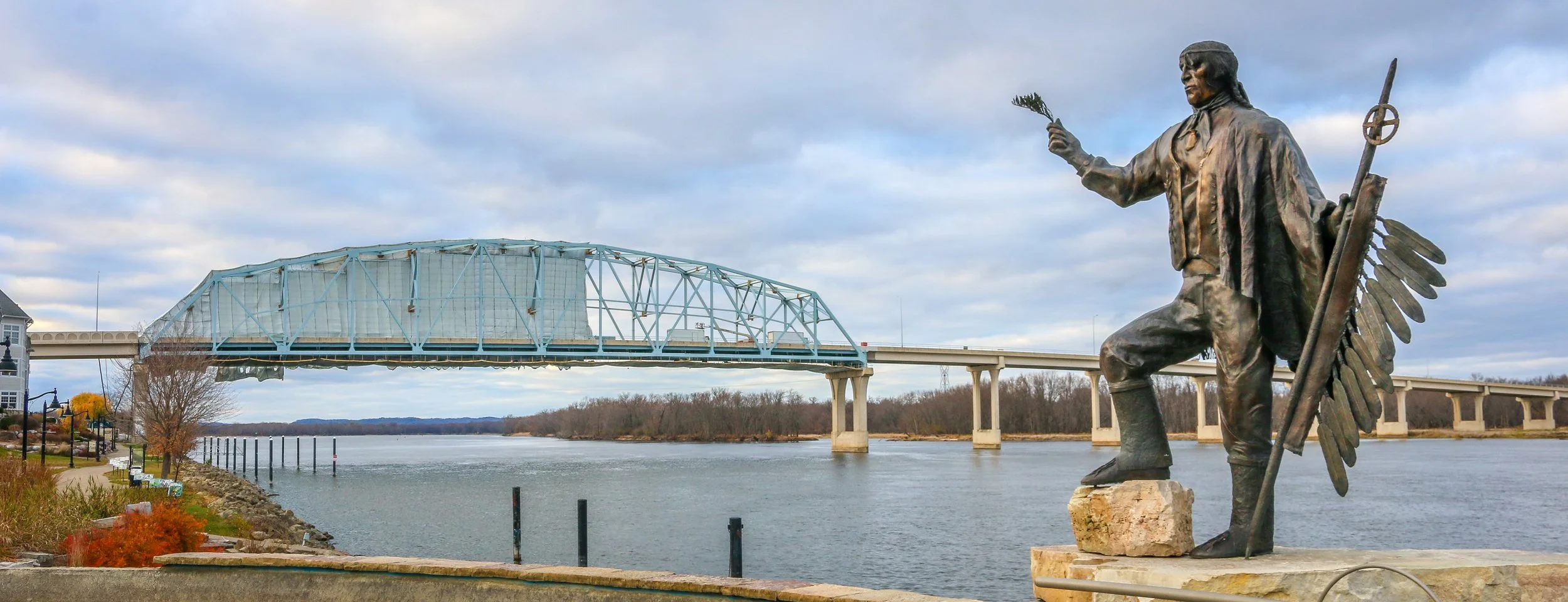
When Europeans first made their way up the Mississippi River, these lands were occupied by the Mdewakanton Dakota people who were led by Chief Wa-pa-shaw. The area was settled in 1826 and officially recognized after the Treaty of Prairie du Chien was signed in 1830. The fledgling town was named after the Chief as “Wabasha” and is now one of the oldest towns on the Upper Mississippi River. The early town’s economy was based on shipping, trading, lumber and flour and there was also a clamming industry and a button factory which utilized the discarded clam shells. Today, Wabasha is still undeniably a river town, but has made tourism a major economic interest - especially with the addition of the National Eagle Center. It’s probably most famous in recent times as the setting, though not the filming location, of the movie Grumpy Old Men. All of that being said, it would be easy to just blow on past Wabasha as it is just a small town of 2,500 or so people, but you’d be missing a real gem on Minnesota’s stretch of the mighty Mississippi. The historic buildings, the awesome statue of Chief Wabasha and the beautiful river setting combine with friendly people and some wonderful small businesses to make Wabasha a charming destination. Be sure you stop by Hoppy Girl Brewing Company while you’re there to taste some of the state’s best microbrews in one of its smallest and friendliest breweries. I had a wonderful visit to Wabasha even though the winter skies were definitely telling me it was time to head south. The next time I find myself in Minnesota, though, it will definitely be on my list of places to return. I hope you enjoy these photos from tiny Wabasha, Minnesota - a true hidden gem on the Mississippi River.