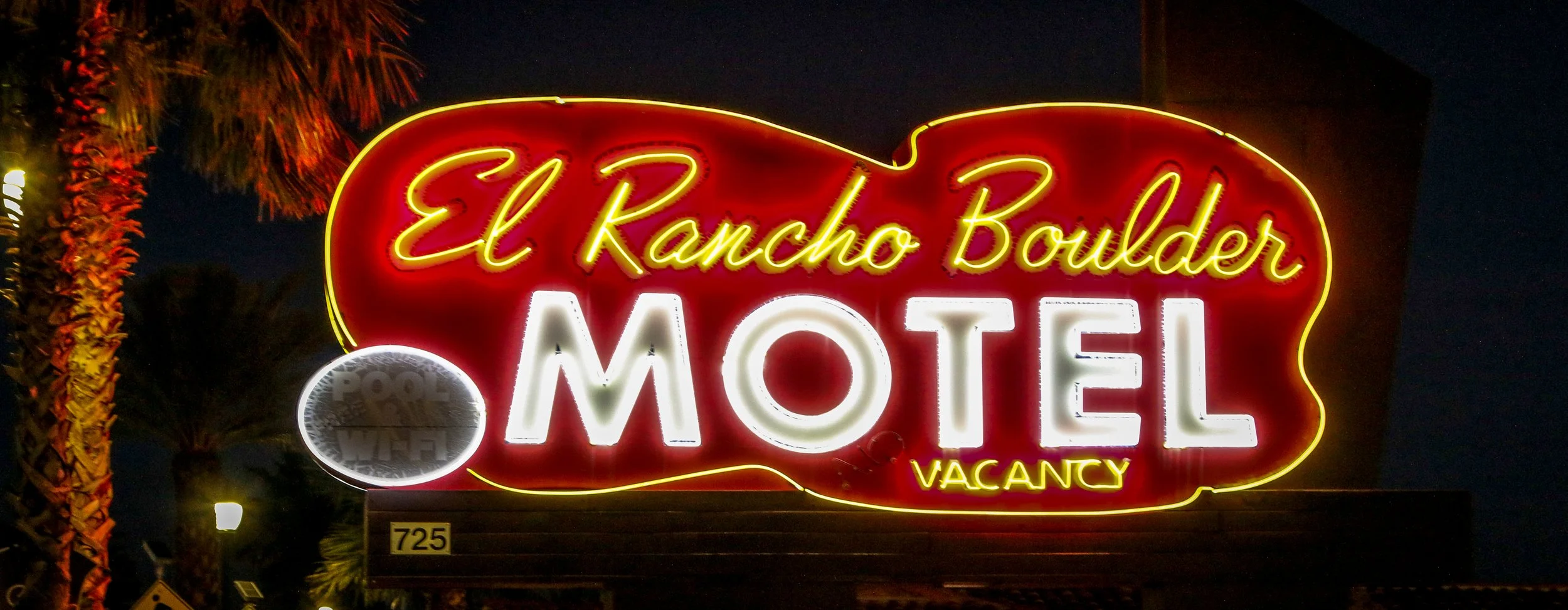
Boulder City, Nevada was founded in 1931 by the United States Bureau of Reclamation to house workers who were there to construct the Boulder Dam (which was renamed the Hoover Dam in 1947). Originally intended to house 5,000 workers for several years while the dam was being built, the town was thoughtfully laid out with plenty of parks and recreation opportunities and thus earned the early nickname of “Nevada’s Garden City”. Founded during prohibition and with the goal of having productive workers, alcohol was prohibited in Boulder City until 1969 and gambling has never been allowed within the city limits making it look and feel different from any other town I visited during my time in Nevada. The federal government maintained control of Boulder City until 1959 when the town was finally incorporated and the citizens elected their first mayor. Boulder City is a pleasant little community which I really enjoyed. The people were friendly and there were some great bars and restaurants and a surprising amount of live music on offer. I also loved all of the public art around town, especially the statues dedicated to the regular folks who made up the community in the early days. There’s a statue of a woman hanging laundry, one of a man with a shovel and another of the janitor resupplying toilet paper to the public restrooms (an unsung hero if ever there was one). All of the statues in town were tastefully decorated for the upcoming Valentine’s Day during my visit which put a smile on my face. I had a great stay in Boulder City which may be only 45 minutes from downtown Las Vegas, but feels a world apart. I hope you enjoy these photos from Boulder City - The Town that Built the Hoover Dam.
Hello Everyone!
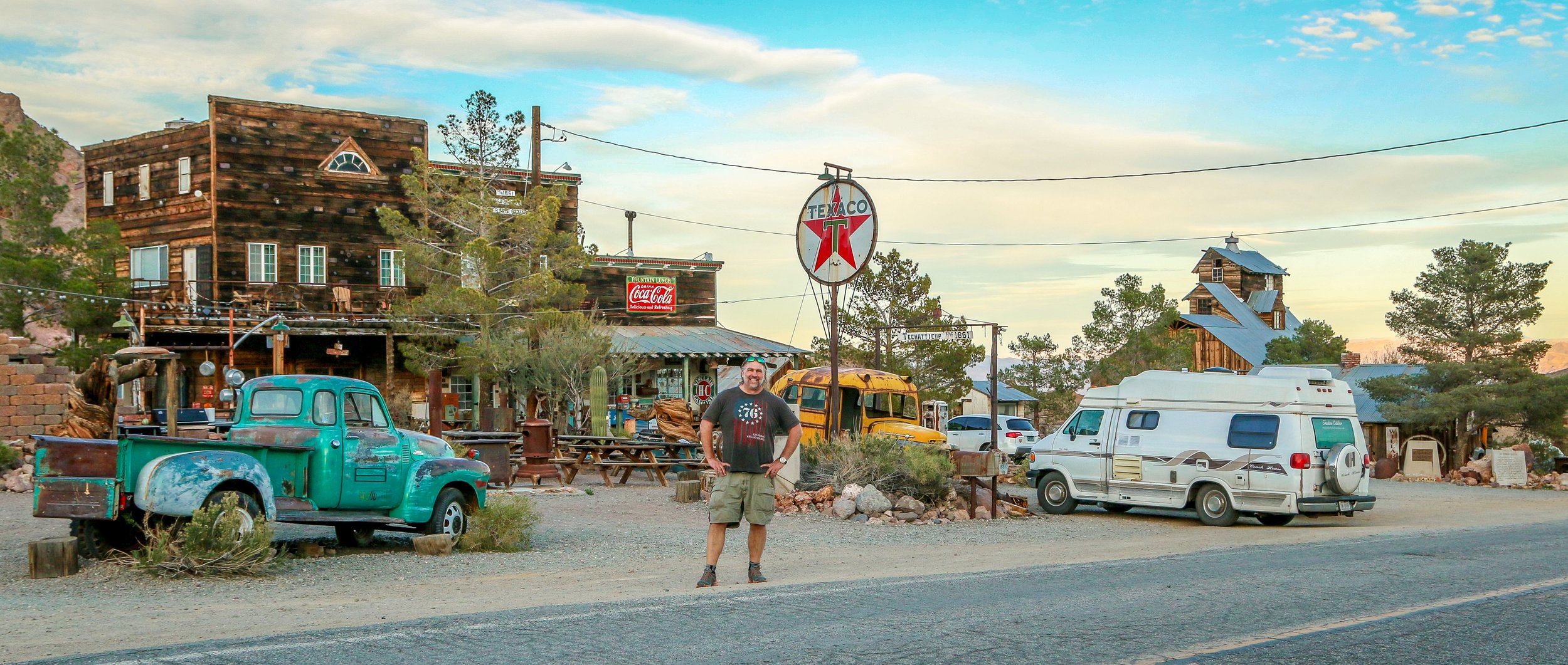
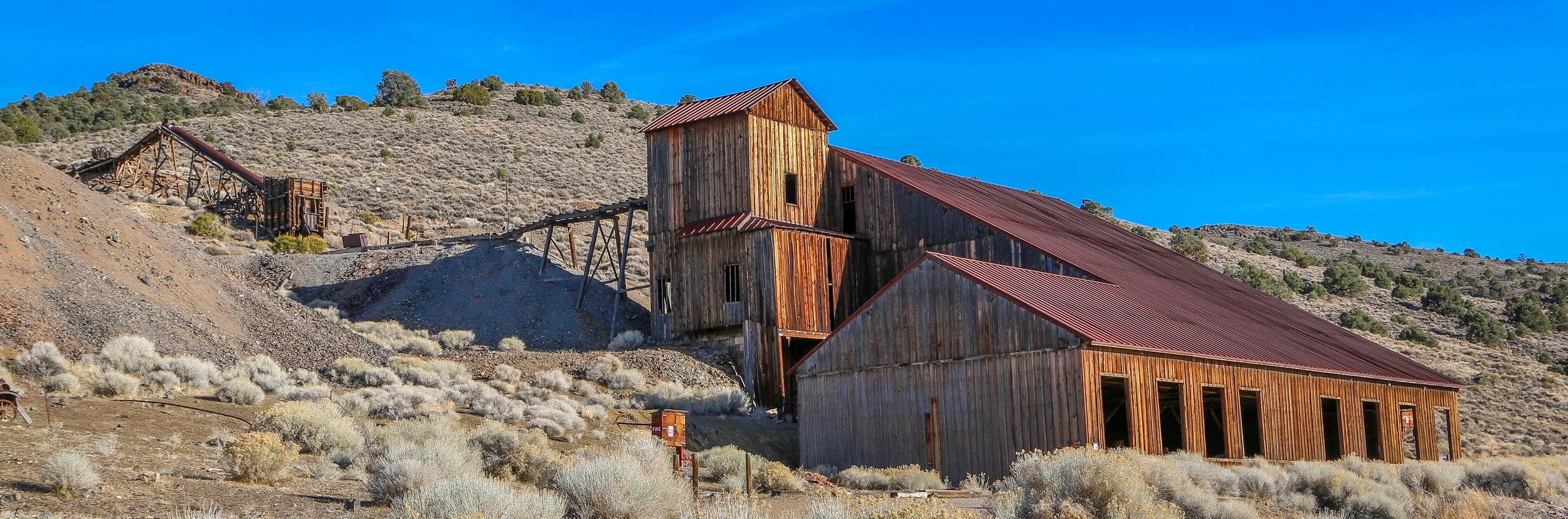
It’s been a relatively mellow week out here on the road. Warm temperatures in southern Nevada have been very welcome and have not inspired me to move back into colder climates with any unnecessary speed. I hung around Las Vegas for an extra day to do some work on my van and then lingered in Boulder City longer than I expected. I did see a fascinating old mining town in the El Dorado Canyon near Nelson, Nevada, visited the Lost City Museum in Overton and finally made it out to the Valley of Fire which did not disappoint. I’m ending my week here in Mesquite, right on the border, as I plan to make my exit from the Silver State tomorrow. It’s not been the busiest week I’ve ever had, but sometimes that’s a good thing.
How can you not go visit a place with the motto “The Town That Refused to Die”? Ione has been on my list for quite some time and I’m glad I finally got there. It adds a little extra to the long detour to Berlin-Ichthyosaur State Park which is just minutes up the road. Ione was founded after a silver strike in the area in 1863. Ione took it’s name from a California mining town and would be named the county seat of the newly created Nye County in 1864. The town’s population would peak at about 600 people, but many would leave when a strike was made in nearby Belmont. Belmont would become the county seat in 1867. Ione would have another small boom in 1897 when a new stamp mill was built and again in 1912 when cinnabar (an ore refined into elemental mercury) was discovered in the area. When that played out in the 1930s, the town’s population would dip to around 40. The post office closed in 1959 and yet the town persisted. There isn’t much to Ione these days - a boarded up saloon and a few old stores and mining era buildings. But there are some newer houses around as well and a population of 41 people who must really like to get away from it all. This is an end-of-the-road town, but one worth wandering through if you’re ever in the area. I hope you enjoy these photos from Ione, Nevada - The Town That Refused to Die.
Berlin was established as a mining town in 1897 by German prospectors who named the town after the city in their native homeland. It had a small decade-long boom cycle but declined quickly after the Panic of 1907. By 1911 Berlin was virtually a ghost town and would begin to deteriorate. The land was acquired by the State of Nevada in 1970 to become part of Berlin-Ichthyosaur State Park. Since it was acquired, volunteers have stabilized the buildings and replaced the roofs and now it sits in a state of “arrested decay”. There are some great old buildings to see in Berlin, especially the massive stamp mill. I hope you enjoy these photos from the tiny old goldmining ghost town of Berlin, Nevada - definitely a cool place to see.
The Lincoln Highway was the original road-tripping route across the country. Dedicated on Halloween, 1913, the Lincoln Highway stretched 3,389 miles from Times Square in New York City to Lincoln Square in San Francisco. It was really the first transcontinental route designed specifically for automobiles and became known as The Main Street Across America. The stretch of the Lincoln Highway that crossed Nevada was planned along a well-trodden path. This route had previously served as a stagecoach route, the main trail for the Pony Express and the transcontinental telegraph also ran along this path. Many years after the highway was built, in 1986, Life magazine called this stretch of road across Nevada “The Loneliest Road in America”, and that wasn’t meant as a compliment. Nevadans, however, loved it and set out to make it a state scenic byway, erecting signs, creating a passport and marketing it to outsiders as The Loneliest Road. It connects fascinating old mining towns like Austin, Ely and Eureka and passes by old Pony Express stations, vast expanses of desert and the ruins of Fort Churchill (now a state park). I’ve made this run across Nevada several times and always really enjoyed it. There’s a lot of history out there and some great bars along the way as well. I hope you enjoy these photos from my time traveling down Nevada’s section of Route 50, The Loneliest Road in America.
Hello Everyone! This week brought me down the east side of the great state of Nevada as I traveled from the old railroad town of Ely to fabulous Las Vegas. It’s another pretty desolate run with lots of wide open, beautiful desert to see. Nevada Route 93 is a great road and an easy one to cruise down with the windows down and the radio up. Tumbleweed blew across the road on more than one occasion. I also saw both a coyote and a roadrunner speed across the highway in front of me, but if the coyote was chasing the roadrunner, he was several hours behind. Perhaps an Acme brand rocket might help him catch up. I did stop through some cool little towns along the way and hiked in three really nice state parks as well, which were all nice to break up the ride. As I’ve been making my way south, I’ve been reading Reno’s Big Gamble by Alicia Barber which is an interesting look at the history of “The Biggest Little City in the World”. Two passages really stuck out though and made me smile so I thought I’d share them with you here. The first talks about how Nevada is right in between the Sierra Nevada Mountains, arguably the most beautiful part of California, and the incredible and diverse landscapes of Western Utah, longtime home of the Mormon Church. That leaves Nevada stuck in the desert “east of Eden and west of Zion”. The second quote stated that Nevada was “only fit for lizards and blizzards”. Both gave me a good chuckle. Nevada is a wonderful place but it takes some time here to understand that and the wide-open desert can be as daunting as it is beautiful. It’s hard not to imagine the emigrant parties toting all of their possessions with them in an old wagon starting off across the great unknown. The distances are much greater than they appear and I can only imagine what went through their heads as they struggled across a few miles at a time. Thankfully I move along at a much quicker pace. All in all, it’s been another great week on the road.
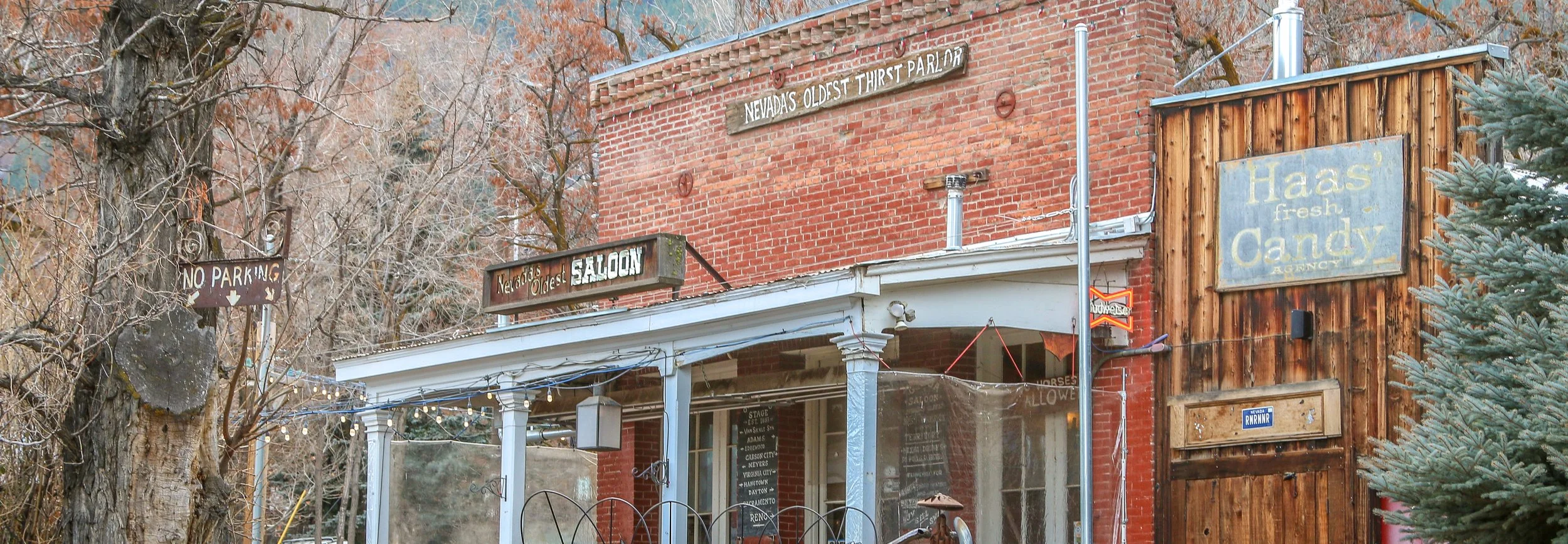
Genoa was first settled by Mormon pioneers in what was then the Mexican Territory of Alta California. Their settlement was known as Mormon Station and served as a roadhouse for westbound emigrants along the California Trail. After American annexation following the Mexican-American War, John Reese arrived and expanded the operation. Others soon settled in the area as well and the town started to grow. In 1856, the town was renamed after the Italian city of Genoa. The Genoa Bar was opened in 1853, making it Nevada’s oldest “thirst parlor”. Genoa was also home to Nevada’s first newspaper and served briefly as the capital city of the newly organized Nevada Territory. A beautiful brick house in town was built by “Lucky Bill” Thorington in 1855, but I guess his luck eventually ran out as he was the first man hanged in Nevada Territory. in 1919, Lillian Finnegan wanted to help the town purchase streetlights so she organized the Genoa Candy Dance to raise money, an event still held today over a century later to raise funds for the town. Genoa is a cool little place just a quick drive from Carson City and well worth a look if you’re ever in the area. I hope you enjoy these photos from Genoa, Nevada’s oldest town.
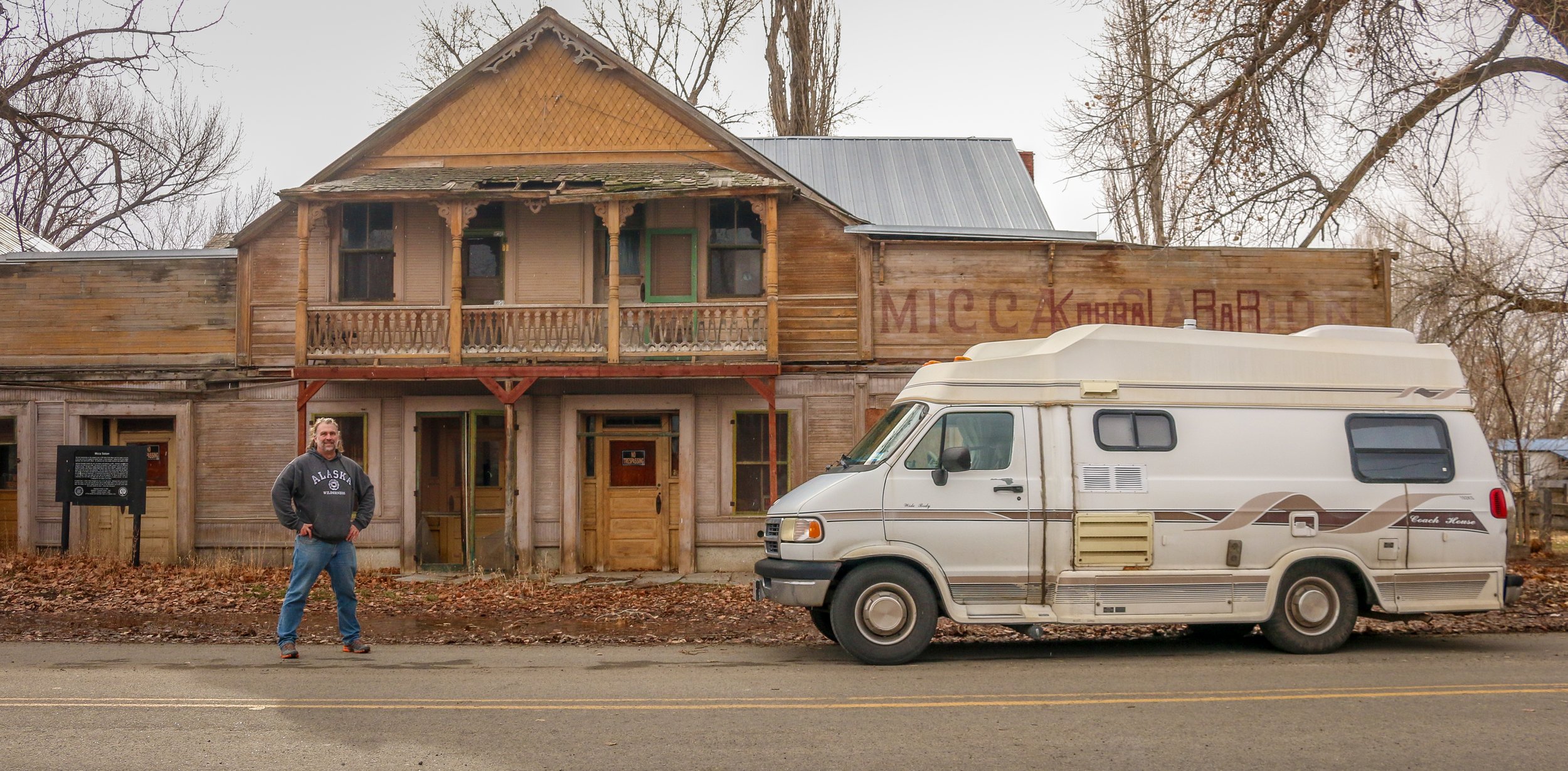
Originally home to the Northern Paiute people, the first non-native person to come through the valley was probably Peter Ogden of the Hudson’s Bay Company, who arrived in 1828. Settlers came to the valley in 1863 and after trouble with the Paiute, Fort Winfield Scott was built for protection. Perhaps because of that, the town that grew up there was originally named Scottsdale and helped supply the area’s mines. It was renamed Paradise City in 1869 and Paradise Valley much later.. The catholic church in town is a reminder of the area’s Italian and Basque heritage. In the 1930s, the Civilian Conservation Corps (CCC) had a camp in town (which is still there today). They were responsible for building the Hinkey Summit/Canyon Creek Road as well as several stone bridges and buildings in the area. Agriculture is the main economic driver in the region these days. Paradise Valley is perhaps best known as the hometown of actress Edna Purviance who appeared in almost 30 films with Charlie Chaplin.
While I came to photograph the cool, old buildings in town, there are some beautiful new homes around as well. The two churches were beautiful and well kept and the saloon looks like it gets quite lively at times. It seems like it would be a wonderful place to live if you wanted to get away from it all. Today, Paradise Valley is home to just over a hundred people. It’s not really close to anything, but if you ever get the chance, stop by and have a wander. You’ll be glad you did. I hope you enjoy these photos from Paradise Valley, Nevada - Humboldt County’s not quite ghost town.
Hello Everyone! It’s been a cold week out here on the road with nighttime temperatures dipping into the single digits. While I’m always prepared for the cold and have plenty of warm clothes and blankets, it’s no fun getting out of bed in the morning. Thankfully it’s also been a week of catching up with old friends and tagging along with them on their adventures so my spirits have been high all week. I started my week in Winnemucca, made my way across the top of the state on Interstate 80 and am finishing my week here in Reno, “The Biggest Little City in the World”.