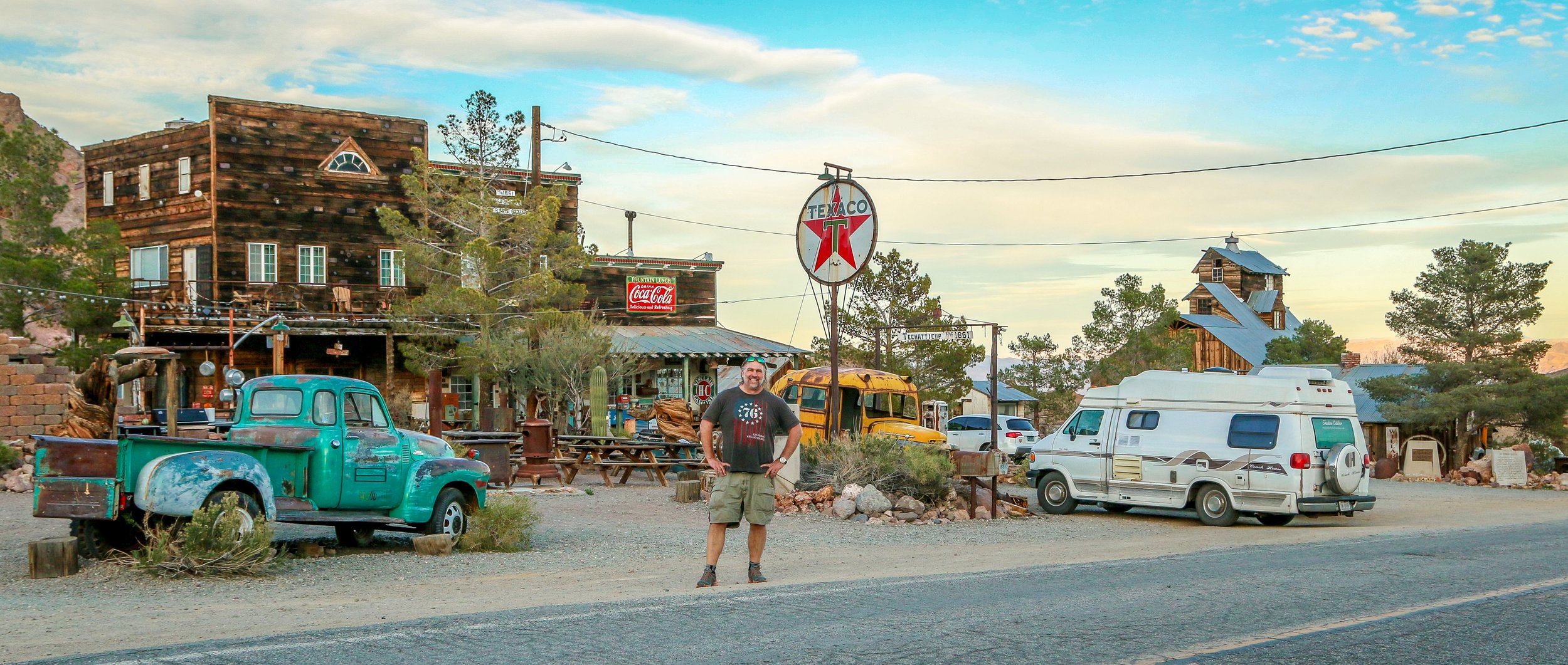
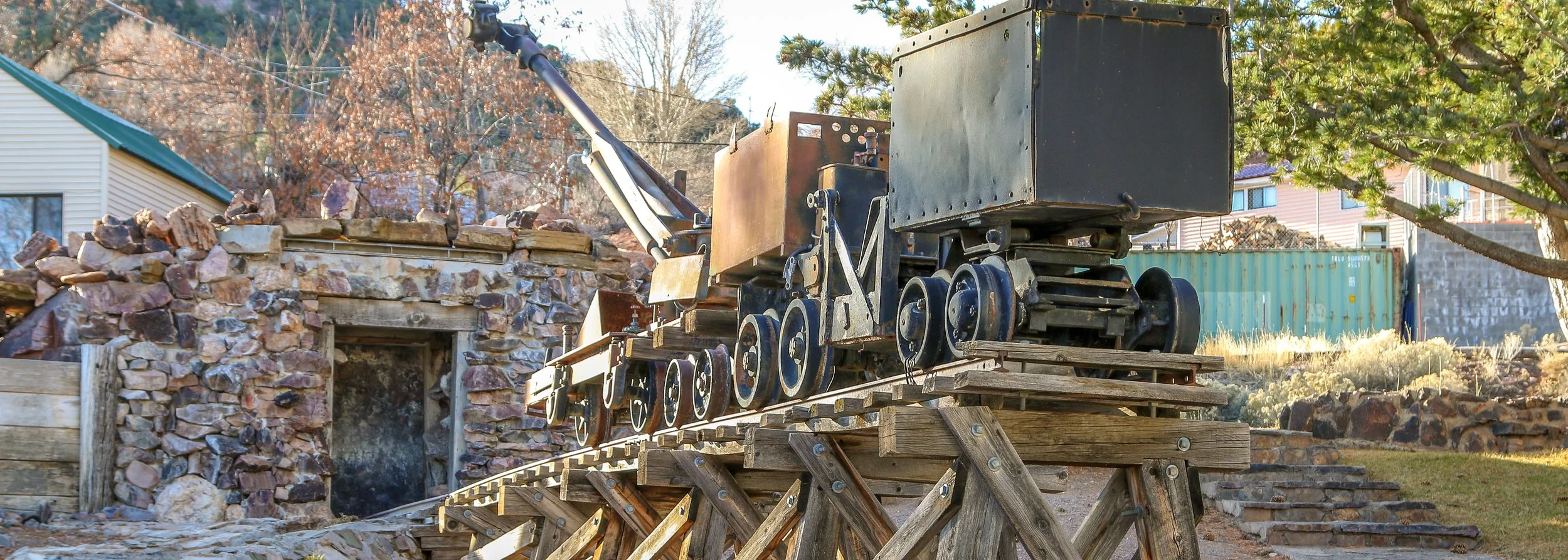
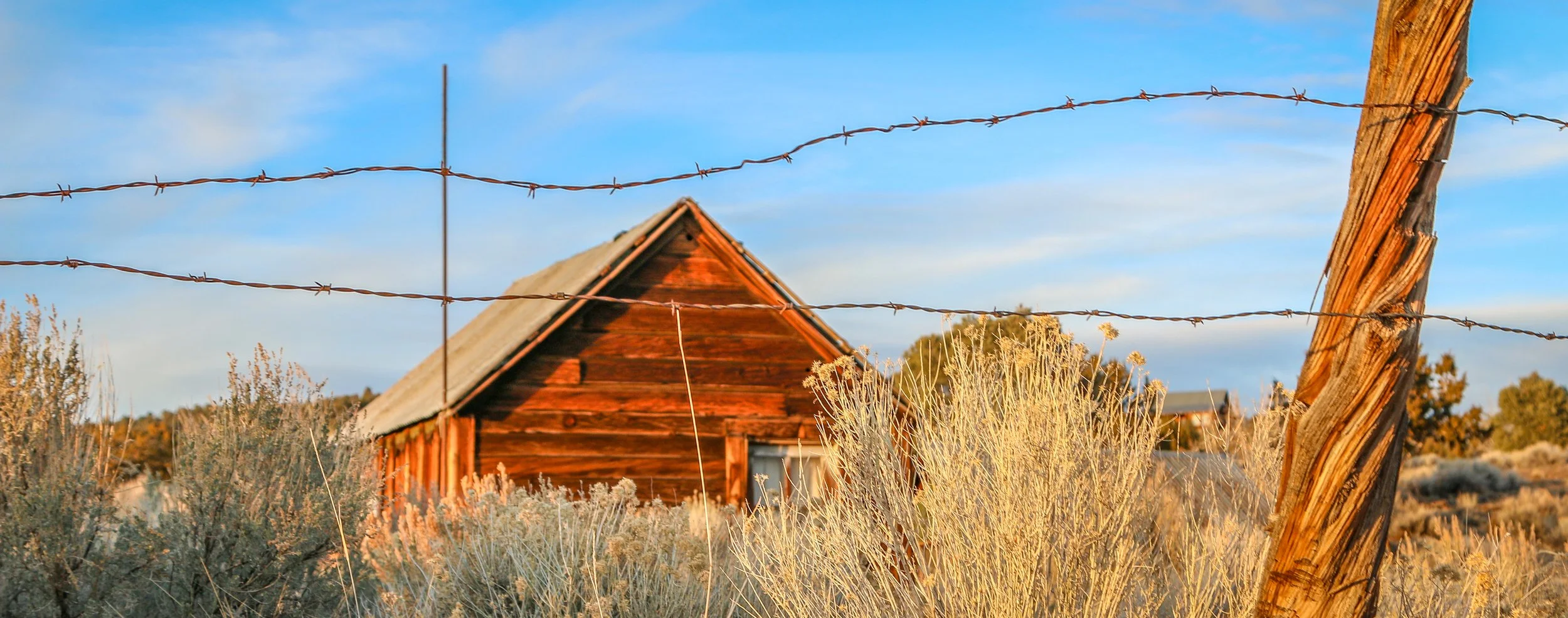
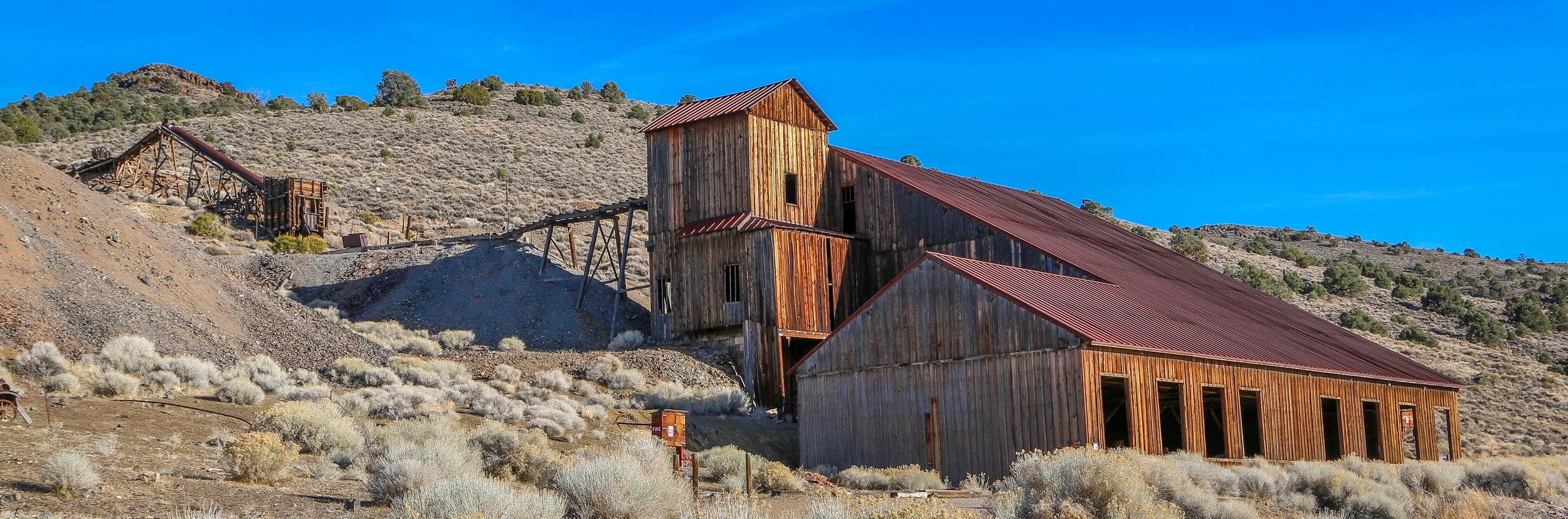
I absolutely loved visiting this old ghost town just south of Nelson, Nevada. It’s located near the site of the old Techatticup Mine in the heart of El Dorado Canyon. Gold and Silver were discovered in El Dorado Canyon in 1859 and a huge population influx soon followed. It grew to be a rough and sinister town and was named for Charles Nelson, a mining director who was killed in his home. Because of its proximity to the Colorado River, it was relatively easy to get people and supplies in and out when compared to other mine locations. The mines in the area were active until 1945, producing several million dollars worth of minerals. Today, the town is privately owned and open to visitors during daylight hours. It’s clearly staged for photography but that didn’t make me love it any less. It seems as though a lot of weddings are held on the property as well. I hope you enjoy these photos from the colorful ghost town of Nelson, Nevada deep in the heart of El Dorado Canyon.
Silver was found in the hills surrounding what is now Pioche in the early 1860s, but conflict with the local Indian bands led the area to be abandoned soon thereafter. In 1868, San Francisco based land speculator François Louis Alfred Pioche purchased the mining claims and the surrounding area and founded a town he humbly named after himself. Within two years hundreds of miners had come to the mines of Pioche to find work, and it quickly gained a reputation as one of the roughest towns in the west. Signs around town will tell you that 72 men were killed in Pioche before the first citizen died of natural causes. Many of these men were buried in a “Boot Hill” cemetery outside of town. In 1872, Pioche became the county seat of the newly formed Lincoln County and a courthouse was commissioned for $88,000. Bonds were issued to cover the costs and then more bonds were issued to pay back the original bonds. This cycle continued until the state of Nevada devised a repayment plan in 1907 to help pay off the debt. The courthouse was finally paid off in 1938 to the tune of a million dollars, two years after the building was condemned. Next door to the courthouse is the old Mountain View Hotel, where Herbert Hoover apparently stayed when he visited Pioche. The old opera house and the 1937 Gem Theater are other distinct local landmarks. I loved my time in Pioche. In addition to these historic sites, the aerial tramway is such an eye-catching feature for the old mining town. I had a great breakfast with the locals at the counter of the Silver Café, and enjoyed a few beers at The Alamo Club and the Overland Saloon which also hosted a rousing round of Bingo when I was in town. I also absolutely loved their historic marker signs, each of which was topped with a unique design referencing the specific location (see some great examples below). To top it all off, Pioche has a free RV park for visitors to stay in while visiting. I had never heard of Pioche when I passed through, but I’m sure glad I stopped. This was my first visit but it won’t be my last. I hope you enjoy these photos from the old mining town of Pioche, Nevada - a once wild place in the heart of Lincoln County.
Hello Everyone!
It’s been a relatively mellow week out here on the road. Warm temperatures in southern Nevada have been very welcome and have not inspired me to move back into colder climates with any unnecessary speed. I hung around Las Vegas for an extra day to do some work on my van and then lingered in Boulder City longer than I expected. I did see a fascinating old mining town in the El Dorado Canyon near Nelson, Nevada, visited the Lost City Museum in Overton and finally made it out to the Valley of Fire which did not disappoint. I’m ending my week here in Mesquite, right on the border, as I plan to make my exit from the Silver State tomorrow. It’s not been the busiest week I’ve ever had, but sometimes that’s a good thing.
How can you not go visit a place with the motto “The Town That Refused to Die”? Ione has been on my list for quite some time and I’m glad I finally got there. It adds a little extra to the long detour to Berlin-Ichthyosaur State Park which is just minutes up the road. Ione was founded after a silver strike in the area in 1863. Ione took it’s name from a California mining town and would be named the county seat of the newly created Nye County in 1864. The town’s population would peak at about 600 people, but many would leave when a strike was made in nearby Belmont. Belmont would become the county seat in 1867. Ione would have another small boom in 1897 when a new stamp mill was built and again in 1912 when cinnabar (an ore refined into elemental mercury) was discovered in the area. When that played out in the 1930s, the town’s population would dip to around 40. The post office closed in 1959 and yet the town persisted. There isn’t much to Ione these days - a boarded up saloon and a few old stores and mining era buildings. But there are some newer houses around as well and a population of 41 people who must really like to get away from it all. This is an end-of-the-road town, but one worth wandering through if you’re ever in the area. I hope you enjoy these photos from Ione, Nevada - The Town That Refused to Die.
Berlin was established as a mining town in 1897 by German prospectors who named the town after the city in their native homeland. It had a small decade-long boom cycle but declined quickly after the Panic of 1907. By 1911 Berlin was virtually a ghost town and would begin to deteriorate. The land was acquired by the State of Nevada in 1970 to become part of Berlin-Ichthyosaur State Park. Since it was acquired, volunteers have stabilized the buildings and replaced the roofs and now it sits in a state of “arrested decay”. There are some great old buildings to see in Berlin, especially the massive stamp mill. I hope you enjoy these photos from the tiny old goldmining ghost town of Berlin, Nevada - definitely a cool place to see.
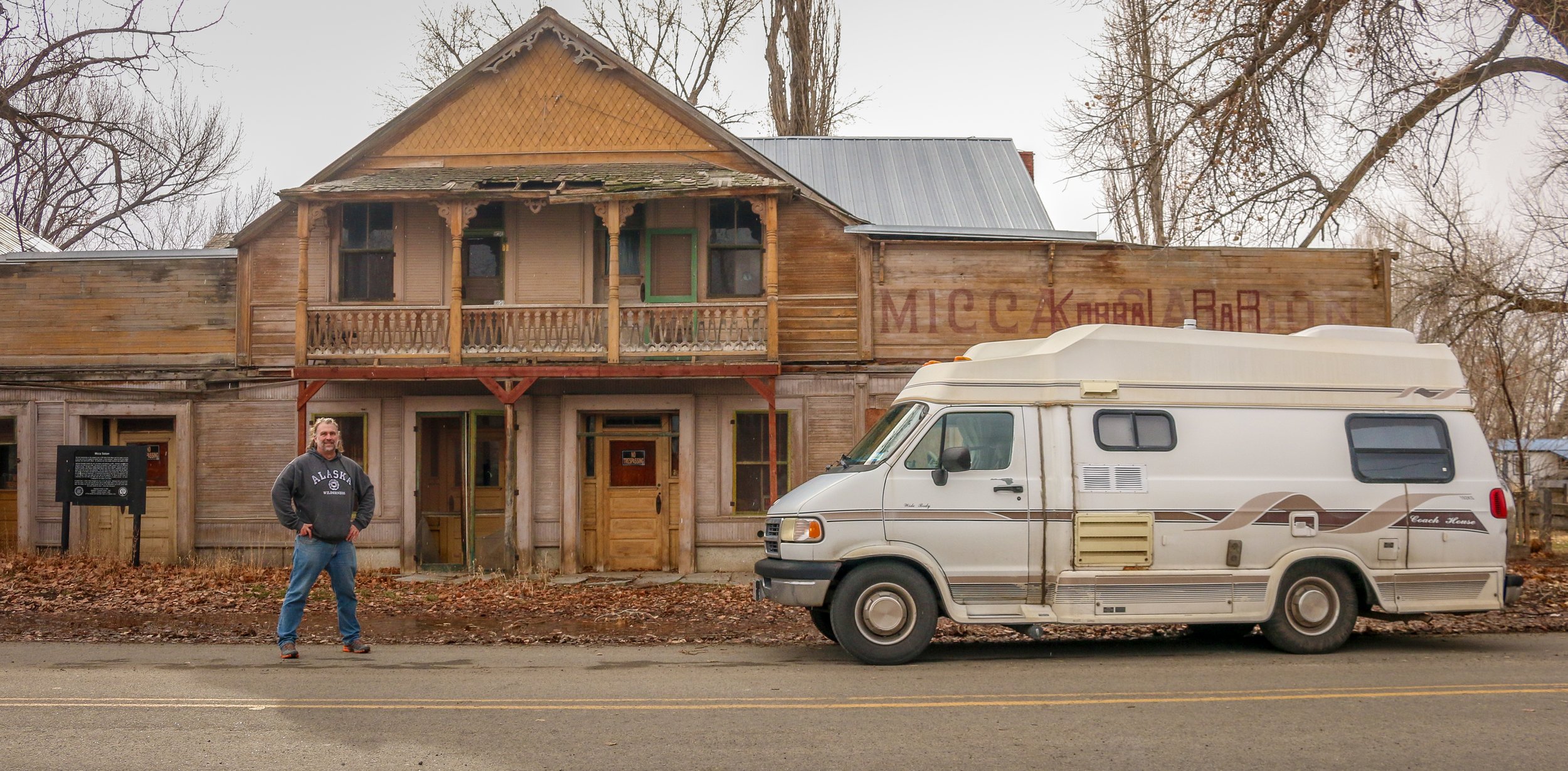
Originally home to the Northern Paiute people, the first non-native person to come through the valley was probably Peter Ogden of the Hudson’s Bay Company, who arrived in 1828. Settlers came to the valley in 1863 and after trouble with the Paiute, Fort Winfield Scott was built for protection. Perhaps because of that, the town that grew up there was originally named Scottsdale and helped supply the area’s mines. It was renamed Paradise City in 1869 and Paradise Valley much later.. The catholic church in town is a reminder of the area’s Italian and Basque heritage. In the 1930s, the Civilian Conservation Corps (CCC) had a camp in town (which is still there today). They were responsible for building the Hinkey Summit/Canyon Creek Road as well as several stone bridges and buildings in the area. Agriculture is the main economic driver in the region these days. Paradise Valley is perhaps best known as the hometown of actress Edna Purviance who appeared in almost 30 films with Charlie Chaplin.
While I came to photograph the cool, old buildings in town, there are some beautiful new homes around as well. The two churches were beautiful and well kept and the saloon looks like it gets quite lively at times. It seems like it would be a wonderful place to live if you wanted to get away from it all. Today, Paradise Valley is home to just over a hundred people. It’s not really close to anything, but if you ever get the chance, stop by and have a wander. You’ll be glad you did. I hope you enjoy these photos from Paradise Valley, Nevada - Humboldt County’s not quite ghost town.