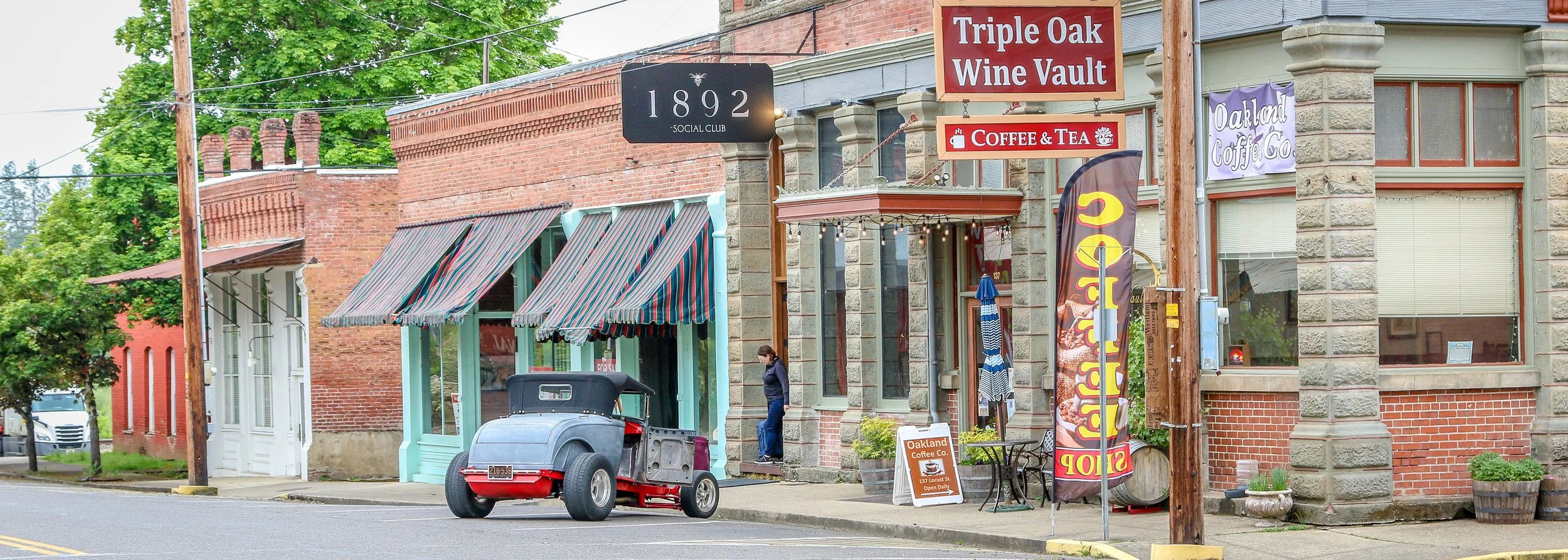
Pulling through Oakland, Oregon on an overcast spring morning, I caught a glimpse of a great, old Bull Durham Tobacco ghost sign next to a vacant lot. Turning onto Locust Street so I could hop out and take a photo of the sign, I found myself in the middle of a delightful historic district. Back in 1846 as westbound emigrants were making their way down the Oregon Trail, the last obstacle they faced was one of their greatest: navigating the treacherous Columbia River Gorge. A party led by Scott Applegate pioneered a cutoff from the trail to avoid the river and the Applegate Trail was born. Following this trail, the Campbell and Cornwall families ran into winter conditions before reaching the Willamette Valley and ended up settling right where they were. Their settlement would eventually grow into the town of Oakland. When the railroad arrived in 1872, Oakland would grow into a transportation hub. Stearns Hardware opened in 1887 and has been going ever since. Over 80 of the buildings in town were built between 1852 and 1890 which led to Oakland being the first city placed on Oregon’s historic register back in 1968. I didn’t stay in Oakland long, but it really made an impression and I hope to return in the future. For a small town, it sure seemed to have a lot to offer. I hope you enjoy these photos from historic Oakland, Oregon.