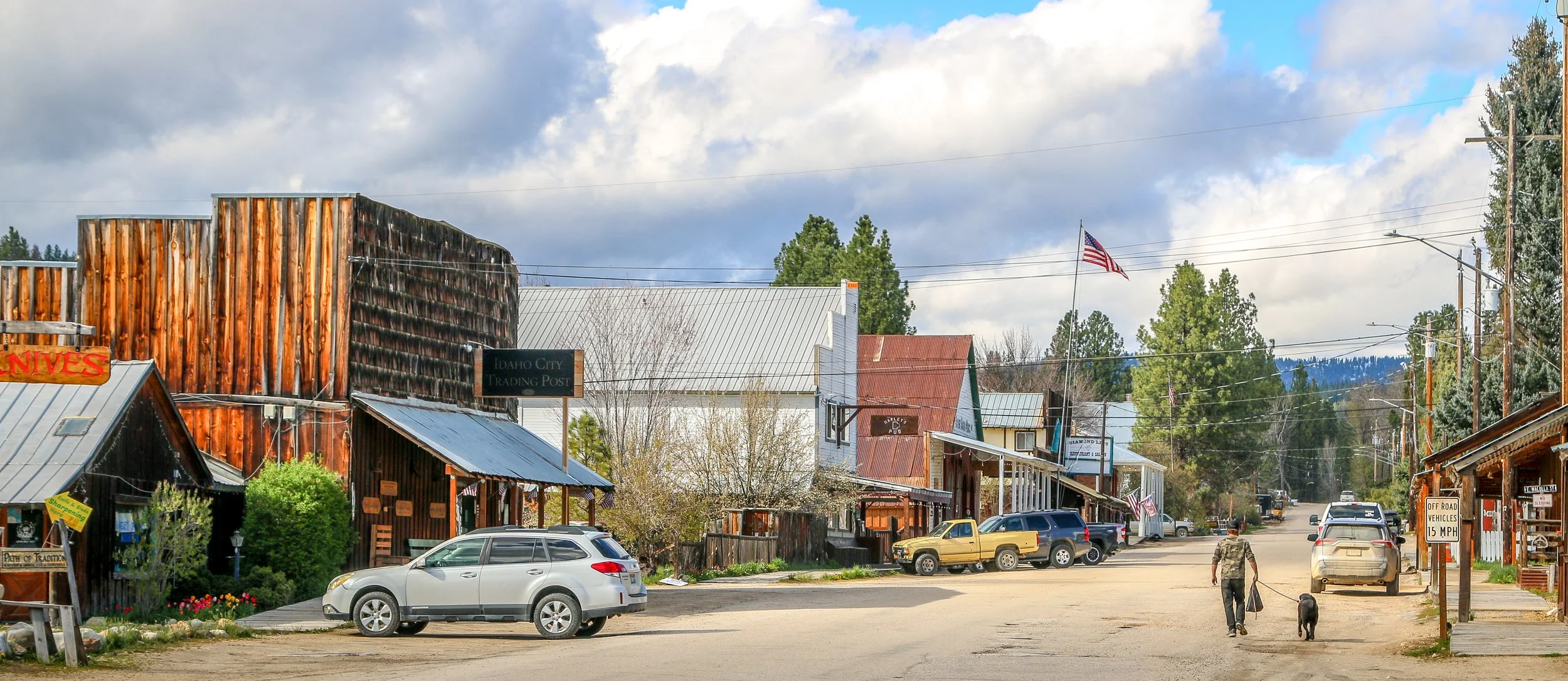

Gold was discovered in the Boise Basin on August 2, 1862 by a prospecting party led by George Grimes. After Grimes met an untimely end, the rest of his party made a quick exit from the area. Prospectors returned the following spring and the search for gold began in earnest, with settlements springing up throughout the region. The town of Bannock City was among them, a town which would later be renamed Idaho City after the Territory of Idaho was established in 1863. During its heyday, Idaho City was the largest city between St. Louis and San Francisco, even outgrowing Portland. It was known as “The Queen of the Gold Camps” and it was often said that the streets of Idaho City were paved in gold (although in reality they weren’t paved at all). Two years after its founding, Idaho City burned to the ground, losing 80% of its buildings in the flames. The town would quickly rebuild, only to suffer another devastating fire just a few years later. This time, wooden buildings were rebuilt with brick. Over $300 million dollars worth of gold was pulled out of the Boise Basin, which would be several billion dollars today. As the gold played out, the miners departed for other strikes in other places. Today, Idaho City has a year-round population of around 500 people. There are some great old buildings around town, beautifully preserved. Of note are the oldest Catholic church, Masonic Hall and Odd Fellow’s Hall (I.O.O.F.) in the state, all of which are still in use today. There’s a fantastic old two story schoolhouse which now serves as the City Hall and Idaho’s old territorial prison. Idaho City is a quiet town and I really enjoyed all of the old buildings and gold rush history. I hope you enjoy these photos from Idaho City, where the streets are (definitely not) paved in gold.