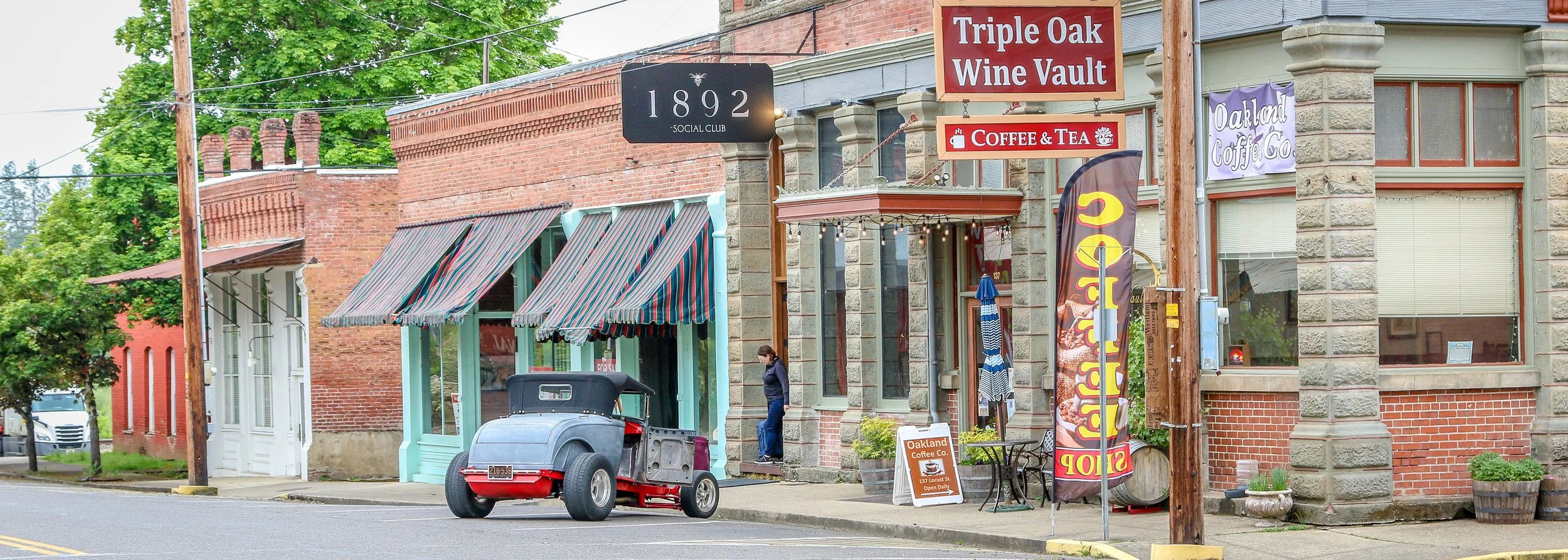
Pulling through Oakland, Oregon on an overcast spring morning, I caught a glimpse of a great, old Bull Durham Tobacco ghost sign next to a vacant lot. Turning onto Locust Street so I could hop out and take a photo of the sign, I found myself in the middle of a delightful historic district. Back in 1846 as westbound emigrants were making their way down the Oregon Trail, the last obstacle they faced was one of their greatest: navigating the treacherous Columbia River Gorge. A party led by Scott Applegate pioneered a cutoff from the trail to avoid the river and the Applegate Trail was born. Following this trail, the Campbell and Cornwall families ran into winter conditions before reaching the Willamette Valley and ended up settling right where they were. Their settlement would eventually grow into the town of Oakland. When the railroad arrived in 1872, Oakland would grow into a transportation hub. Stearns Hardware opened in 1887 and has been going ever since. Over 80 of the buildings in town were built between 1852 and 1890 which led to Oakland being the first city placed on Oregon’s historic register back in 1968. I didn’t stay in Oakland long, but it really made an impression and I hope to return in the future. For a small town, it sure seemed to have a lot to offer. I hope you enjoy these photos from historic Oakland, Oregon.
The Keweenaw Peninsula juts north from Michigan’s Upper Peninsula far out into Lake Superior. The word “Keweenaw” comes from an old Ojibwa word meaning “a place where portage is made”. This area is home to one of the richest copper deposits in the world and has been mined for thousands of years. After Michigan became a state in 1837, prospectors started making their way into the Keweenaw and copper claims and mines were quickly established. These mines were often in operation until World War II. Around these mines, communities grew which were often settled by immigrants eager to build a life in the new world. Mining was dangerous work, but the promise of a decent wage was enough to lure people to this isolated northern region. When the price of copper dropped and the mining process was no longer profitable, whole communities packed up and moved elsewhere and once-bustling towns were quickly reclaimed by the forest. Some towns remain today, but many are struggling and reliant on tourism. I loved this region and spent a little over a week exploring its history and towns. I toured the Quincy Mine and enjoyed wandering around Houghton, Hancock, Calumet, Eagle River and Copper Harbor. I included a few photos from nearby Marquette as well since it traces its roots to the same time period. The whole region is now a part of Keweenaw National Historical Park and Keweenaw National Heritage Area and you can find the Visitors Center in downtown Calumet. I hope you enjoy these photos from the beautiful Keweenaw Peninsula, Michigan’s Copper Country.
It is very exciting to have entered the second state of my journey, North Carolina. North Carolina has a lot of history, some of which I know and some of which I hope to uncover for both of us in the month or so to come. It's nice to be here.
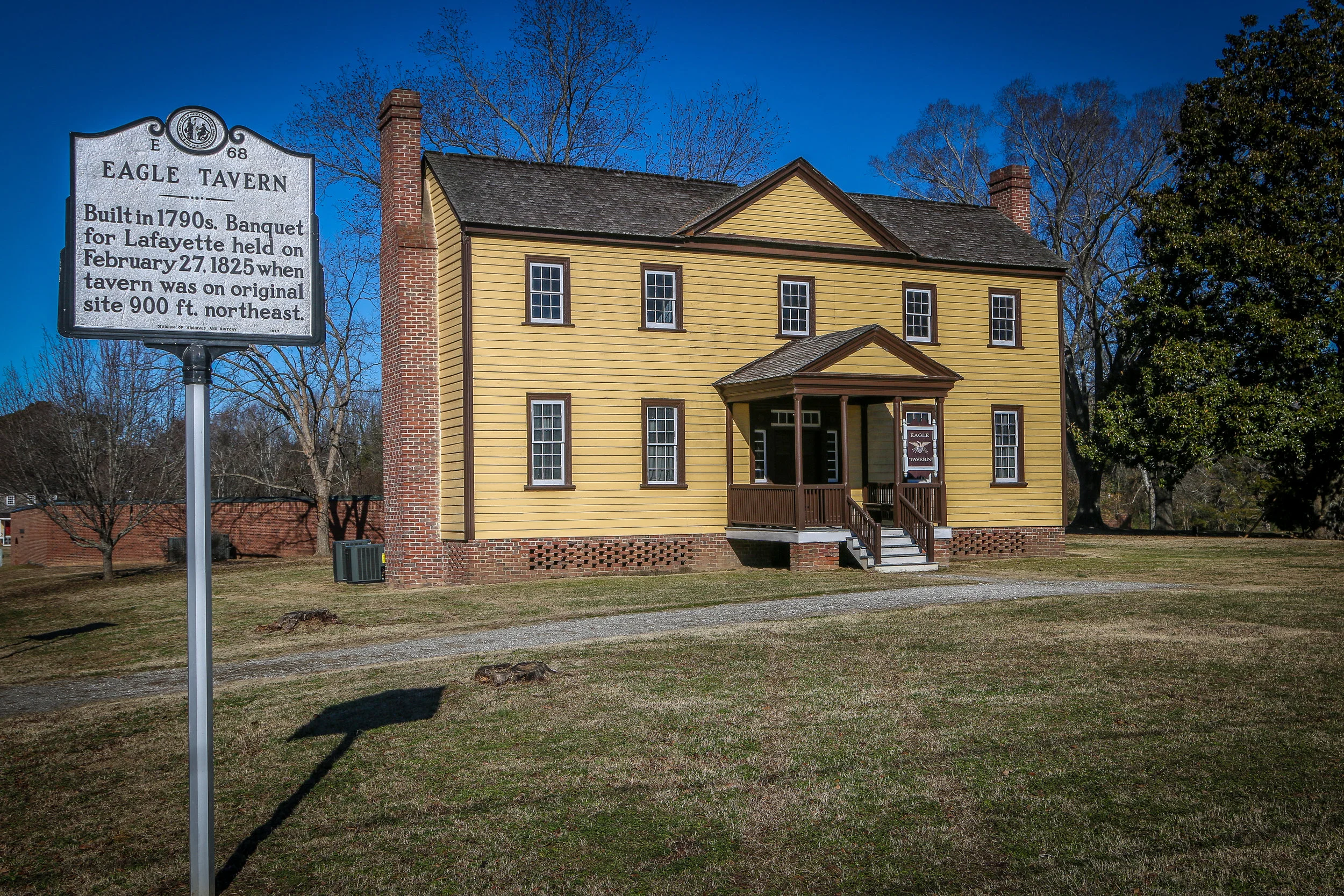
I began my journey into the Tar Heel State by visiting the tiny town of Halifax, and more specifically Halifax State Historic Site. This seemed like an appropriate place to start my travels in the state, not just geographically, but because of the history of the area. It was in Halifax, on April 12th, 1776 that the underground, non-British, Fourth Provincial Congress met and passed what became known as the Halifax Resolves. The Halifax Resolves essentially authorized North Carolina's delegates to the Second Continental Congress in Philadelphia to vote for independence for the colonies...
I am a proud Washingtonian, born and raised. In my adult life, however, I have spent far more time out of Washington D.C. than in it. So when I am home, I make it a point to dig a little deeper, explore a little further and expand my knowledge of the city I call home. My mother, also born and raised in D.C., has become my accomplice on these adventures and we have found some amazing little spots all over the city that if you weren’t looking for, you’d probably never find. This winter, we set out to discover the original boundary stones that marked the surveyed borders of Washington D.C. when it was laid out in 1791-92. And while we haven’t made it to all of them, we have found the four corners and many in between and it has been a fascinating mini-adventure super close to home...