Hello Everyone!
Greetings from Pocatello, Idaho and Happy April to you all. I crossed the border into The Gem State yesterday morning and it is nice to be here. Leaving a state always feels bittersweet to me. After 5-6 weeks I feel as though I have a pretty good understanding of the people, places, history and culture of a state which is, of course, the whole point of this adventure. And then when I reach that point, it is time to move on and start fresh but it’s always a little sad to leave the familiar for the unknown. I can’t say enough good things about Utah and the last six weeks I spent in The Beehive. From tracing the trails of The Ancients to old cliff dwellings and petroglyph panels to following the Mormon pioneers as they spread out to create their New Zion to exploring truly incredible natural landscapes, Utah has really given me so much to be thankful for. I have loved almost every minute of my time in Utah and certainly look forward to returning in the future. That said, I’m also looking forward to the next few weeks here in Idaho and to seeing everything it has to offer. I hope you’ll come along for the ride.
Like many towns in America with Spanish Colonial roots, Goliad started out as a presidio (fort) and mission, both located on the San Antonio River. Presidio La Bahia and Mission Nuestra Señora del Espíritu Santo de Zúñiga had originally been located elsewhere, but were moved to their current location in 1749. One of the first schools in Texas was founded nearby in 1804. During the Mexican War for Independence, the presidio was a strategic target and changed hands between the Spanish loyalists and Mexican rebels several times. In 1829 La Bahia, the village which had grown up near the fort, changed its name to Goliad, an anagram of the name Hidalgo (minus the “H”) in honor of Father Miguel Hidalgo, a hero of the Mexican Revolution.
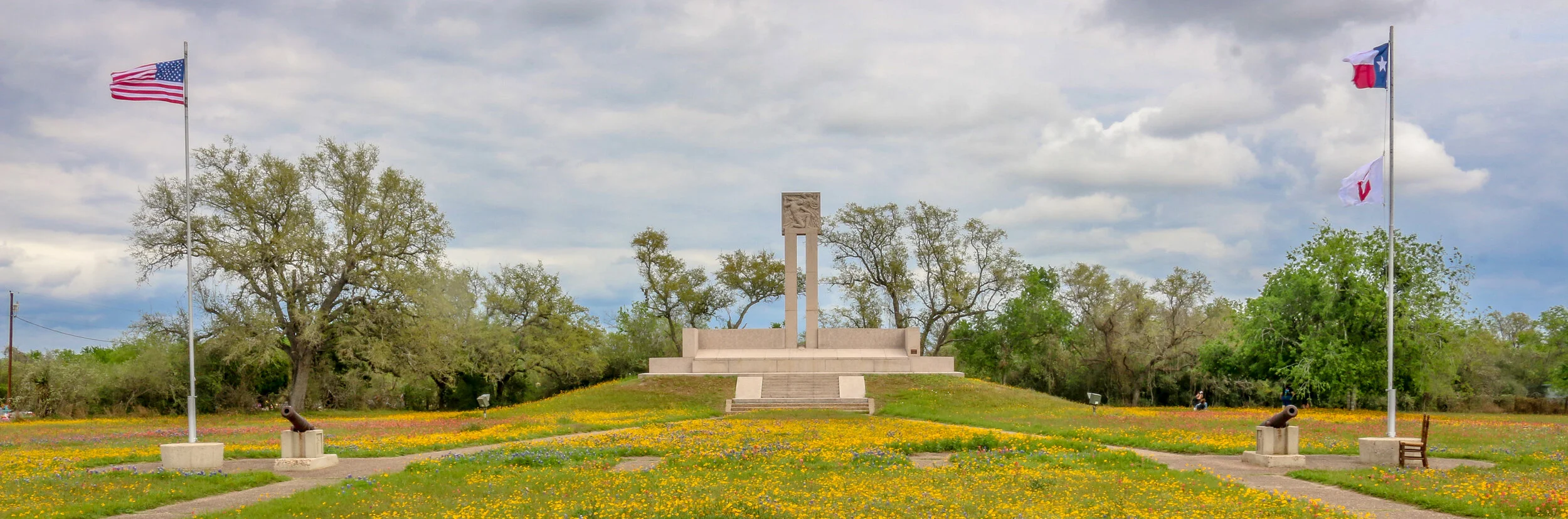
In the opening days of the Texas Revolution, American mercenaries captured the fort and held it for six months. It was within the fort’s walls that the first Texas Declaration of Independence was signed. In March of 1836, the American garrison, under the command of Colonel James Fannin, was defeated at the nearby Battle of Coleto. Under the agreement that they would be treated as prisoners of war, they surrendered and were marched back to the fort. A week later, on Palm Sunday, under the orders of Mexican President Antonio Lopez de Santa Anna, 342 of these men, including James Fannin, were marched out of the fort and executed. Just over three weeks after the massacre, at the decisive battle at San Jacinto, Sam Houston rallied his troops with cries of “Remember the Alamo, Remember Goliad” as he led his rebel army on to victory and Texas independence…