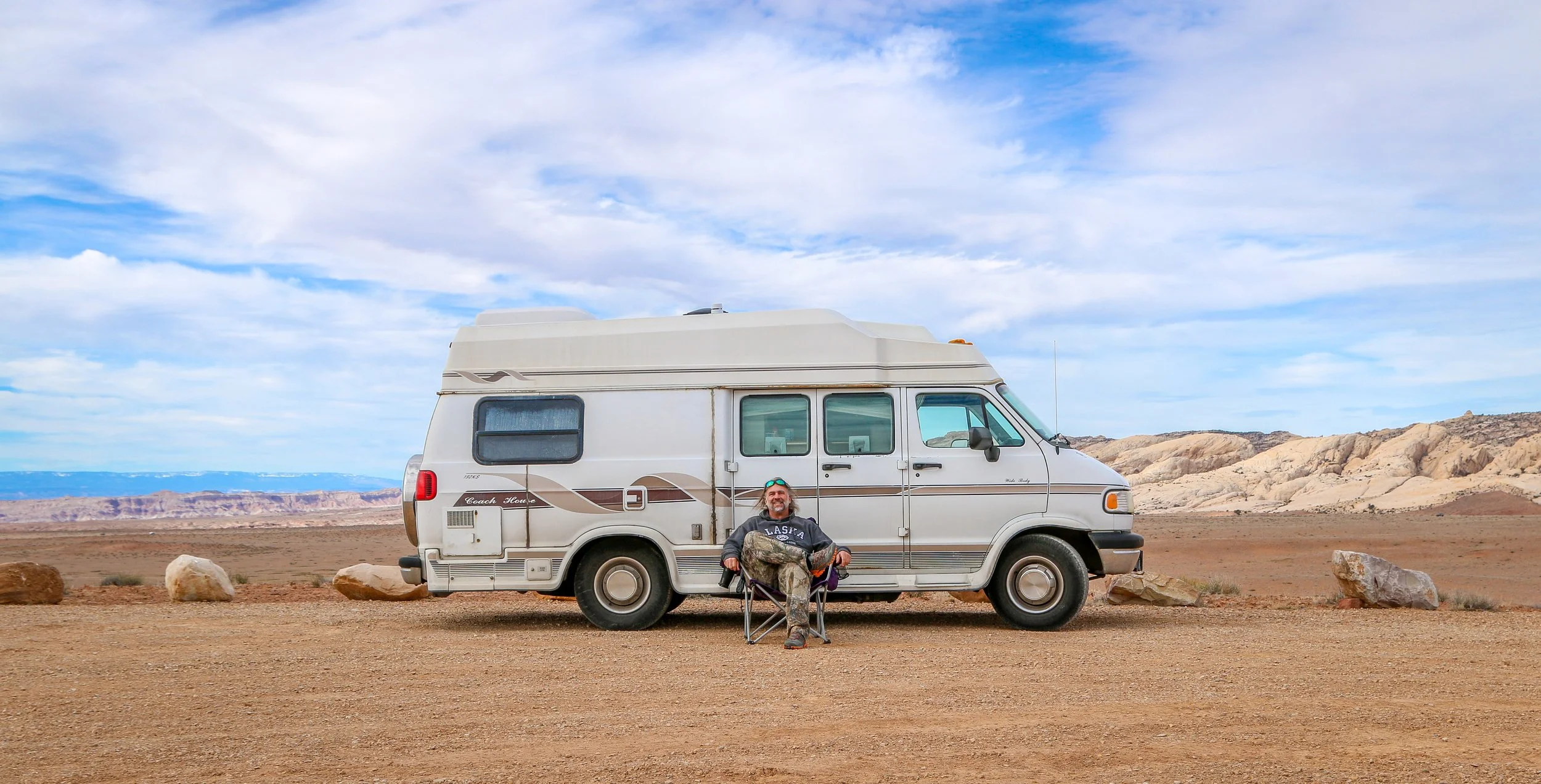
Hello Everyone! It’s been an amazing week out here on the road in southern Utah. I’ve seen some absolutely beautiful country, driven some spectacular roads and visited some amazing archaeological sites. I did have a bit of a stomach bug midweek which wiped me out for a couple of days, but it seems to have passed. The weather has been amazing, the photography opportunities plentiful and it’s just generally been a good week all around.
I left off last week in Panguitch, a cute little town about half an hour west of Bryce Canyon National Park. When I finished up last week’s post, I wandered around town for a bit and then made my way on into the park. I’ve been to Bryce at least 50 times in my life and it never ceases to amaze me. The view from one of the many overlooks on a sunny day will rival any view, anywhere in the world for natural splendor and beauty. It truly is nature’s little fairyland. The sandstone spires of Bryce, called “hoodoos”, are mostly the result of the extreme temperature fluctuations Bryce sees during the year. Located above 8000’, it’s not unusual to have freezing temperatures any day of the year, but it can be sunny and warm and beautiful any day as well. It’s the cycle of freezing and thawing which has helped shape the landscape more than wind or flowing water. Bryce Canyon is named after Ebenezer Bryce, who you may remember built the Pine Valley Chapel which I wrote about two weeks ago. He and his wife homesteaded in the area in the 1870s and he spent many months digging a canal to funnel the water to the valley below. When asked about the canyon which would forever bear his name, Bryce was once quoted as saying “it’s a hell of a place to lose a cow”. It most certainly would be. It was quite icy out on the trails this time through, so I settled for a few nice views from the rim. After the sun went down I enjoyed a warm seat by the fire out at Ruby’s Inn, just outside the entrance to the park, where I read my book for a while before calling it a night.
The homes we now refer to as the Gila Cliff Dwellings were built beginning around 1276. The rivers in the area provided a constant source of water, a necessity in the desert and probably the reason the people who built these dwellings chose this location. While they were contemporaries of the people we now call the Ancestral Puebloans, differences in their construction styles, pottery and art have caused archaeologists to give them a different name and we refer to them as the Mogollon. The time that the Mogollon spent in these dwellings, approximately 25 years, coincides with prolonged drought in the area which caused many groups to move in search of water. It seems that the Mogollon moved into these alcoves near the beginning of the drought, and left as it was ending. When looking at history, it’s easy to think of 25 years as the blink of an eye, but it’s a whole generation of children growing to adulthood and having their own babies and adults moving into the roles of elders as elders pass on. There was love and loss and laughter as this group passed the time farming, hunting, building, creating and growing.
The Mogollon seem to have moved on around 1300 as the drought was coming to its end and these isolated dwellings likely remained empty for quite some time. The Chiricahua Apache migrated to the region in the 1500s and the great leader Geronimo was born near the headwaters of the Gila River around 1820. Spanish settlers came to the area in 1598, but there is no evidence they penetrated the wilderness anywhere near to the dwellings. Prospector H.B. Ailman documented the cliff dwellings in 1878 and by the time archaeologist Adolph Bandelier arrived in 1884, looters had ransacked the alcoves and made off with whatever artifacts were to be found. Homesteaders, miners, prospectors and ranchers arrived over the next few decades and President Theodore Roosevelt protected the area as Gila Cliff Dwellings National Monument in 1907. Not too long after he did, Aldo Leopold came to the region as a forester and lobbied the Forest Service to establish the GIla Wilderness, the first designated wilderness area in the country and an inspiration for the 1964 Wilderness Act.
Today, the Gila Wilderness is a quiet and magical place. It’s a two hour drive from Silver City, the nearest town of any real size, to the Cliff Dwellings. The road that brings you in is the aptly named Trail of the Mountain Spirits National Scenic Byway and it is a truly beautiful drive. During my visit, I toured the cliff dwellings, scouted out some beautiful pictographs, hiked the fabulous Little Bear Creek Canyon trail to the Middle Fork of the Gila River and soaked in wonderful hot springs. I loved my time in the Gila Wilderness and hope you enjoy these photos from my visit.