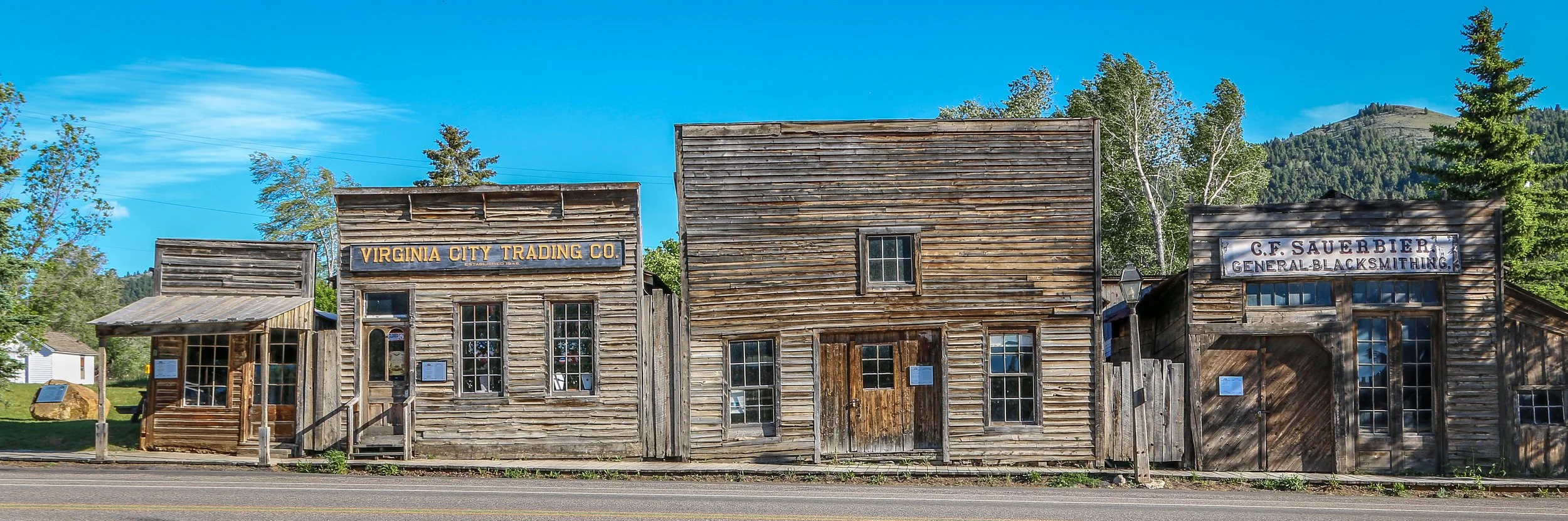
Gold was discovered in nearby Alder Creek in 1863, sparking off one of Montana’s biggest gold rushes. People came from far and wide to try and earn their fortune in what is now southwest Montana. Soon after the discovery, a mining district was established and was named Verina [sic] after Confederate President Jefferson Davis’ wife, Varina. In the midst of the Civil War, this couldn’t be allowed, so the name was changed to Virginia City. When Montana Territory was carved from the existing Idaho Territory in 1864, Bannack was chosen as the capital, but the capital was moved to Virginia City just a year later. Virginia City would remain the capital for a decade before it was moved again to Helena. In the early days, a road gang called The Innocents was preying on wagons moving between the mining towns. In response, Virginia City residents formed The Montana Vigilantes who rode on The Innocents and lynched them in the streets of nearby Bannack. Virginia City is considerably quieter these days. With some lovely shops, some good restaurants and a couple of bars, including Montana’s oldest the Bale of Hay Saloon, Virginia City is a wonderful place for a wander. I hope you enjoy these photos from the cool, historic town of Virginia City, Montana’s second territorial capital.
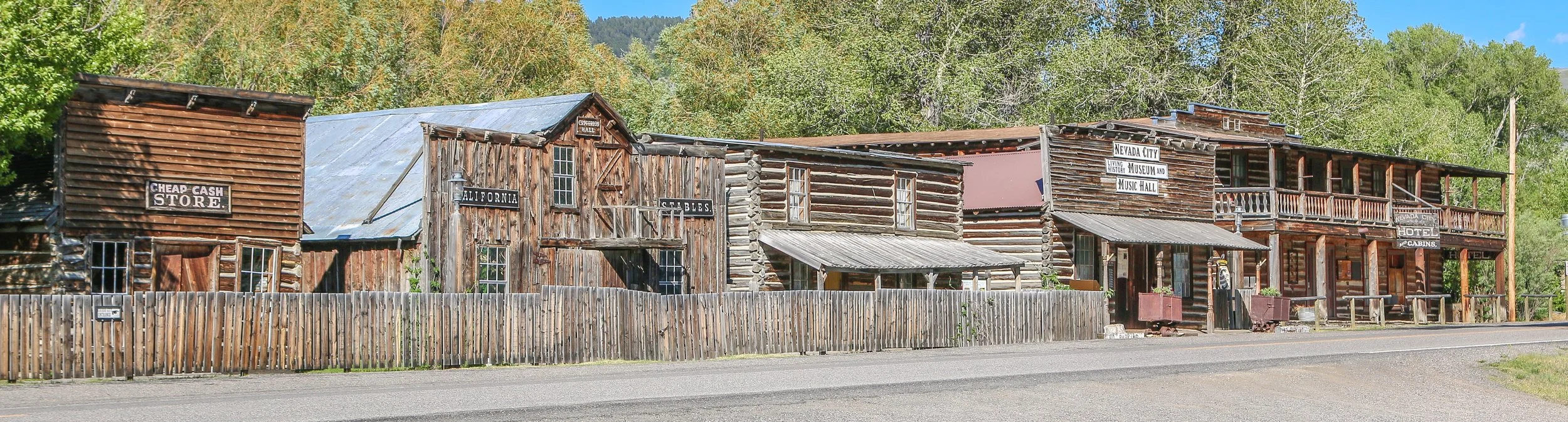
Gold was discovered in Alder Gulch in 1863 and Nevada City sprung up almost overnight. It was a true boom and bust mining town which may have grown to as many as 2,000 residents but would dwindle down to only a hundred by the end of the decade. By 1880, the population was down to 50 and it would continue to shrink until Nevada City was all but a ghost town. In the 1950s, former state senator Charles Bovey decided to revive the old town as an outdoor living history museum. He salvaged a dozen or so buildings which were original to the townsite and then started bringing in other historic buildings from around the state. Today, Nevada City is owned by the State of Montana and managed by the Montana Heritage Commission. I unfortunately arrived after it had closed down for the night, but there was still plenty to see from the street. I’ll definitely have to get back and explore it another time. I hope you enjoy these photos from historic Nevada City - where Montana history comes to life.
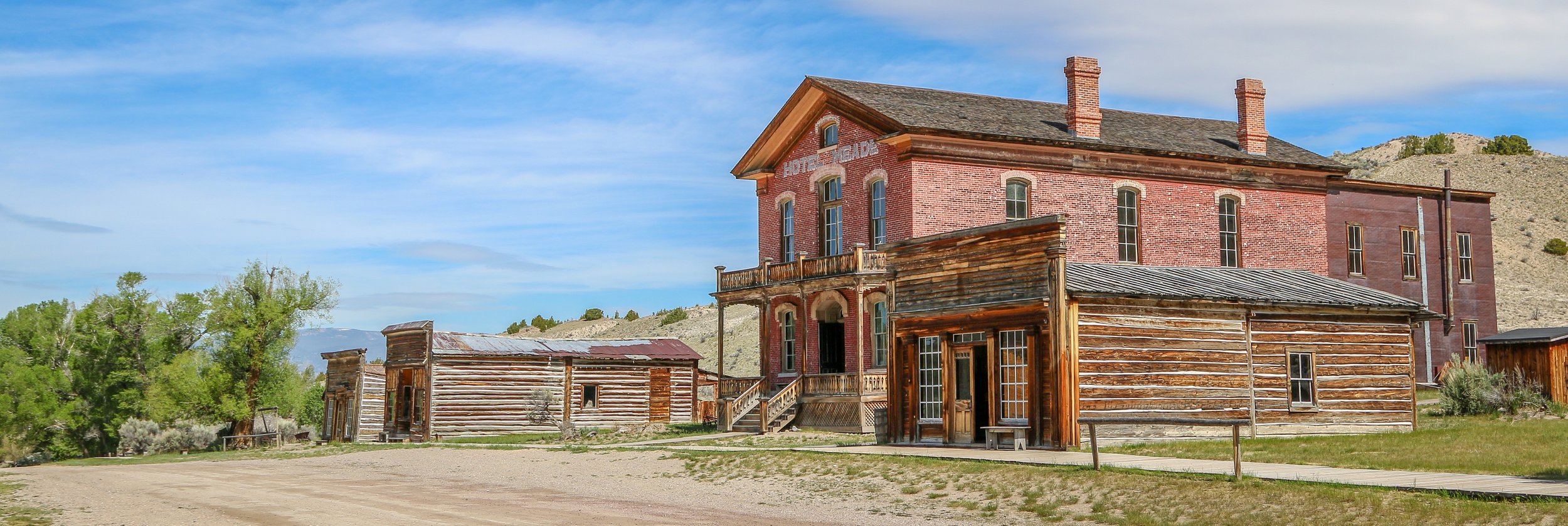
Gold was discovered on Grasshopper Creek in 1862 and the town of Bannack would quickly sprout up nearby, eventually growing to a population of over 10,000 people. Named after the local Bannock Indians, Bannack would serve as Montana’s territorial capital for 2 years before Virginia City took over the role. During its heyday, Bannack boasted three hotels, three bakeries, three blacksmith shops, two stables, two meat markets, a grocery store, a restaurant, a brewery, a billiard hall, and four saloons. In 1864, Bannack elected Henry Plummer as their sheriff. Plummer was the leader of a gang of outlaws known, ironically, as The Innocents, which prayed on supply wagons making their way between Bannack and Virginia and Nevada Cities. Eventually, a posse was raised in Virginia City known as the Vigilance Committee of Alder Gulch or, more simply, The Montana Vigilantes. They tracked down Plummer and his gang and lynched him in the middle of Bannack without a trial in 1864. Bannack’s population would fluctuate over the next hundred years with the price of gold, but the last resident left town in the 1970s. Thankfully a group of local residents stepped in to preserve Bannack and today it is a Montana State Park. I also thought it was cool that the Masonic Temple is still in regular use. I really enjoyed my time wandering the streets of town and I hope you enjoy these photos from beautiful Bannack, a classic Montana ghost town.
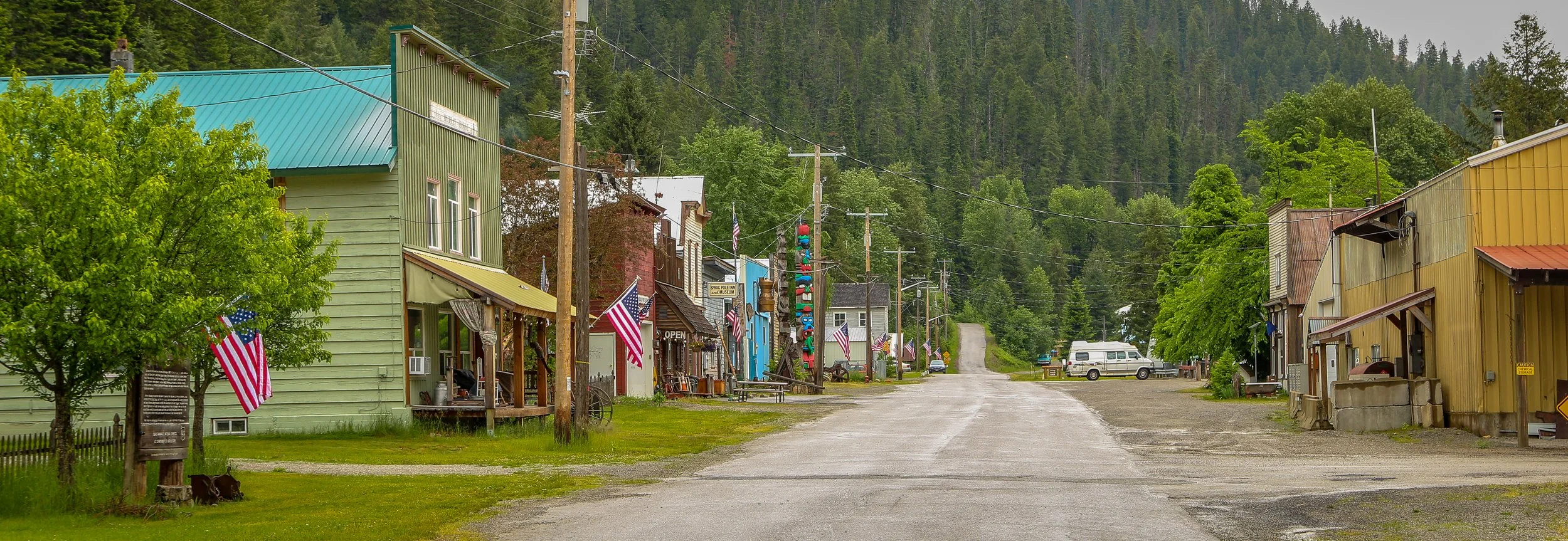
Gold was discovered along Prichard and Eagle Creeks back in 1882, sparking a small rush to the area. The town of Murray was established in 1884 and named for a local miner, George Murray. 5000 miners made their way to the valley, but the placer gold soon played out and the town’s population would drop to about 500 by 1910. Mining would continue in the area until the late 1950s. Wyatt Earp spent some time in Murray at the end of the 19th century. Perhaps the most loved and remembered citizen of Murray was the prostitute turned madam Maggie Hall, AKA Molly Burdan, AKA Molly B’Damn. Maggie was born in England to Irish parents and moved to New York in 1870. She came west a few years later and made her way to Murray during the gold rush in 1884. While quite a popular prostitute in town, Molly was also known and remembered for her kindness and generosity, being sure that everyone in town was fed and clothed. She died of tuberculosis in 1888 at the age of 34 and was buried in the town’s cemetery. Murray still celebrates their favorite lady every year during the annual Molly B'Damn Gold Rush Days.
There isn’t much to Murray these days, but what there is is fantastic. The Sprag Pole Inn and Museum is a sprawling complex stretching through several buildings and containing the personal collection of Walt Almquist. It displays everything from old matchbooks and cigarette packets to one of the world’s longest wooden chains. Down the road is the Bedroom Goldmine which has a plexiglass covered mine shaft in the back room. Guests were allowed to pan for gold until a flood washed out all of the support structures. I thought Murray was just the coolest little town and I’m glad I stopped to check it out. I hope you enjoy these photos of tiny Murray, Idaho, an old gold rush town in the Silver Valley.
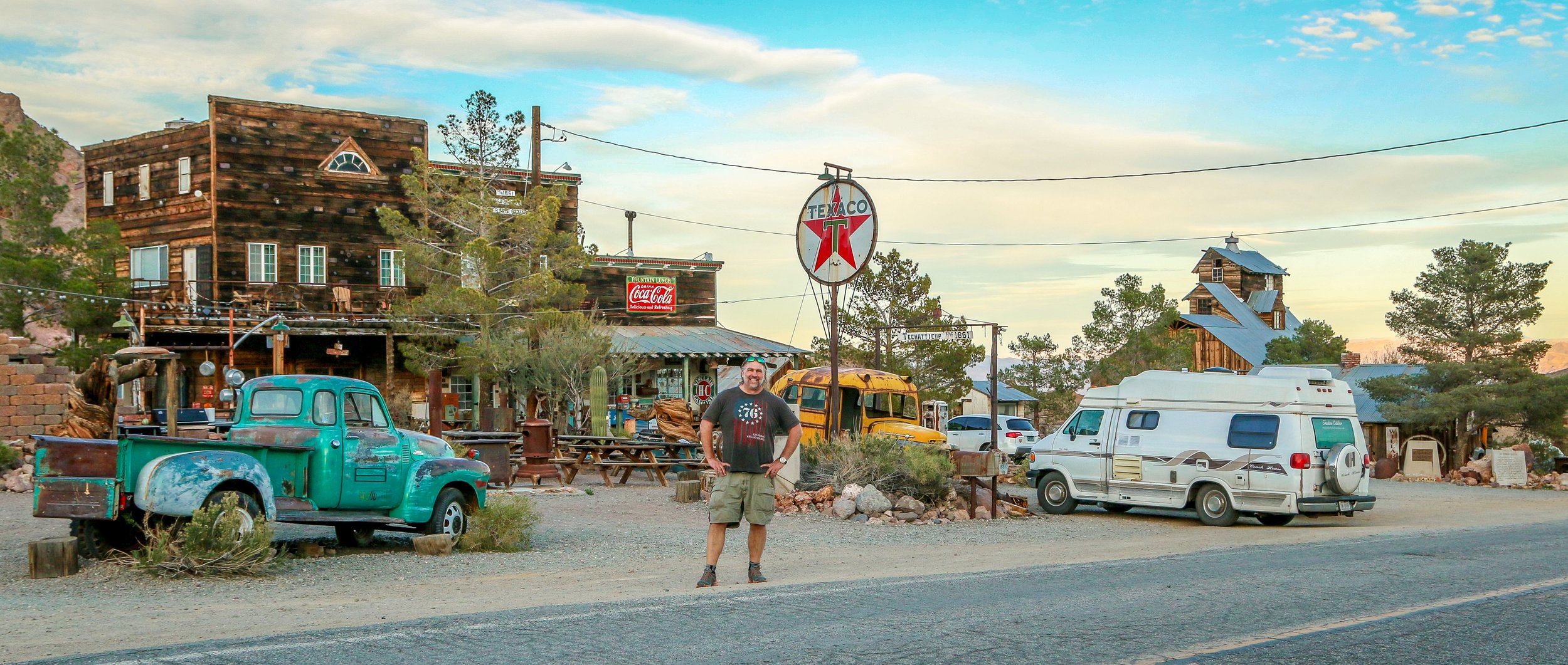
I absolutely loved visiting this old ghost town just south of Nelson, Nevada. It’s located near the site of the old Techatticup Mine in the heart of El Dorado Canyon. Gold and Silver were discovered in El Dorado Canyon in 1859 and a huge population influx soon followed. It grew to be a rough and sinister town and was named for Charles Nelson, a mining director who was killed in his home. Because of its proximity to the Colorado River, it was relatively easy to get people and supplies in and out when compared to other mine locations. The mines in the area were active until 1945, producing several million dollars worth of minerals. Today, the town is privately owned and open to visitors during daylight hours. It’s clearly staged for photography but that didn’t make me love it any less. It seems as though a lot of weddings are held on the property as well. I hope you enjoy these photos from the colorful ghost town of Nelson, Nevada deep in the heart of El Dorado Canyon.
How can you not go visit a place with the motto “The Town That Refused to Die”? Ione has been on my list for quite some time and I’m glad I finally got there. It adds a little extra to the long detour to Berlin-Ichthyosaur State Park which is just minutes up the road. Ione was founded after a silver strike in the area in 1863. Ione took it’s name from a California mining town and would be named the county seat of the newly created Nye County in 1864. The town’s population would peak at about 600 people, but many would leave when a strike was made in nearby Belmont. Belmont would become the county seat in 1867. Ione would have another small boom in 1897 when a new stamp mill was built and again in 1912 when cinnabar (an ore refined into elemental mercury) was discovered in the area. When that played out in the 1930s, the town’s population would dip to around 40. The post office closed in 1959 and yet the town persisted. There isn’t much to Ione these days - a boarded up saloon and a few old stores and mining era buildings. But there are some newer houses around as well and a population of 41 people who must really like to get away from it all. This is an end-of-the-road town, but one worth wandering through if you’re ever in the area. I hope you enjoy these photos from Ione, Nevada - The Town That Refused to Die.
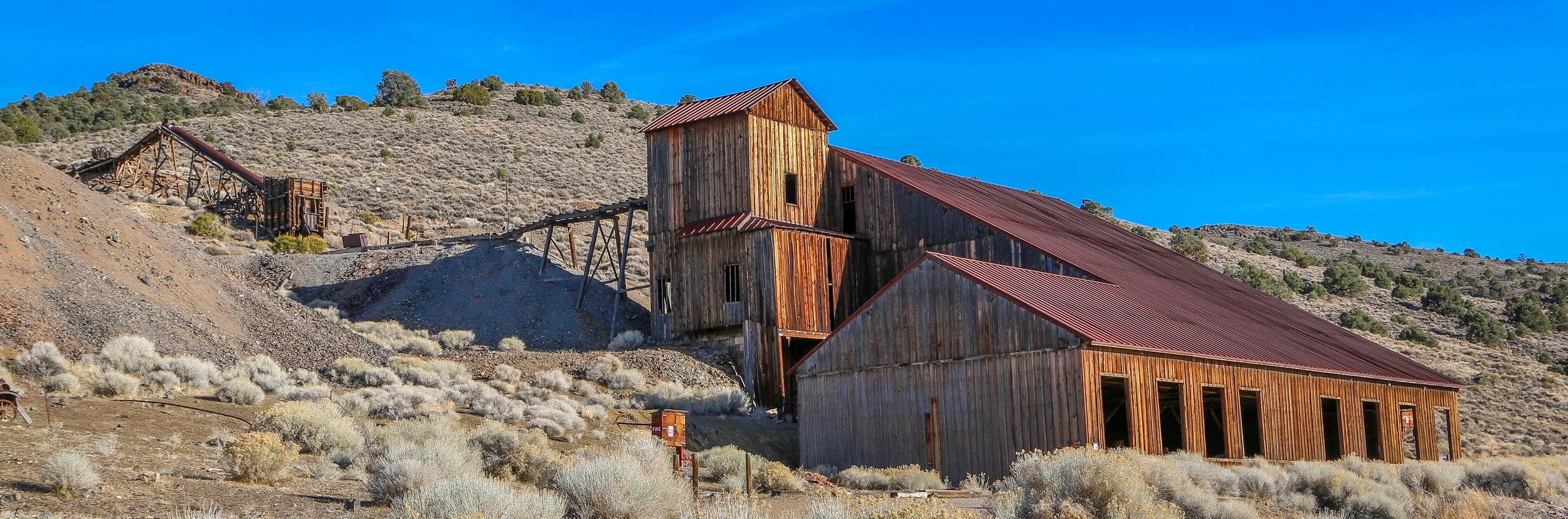
Berlin was established as a mining town in 1897 by German prospectors who named the town after the city in their native homeland. It had a small decade-long boom cycle but declined quickly after the Panic of 1907. By 1911 Berlin was virtually a ghost town and would begin to deteriorate. The land was acquired by the State of Nevada in 1970 to become part of Berlin-Ichthyosaur State Park. Since it was acquired, volunteers have stabilized the buildings and replaced the roofs and now it sits in a state of “arrested decay”. There are some great old buildings to see in Berlin, especially the massive stamp mill. I hope you enjoy these photos from the tiny old goldmining ghost town of Berlin, Nevada - definitely a cool place to see.
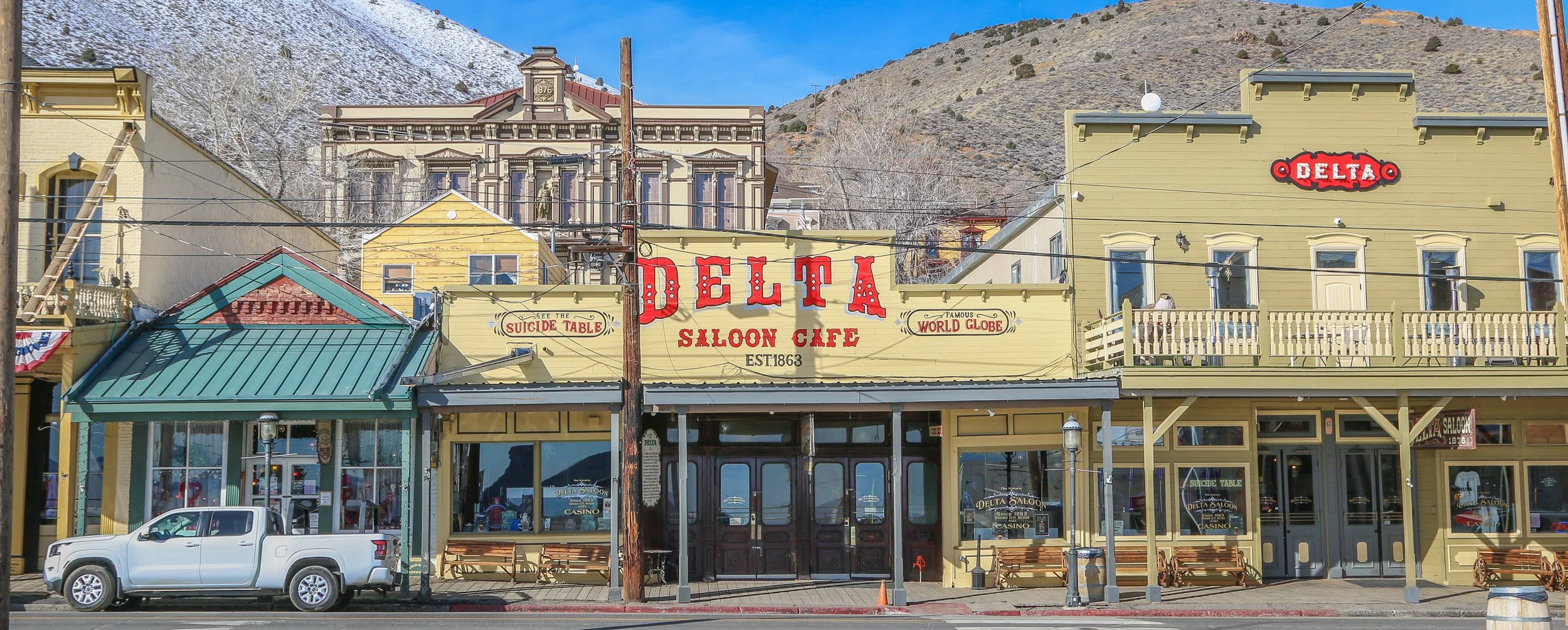
Virginia City, Nevada is one of the coolest Old West mining towns left in the country, and rightfully so as it was once the site of the biggest bonanza in the country’s history. Ten years after the California gold rush brought tens of thousands of people west to find their fortunes, Henry Comstock discovered gold at what would later be called Gold Canyon. The Comstock Lode would bring 25,000 people into the desolate Nevada hills and Virginia City would come to be known at “The Richest Place on Earth”. Because of the tremendous wealth in the area, huge hurdles would be overcome as the town grew, including piping in water from the nearby Sierra Nevada mountains and building a railroad up the steep grade to bring supplies in and out of town. Beautiful churches, mansions, schools and a gorgeous county courthouse were built, along with dozens of saloons, gambling halls and brothels. As a nod to the latter, you’ll notice that the statue of Justice on the courthouse isn’t blind, but instead holds a constant watch over the town. In total, over $400 million dollars worth of gold and silver came out of these hills, equivalent to several billion in today’s money. These riches would filter out of the hills and be responsible for the founding of Reno and for turning San Francisco into the beautiful city it is today. It also helped fund the Union cause during the Civil War, hastening the push for Nevada’s statehood. Nevada’s “Battle Born” motto and designation as the Silver State are both a direct result of the wealth of Virginia City. When the minerals played out, the population dwindled and major fires burned down a lot of what Virginia City once was. Today, nostalgia for the past brings in plenty of tourism and it’s well worth a visit. I hope you enjoy these photos from colorful, historic Virginia City, Nevada a town where the Old West lives on.
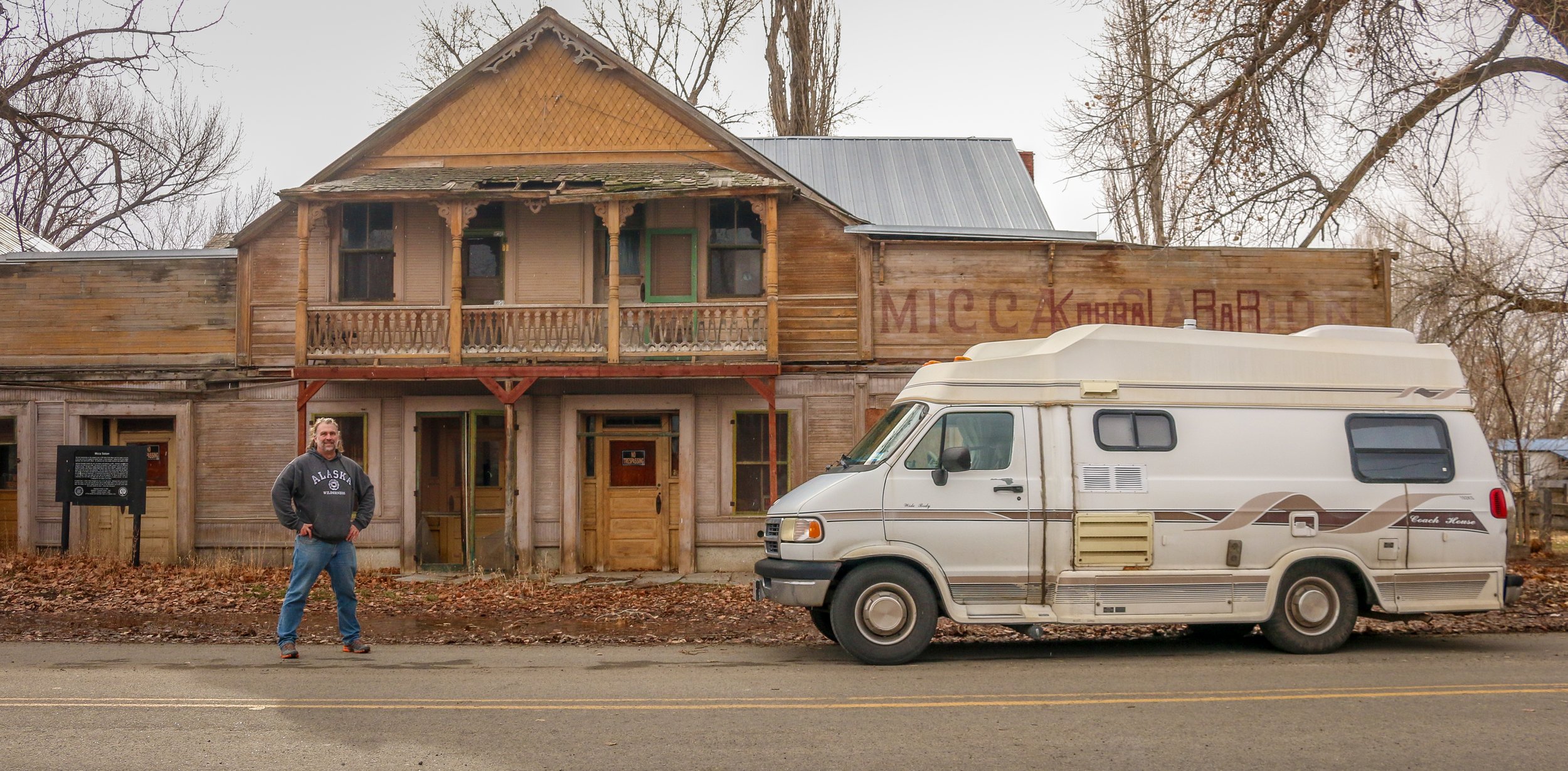
Originally home to the Northern Paiute people, the first non-native person to come through the valley was probably Peter Ogden of the Hudson’s Bay Company, who arrived in 1828. Settlers came to the valley in 1863 and after trouble with the Paiute, Fort Winfield Scott was built for protection. Perhaps because of that, the town that grew up there was originally named Scottsdale and helped supply the area’s mines. It was renamed Paradise City in 1869 and Paradise Valley much later.. The catholic church in town is a reminder of the area’s Italian and Basque heritage. In the 1930s, the Civilian Conservation Corps (CCC) had a camp in town (which is still there today). They were responsible for building the Hinkey Summit/Canyon Creek Road as well as several stone bridges and buildings in the area. Agriculture is the main economic driver in the region these days. Paradise Valley is perhaps best known as the hometown of actress Edna Purviance who appeared in almost 30 films with Charlie Chaplin.
While I came to photograph the cool, old buildings in town, there are some beautiful new homes around as well. The two churches were beautiful and well kept and the saloon looks like it gets quite lively at times. It seems like it would be a wonderful place to live if you wanted to get away from it all. Today, Paradise Valley is home to just over a hundred people. It’s not really close to anything, but if you ever get the chance, stop by and have a wander. You’ll be glad you did. I hope you enjoy these photos from Paradise Valley, Nevada - Humboldt County’s not quite ghost town.